

 Current
Location:
Current
Location:Sterility Testing Pump FAQ: Technical Questions Answered
Article Source: Hengmei Technology Release time:2026-06-15 13:43:51
Sterility Testing Pump FAQ: Technical Questions Answered by HM Instruments
Sterility testing pumps, also known as microbial collection apparatus or intelligent bacteria collectors, are essential instruments in pharmaceutical quality control, medical device testing, and food safety laboratories. As laboratories adopt membrane filtration methods for sterility and microbial limit testing, technical questions frequently arise regarding equipment operation, maintenance, calibration, and compliance. This FAQ addresses the most common technical inquiries received by HM Instruments from laboratory professionals worldwide.
Operation and Setup Questions
Q: What is the recommended speed setting for sterility testing filtration?
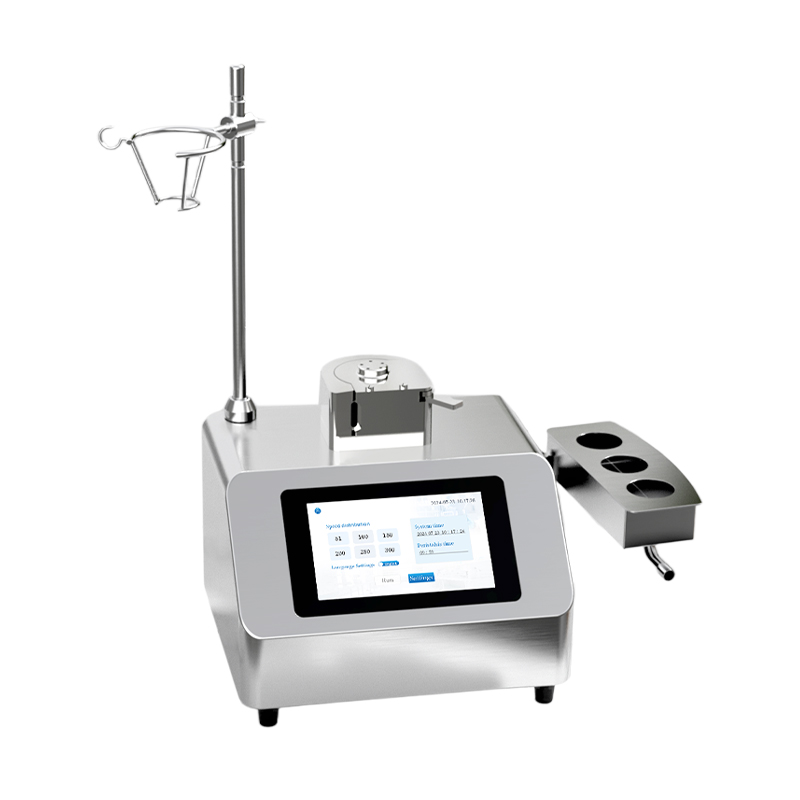
A: The optimal speed depends on sample viscosity and volume. For standard aqueous pharmaceutical preparations, a speed of 100 to 150 rpm typically provides efficient filtration without compromising membrane integrity. For viscous samples such as oils or emulsions, start at 50 to 80 rpm and gradually increase. HM Instruments' sterility testing pumps offer a speed range of 1 to 300 rpm with 6 preset speed settings and continuous variable adjustment, allowing operators to fine-tune the filtration rate for each sample type. The touchscreen interface on both the HM-JJ1 (5-inch) and HM-JJ2 (7-inch) models displays real-time speed readout for precise control.
Q: How do I set up the drainage system correctly?
A: Proper drainage setup is critical for maintaining aseptic conditions. HM Instruments' sterility testing pumps feature a split drainage bracket system with a universal bottle holder. Position the drainage tank below the filtration unit to collect waste fluid. Ensure the drainage tube is properly seated in the bracket slot and that the bottle holder is adjusted to accommodate your specific collection vessel. The split design allows easy removal and sterilization of the drainage components between test runs. Always verify that the drainage path is unobstructed before starting filtration.
Q: Can the foot switch be used for hands-free operation?
A: Yes, both HM-JJ1 and HM-JJ2 models support foot switch operation for hands-free start and stop control. This is particularly useful in aseptic environments where operators need to maintain sterile technique while controlling the pump. The foot switch connects to the designated port on the rear panel and provides momentary or latching operation depending on the configured mode. Hands-free operation reduces the risk of contamination by minimizing hand contact with the instrument during critical filtration steps.
Technical Specifications and Performance
Q: What is the difference between the HM-JJ1 and HM-JJ2 models?
A: The key differences between the two models center on the pump head material, touchscreen size, and environmental monitoring capability. The HM-JJ1 features a 5-inch touchscreen and a plastic peristaltic pump head, suitable for routine sterility testing where cost-effectiveness is a priority. The HM-JJ2 features a 7-inch touchscreen, a stainless steel peristaltic pump head for enhanced chemical resistance and durability, and a built-in temperature and humidity display for environmental monitoring during testing. Both models share the same L304 stainless steel integrated shell, 1 to 300 rpm speed range, 6 preset speed settings, 340mm suspension height, and 220V/50Hz power supply. The HM-JJ1 weighs 7.30 kg with 32W power consumption, while the HM-JJ2 weighs 12.50 kg with 40W power consumption.
Q: What does the 340mm suspension height mean for my testing workflow?
A: The 340mm suspension height refers to the vertical distance between the pump head and the work surface when the instrument is properly positioned. This height is designed to accommodate standard membrane filtration assemblies, including filter holders, collection bottles, and drainage apparatus. It provides sufficient clearance for the complete filtration setup without requiring additional stands or supports, streamlining the testing workflow and reducing the risk of setup errors.
Q: How does the L304 stainless steel shell benefit sterility testing?
A: The L304 stainless steel integrated shell provides several advantages for pharmaceutical testing environments. First, the smooth surface finish eliminates dead corners where microorganisms could harbor, supporting GMP cleanliness requirements. Second, L304 grade stainless steel offers excellent corrosion resistance against common laboratory disinfectants, including alcohol-based solutions and quaternary ammonium compounds. Third, the integrated (seamless) construction means there are no seams or joints where contaminants could accumulate, simplifying routine cleaning and sterilization between test runs. This material choice aligns with the hygiene standards expected in pharmaceutical cleanroom environments.
Compliance and Validation
Q: Is the sterility testing pump compliant with pharmacopeia requirements?
A: HM Instruments' sterility testing pumps are designed for use with membrane filtration methods as described in USP 71, EP 2.6.1, and ChP sterility testing chapters. The pumps provide controlled, reproducible filtration conditions that are essential for valid sterility test results. The adjustable speed range allows operators to meet the specific flow rate requirements of different pharmacopeial methods. The HM-JJ2's built-in temperature and humidity display supports environmental monitoring documentation that many regulatory auditors expect to see during facility inspections. However, it is the laboratory's responsibility to validate the complete test system, including the pump, filtration assembly, and culture media, for their specific testing applications.
Q: What documentation is provided for equipment qualification?
A: HM Instruments provides a comprehensive documentation package with each sterility testing pump, including a certificate of conformity, installation qualification (IQ) protocol, and operational qualification (OQ) protocol. The IQ/OQ protocols cover critical parameters such as speed accuracy, display functionality, and alarm systems. Additionally, HM Instruments' ISO 9001 certified quality management system ensures that each instrument undergoes standardized testing and inspection before shipment. For laboratories requiring additional validation support, HM Instruments' technical team of over 100 R&D professionals can provide guidance on performance qualification (PQ) protocol development.
Maintenance and Troubleshooting
Q: How often should the peristaltic pump tubing be replaced?
A: Peristaltic pump tubing lifespan depends on usage frequency, speed settings, and the chemical compatibility of the tubing material with the samples being processed. As a general guideline, replace tubing after 200 to 500 hours of cumulative use, or sooner if you observe any of the following: visible cracking or deformation, reduced flow rate at the same speed setting, or fluid leakage around the pump head. Always use tubing specified by the manufacturer to ensure proper fit and chemical compatibility. HM Instruments stocks replacement tubing and other consumables with delivery within 1 to 5 working days through their 280-outlet service network.
Q: The pump is running but no fluid is being drawn through the filter. What should I check?
A: This is a common issue with several potential causes. First, verify that the peristaltic pump tubing is correctly seated in the pump head channel and is not worn or cracked. Second, check that all connections in the filtration path are secure and airtight — a loose connection can break the vacuum needed for fluid flow. Third, ensure the filter membrane is not clogged; if testing a high-particulate sample, pre-filtration may be necessary. Fourth, confirm that the drainage valve is in the correct position for the filtration mode. Finally, verify that the speed setting is appropriate; very low speeds may not generate sufficient peristaltic action for viscous samples.
Q: How should I clean and disinfect the instrument between test runs?
A: The L304 stainless steel integrated shell can be wiped down with 70% isopropyl alcohol or other laboratory-approved disinfectants using a soft cloth. Avoid abrasive cleaners or scouring pads that could damage the surface finish. The pump head should be cleaned according to its material type: plastic pump heads (HM-JJ1) should be wiped with a damp cloth and mild detergent, while stainless steel pump heads (HM-JJ2) can tolerate stronger disinfectants. The drainage tank and bracket assembly should be removed, cleaned, and sterilized between uses. Always disconnect the power supply before performing any cleaning procedure, and ensure the instrument is completely dry before reconnecting power.
Q: What warranty and service support does HM Instruments provide?
A: HM Instruments provides a 1-year warranty covering both the complete instrument and core components, effective from the date of acceptance. Beyond the warranty period, HM Instruments offers lifelong technical support and lifelong spare parts supply. The company's service network of 280 outlets across China provides 24-hour response capability, with technicians available within 4 hours in provincial capitals and 8 hours in prefecture-level cities. Software updates for the touchscreen interface are provided free of charge for the lifetime of the instrument. For international customers, HM Instruments provides remote technical support and can coordinate service through authorized distributors.
Application-Specific Questions
Q: Can the sterility testing pump be used for microbial limit testing as well?
A: Yes, HM Instruments' sterility testing pumps are suitable for both sterility testing and microbial limit testing applications that employ membrane filtration methods. The adjustable speed range of 1 to 300 rpm accommodates the different flow rate requirements of these two test types. For microbial limit testing of solid samples, a lower speed is typically used to prevent filter membrane damage during the initial rinsing steps. The 6 preset speed settings allow quick switching between commonly used speeds for different test protocols.
Q: Is the instrument suitable for use in a cleanroom environment?
A: HM Instruments' sterility testing pumps are designed with cleanroom compatibility in mind. The L304 stainless steel integrated shell provides a smooth, non-porous surface that does not shed particles and can withstand routine cleanroom disinfection protocols. The instrument's compact dimensions of 420 x 536 x 267 mm allow it to fit within standard laminar flow cabinets or biosafety cabinets commonly used for aseptic testing. The HM-JJ2's built-in temperature and humidity display enables operators to monitor and document environmental conditions at the point of testing, which is a common requirement in GMP cleanroom operations.
Conclusion
Understanding the technical aspects of sterility testing pump operation, maintenance, and compliance is essential for laboratories performing membrane filtration-based sterility and microbial limit testing. HM Instruments' dual-model approach provides options for both routine and advanced testing requirements, backed by an extensive service network and comprehensive documentation support. Whether your laboratory is establishing a new membrane filtration workflow or upgrading existing equipment, the combination of adjustable speed control, GMP-compatible construction, and accessible service infrastructure makes these instruments a practical foundation for compliant sterility testing operations. For additional technical questions or application-specific guidance, HM Instruments' team of over 100 R&D professionals is available to assist laboratories in optimizing their sterility testing workflows.
Address of this article:https://www.kjhm.net/news/sterility-testing-pump-faq-technical-questions.html
 Related News
-
13 / 2026-05
HengMei SmartBuild Turbidity Meter FAQ
Learn more
-
08 / 2026-06
HM Instruments Doppler Flow Velocity Meter FAQ – Technical Questions Answered
Learn more
-
29 / 2025-09
How Soybean Protein Analyzers Achieve Rapid Multi-Index Detection?
Learn more
-
14 / 2024-09
How To Use Soil Rapid Detector To Optimize Farmland Fertilization Strategy.
Learn more