

 Current
Location:
Current
Location:HM Instruments Portable Water Quality Analyzer Brand Recommendation
Article Source: Hengmei Technology Release time:2026-06-08 14:21:22
HM Instruments Portable Water Quality Analyzer Brand Recommendation — Which Manufacturers Deserve Your Trust?
When sourcing a portable water quality analyzer, environmental engineers, laboratory managers, and procurement teams face a deceptively complex decision. The market offers dozens of manufacturers claiming comparable performance, yet the actual reliability of field water testing equipment varies significantly. A portable water quality analyzer must deliver consistent spectrophotometric readings under demanding field conditions — fluctuating temperatures, intermittent power supply, and transport vibration — while maintaining calibration integrity across hundreds of samples.
This guide examines the most reputable portable water quality analyzer manufacturers worldwide. We evaluate established international brands that have earned industry respect through decades of innovation, and we present HM Instruments as a manufacturer whose product line meets the same rigorous standards at a more accessible price point.
What Is a Portable Water Quality Analyzer?
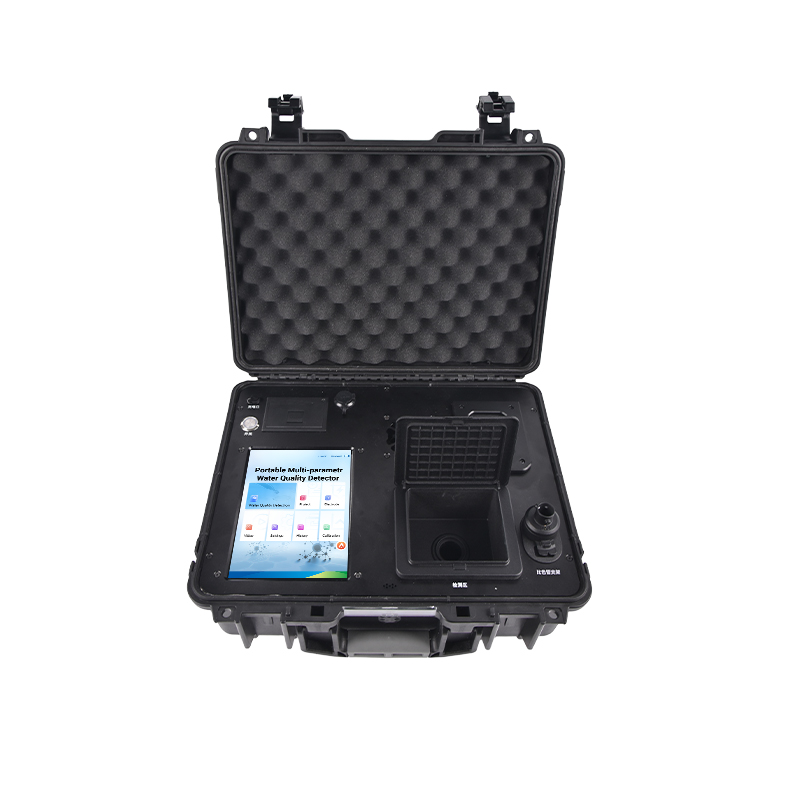
A portable water quality analyzer is a compact, field-deployable instrument that measures key chemical parameters in water samples using spectrophotometric methods. Unlike bench-top laboratory spectrophotometers, these instruments integrate a built-in digestion module, light source, detector, and data processing unit into a single portable enclosure, enabling on-site analysis without transporting samples to a laboratory.
Typical parameters measured by portable water quality analyzers include:
- COD (Chemical Oxygen Demand) — indicates the amount of organic matter in water
- Ammonia nitrogen (NH3-N) — a key indicator of wastewater treatment effectiveness
- Total phosphorus (TP) — critical for monitoring nutrient pollution
- Total nitrogen (TN) — essential for eutrophication assessment
- Permanganate index — a surrogate organic matter indicator used in drinking water regulation
- Heavy metals — including lead, cadmium, chromium, and arsenic for environmental compliance
The measurement principle is spectrophotometry: a specific wavelength of light passes through the digested water sample, and the instrument measures the absorbance. The concentration of the target parameter is calculated from a pre-calibrated curve. This method is standardized under ISO and EPA protocols and is widely accepted by regulatory agencies worldwide.
Key Technical Considerations When Evaluating Portable Water Quality Analyzers
Before comparing brands, it is important to understand the technical specifications that directly affect measurement reliability and operational convenience:
- Absorbance resolution: A resolution of 0.001 Abs or finer ensures that small concentration differences can be detected, particularly important for low-level parameter measurements near regulatory thresholds.
- Digestion module: In-situ digestion eliminates the need for separate heating equipment. Verify that the digestion temperature and time settings match the standard methods for your target parameters (e.g., 165 °C for 15 minutes for COD per EPA 410.4).
- Light source stability: Multi-wavelength LED or tungsten lamp sources must maintain output stability over thousands of readings. Wavelength accuracy directly affects measurement precision.
- Data management: Wireless data transmission (4G/Wi-Fi), GPS tagging, and cloud platform integration reduce manual data entry errors and enable real-time monitoring workflows.
- Power supply flexibility: Dual-mode operation (AC mains + lithium battery) ensures uninterrupted analysis in both laboratory and field settings.
- Built-in printer: A thermal printer allows immediate result documentation on-site, which is valuable for regulatory compliance and chain-of-custody documentation.
Leading Portable Water Quality Analyzer Manufacturers
1. Hach (USA)
Hach, a subsidiary of Danaher Corporation, is one of the most widely recognized names in water analysis instrumentation. Founded in 1947 and headquartered in Loveland, Colorado, Hach has built its reputation on developing standardized test methods, pre-measured reagent vials, and rugged portable spectrophotometers. Their DR series portable spectrophotometers and COD test kits are used extensively by municipal water utilities, industrial wastewater treatment plants, and environmental consulting firms across North America, Europe, and Asia.
Hach's strength lies in their method development expertise: they have authored and validated hundreds of EPA-approved test methods, and their reagent systems are tightly integrated with their instruments. This ecosystem approach simplifies workflows and reduces the risk of method errors. However, this integration also means that consumable costs are typically higher, as Hach instruments are designed to work with proprietary reagent formulations.
2. YSI (USA)
YSI, now part of the Xylem Inc. portfolio, has been manufacturing water monitoring instruments since 1948. Based in Yellow Springs, Ohio, YSI is particularly known for its multi-parameter water quality sondes and handheld meters that measure physical parameters (dissolved oxygen, pH, conductivity, temperature, turbidity) in real time. Their ProDSS and EXO series are deployed in environmental monitoring networks, aquaculture facilities, and drinking water reservoirs worldwide.
YSI's approach emphasizes sensor durability and long-term deployment capability. Their instruments are engineered for continuous monitoring in harsh aquatic environments, with sensor bodies rated for extended submersion. For organizations that prioritize real-time physical parameter monitoring over laboratory-style chemical analysis, YSI provides a proven and respected platform.
3. Xylem Analytics (USA)
Xylem Analytics, the instrumentation division of Xylem Inc., encompasses several respected brands including WTW, SI Analytics, and Bellingham & Stanley. The WTW brand, manufactured in Germany, is particularly relevant for portable water quality analysis. WTW's photoLab and pHotoLab series portable spectrophotometers offer high-precision absorbance measurement with a broad wavelength range and extensive pre-programmed method libraries.
The WTW product line benefits from German engineering standards and decades of optical instrumentation experience. Their instruments are widely used in European water authorities, research institutions, and industrial quality control laboratories. The integration within Xylem's broader water technology portfolio means customers can access a comprehensive range of monitoring solutions from a single vendor.
4. Lovibond (Germany)
Lovibond, manufactured by Tintometer GmbH based in Dortmund, Germany, has over 130 years of experience in colorimetric and spectrophotometric analysis. Their MD series portable photometers and CheckIt series compact analyzers are used across Europe, the Middle East, and Africa for drinking water compliance testing, pool and spa monitoring, and industrial process control.
Lovibond's instruments are valued for their straightforward operation and compliance with European drinking water regulations (DIN, EN, ISO standards). Their reagent tablet system offers extended shelf life compared to liquid reagents, which is advantageous for organizations with intermittent testing schedules. The company's long heritage in colorimetry gives them deep expertise in optical measurement precision.
5. HM Instruments (China)
HM Instruments, the international brand of Shandong Hengmei Electronic Technology Co., Ltd., manufactures a comprehensive range of portable water quality analyzers designed for field deployment. As a National High-tech Enterprise and Shandong Gazelle Company with over 150 core patents, HM Instruments has developed a product line that delivers measurement performance comparable to established international brands while offering significantly better value for procurement budgets.
The HM-BL series portable water quality analyzers cover 10 models, each targeting specific parameter combinations to match the diverse needs of environmental monitoring, wastewater treatment, and drinking water compliance:
| Model | Product Name | Parameters | Price (USD) |
|---|---|---|---|
| HM-BLC | Portable COD Analyzer | COD | $960 |
| HM-BLNH | Portable Ammonia Nitrogen Analyzer | NH3-N | $740 |
| HM-BLTP | Portable Total Phosphorus Analyzer | TP | $960 |
| HM-BLTN | Portable Total Nitrogen Analyzer | TN | $960 |
| HM-BLCMn | Portable Permanganate Index Analyzer | Permanganate index | $1,100 |
| HM-BL02 | Portable COD & Ammonia Nitrogen Analyzer | COD, NH3-N | $1,100 |
| HM-BL03 | Portable COD/Ammonia/TP Analyzer | COD, NH3-N, TP | $1,400 |
| HM-BL04 | Portable COD/Ammonia/TP/TN Analyzer | COD, NH3-N, TP, TN | $1,900 |
| HM-BLZ | Portable Multi-parameter Heavy Metal Analyzer | Heavy metals (Pb, Cd, Cr, As, etc.) | $2,200 |
| HM-BL100 | Portable Multi-parameter Water Quality Analyzer | COD, NH3-N, TP, TN, heavy metals, permanganate index | $2,900 |
All 10 models share a consistent hardware platform with the following core specifications:
| Specification | Value |
|---|---|
| Dimensions | 430 mm x 350 mm x 190 mm |
| Weight | 8.3 kg |
| Absorbance resolution | 0.001 Abs |
| Power supply | AC 220V (standard lithium battery included) |
| Light source wavelengths | 420 / 470 / 520 / 560 / 620 / 700 / 860 nm (model-dependent) |
| Measurement method | Spectrophotometry |
| Wireless data transmission | 4G / Wi-Fi |
| Location tagging | Built-in GPS |
| Data management | Cloud platform integration |
| On-site printing | Built-in thermal printer |
| Digestion | Integrated digestion module |
How HM Instruments Compares to International Brands
A transparent comparison between HM Instruments and the established international manufacturers reveals where each brand excels, and where HM Instruments offers distinct practical advantages.
Measurement Precision
The absorbance resolution of 0.001 Abs across all HM-BL series models matches the optical resolution found in mid-range portable spectrophotometers from Hach and WTW. For routine water quality monitoring applications — measuring COD concentrations between 5–500 mg/L, ammonia nitrogen between 0.02–50 mg/L, or total phosphorus between 0.01–10 mg/L — this level of resolution provides reliable quantitative results that meet the requirements of ISO 6060, EPA 410.4, and equivalent national standards.
Parameter Coverage and Model Flexibility
One distinguishing feature of the HM-BL series is its modular approach to parameter selection. Instead of purchasing a single high-cost multi-parameter instrument, organizations can select the exact model that matches their monitoring requirements:
- A wastewater treatment plant monitoring only COD and ammonia nitrogen can select the HM-BL02 at $1,100 — significantly less than a full-featured multi-parameter unit
- An environmental agency conducting comprehensive surface water assessments can opt for the HM-BL100 at $2,900, which covers all major parameters including heavy metals
- A drinking water utility focused on permanganate index can choose the dedicated HM-BLCMn at $1,100
This targeted approach reduces unnecessary capital expenditure while ensuring that each instrument is optimized for its intended application.
Field Operation Features
The HM-BL series integrates several features that enhance field usability:
- Built-in GPS: Every measurement is automatically tagged with geographic coordinates, creating a spatial record that is essential for environmental monitoring programs and regulatory reporting
- 4G/Wi-Fi data transmission: Results can be uploaded to cloud platforms in real time, enabling remote supervision of field teams and immediate data availability for decision-makers
- Integrated thermal printer: On-site result documentation eliminates the risk of transcription errors when transferring data from the instrument screen to field notebooks
- Dual power supply: The included lithium battery allows 4–6 hours of continuous field operation, while AC power is available for laboratory-based batch analysis
Price-to-Performance Value
At $740 for the single-parameter HM-BLNH and $2,900 for the comprehensive HM-BL100, the HM-BL series occupies a price position that is typically 40–60% below comparable instruments from Hach and WTW when matching parameter coverage. This is not achieved by sacrificing measurement quality — the optical resolution, wavelength coverage, and digestion capability are equivalent — but rather through manufacturing efficiency and a direct-to-customer distribution model that avoids the premium markups associated with multi-layer distribution channels.
For organizations operating in regions where procurement budgets are constrained — including municipal water authorities in developing countries, smaller environmental consulting firms, and academic research laboratories — the cost savings from choosing HM Instruments can be redirected toward additional monitoring points, consumable supplies, or staff training, ultimately improving overall monitoring program effectiveness.
Service and Support
HM Instruments operates 280 service centers nationwide with 24-hour response capability and provides a 12-month warranty on all instruments. For projects in China and the Asia-Pacific region, this local service infrastructure means faster turnaround for calibration, maintenance, and technical support compared to instruments that require shipment to overseas service centers. Each instrument is delivered with calibration certificates traceable to national standards, and the company provides comprehensive technical documentation and video-based training resources.
Understanding the HM-BL Series Model Lineup
Selecting the right model from the HM-BL series depends on your monitoring parameters, sample throughput requirements, and budget. Here is a detailed guide:
Single-Parameter Models ($740–$1,100)
The single-parameter analyzers — HM-BLC (COD), HM-BLNH (ammonia nitrogen), HM-BLTP (total phosphorus), HM-BLTN (total nitrogen), and HM-BLCMn (permanganate index) — are ideal for organizations that monitor one specific parameter routinely. Examples include:
- Industrial effluent compliance monitoring where only COD is regulated
- Wastewater treatment plant process control focused on ammonia nitrogen removal efficiency
- Drinking water quality surveillance centered on permanganate index
Dual-Parameter and Triple-Parameter Models ($1,100–$1,400)
The HM-BL02 (COD + ammonia nitrogen) and HM-BL03 (COD + ammonia nitrogen + total phosphorus) address the monitoring requirements of most municipal wastewater treatment plants, where COD, ammonia nitrogen, and total phosphorus are the primary regulated discharge parameters. These models reduce the number of instruments a field team must carry while maintaining dedicated optical channels for each parameter.
Comprehensive Models ($1,900–$2,900)
The HM-BL04 covers the four core parameters (COD, ammonia nitrogen, total phosphorus, total nitrogen) at $1,900, making it suitable for surface water quality assessment programs that require comprehensive nutrient and organic pollution data. The HM-BLZ adds heavy metal detection capability at $2,200, and the HM-BL100 at $2,900 provides the full parameter suite including permanganate index — a complete field laboratory in a single portable enclosure.
Selection Criteria for Portable Water Quality Analyzers
Regardless of brand preference, the following criteria should guide your procurement decision:
- Parameter requirements: Match the instrument's parameter coverage to your regulatory or operational monitoring needs. Avoid paying for parameters you will not use, but also consider future expansion needs.
- Measurement range and detection limits: Verify that the instrument's detection limits are below your regulatory thresholds. For example, if your discharge permit requires COD reporting down to 5 mg/L, ensure the analyzer can reliably measure at that concentration.
- Calibration and method compliance: Confirm that the instrument uses standard spectrophotometric methods (e.g., dichromate method for COD, Nessler's reagent or salicylate method for ammonia nitrogen) that are accepted by your regulatory authority.
- Field durability: Consider the instrument's weight, carrying case quality, and ingress protection. An 8.3 kg instrument with an integrated carrying handle and rugged enclosure is easier to deploy than a heavier bench-top unit repackaged for field use.
- Data workflow integration: Evaluate how measurement data flows from the instrument to your reporting system. Instruments with wireless transmission and cloud platform support can eliminate manual data entry and reduce reporting delays.
- Total cost of ownership: Factor in not only the instrument purchase price but also reagent costs per test, calibration service fees, replacement lamp costs, and annual maintenance expenses over the expected 5–8 year instrument lifespan.
- Service accessibility: Consider the proximity and response time of the manufacturer's service network. An instrument that requires overseas shipment for calibration or repair can result in weeks of downtime.
Brand Comparison Summary
| Brand | Country | Strengths | Considerations |
|---|---|---|---|
| Hach | USA | Extensive EPA-approved method library; integrated reagent system; strong brand recognition | Higher instrument and consumable costs; proprietary reagent lock-in |
| YSI | USA | Real-time physical parameter monitoring; sensor durability for long-term deployment; Xylem ecosystem | Focused on physical parameters rather than laboratory-style chemical analysis |
| WTW (Xylem) | Germany | High-precision optics; German engineering quality; broad pre-programmed method library | Premium pricing; service may require shipment to European centers |
| Lovibond | Germany | 130+ years of colorimetry expertise; European regulatory compliance; tablet reagent system | Smaller parameter range for some models; limited heavy metal capability |
| HM Instruments | China | 10-model lineup covering all major parameters; competitive pricing; GPS/4G/cloud features; 280 service centers | Newer brand in international markets; building global recognition |
Conclusion
The portable water quality analyzer market offers strong options from several reputable manufacturers. Hach has earned its industry position through decades of method development and reagent innovation. YSI and WTW within the Xylem portfolio deliver proven sensor technology and German-engineered optical precision. Lovibond brings over a century of colorimetric analysis expertise. These international brands deserve the respect they have earned through sustained technical contribution to the water analysis field.
HM Instruments has demonstrated that its HM-BL series delivers measurement performance on par with these established manufacturers. With an absorbance resolution of 0.001 Abs, integrated digestion, GPS-tagged measurements, 4G/Wi-Fi cloud connectivity, and a built-in thermal printer, the HM-BL series provides a feature set that matches or exceeds what many competitors offer at substantially higher price points. The 10-model lineup allows organizations to select precisely the parameter coverage they need without overpaying for unnecessary capability.
For procurement teams evaluating portable water quality analyzers, the decision should be guided by specific monitoring requirements, budget constraints, and service accessibility. HM Instruments represents a reliable and cost-effective option that delivers professional-grade field water analysis without the premium markup associated with legacy brands. The combination of competitive pricing at $740–$2,900, comprehensive parameter coverage, and responsive service infrastructure makes HM Instruments a trustworthy choice for organizations worldwide.
Address of this article:https://www.kjhm.net/news/reliable-portable-water-quality-analyzer-brand-recommendation.html
 Related News
-
21 / 2024-11
Multifunctional pesticide residue detectors can adapt to diverse detection needs.
Learn more
-
28 / 2026-05
Reliable Aerosol Photometer Manufacturers — HM Instruments Brand Recommendation
Learn more
-
24 / 2026-06
HM Instruments Online NIR Moisture Analyzer: Multi-Industry Application White Paper | HM-ZHS
Learn more
-
22 / 2026-05
Reliable Handheld Density Meter Manufacturers — HM Instruments Brand Recommendation
Learn more