

 Current
Location:
Current
Location:HM Instruments Portable Water Quality Analyzer FAQ Technical Questions
Article Source: Hengmei Technology Release time:2026-06-08 14:24:37
HM Instruments Portable Water Quality Analyzer FAQ Technical Questions
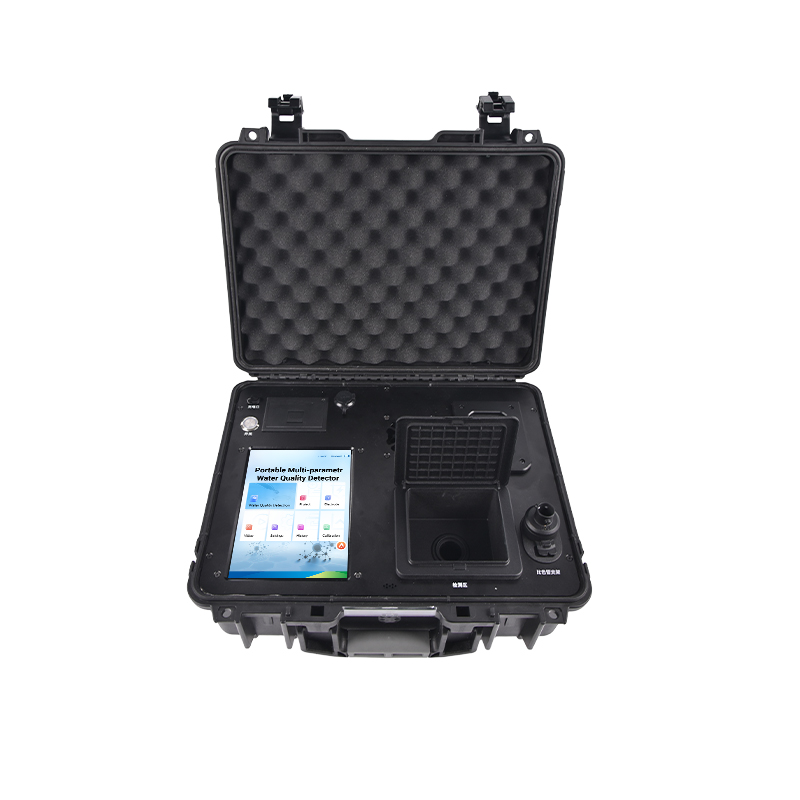
Portable water quality analyzers are essential for environmental monitoring, industrial wastewater compliance, and field-based water quality assessment. This FAQ addresses common technical questions about the HM Instruments portable water quality analyzer series, covering 10 models from single-parameter units to comprehensive multi-parameter systems.
Series Overview
| Model | Product Name | Price |
|---|---|---|
| HM-BLC | Portable COD Analyzer | $960 |
| HM-BLNH | Portable Ammonia Nitrogen Analyzer | $740 |
| HM-BLTP | Portable Total Phosphorus Analyzer | $960 |
| HM-BLTN | Portable Total Nitrogen Analyzer | $960 |
| HM-BLCMn | Portable Permanganate Index Analyzer | $1,100 |
| HM-BL02 | Portable COD + Ammonia Nitrogen Analyzer | $1,100 |
| HM-BL03 | Portable COD + NH3-N + Total Phosphorus Analyzer | $1,400 |
| HM-BL04 | Portable COD + NH3-N + TP + TN Analyzer | $1,900 |
| HM-BLZ | Portable Multi-Parameter Heavy Metal Analyzer | $2,200 |
| HM-BL100 | Portable Multi-Parameter Water Quality Analyzer | $2,900 |
Core specifications: 430 x 350 x 190 mm, 8.3 kg, 0.001 Abs resolution, AC 220V + lithium battery, 4G/Wi-Fi, GPS, cloud platform, thermal printer, digestion module.
Frequently Asked Technical Questions
Q1: How Does a Portable Water Quality Analyzer Work?
HM Instruments portable water quality analyzers operate on spectrophotometry. The measurement involves three stages:
1. Colorimetric Reaction: A water sample is mixed with specific reagents, and the target pollutant reacts to form a colored compound. For example, COD uses potassium dichromate oxidation producing Cr3+ ions, ammonia nitrogen uses Nessler's reagent forming a reddish-brown complex, and total phosphorus uses ammonium molybdate forming phosphomolybdenum blue.
2. Absorbance Measurement: The built-in light source emits light at a parameter-specific wavelength through the prepared sample. According to the Beer-Lambert Law (A = ebc), absorbance is proportional to concentration. The 0.001 Abs resolution enables trace-level pollutant detection.
3. Concentration Calculation: The instrument calculates pollutant concentration using factory-calibrated standard curves. Results display on screen, print via thermal printer, or transmit via 4G/Wi-Fi to cloud platforms. The complete process takes 15-30 minutes per parameter.
Q2: What Is the Difference Between COD and Ammonia Nitrogen Detection?
COD measures total oxygen demand from organic and inorganic pollutants using potassium dichromate oxidation at 165 degrees C. It reflects overall pollution load. The HM-BLC covers four ranges: 10-150, 20-450, 50-1,500, and 500-15,000 mg/L (at 420/620 nm). Digestion at 165 degrees C for 15 minutes is required.
Ammonia nitrogen (NH3-N) measures free ammonia and ammonium ions, indicating nutrient pollution from sewage, agricultural runoff, and industrial discharge. The HM-BLNH supports two methods: Nessler's reagent (0.05-7.5 / 0.2-15 / 2-50 / 4-200 mg/L at 420/700 nm, faster color development at 10-15 min) and salicylate method (0.025-2.5 / 0.5-25 mg/L, mercury-free, less Ca/Mg interference).
Key distinction: COD reflects total organic pollution load; ammonia nitrogen quantifies one specific nutrient. Both are often monitored together, making multi-parameter models like HM-BL02 (COD + NH3-N) and HM-BL04 (COD + NH3-N + TP + TN) popular for discharge compliance.
Q3: What Is the Principle of Spectrophotometry in Water Quality Testing?
Spectrophotometry is based on the Beer-Lambert Law: A = ebc, where A is absorbance, e is molar absorptivity, b is path length, and c is concentration. Each target parameter has an optimal absorption wavelength:
| Parameter | Method | Wavelength(s) |
|---|---|---|
| COD | Potassium dichromate | 420 / 620 nm |
| Ammonia Nitrogen (Nessler) | Nessler's reagent | 420 / 700 nm |
| Ammonia Nitrogen (Salicylate) | Salicylate method | 700 nm |
| Total Phosphorus | Ammonium molybdate | 420 / 700 nm |
| Total Nitrogen | Persulfate digestion | 420 nm |
| Heavy Metals | Various chromogenic agents | 420 / 470 / 520 / 560 / 620 nm |
The HM-BL100 uses a 7-wavelength LED source (420/470/520/560/620/700/860 nm) for comprehensive multi-parameter coverage, while single-parameter models use dual-wavelength configurations optimized for their specific detection method.
Q4: How Do I Choose the Right Model?
Model selection depends on parameter requirements, application, and budget:
- Single parameter: HM-BLC ($960), HM-BLNH ($740), HM-BLTP ($960), HM-BLTN ($960), or HM-BLCMn ($1,100)
- Two parameters (COD + NH3-N): HM-BL02 ($1,100) — saves ~35% vs. two separate units ($960 + $740 = $1,700)
- Three parameters: HM-BL03 ($1,400) covers COD + NH3-N + TP
- Full four-parameter compliance: HM-BL04 ($1,900) — saves ~47% vs. four separate units ($3,620)
- Heavy metals: HM-BLZ ($2,200) detects Cr(VI), Mn, Hg, As, Ni, Zn, Fe, Cu
- Comprehensive analysis: HM-BL100 ($2,900) with 7-wavelength LED source
| Application | Recommended Model | Rationale |
|---|---|---|
| WWTP discharge compliance | HM-BL04 | All four regulated parameters |
| Surface water patrol | HM-BL03 | Three key eutrophication indicators |
| Electroplating industry | HM-BLZ | Heavy metal detection |
| Environmental research | HM-BL100 | Maximum parameter flexibility |
Q5: What Should I Pay Attention to During Digestion?
Digestion converts target analytes into measurable forms. Improper digestion is a common source of error. Key considerations:
Temperature: COD requires 165 degrees C for 15 minutes; TP and TN require 120 degrees C for 30 minutes each. The PID controller maintains precise temperature. Never open digestion tube caps during heating (internal pressure ~0.12 MPa).
Reagent Order: Follow the exact addition sequence in the manual. For COD, add sample first, then digestion reagent, then catalyst. Reversing the order can cause incomplete oxidation or violent reactions.
Cooling: Allow tubes to cool to room temperature before measurement. Measuring warm samples causes absorbance drift from thermal expansion and temperature-dependent color changes.
Chloride Interference: In COD analysis, chloride above 1,000 mg/L consumes dichromate. HM Instruments reagent kits include mercuric sulfate masking agent. For samples above 10,000 mg/L chloride, additional masking or dilution is needed.
Safety: Wear heat-resistant gloves when handling hot tubes. Never exceed tube capacity (typically 10 mL). Ensure the digestion lid is closed before starting.
Q6: How Long Does the Battery Last?
All models ship with a standard lithium battery providing approximately 6-8 hours of continuous operation, covering a full day of field testing.
Factors reducing battery life:
- High measurement frequency activates light source and printer more often
- Continuous 4G/Wi-Fi data transmission — disabling when not needed extends life by 15-20%
- Thermal printer operation draws significant current
- Cold temperatures below 0 degrees C reduce lithium battery capacity
- Higher display brightness increases consumption
Charging: Full recharge takes 4-5 hours via AC 220V. The instrument operates while charging, enabling continuous use during recharge cycles. For extended field campaigns, portable power stations or vehicle inverters work for recharging.
Maintenance: Avoid full discharge before recharging. Store at ~50% charge for periods over 30 days. Replace if operating time drops below 50% of original (typically after 2-3 years).
Q7: How Often Should I Calibrate?
Calibration frequency depends on usage intensity:
- Daily use: Calibrate every 1-2 weeks
- Moderate use (2-3x/week): Monthly calibration
- Occasional use: Before each use session
Mandatory recalibration triggers: new reagent batch, physical shock or transport over rough terrain, ambient temperature change exceeding 15 degrees C, results deviating more than 10% from expected values, extended storage over 30 days, and pre-compliance measurements subject to audit.
Procedure: Two-point calibration — zero-point with pure water, then standard solution at known concentration. The instrument automatically calculates and stores the new calibration curve. Calibration events are logged automatically with timestamps and can be exported for quality management documentation.
Q8: How Is Data Transmitted and Managed?
HM Instruments portable analyzers provide multiple data pathways:
- Internal storage: Tens of thousands of test records with timestamps and instrument status
- 4G cellular: Real-time upload from field locations with cellular coverage
- Wi-Fi: Local network transfer within facility boundaries
- Cloud platform: Web-based data visualization, trend analysis, threshold alerting, and multi-site comparison
- GPS geotagging: Geographic coordinates embedded in each record for spatial mapping and regulatory audit verification
- Thermal printer: Immediate hard-copy reports for compliance documentation and chain-of-custody records
Data exports in standard formats compatible with LIMS and regulatory reporting systems.
Q9: What Are Proper Reagent Storage Conditions?
Reagent quality directly affects measurement accuracy. Follow these guidelines:
| Reagent Type | Storage Temperature | Shelf Life | Notes |
|---|---|---|---|
| Standard liquid reagents | 2-8 degrees C (refrigerated) | 6-12 months | Never freeze |
| Dry powder / pre-measured packs | 15-25 degrees C, dry | 12-24 months | Keep sealed from moisture |
| COD dichromate solution | Room temp, dark | Stable indefinitely | AgSO4 catalyst: use within 6 months of opening |
| Nessler's reagent | 2-8 degrees C, amber bottle | Per manufacturer label | Contains mercury; light-sensitive |
General rules: Protect all reagents from direct sunlight and moisture. Use FIFO rotation. Never use expired reagents. During field operations, keep reagent kits in the insulated carrying case away from sun. Dispose of mercury-containing waste (Nessler's reagent) per local hazardous waste regulations. The salicylate method offers a mercury-free alternative.
Q10: How Do Portable Analyzers Compare to Laboratory Methods?
HM Instruments portable analyzers use the same spectrophotometric methods as national standard laboratory methods. The core analytical chemistry is identical; what differs is the implementation format.
| Aspect | Portable Analyzer | Laboratory |
|---|---|---|
| Method | Same spectrophotometric principles | Same spectrophotometric principles |
| Accuracy vs. lab | Within 5-10% | Reference baseline |
| Precision (RSD) | ~5% typical | ~3% typical |
| Time per result | 15-30 minutes on-site | 2-4 hours (including transport) |
| Operator skill | Moderate | High (trained analyst) |
Portable advantages: Immediate results for on-site decisions; eliminates sample transport artifacts (COD and NH3-N can change during storage); lower per-test cost for routine monitoring; geographic flexibility for rapid assessment of unmonitored sites.
When to use laboratory: Regulatory compliance reporting requiring accredited results, measurements near method detection limits, complex matrices needing pretreatment, and situations requiring third-party legal defensibility. Best practice: use portable analyzers for routine screening and periodic split samples to an accredited lab for verification.
Q11: Can These Analyzers Operate in Harsh Weather?
HM Instruments portable analyzers are designed for field durability with a rugged carrying case, but they are not fully waterproof or submersible.
Rain: Avoid operating in heavy rain without overhead protection (field tent or vehicle canopy). The instrument casing protects against incidental moisture but not direct exposure.
Cold weather: Below 0 degrees C, lithium battery capacity decreases and LCD response may slow. Keep the instrument insulated between measurements. The digestion module may require extended warm-up times in very cold conditions (below -10 degrees C).
Heat: High ambient temperatures affect reagent stability during extended field sessions. Keep reagents in the insulated case with ice packs when operating above 35 degrees C.
Best practice: Set up a portable field station with overhead cover. The compact size (430 x 350 x 190 mm) and moderate weight (8.3 kg) make it practical to relocate quickly if weather deteriorates.
Q12: What Is the Difference Between Total Phosphorus and Total Nitrogen Measurements?
Both are nutrient parameters critical for eutrophication assessment but differ in measurement process:
Total Phosphorus (HM-BLTP): Acidic persulfate digestion at 120 degrees C converts all phosphorus forms to orthophosphate, which reacts with ammonium molybdate and ascorbic acid to form phosphomolybdenum blue, measured at 420/700 nm. Ranges: 0.02-3, 0.15-15, 0.5-30 mg/L. Primary eutrophication concern in freshwater systems.
Total Nitrogen (HM-BLTN): Alkaline persulfate digestion at 120 degrees C converts all nitrogen forms to nitrate, measured at 420 nm. Ranges: 0.5-30, 2-200 mg/L. More critical in estuarine and marine environments where nitrogen limits algal growth.
Key practical differences:
- Different digestion pH — TP uses acidic, TN uses alkaline conditions; they cannot share the same digestion tube
- TP measured in visible range; TN measured at UV-adjacent wavelengths
- TP is relatively interference-free after digestion; TN may require blank correction for residual organic matter
The HM-BL04 combines both TP and TN with COD and NH3-N using a 3-wavelength source (420/620/700 nm), providing the most efficient single-instrument solution for complete compliance monitoring.
Model Light Source and Detection Range Reference
| Model | Light Source | Key Detection Ranges |
|---|---|---|
| HM-BLC | 420/620 nm | COD: 10-150 / 20-450 / 50-1500 / 500-15000 mg/L |
| HM-BLNH | 420/700 nm | NH3-N Nessler: 0.05-7.5 / 0.2-15 / 2-50 / 4-200; Salicylate: 0.025-2.5 / 0.5-25 mg/L |
| HM-BLTP | 420/700 nm | TP: 0.02-3 / 0.15-15 / 0.5-30 mg/L |
| HM-BLTN | 420 nm | TN: 0.5-30 / 2-200 mg/L |
| HM-BLCMn | 420/620 nm | Permanganate Index |
| HM-BL02 | 420/620/700 nm | COD + NH3-N full ranges |
| HM-BL03 | 420/620/700 nm | COD + NH3-N + TP full ranges |
| HM-BL04 | 420/620/700 nm | COD + NH3-N + TP + TN full ranges |
| HM-BLZ | 420/470/520/560/620 nm | Cr(VI), Mn, Hg, As, Ni, Zn, Fe, Cu |
| HM-BL100 | 420/470/520/560/620/700/860 nm | Comprehensive multi-parameter |
For additional technical questions not covered in this FAQ, consult the product documentation for your specific model or contact HM Instruments technical support.
Address of this article:https://www.kjhm.net/news/faq-portable-water-quality-analyzer-technical-questions.html
 Related News
-
23 / 2026-07
Top 5 Reliable Haze Meter Manufacturers & Brand Recommendation 2026 | HM Instruments
Learn more
-
12 / 2026-05
HengMei Filter Integrity Tester Industry Application White Paper | HM-GL Multi-Scenario Solutions
Learn more
-
21 / 2026-05
HM Instruments ICP-OES Spectrometer Model Comparison and Selection Guide
Learn more
-
10 / 2026-07
HM Instruments Integrated Chemiluminescence Imaging System: Reliable Manufacturer & Brand Guide
Learn more