

 Current
Location:
Current
Location:HM Instruments ICP-OES Spectrometer Model Comparison and Selection Guide
Article Source: Hengmei Technology Release time:2026-05-21 09:04:01
HM-ICP1 vs HM-ICP2 vs HM-ICP3: Complete Specification Comparison & Selection Decision Tree | HM Instruments Co., Ltd.
1. Three Models Overview
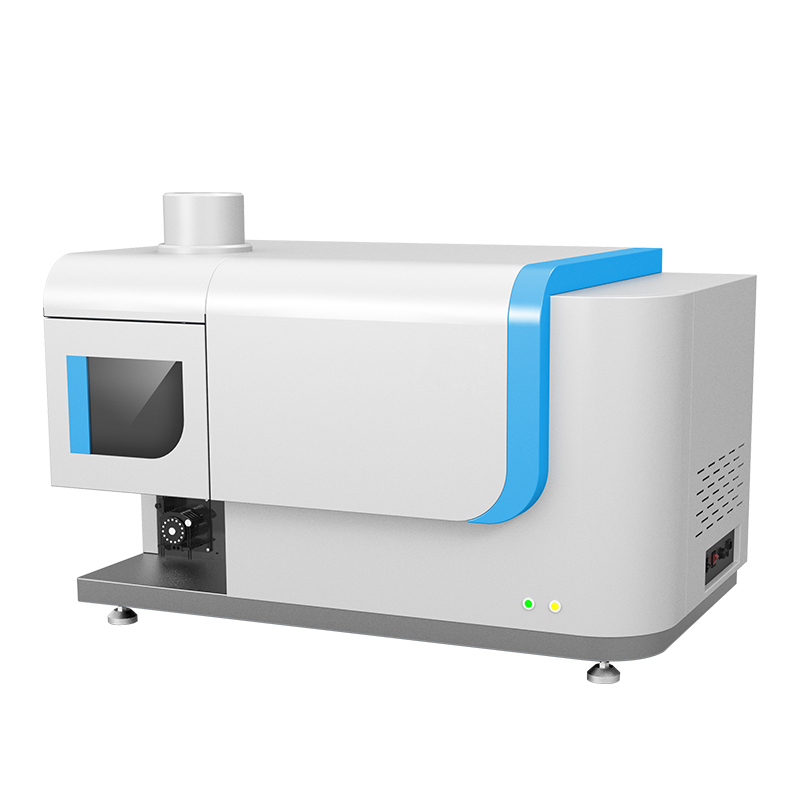
HM Instruments offers three ICP-OES (Inductively Coupled Plasma Optical Emission Spectrometry) spectrometer models in its current product line. Each model is built around a different combination of optical design, detector technology, and sample introduction configuration, targeting distinct application segments while sharing a common solid-state RF generator platform and software architecture. The following overview summarizes the primary positioning of each model.
HM-ICP1 — Petrochemical-Optimized Sequential ICP-OES
List Price: $39,000 USD
HM-ICP1 uses a Czerny-Turner 1000 mm focal length monochromator with a 3600 lines/mm grating and PMT (photomultiplier tube) detection. The instrument is equipped with a cryogenic spray chamber capable of -20°C operation, enabling direct injection of organic and hydrocarbon matrices without sample dilution. The PMT detector provides a very wide adjustable gain range and high single-channel sensitivity. HM-ICP1 covers the wavelength range of 190 to 500 nm in sequential scanning mode, and delivers spectral resolution of ≤0.005 nm. The RF generator operates between 800 and 1600 W at 27.12 MHz.
Primary application sector: Petrochemical, refined petroleum products, crude oil, organic solvent matrices.
HM-ICP2 — General-Purpose Simultaneous ICP-OES with CCD Detector
List Price: $48,000 USD
HM-ICP2 employs an echelle grating combined with a prism cross-disperser and a proprietary CCD array detector with approximately one million pixels. The full spectrum from 165 to 900 nm is acquired simultaneously, supporting multi-element analysis in a single plasma exposure. The three-stage thermoelectric cooled (TEC) detector operates at -45°C, minimizing dark current noise. The optical bench is thermostated at 35–36°C ± 0.1°C. Short-term precision is ≤0.5% RSD, and typical detection limits reach 0.1 μg/L for key elements. The RF generator range is 500–1600 W, providing flexibility for low-matrix aqueous samples and moderately complex matrices.
Primary application sector: Environmental monitoring, food safety, water quality, general industrial multi-element analysis.
HM-ICP3 — Research-Grade Simultaneous ICP-OES with CID Detector
List Price: $56,000 USD
HM-ICP3 is configured with the same echelle grating + prism optical system as HM-ICP2, but uses a CID (charge injection device) detector of the same type as those used in Thermo Fisher Scientific ICP-OES instruments. The CID provides non-destructive readout capability, inherent anti-overflow by device architecture, and a 2 ms minimum readout time. The optical bench is actively thermostated at 35 ± 0.1°C. The RF generator operates from 700 to 1500 W. Short-term precision is below 0.5% RSD, with typical detection limits in the 1–10 ppb range.
Primary application sector: Academic and industrial research, metallurgy, multi-sector reference laboratories, applications requiring the widest dynamic range and adaptive integration control.
2. Complete Specification Comparison Tables
2.1 Optical System Comparison
| Parameter | HM-ICP1 | HM-ICP2 | HM-ICP3 |
|---|---|---|---|
| Optical Design | Czerny-Turner monochromator | Echelle grating + prism cross-disperser | Echelle grating + prism cross-disperser |
| Focal Length | 1000 mm | 440 mm | 440 mm |
| Grating Type | Planar ruled, 3600 lines/mm | Echelle grating | Echelle grating |
| Wavelength Range | 190 – 500 nm | 165 – 900 nm | 165 – 900 nm |
| Spectral Resolution | ≤0.005 nm | ≤0.007 nm @ 200 nm | <0.007 nm @ 200 nm |
| Acquisition Mode | Sequential | Simultaneous (full spectrum) | Simultaneous (full spectrum) |
| Optical Bench Thermostat | Not applicable | 35–36°C ± 0.1°C | 35 ± 0.1°C |
2.2 RF Generator Comparison
| Parameter | HM-ICP1 | HM-ICP2 | HM-ICP3 |
|---|---|---|---|
| Generator Type | Solid-state | Solid-state | Solid-state |
| Operating Frequency | 27.12 MHz | 27.12 MHz | 27.12 MHz |
| Power Range | 800 – 1600 W | 500 – 1600 W | 700 – 1500 W |
| Impedance Matching | Automatic | Automatic | Automatic |
| Minimum Power (Low-Matrix Use) | 800 W | 500 W | 700 W |
| Maximum Power (High-Matrix/Refractory) | 1600 W | 1600 W | 1500 W |
2.3 Sample Introduction Comparison
| Parameter | HM-ICP1 | HM-ICP2 | HM-ICP3 |
|---|---|---|---|
| Nebulizer Type | Concentric | Concentric | Concentric |
| Spray Chamber | Extended (patented) | Extended (patented), separate-chamber | Extended (patented) |
| Cryogenic Cooling Option | Yes, -20°C | No | No |
| Organic Matrix Direct Injection | Yes | No (dilution/digestion required) | No (dilution/digestion required) |
| Peristaltic Pump | 5-channel, 16-roller | 5-channel, 16-roller | 5-channel, 16-roller |
2.4 Analytical Performance Comparison
| Parameter | HM-ICP1 | HM-ICP2 | HM-ICP3 |
|---|---|---|---|
| Short-Term Precision (RSD) | Published per method | ≤0.5% | <0.5% |
| Typical Detection Limit | Method-dependent (organic matrix) | 0.1 μg/L (element-dependent) | 1 – 10 ppb (element-dependent) |
| Dynamic Range | Wide (PMT gain-adjustable) | Wide (TEC-cooled CCD) | Wide (CID non-destructive readout) |
| Simultaneous Multi-Element | No (sequential) | Yes (full spectrum simultaneous) | Yes (full spectrum simultaneous) |
2.5 Software Feature Comparison
| Feature | HM-ICP1 | HM-ICP2 | HM-ICP3 |
|---|---|---|---|
| Spectral Library (emission lines) | 75,000+ | 75,000+ | 75,000+ |
| Full-Spectrum Acquisition | No | Yes | Yes |
| IEC Correction | Yes | Yes | Yes |
| Internal Standard Correction | Yes | Yes | Yes |
| Audit Trail (21 CFR Part 11) | Yes | Yes | Yes |
| Real-Time Plasma Camera | Yes | Yes | Yes |
| Retrospective Spectrum Query | No | Yes | Yes |
3. Detector Technology Deep Comparison: PMT vs CCD vs CID
The detector is the most consequential hardware differentiator among the three HM-ICP models. Each detector technology carries distinct advantages in specific analytical contexts. Understanding the operational differences enables informed selection.
3.1 Photomultiplier Tube (PMT) — HM-ICP1
A PMT is a vacuum electronic device that converts photons to electrons through the photoelectric effect and then amplifies the electron current through a cascade of dynodes. It detects a single wavelength at a time (point detector). In HM-ICP1, the PMT is scanned mechanically across wavelengths by rotating the grating.
Characteristics relevant to instrument selection:
Gain is adjustable by changing the bias voltage from -50 V to -1000 V, providing a continuously variable sensitivity range within a single element measurement. This is particularly useful when the same element must be quantified at both trace and high concentration levels across different sample types.
Since only one wavelength is measured at a time, extremely long integration times can be applied per wavelength, improving signal-to-noise ratio for very low concentrations without the constraint of multi-element simultaneous integration budgets.
The 1000 mm focal length Czerny-Turner spectrometer paired with the 3600 lines/mm grating delivers ≤0.005 nm resolution — finer than the ≤0.007 nm of the echelle systems — allowing resolution of very closely spaced spectral interferences that are commonly encountered in hydrocarbon matrix samples where background emission from molecular bands (CN, C2, CH) is high.
PMT does not support simultaneous multi-element detection; each element requires a separate scan step. Total analysis time per sample increases proportionally with the number of elements measured.
3.2 CCD Array Detector — HM-ICP2
A CCD (charge-coupled device) is a two-dimensional silicon photodetector array. Photons generate electron-hole pairs in each pixel; the accumulated charge represents the integrated photon flux over the exposure period. At the end of integration, charge is shifted sequentially down columns and out through a readout register.
Characteristics relevant to instrument selection:
The proprietary CCD in HM-ICP2 has approximately one million pixels covering the full 165–900 nm range simultaneously. Every element's emission lines are captured in a single plasma exposure event, regardless of how many elements are in the analytical method. Analysis time per sample is determined by plasma integration time, not by the number of elements.
Three-stage TEC cooling to -45°C suppresses dark current to a level negligible relative to shot noise for typical analytical integration times, enabling low-noise long-integration operation for trace element analysis.
Anti-blooming design prevents charge overflow from high-intensity lines (e.g., matrix elements such as calcium or iron at high concentration) from contaminating adjacent pixels where trace element lines are located.
The standard CCD readout is destructive: the charge is cleared after each readout event. Integration time must therefore be pre-set or estimated based on prior knowledge of sample concentration levels. This requires calibration runs or pre-analysis screening to set appropriate integration parameters for mixed-concentration sample sets.
3.3 CID Detector — HM-ICP3
A CID (charge injection device) is also a silicon two-dimensional array. Unlike a CCD, each CID pixel has individual addressing: any pixel can be read or reset independently without disturbing adjacent pixels.
Characteristics relevant to instrument selection:
Non-destructive readout: accumulated charge in each pixel can be read without erasing it. The software can monitor integration progress in real time and stop integration for any pixel group that reaches a set threshold. This allows simultaneous optimization of integration time for both high-concentration and trace-concentration elements in the same sample measurement — the high-intensity lines are read early and the trace lines continue integrating.
Inherent anti-overflow: when a CID pixel reaches full-well capacity, excess charge is injected into the substrate by device architecture. No external anti-blooming circuit is required, and the overflow protection is continuous and automatic rather than requiring a pre-set integration limit.
The 2 ms minimum readout time supports rapid detector scanning, useful for transient signal applications such as electrothermal vaporization or flow injection introduction methods.
The CID used in HM-ICP3 is of the same device type as those in Thermo Fisher Scientific ICP-OES instruments (notably the iCAP series), meaning that its fundamental performance characteristics — quantum efficiency, well depth, read noise, and anti-overflow behavior — have been validated in a broad range of published analytical applications across geochemistry, metallurgy, environmental science, and pharmaceutical analysis.
3.4 Summary Detector Comparison Table
| Characteristic | PMT (HM-ICP1) | CCD (HM-ICP2) | CID (HM-ICP3) |
|---|---|---|---|
| Simultaneous multi-element | No | Yes | Yes |
| Wavelength range coverage | 190–500 nm (scanned) | 165–900 nm (all at once) | 165–900 nm (all at once) |
| Pixel count | Single channel | ~1,000,000 | ~1,000,000 |
| Adjustable gain | Yes (bias -50 to -1000 V) | No (fixed TEC cooling) | No (variable integration time) |
| Detector cooling method | N/A | 3-stage TEC, -45°C | Thermoelectric |
| Non-destructive readout | N/A | No | Yes |
| Inherent anti-overflow | N/A (gain adjustment) | No (designed anti-blooming) | Yes (by CID architecture) |
| Minimum readout time | N/A | Not specified | 2 ms |
| Reference device lineage | Hamamatsu R212/R928 | Proprietary HM design | Same type as Thermo Fisher |
4. Sample Introduction System Comparison
The sample introduction system converts liquid samples into an aerosol suitable for transport into the plasma. All three models share the concentric nebulizer and 5-channel 16-roller peristaltic pump as common components. The critical difference lies in spray chamber design and the availability of cryogenic cooling for organic matrices.
4.1 HM-ICP1: Cryogenic -20°C System for Organic Matrices
HM-ICP1 is specifically configured for the direct analysis of organic and hydrocarbon-based matrices. The cryogenic spray chamber operates at -20°C, condensing volatile organic solvent vapors before they reach the plasma torch. This design enables the following analytical capabilities that are not available on HM-ICP2 or HM-ICP3 without additional sample preparation:
Direct injection of petroleum distillates (naphtha, kerosene, diesel, heating oil, lubricating base oils) dissolved or diluted in organic solvents such as xylene, MIBK, or isoparaffin mixtures.
Analysis of metals in crude oil, residual fuel oil, and other high-boiling hydrocarbon fractions after dilution to appropriate viscosity.
Compliance with test methods such as ASTM D4951, ASTM D5708, ASTM D7691, and related IP standards for metals in petroleum products, where direct organic matrix introduction is specified.
Reduced sample dilution factors compared to aqueous-matrix analysis approaches, preserving detection sensitivity for trace metals in complex petroleum matrices.
The cryogenic spray chamber is an integrated component of the HM-ICP1 system and does not require separate laboratory cooling equipment. The cryogenic unit is thermoelectrically cooled and is software-controlled as part of the method configuration.
4.2 HM-ICP2: Separate-Chamber Design for General Use
HM-ICP2 uses a separate-chamber configuration where the nebulizer housing and the spray chamber are physically distinct modules. This provides independent control of the gas flow dynamics around the nebulizer tip and within the aerosol classification chamber, allowing optimization for different sample viscosities and salt concentrations. The separate-chamber approach is well suited for the range of aqueous matrices typically encountered in environmental water analysis, food sample digests, pharmaceutical solutions, and industrial process waters.
For organic matrix samples, HM-ICP2 requires aqueous-phase sample preparation (e.g., acid digestion, wet ashing, or closed-vessel microwave digestion) to transfer metals from the organic phase into an aqueous matrix prior to analysis. This adds preparation time but is standard practice in many regulated environmental and food analysis workflows.
4.3 Common Components: Patented Extended Spray Chamber and 16-Roller Pump
All three models use HM Instruments' extended spray chamber with patented internal geometry, which provides finer aerosol droplet size classification and more uniform aerosol delivery to the torch compared to standard Scott-type chambers. The 5-channel 16-roller peristaltic pump provides low-pulsation liquid delivery, reducing baseline noise that would otherwise arise from flow pulsation in the nebulizer feed line. These shared components ensure that fundamental signal stability and precision are consistent across all three models.
5. Software Feature Comparison
All three models run on the HM Instruments common software platform, which provides a unified interface for instrument control, method management, data processing, and reporting. Key software capabilities and their availability across models are detailed below.
Spectral Library: The 75,000+ line spectral database is present across all three models. It supports interference identification during method development and allows the operator to select from multiple analytical lines per element. For each line, the library provides the nominal wavelength, relative intensity, and a list of known interferences from other common elements.
Full-Spectrum Acquisition: Available only on HM-ICP2 and HM-ICP3, which use two-dimensional array detectors. In full-spectrum mode, the complete 165–900 nm emission spectrum is stored for each sample measurement. This stored spectrum can be reopened and any element or spectral region re-examined without re-running the sample. This is particularly valuable for quality review, regulatory re-analysis, and retrospective investigation of matrix interference effects.
Inter-Element Correction (IEC): Available on all three models. IEC factors are determined during calibration and applied automatically during sample analysis. The software maintains a correction matrix for user-defined element/wavelength pairs and updates factors when the calibration is refreshed.
Internal Standard Correction: Available on all three models. One or more elements can be designated as internal standards. The software continuously compares internal standard signals during a run and applies a real-time correction factor to all analyte signals to compensate for changes in nebulization efficiency, plasma conditions, or matrix suppression effects.
Audit Trail: Available on all three models. The audit trail records all user actions with timestamp and user ID. It is designed to support compliance with 21 CFR Part 11 (FDA electronic records for regulated pharmaceutical and food environments) and ISO 17025 data integrity requirements.
Real-Time Plasma Camera: Available on all three models. The CCD camera feed provides a live view of the plasma torch during operation, enabling visual monitoring of plasma stability and torch condition without opening the instrument enclosure. The camera feed is logged alongside the analytical run record.
6. Selection Decision Tree
The following decision framework is structured around application type, budget, and key analytical requirements. Work through each branch relevant to your laboratory context to arrive at a model recommendation.
Branch A: Primary Application — Petrochemical and Hydrocarbon Matrices
Does your laboratory analyze elements in petroleum products, crude oil, refined fractions, lubricants, or other organic/hydrocarbon matrices where direct organic matrix introduction is required or preferred?
Yes, and organic direct injection is required (ASTM D4951, D5708, etc.): HM-ICP1 is the configured solution. The -20°C cryogenic spray chamber is designed for this purpose. The 1000 mm Czerny-Turner monochromator provides ≤0.005 nm resolution to resolve spectral interferences from hydrocarbon background emission. Budget entry point is $39,000.
Yes, but aqueous sample preparation (digestion) is acceptable: All three models can be used following acid digestion sample preparation. If broad elemental coverage (165–900 nm) and simultaneous analysis are also priorities, HM-ICP2 or HM-ICP3 may be considered.
Branch B: Primary Application — Environmental Monitoring and Water Analysis
Does your laboratory conduct elemental analysis of drinking water, wastewater, surface water, groundwater, or soil/sediment digests under regulatory methods (EPA 200.7, EPA 6010, ISO 11885, etc.)?
Primary need is simultaneous multi-element analysis, broad wavelength coverage, and detection limits at 0.1 μg/L level: HM-ICP2 is appropriate. The CCD-based simultaneous system with 165–900 nm coverage supports all common environmental EPA/ISO methods. RSD ≤0.5%, detection limit 0.1 μg/L. Budget: $48,000.
Same requirements but with need for adaptive integration control and widest dynamic range for mixed-concentration environmental matrices: HM-ICP3 with CID detector provides non-destructive readout for real-time integration management. Budget: $56,000.
Branch C: Primary Application — Metallurgy and Alloy Analysis
Does your laboratory analyze metal alloys, steels, non-ferrous metals, or process solutions from metal manufacturing, where major and trace element co-analysis in high-concentration matrices is requir
Address of this article:https://www.kjhm.net/news/icp-oes-spectrometer-model-comparison-selection-guide.html
 Related News
-
28 / 2026-05
Reliable Aerosol Photometer Manufacturers — HM Instruments Brand Recommendation
Learn more
-
08 / 2026-05
Contact Angle Goniometer Value Analysis-HENGMEI ZHIZAO vs Intl Brands
Learn more
-
15 / 2026-06
Reliable Sterility Testing Pump Manufacturers & Brand Guide
Learn more
-
08 / 2026-06
HM Instruments Portable Water Quality Analyzer Brand Recommendation
Learn more