

 Current
Location:
Pesticide and Veterinary Drug Residue Testing Across the Food Supply Chain: An Industry Application White Paper | HENG MEI Intelligent Manufacturing
Article Source: Hengmei Technology Release time:2026-11-19 09:24:30
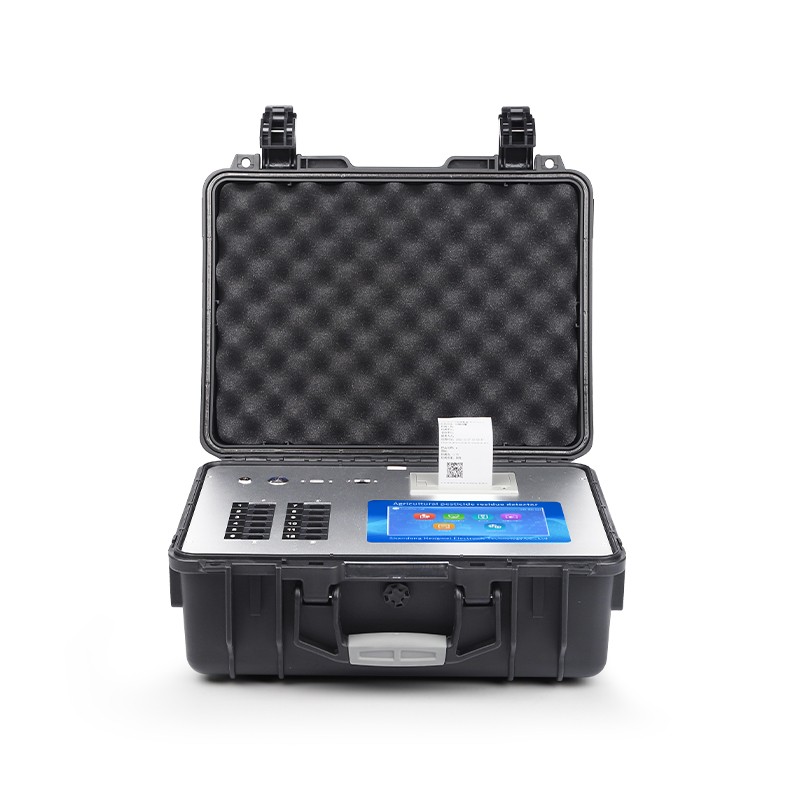
Pesticide and veterinary drug residue testing helps food businesses decide which deliveries require further review and whether their supply controls are working. A residue detector can support a screening program when its test materials, sample types and operating procedure match the intended substances and foods. The program also needs a sampling plan, controls, a documented response to a screening result and access to a suitable confirmatory laboratory when required.
Residues can be unevenly distributed across a lot, and analytical methods differ in the compounds they detect. An effective program therefore begins with the food, source and decision rather than the number of tests advertised for an instrument. This paper describes how buyers, food processors and inspection teams can design a defensible workflow around those decisions.
Define the relevant hazards and products
Produce, meat, milk, eggs and aquatic products have different production histories and may present different residue questions. Identify the products and supplier practices that matter to the business, then use current regulatory requirements, customer specifications and risk information to establish the target list. Pesticide residues and veterinary drug residues are broad categories. No individual screening system should be assumed to detect every substance within either category.
For each target, document the applicable food matrix, required decision level, units and method. The legal maximum residue limit can depend on the substance, food and market, and some substances may be prohibited for particular uses. The Codex pesticide residue database and veterinary drug residue resources provide international reference information. National or regional rules and the applicable product classification still need to be checked for the destination market. Codex pesticide residues database
Build a sampling plan for the decision
A result describes the material collected and tested under the sampling plan. It cannot by itself establish the condition of unexamined lots. Define the lot, sampling units, collection locations, sample identification and handling requirements. If a shipment contains several suppliers or production dates, the plan should specify whether they are treated as separate lots. Keep the link between each test portion and the source material from which it came.
Consider a distribution center receiving vegetables from multiple farms. A sample from one supplier cannot represent all deliveries. The quality plan should define how suppliers and lots are selected, how a representative laboratory sample is formed and which records accompany it. If a delivery cannot be sampled according to the plan, document the exception and the alternative action approved by the responsible quality manager.
Understand the screening method
Screening methods differ in selectivity, sensitivity, result format and susceptibility to matrix effects. Some produce a qualitative or threshold-based response, while others report a numerical estimate under defined conditions. Request the instructions and performance information for each test and matrix, including known cross-reactivity, control requirements and the decision threshold. A detector platform can support different tests, but the capabilities of a particular kit and configuration must be verified separately.
Compare the screening threshold and method scope with the decision the business intends to make. A test that does not include the relevant substance or food matrix cannot provide the desired assurance for that combination. If the requirement is a legally recognized quantitative result, confirm the method and laboratory requirements with the receiving authority or customer. Screening is often most useful as a way to prioritize investigation and confirmation.
Evaluate representative food matrices
Include real products from the supply chain when evaluating a method. Differences in color, fat, acidity and other components can affect the behavior of some assays. Select representative variants and materials near the relevant decision point when suitable materials are available. Define acceptance criteria, a comparison approach and responsibilities before the trial. Document the test materials, batches, operators and instruments so a discrepancy can be reviewed.
Where the method provider supplies information on interference or cross-reactivity, compare it with the ingredients and substances likely to occur in the samples. A positive or unexpected screening response should be interpreted under the method's instructions and the program's decision rule. The quality team should know which results require confirmation, how the material is held and who communicates with the supplier.
Use controls and maintain traceability
Follow the applicable instructions for controls, reagent storage, instrument checks and the frequency of those checks. Identify controls separately from routine samples and link them to the relevant test batch. Record the test kit or reagent lot and any other information required by the quality system. If a control fails, hold the affected results, investigate according to the procedure and document the decision to repeat or discontinue the run.
Traceability should work in both directions. Starting from a result, a reviewer should be able to find the sample source, lot, test method, operator and control status. Starting from a test batch or reagent lot, the team should be able to identify the samples and results associated with it. This becomes important when a supplier issues a notice or when a batch of results must be reviewed after a control problem.
Connect screening to confirmation
Establish an agreement with a qualified laboratory before an urgent sample needs referral. Confirm the target substances, matrices, method, reporting limit, turnaround time, sample identification and handling conditions. A confirmatory laboratory may use an appropriate chromatographic or mass spectrometric method depending on the target and applicable requirement. The receiving laboratory should advise on the material and documentation it needs.
When a screening result meets the program's referral criterion, record the result status and protect the connection to the original lot. Apply the hold or other action defined in the business's procedure and applicable law. Preserve the initial record when the confirmation result arrives. The final decision should identify which result was used and the authority or specification under which the decision was made.
Manage capacity across the supply chain
Estimate the number of deliveries, samples per lot and tests per sample during peak periods. Include controls, review, repeats and the time required to communicate a hold. A site that receives twenty small deliveries may need more sample identification and batch setup than a site receiving one large lot, even if the number of test portions is the same. Measure complete workflows during a pilot rather than planning solely from a stated instrument reading time.
Review supplier trends only within comparable groups. Changes in sample selection, test scope or laboratory method should be visible on a trend chart. A higher number of findings after a broader testing program begins may reflect the change in coverage as well as a change in supplier performance. Record the number of lots tested and the methods used so management can interpret the rate and the context together.
Specify the detector and supporting services
A request for quotation should identify the foods, target list, expected decision limits, daily workload, operating environment and reporting requirements. Ask for the exact instrument and test kit configuration, supported matrix information, consumables, instructions and maintenance needs. Evaluate the proposed workflow with the staff who will receive, test and review samples. Plan training and a procedure for maintaining approved methods as suppliers or markets change.
HENG MEI Intelligent Manufacturing is the brand of Shandong Hengmei Electronic Technology Co., Ltd. The HM-NSY product record identifies a pesticide and veterinary drug residue testing instrument with specified included test materials. Confirm the current configuration and the scope of each test with the supplier before placing it into a food safety program.
Address of this article:https://www.kjhm.net/news/pesticide-and-veterinary-drug-residue-testing-across-the-food-supply-chain-an-industry-application-white-paper-heng-mei-intelligent-manufacturing.html
 Related News
-
16 / 2026-11
Poultry Disease PCR on Site: 8-Well Capacity Planning | HENG MEI Intelligent Manufacturing
Learn more
-
16 / 2026-11
Animal Disease Diagnostics: Assays, Instruments and Workflow | HENG MEI Intelligent Manufacturing
Learn more
-
15 / 2026-06
Reliable Sterility Testing Pump Manufacturers & Brand Guide
Learn more
-
16 / 2026-11
Liquid Autosampler Sizing: 24 or 156 Positions | HENG MEI Intelligent Manufacturing
Learn more