

 Current
Location:
Colloidal Gold Reader Model Comparison for HM-JD01, HM-JD02, HM-JD03 and HM-JD04 | HENG MEI Intelligent Manufacturing
Article Source: Hengmei Technology Release time:2026-11-20 08:53:31
Choose a colloidal gold reader by starting with card format and the number of cards ready at the same time. The HM-JD01, HM-JD02, HM-JD03 and HM-JD04 from HENG MEI Intelligent Manufacturing cover different handling needs. A single-card field workflow, a bench processing many individual cards and a lab using combination panels require different holders and scheduling. Confirm the supplied card geometry and software package for the exact configuration on the order.
HM-JD01 for individual field checks
The HM-JD01 is a handheld single-channel configuration. Evaluate it when staff carry the reader to individual sampling points and need to handle one compatible card at a time. Include identification, assay development, result review and transfer back to the central record when estimating report time. Staff who travel between sites should also check power and storage requirements for the reader and its consumables.
HM-JD02 for groups of compatible individual cards
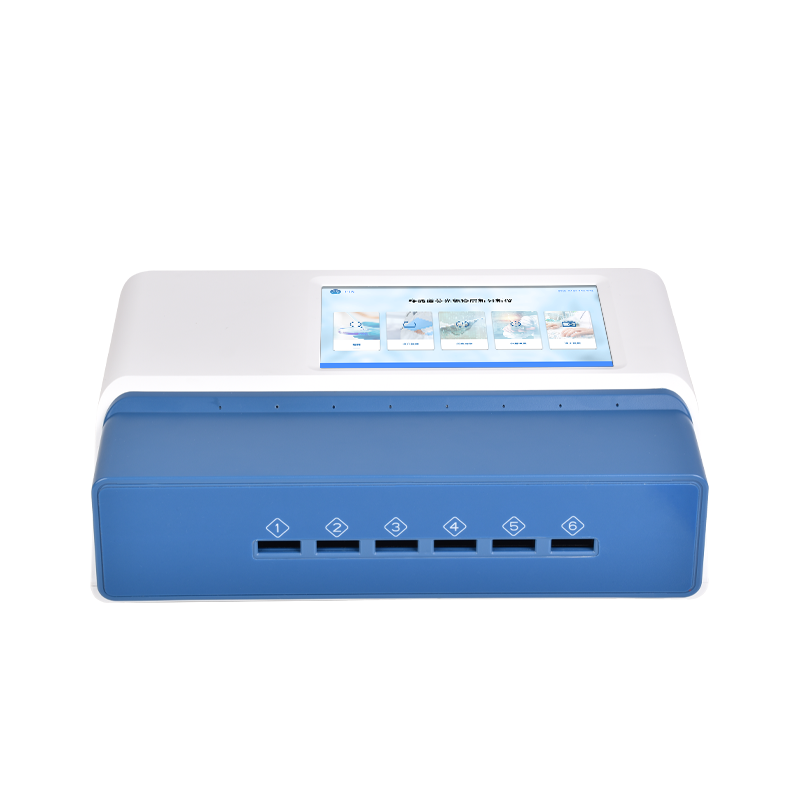
The HM-JD02 product configuration lists a seven-inch screen and six channels. This format is suitable to evaluate when receiving multiple compatible single cards at a bench. Check whether the specific card dimensions fit and how the instrument identifies each channel. The number of slots should be compared with the number of cards reaching the reading window together. A card whose reading window begins later still needs to be scheduled independently.
HM-JD03 for mixed card formats
The current configuration lists positions for single, double, triple and quadruple card formats. This is a useful distinction for labs whose approved test menu contains multiple panel constructions. The combination panel still needs a compatible assay and supported analysis program. Ask the supplier to demonstrate the actual panel the lab uses, including how individual targets are shown and how a failed control is displayed.
HM-JD04 for single-card throughput with a triple-card position
The product configuration lists six single-card positions and one triple-card position. Evaluate that layout when individual cards make up most of the workload and a supported triple panel is also used. A laboratory that expects other panel formats should check the exact offered holder and software. Similar enclosure designs are insufficient evidence of identical card support.
Compare by the daily card mix
Suppose a lab processes twelve individual cards in one window. A six-position layout has two groups of six during the reading stage, provided all cards and their development windows are compatible. The same twelve cards may be distributed across the shift at a remote receiving point, where a single-channel reader could be adequate. Document actual arrivals, preparation, control use and data review. This makes it possible to evaluate workflow time without inferring it from slot count alone.
Ask how the application identifies the program for each target. The reading hardware and the installed test menu are separate purchase details. A research reader or empty application profile may need a configured method before routine food testing. Verify the assay, lot handling, reporting units, calibration and known limits using the actual cards in the lab's quality plan.
Compare panel capacity with the real reading window
The number of physical positions gives the laboratory only part of the scheduling picture. Suppose six single cards are ready together and all use the same approved reading window. A compatible six-position system can be evaluated on that group. If three cards mature later under different instructions, build a second group even when the first leaves positions unused. Time stamps, assay rules and the operating interface determine effective capacity as much as the layout shown in a catalog.
A multi-format system also requires a realistic panel mix. If the approved program uses two kinds of multi-strip housing and individual tests, list each format, its expected frequency and the staff who use it. Check the physical openings and the software assignment separately. In a test with four analytes, the laboratory should be able to retrieve four linked responses under the same sample identifier and see which channel or position produced each.
Use a compatibility table before asking for prices
Create one row per approved card or assay. Record its dimensions, target, intended food matrix, reading window and current interpretation. Ask the supplier to identify the compatible HM-JD model, holder and software package for each row. An empty entry in that response becomes a question to resolve during the trial. This is particularly valuable when a procurement specification refers only to colloidal gold testing and the consumable list is maintained separately by the lab.
Where a current procedure uses visual interpretation, ask how the proposed system maps its numeric or classified output to that procedure. If the reader reports a ratio, determine whether the quality program will retain the ratio as an observation or use a method-authorized conversion. Demonstrate the retrieval of an invalid or borderline result. Staff should know what will appear in the final report and what status needs a follow-up.
Consider training, redundancy and location
A small satellite laboratory may choose a handheld HM-JD01 for occasional checks, while a central station may need a six-position format for repeatable groups. Using different models in the two locations can work when the matrix and approved methods have been verified for each. When results feed into one record, make sure each entry identifies the device or method so a reviewer can understand differences between stations.
If a reader is essential to dispatch or receiving, ask how work continues during service or a consumable delay. Check whether a second compatible reader can accept the same approved cards and produce records that the laboratory can review. A repair arrangement should identify what to send, who provides method support and how the instrument will be checked when it returns. Compare these terms in the quotation along with equipment capacity and purchasing cost.
Evaluate data retrieval using an actual shift
Set up a trial in which samples enter at different times and one card needs review. Ask the operator to log each sample, associate its test, record control status and find one result from earlier in the shift. Then hand over the open case to a second operator. If the incoming analyst has to ask which slot or panel belongs to a sample, the proposed record process is incomplete even if the reader produced a valid observation.
Compare how long results take from identified sample to reviewed record. The site may discover that manual entry of identifiers, reviewing the report or sorting mixed cards takes more time than reading itself. Workload measurements are also useful for deciding between the six individual positions of HM-JD02 and the mixed format handling offered by HM-JD03 or HM-JD04. Confirm any export or transfer function against the quoted version.
Compare cost per usable result
Include consumable use for controls and repeats, procurement of any holders and the time to maintain the assay menu. Where the test list changes often, ask how an approved setup is added, versioned and checked. A lower purchase price has a different value in a site that reads a few single cards each week from one that needs several reportable groups per shift. Price the method and workload you expect and revisit the estimate after the acceptance trial.
Commission the chosen model with your cards
Create a batch of representative cards, including routine controls and an invalid or out-of-range example where appropriate. Verify that staff can locate each result by sample and card identity. Compare results with the agreed procedure and record deviations before accepting the system. A trial should demonstrate the instrument, holders and software as a complete package.
Shandong Hengmei Electronic Technology Co., Ltd. supplies the HM-JD series under HENG MEI Intelligent Manufacturing. Provide the card dimensions, panel formats, assay list and peak workload when requesting a recommendation. Verify the offered configuration in writing and retain it with the laboratory's method records.
Address of this article:https://www.kjhm.net/news/colloidal-gold-reader-model-comparison-for-hm-jd01-hm-jd02-hm-jd03-and-hm-jd04-heng-mei-intelligent-manufacturing.html
 Related News
-
28 / 2026-05
Aerosol Photometer FAQ — HM Instruments HM-AP1 Technical Questions
Learn more
-
05 / 2026-06
Coefficient of Friction Tester Manufacturers & Brand Guide
Learn more
-
29 / 2025-09
Triple Advantages of Rice Freshness Testers:Efficiency, Accuracy, Convenience
Learn more
-
19 / 2026-11
Milk Somatic Cell Counters in Dairy Quality Management: An Industry Application White Paper | HENG MEI Intelligent Manufacturing
Learn more