


 Current
Location:
Milk Somatic Cell Counters in Dairy Quality Management: An Industry Application White Paper | HENG MEI Intelligent Manufacturing
Article Source: Hengmei Technology Release time:2026-11-19 09:17:01
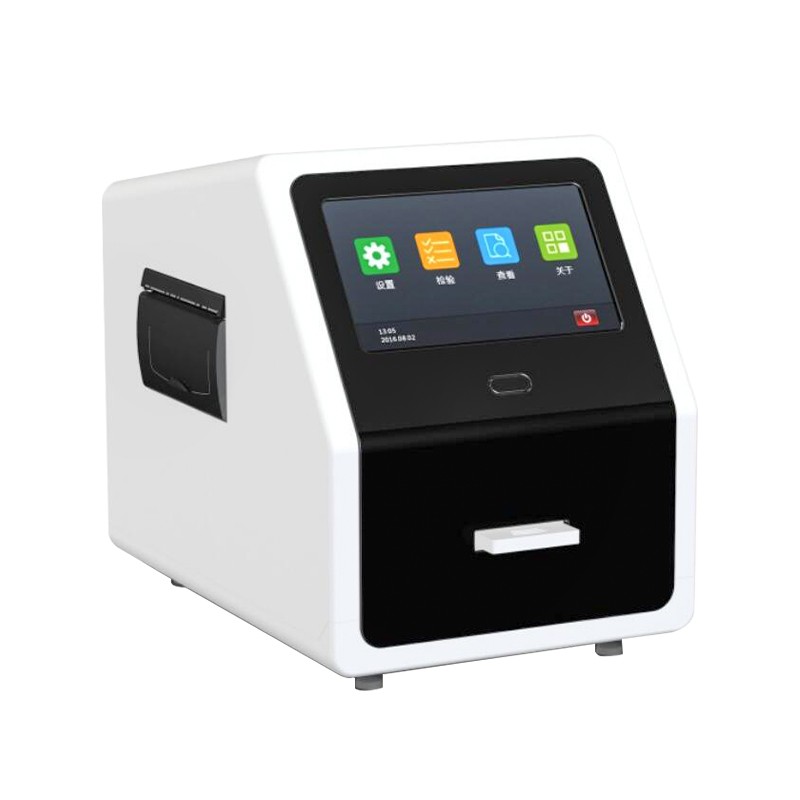
Milk somatic cell count gives dairy teams a way to monitor udder health and milk quality over time. A milk somatic cell counter measures a defined sample and reports a count that can support herd management, milk collection and laboratory review. The value is most useful when the sampling point, sample handling, measurement procedure and decision rule are all known. A count from an individual animal and a count from a bulk tank answer different questions and should be interpreted in their own context.
This white paper examines where somatic cell counting fits in the dairy supply chain, how sampling and controls affect the meaning of a result, and what buyers should consider when introducing a routine counting program. Veterinary decisions, milk payment terms and regulatory acceptance depend on the applicable local requirements and the advice of the responsible professionals.
What a somatic cell count represents
Somatic cells in milk include cells associated with the animal's immune response and cells from udder tissue. Counts can vary between animals and over time. An elevated count can be associated with udder inflammation, including mastitis, but a count alone does not identify a particular organism or establish the cause of a health problem. A veterinarian can combine the result with examination, herd history and other diagnostic information when deciding on follow-up.
Counts may be expressed as cells per milliliter. Check the unit and any scaling shown on the instrument, worksheet or laboratory report before entering a value into a herd record. A value displayed in thousands of cells per milliliter must be converted consistently when compared with a report expressed directly in cells per milliliter. Record the original result as well as any converted value so a later reviewer can verify the calculation.
Individual and bulk samples serve different decisions
An individual animal sample can help identify a change in that animal's count and support a discussion with the herd's veterinarian. A bulk tank sample represents combined milk under the conditions of collection and mixing. It can help a dairy monitor the milk delivered from the tank, but it does not identify which individual animal contributed to the measured level. A collection point may use bulk results to monitor trends and determine whether additional farm-level investigation is needed.
Define the sampling point and purpose in the procedure. A routine herd trend should use a consistent identification system and a documented collection schedule. A bulk collection program should specify how samples are identified, handled and related to a delivery. When results are compared across sites or laboratories, confirm that the sample type, collection conditions and reporting units are comparable. Differences in the population represented by each sample may explain changes that appear surprising on a single chart.
Preserve sample identity and condition
Before collection, prepare a container and label that can remain legible throughout handling. Record the animal or tank identifier, collection date and time, collector and any information required by the laboratory. Follow the applicable method and collection instructions for mixing, sample volume, storage, transport and any permitted preservative. These conditions should be agreed with the testing laboratory rather than improvised after the sample reaches the bench.
When a sample arrives, inspect the identification and documented condition before testing. If the container is damaged, the identity cannot be reconciled or the handling history falls outside the procedure, record the exception and apply the laboratory's acceptance rule. A repeat measurement cannot resolve an uncertain sample identity. Depending on the decision and available material, the appropriate response may be to request another sample and document the reason.
Understand the counting method
Different somatic cell counting systems use different measurement principles and sample handling workflows. The HM-TXB somatic cell counter is described in the product information as using fluorescence imaging with individual cell imaging and a dual-chamber review. When comparing equipment, ask the supplier for the current operating instructions, applicable sample types, consumables and performance information for the offered configuration. Evaluate the entire process, including preparation, measurement, quality control and result recording.
Method choice depends on the intended use. A farm seeking a rapid internal trend can evaluate a routine counter against its herd management needs. A laboratory issuing results for a contractual or regulatory purpose must check the required method, performance criteria and recognition in its jurisdiction. ISO 13366-2 addresses guidance on the operation of fluoro-opto-electronic counters for somatic cell counting in milk. Confirm the edition and applicability with the laboratory responsible for the report. ISO 13366-2
Make quality control part of the routine
Establish a schedule for the controls and instrument checks specified by the method, manufacturer and laboratory quality plan. Assign each control a clear identity and retain its result with the relevant test period or batch. The procedure should define acceptance criteria and the action to take when a control is outside those criteria. Staff should know which results to hold, who to notify and how the equipment returns to use after the issue is resolved.
Repeatability can be examined by measuring suitable material more than once under defined conditions. A comparison between two independently handled samples also includes variation introduced before measurement. These exercises answer different questions. Document the sample, timing, operator, equipment and acceptance criteria for the comparison. If a discrepancy occurs, review the sample condition and handling record along with the instrument and control records before deciding what action is required.
Use trends without hiding important differences
A single result can be useful as a trigger for review, while a sequence of comparable results can show whether a change persists. Plot individual animal results separately from bulk tank results and label the sampling dates. Include changes in collection procedure or laboratory method on the chart. Avoid treating a missing sample as a zero, and record when an animal or tank was unavailable for testing.
For illustration, a herd manager might see that one animal's recorded count is higher than its previous values while the bulk tank trend remains stable. That pattern can justify checking the animal's record and discussing follow-up with the veterinarian. If the bulk trend rises across several collections, the review may need to include the contributing animals, sample collection and tank records. The action threshold should come from the herd plan, buyer agreement or local rules relevant to the decision.
Plan capacity and the cost of a result
Estimate the number of samples per day, the peak batch size and the time available between collection and decision. Include controls, repeat measurements, setup and record review. If a farm tests a group of animals on one morning each week, it has a different peak workload from a laboratory receiving the same number of samples evenly over five days. Test a representative sequence during evaluation and measure both elapsed time and staff time.
Include consumables, training, maintenance and any external comparison or confirmation testing in the cost estimate. Ask how results are stored or transferred and whether the output contains the identifiers needed by the herd record. A quick reading is less useful if staff must retype results from several unlabelled printouts. Review the proposed process with the person responsible for data entry as well as the operator.
Introduce a counter with a defined acceptance plan
Before routine use, define the sample types, control schedule, comparison materials, acceptance criteria and staff responsibilities. If the new system will replace an established method, run an agreed comparison with representative samples across the relevant range. Record any handling differences and resolve discrepancies according to a documented process. Keep the evaluation results with the equipment and method records.
HENG MEI Intelligent Manufacturing is the brand of Shandong Hengmei Electronic Technology Co., Ltd. For an HM-TXB milk somatic cell counter inquiry, share whether the application involves individual raw milk samples, bulk samples or both, along with the expected workload and reporting requirements. The supplier and laboratory can then review the proposed configuration against the actual dairy workflow.
Address of this article:https://www.kjhm.net/news/milk-somatic-cell-counters-in-dairy-quality-management-an-industry-application-white-paper-heng-mei-intelligent-manufacturing.html
 Related News
-
09 / 2026-11
Animal Disease Tester Brands Compared: IDEXX, Bio-Rad, HENG MEI
Learn more
-
21 / 2025-11
Rice Heavy Metal Detector ( HM-FZ1) Product Knowledge Graph White Paper
Learn more
-
16 / 2026-11
Airborne Microbial Sampler Selection Guide | HENG MEI Intelligent Manufacturing
Learn more
-
28 / 2024-04
What Can The Soil Nutrient Detector Be Measured.
Learn more