

 Current
Location:
Food Sample Preparation Equipment for Rapid Testing: An Industry Application White Paper | HENG MEI Intelligent Manufacturing
Article Source: Hengmei Technology Release time:2026-11-19 09:15:24
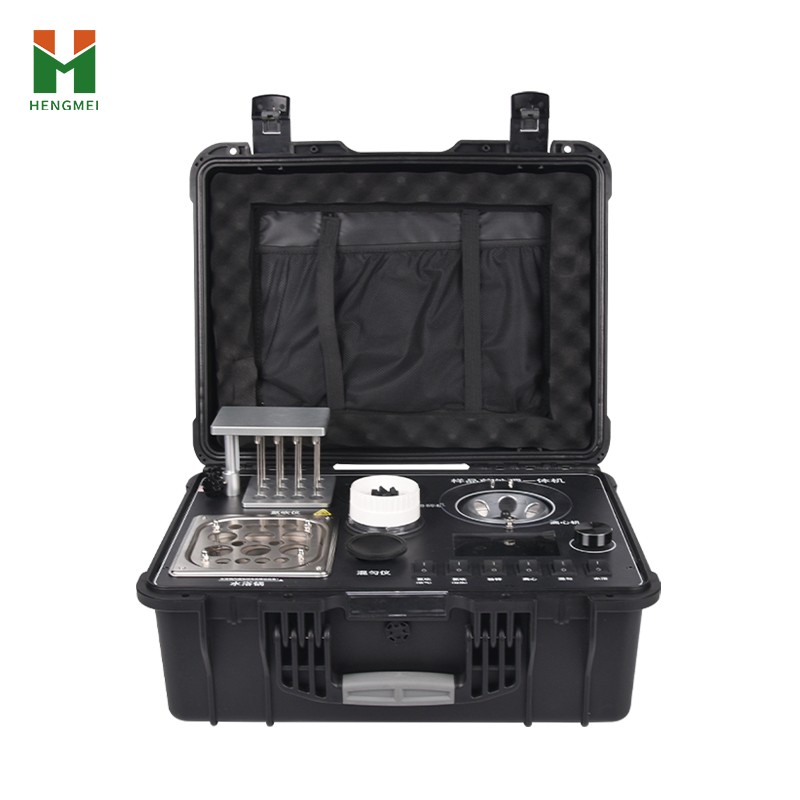
Food testing decisions depend on more than the instrument that produces the final reading. The way a sample is identified, mixed and prepared can affect the portion presented to the test and the confidence a laboratory places in the result. Integrated food sample preparation equipment brings several preparation functions into one working area. It can help a team organize routine work when the selected configuration fits the validated method, sample volume and working environment.
Food producers, inspection laboratories and mobile testing teams all face the same practical question. How can staff process different sample types consistently while keeping enough information to investigate an unexpected result? This white paper examines the points at which preparation affects a testing program, the conditions a laboratory should consider when selecting equipment, and the records needed to connect preparation with a reportable result.
Where preparation fits in a food testing program
A typical testing chain begins with a decision about the lot to be examined. Staff collect and identify material, obtain a laboratory sample and select a test portion according to the applicable procedure. They then prepare that portion for a specific measurement, perform the test, review controls and release a result. Each stage addresses a different source of variation. The final instrument cannot recover information lost when the sample is mislabeled or an unrepresentative portion is taken.
Preparation requirements depend on the substance, food matrix and analytical method. Leafy produce, powdered ingredients and fatty foods do not necessarily behave alike. A step useful for one assay may be unnecessary or unsuitable for another. Laboratories should map the approved method before choosing equipment and should check sample compatibility, operating limits and accessories with the supplier. The equipment setup should support the laboratory procedure as written and any change should be evaluated under the laboratory's quality system.
Managing variation in heterogeneous foods
Food lots often contain real differences between pieces, layers or containers. A test of a single portion provides information about that portion and the sampling design used to select it. Consider a delivery composed of multiple crates of produce. A laboratory that samples only the top crate has limited information about the rest of the delivery. A documented sampling plan, with locations and a method for forming the laboratory sample, makes a later result easier to interpret.
Within the laboratory sample, consistent mixing or homogenization can help produce comparable test portions when the procedure calls for it. The objective is to follow a defined preparation method that is appropriate for the material. Record the identity of the equipment and any relevant settings or deviations. If a retained portion is later tested to investigate a disputed result, the team can determine whether the original and repeat portions were prepared in comparable ways.
Combining functions at the bench
An integrated preparation system can consolidate selected functions that would otherwise occupy separate pieces of equipment. For example, a laboratory may need mixing, separation and controlled heating across its test menu. A proposed configuration should be evaluated against each method rather than assuming that every function applies to every sample. Check the capacity, available holders, operating range, controls and compatibility of the sample containers for the exact configuration offered.
Shared access to several functions can simplify bench layout, but it also creates scheduling dependencies. If one module is occupied by a long procedure, another operator may need a separate work area or revised batch schedule. During an evaluation, follow several samples through the full process and note where staff wait, move containers or enter data. Count the time required for setup, cleaning and changeover as well as the time during which a module is running.
Designing a reliable sequence of work
Map the path of a sample from receipt to the testing instrument. Give each test portion a readable identifier and provide a designated position for samples awaiting preparation, material in progress and completed preparations. A worksheet can record the sample identity, preparation batch, method revision, operator and equipment identifier. Controls should be distinguishable from ordinary samples and linked to the same preparation batch when the method requires them.
For a team handling several food groups in a shift, a simple batch plan can reduce mix-ups. Group samples only when their methods and handling requirements permit the same sequence. Schedule time between batches for the cleaning and inspection specified in the procedure. If a sample needs special handling or has an unusual appearance, record the observation before it is moved to the next station. When an interruption occurs, mark the last completed step so another operator can resume using the written record.
Preventing carryover and resolving exceptions
Carryover is a concern whenever material from one sample can affect another. The laboratory's cleaning procedure should address the surfaces, containers and accessories that contact material during the approved workflow. Staff should be able to identify which parts are reusable and what condition makes a part unsuitable for continued use. Check the manufacturer's instructions for cleaning and compatibility, then include the relevant steps in the laboratory procedure.
When a control fails or an unexpected result appears, preserve the batch record and identify the potentially affected samples. A review may consider the sample sequence, cleaning record, preparation conditions, control results and any change in materials. The scope of the review depends on the evidence. A problem associated with one sample container may lead to a different response from a failure affecting an entire preparation batch. The quality manager should apply the laboratory's established criteria for repeats and reporting.
Capacity should be measured over a real shift
Equipment capacity is often described by the number of positions available in a module. A laboratory also needs to know how many complete results its staff can produce during the working period. Suppose a team expects forty samples in four groups of ten. If each group requires setup, preparation, control review and changeover, the schedule must include all four cycles. Adding another reader will not necessarily increase the number of completed results if the preparation stage remains occupied.
Measure representative batches during a trial. Include normal staffing, typical sample types and the routine controls required by the procedure. Record the elapsed time and active staff time separately. A stage that runs unattended may fit into a schedule differently from one requiring continuous attention. Use those measurements to decide whether the proposed equipment, an additional accessory or a change in work sequence offers the best improvement.
Connecting equipment to quality records
Maintenance and performance checks should follow the supplier's instructions and the laboratory's quality plan. Keep the equipment identifier, inspection or service date, observed condition and action taken. When accessories are replaced, record the change if it may affect a method. Store relevant instructions where operators can find them, and make sure revised procedures reach all shifts that use the equipment.
A useful review exercise is to select one reported result and trace it back through the preparation batch, sample identity and applicable equipment record. Then start with a preparation batch and identify the samples and controls processed in it. These checks show whether the records support both routine review and an investigation across a group of results. Gaps found during the exercise can be corrected in the worksheet and training material before a real incident occurs.
Selecting a configuration for the application
Prepare a request for quotation that lists the foods, methods, daily workload, container sizes, available bench space and environmental requirements. Ask for a clear list of included functions and accessories, together with operating instructions and the information needed to determine compatibility. For portable applications, include how the equipment will be transported and where it will be used. A demonstration with representative materials gives staff an opportunity to assess the physical workflow and the resulting records.
HENG MEI Intelligent Manufacturing is the brand of Shandong Hengmei Electronic Technology Co., Ltd. When discussing integrated food sample preparation equipment, provide the test menu and expected batch pattern so the proposed configuration can be evaluated against the laboratory's actual procedures. A successful implementation is one that staff can operate consistently and document from sample receipt through review.
Address of this article:https://www.kjhm.net/news/food-sample-preparation-equipment-for-rapid-testing-an-industry-application-white-paper-heng-mei-intelligent-manufacturing.html
 Related News
-
18 / 2026-11
HENG MEI Intelligent Manufacturing | Choosing an Edible Oil Analyzer for Acid and Peroxide Values
Learn more
-
13 / 2026-11
HENG MEI Intelligent Manufacturing Airborne Particle Counter Guide
Learn more
-
13 / 2026-11
HENG MEI Intelligent Manufacturing Choosing an Automatic Kjeldahl Analyzer
Learn more
-
13 / 2026-05
Top Turbidity Meter Manufacturers & Brand Recommendations | HengMei SmartBuild In-Depth Analysis
Learn more