

 Current
Location:
HENG MEI Intelligent Manufacturing Airborne Particle Counter Guide
Article Source: Hengmei Technology Release time:2026-11-13 13:27:01
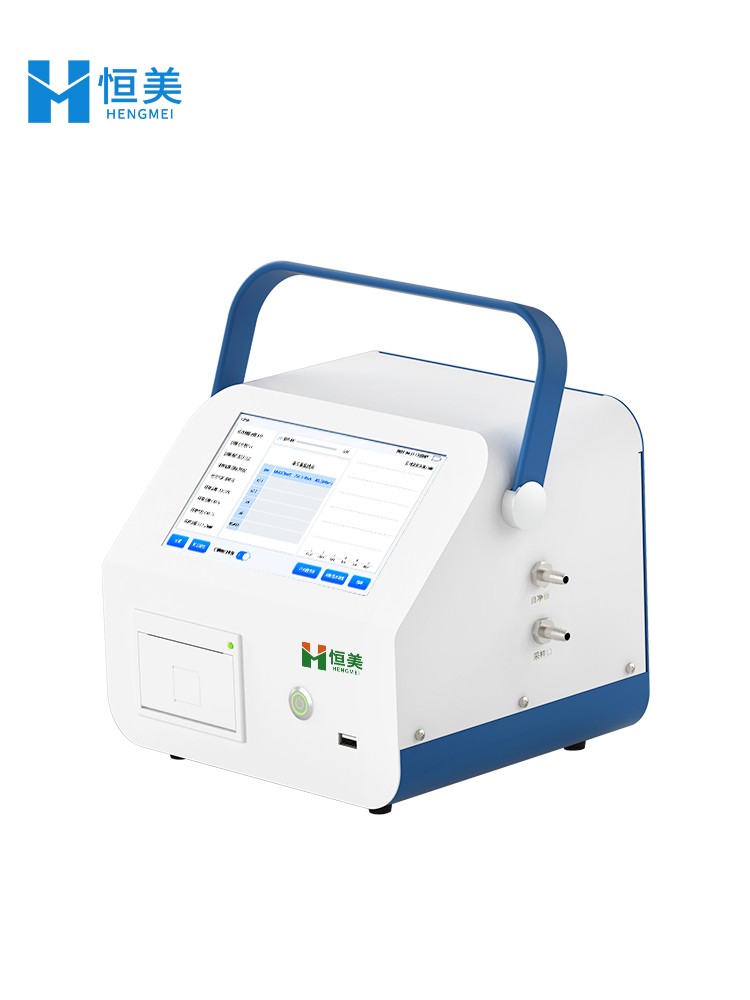
Choose an airborne particle counter by the sampling task, required particle-size thresholds, sample volume and record-management needs. In the HENG MEI Intelligent Manufacturing range, HM-CL1 provides six-channel counting at 2.83 L/min for routine measurements. HM-CL2 retains that flow rate and adds an audit-trail function. HM-CL3 combines audit-trail functionality with a 28.3 L/min flow for applications where the sampling plan benefits from collecting a larger air volume in less time.
Shandong Hengmei Electronic Technology Co., Ltd. supplies the HM-CL range for routine cleanroom surveys, record-controlled measurements and higher-volume sampling.
Define the cleanroom task before comparing instruments
A laboratory purchasing a counter for periodic room surveys has a different workflow from a production team investigating a process excursion. Begin by identifying the decision that the measurement must support, then specify the sampling locations, room condition, particle-size thresholds and reporting format.
| Measurement task | What the team needs to establish | What to include in the instrument specification |
|---|---|---|
| Cleanroom classification | The applicable classification procedure, room condition, sampling locations and accepted particle-size thresholds | Suitable channels, flow, sampling controls, calibration evidence and a report that preserves the measurement settings |
| Routine cleanliness monitoring | Locations, intervals, baseline behavior and the response to an excursion | Repeatable measurement settings, identifiable records, practical data export and a defined review process |
| Investigation of a particle event | When and where the event occurred, together with relevant production activity | Time-stamped readings, accessible settings and a practical arrangement for moving between investigation points |
ISO 14644-1:2015 addresses cleanroom classification by airborne particle concentration. ISO 14644-2:2015 sets requirements for a monitoring plan related to particle concentration. Specify the classification procedure or monitoring plan in the procurement brief, including the room condition, sampling locations and acceptance criteria. IEST summary of ISO 14644-1 · IEST summary of ISO 14644-2
Understand what the particle-size channels represent
A light-scattering airborne particle counter detects individual optical events as air passes through its sensing system. The instrument assigns events to particle-size channels according to its calibrated response. HM-CL1, HM-CL2 and HM-CL3 measure across six channels at 0.3, 0.5, 1.0, 3.0, 5.0 and 10.0 µm.
The reporting mode matters. In a cumulative display, a result at a threshold includes particles at or above that threshold. A differential display separates particles into size intervals. For a cumulative report, adding the 0.3 µm and 0.5 µm channel totals would count some of the same events twice. Confirm the configured output mode before calculating totals or comparing reports.
IEST identifies cumulative distributions at specified lower-limit sizes as the basis for the classification described in ISO 14644-1. The same summary explains that particle identity, chemical composition and viability require their respective characterization methods. For a purchasing requirement at a 0.1 µm lower threshold, specify an instrument with documented capability at that size. IEST classification scope and measurement basis
Compare HM-CL1, HM-CL2 and HM-CL3 by the differences that affect work
The three models share a six-channel measurement menu and a 7-inch color touchscreen. Sampling flow, audit-trail functionality and carrying weight distinguish the models.
| Specification or selection point | HM-CL1 | HM-CL2 | HM-CL3 |
|---|---|---|---|
| Nominal sampling flow | 2.83 L/min | 2.83 L/min | 28.3 L/min |
| Particle-size channels | 0.3, 0.5, 1.0, 3.0, 5.0 and 10.0 µm | 0.3–10.0 µm, six channels | 0.3–10.0 µm, six channels |
| Record-management features | Thermal printing, Wi-Fi transfer and USB copying | Audit-trail function | Audit-trail function |
| Net mass | 3.25 kg | 3.25 kg | 4.05 kg |
| Practical selection focus | Routine portable measurements at 2.83 L/min | 2.83 L/min work with an audit-trail requirement | Higher-volume sampling with an audit-trail requirement |
All three models support thermal printing, Wi-Fi transfer and USB data copying, with a working environment of 15–35 °C and 10–85% relative humidity. Check these conditions against the actual room and transport arrangements. An audit-trail function supports record review, while the complete data-control process also requires appropriate user access, procedures, retention and system evaluation.
Translate flow rate into a realistic sampling schedule
For a chosen air volume, theoretical sampling time equals volume divided by flow. For a sampling plan using 20 L at each location, at 2.83 L/min, collecting that volume takes approximately 7.07 minutes. At 28.3 L/min, it takes approximately 0.707 minutes, or 42.4 seconds. Set the required volume and minimum duration according to the applicable classification or monitoring procedure.
| 20 L per sampling location | HM-CL1 / HM-CL2 | HM-CL3 |
|---|---|---|
| Calculation | 20 ÷ 2.83 | 20 ÷ 28.3 |
| Air-collection time at one point | 7.07 min | 42.4 s |
| Sampling time for eight points | Approximately 56.5 min | Approximately 5.65 min |
For a complete eight-point schedule, add instrument preparation, movement between points, inlet positioning, required checks and report review to the air-collection time. Higher flow can shorten the collection stage for a fixed volume. The benefit to a particular site depends on its approved sampling protocol and the other stages of the job.
Match the configuration to the application
For pharmaceutical clean areas, define the room condition and sampling protocol together with the record-review requirements. Where an audit trail is specified, review HM-CL2 and HM-CL3 against that requirement and evaluate the actual software workflow. Choose the flow rate after calculating the required volume and schedule.
For electronics, precision manufacturing and optical assembly, identify the particle thresholds relevant to the process. Consistent inlet position and operating conditions help make successive surveys useful for investigating changes. Check whether the documented lower size threshold covers the contamination question.
For food-processing clean areas, connect particle surveys to activities such as personnel movement, cleaning and packaging operations. Microbiological air testing and surface hygiene testing provide their own measurements within the hygiene program.
For filter-related investigations, specify the complete test arrangement, sampling positions and challenge conditions. Quantifying filter efficiency requires the relevant upstream and downstream measurement procedure and an appropriate test setup.
Evaluate supplier evidence and operating cost together
A useful supplier discussion produces a traceable equipment specification and a workable measurement process. Ask for the model and serial-number identification, channel and flow specifications, supplied accessories, calibration documentation, operating instructions and an example of the exported record. Link calibration documents to the actual instrument and the measurement points covered.
For HENG MEI Intelligent Manufacturing equipment, state whether the requirement is routine counting, an audit-trail workflow or higher-volume sampling. This makes the HM-CL1, HM-CL2 and HM-CL3 comparison specific to the job. Include the inlet accessories, power arrangement, data-export needs and training topics in the configuration discussion.
Assess operating cost over the expected measurement workload. Relevant items include instrument acquisition, calibration, permitted accessories, operator time, data review and service logistics. For an eight-point survey collecting 20 L per point, the nominal air-collection time is 56.5 minutes at 2.83 L/min and 5.65 minutes at 28.3 L/min. Include that operator time in the operating-cost assessment. Use the supplier's actual quotation and the site's labor assumptions for a monetary comparison.
Before ordering, document warranty coverage, the service process, calibration arrangements and support for the installation country. Written terms tied to the destination and configuration give the purchasing team a clear basis for planning support.
Questions buyers commonly need to resolve
Which model fits a 2.83 L/min procedure with an audit-trail requirement?
HM-CL2 is the model in this comparison combining a 2.83 L/min flow with an audit-trail function. Review the delivered software, user-control workflow and exported records against the site's data requirements.
When does the 28.3 L/min model become useful?
HM-CL3 deserves consideration when collecting the required volume at multiple locations creates a significant scheduling burden. Calculate the collection time using the approved volume and duration, then add preparation, movement and review time.
How should two suppliers' specifications be compared?
Use the same channel thresholds, flow, reporting units, operating conditions and calibration scope. Add the configured software, accessories and service terms. A feature-by-feature comparison on a shared basis is more informative than a single headline accuracy value.
What should a calibration document identify?
Look for the instrument identity, calibration date, method, measured quantities and points, results and traceability information. Establish the next calibration or verification interval through the site's quality process and relevant requirements.
Can one counter reading establish a room classification?
A classification conclusion follows the applicable procedure, including its specified room condition, sampling locations, volumes and result evaluation. The instrument supplies measurements within that procedure.
Explore the relevant configurations
Review the HM-CL1 airborne particle counter and the documented HM-CL2 configuration with audit-trail functionality or HM-CL3 high-flow configuration. For a configuration enquiry, provide the application, required size thresholds, volume per location, number of locations and record-control needs.
Address of this article:https://www.kjhm.net/news/choosing-an-airborne-particle-counter.html
 Related News
-
28 / 2026-05
Reliable Aerosol Photometer Manufacturers — HM Instruments Brand Recommendation
Learn more
-
18 / 2026-05
Karl Fischer Moisture Analyzer Reliable Manufacturer Recommendation | HM Instruments Brand Analysis
Learn more
-
29 / 2024-10
Unleash the Power of Soil Respiration Analysis with HM-TH2.
Learn more
-
28 / 2024-04
What Can The Soil Nutrient Detector Be Measured.
Learn more