

 Current
Location:
HENG MEI Intelligent Manufacturing How to Select a Negative Air Ion Detector
Article Source: Hengmei Technology Release time:2026-11-13 13:27:24
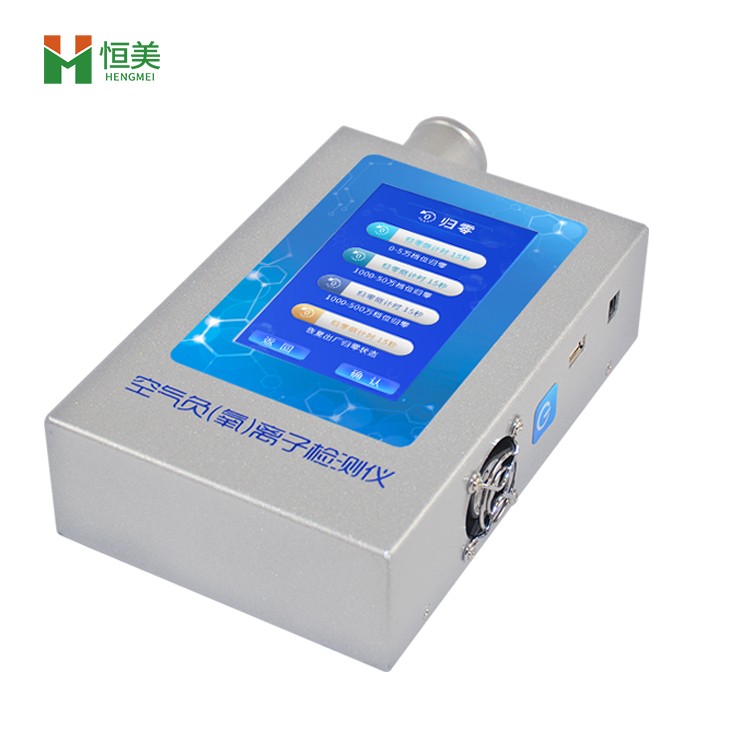
Select a negative air ion detector by its measurement principle, mobility range, concentration range and sampling conditions. HM-FY2 uses a cylindrical capacitive air-intake method. These details matter when comparing readings collected at different locations or with different instruments.
HM-FY2 is part of the HENG MEI Intelligent Manufacturing range supplied by Shandong Hengmei Electronic Technology Co., Ltd.
How the measurement works
HM-FY2 draws air through a cylindrical capacitive sensor. A polarization field collects ions within the sensor conditions, and the collected charge is used to calculate concentration. The mobility selection and airflow arrangement form part of the measurement definition.
Specify the sampling environment and time pattern
For field surveys, choose a consistent inlet height, location procedure and measurement period. Nearby ion sources, airflow and operator movement can change the local conditions. For a repeat visit, reproduce the setup and time pattern as closely as the study requires. Select a concentration setting that covers the expected values while preserving the required reporting detail.
Technical configuration
| Parameter | Specification |
|---|---|
| Measurement method | Cylindrical capacitive air intake |
| Mobility range | 0.4–1.0 cm²/(V·s) |
| Result refresh | Once per second |
Summarize repeated readings with their spread
If five successive readings are 1,200, 1,260, 1,180, 1,240 and 1,220 ions/cm³, their arithmetic mean is 1,220 ions/cm³ and their range is 1,180–1,260 ions/cm³. Reporting both the mean and the individual sequence helps a reviewer distinguish a stable period from a changing local environment. Choose the averaging period through the survey procedure.
Compare measurements on a shared basis
Compare concentration values together with mobility range, selected measurement range, inlet conditions and observation period. A single display value describes the sampled conditions at that time. To assess an environmental change, collect a repeatable sequence at comparable locations and document surrounding activity. Health-related conclusions need their own applicable evidence.
Build a repeatable location comparison
When comparing an outdoor area with an indoor space, document the environment at each location rather than treating the location name as the complete measurement condition. Use the same instrument orientation, inlet arrangement and observation period where the survey design permits. Record nearby ventilation, doors, electrical equipment and sources that may affect the local ion population. For a change-over-time study, collect a sequence of readings and preserve its spread alongside the average. Review a difference in the context of the whole sequence and the environmental observations. This gives the customer a usable record for repeat surveys and equipment comparisons.
Put the selected method into practice
- Choose the location and record surrounding equipment and airflow conditions.
- Set up the detector with its inlet unobstructed according to the instrument instructions.
- Use a consistent measurement sequence and retain repeated readings with their timestamps.
- Report the concentration setting and measurement conditions together with the numerical result.
Plan support for common operating issues
| Operating issue | Checks and follow-up |
|---|---|
| Readings fluctuate sharply | Check airflow, nearby ion-generating equipment, inlet obstruction and movement around the sensor. |
| Two instruments disagree | Align mobility selection, range, location, time and calibration status. |
| A repeat survey gives different values | Review weather, room operation and the original sampling arrangement. |
Plan the complete working configuration
Specify the expected concentration range and intended measurement environment. HM-FY2 lists a 5-inch touchscreen, manual and automatic measurement modes, and a rechargeable battery. Determine whether the task needs spot readings or a repeatable monitoring sequence. Include sensor handling, inlet cleanliness and calibration arrangements in the purchasing specification.
Define the acceptance and reporting requirements
Agree on the following items when configuring HM-FY2. They connect the equipment and consumables to the intended measurement and provide a basis for operator training and result review.
- Location and inlet height
- Measurement range and mobility
- Timestamp and averaging period
- Environmental conditions and nearby equipment
Questions from buyers and laboratory teams
Why can two detectors show different values?
Compare the measurement principle, ion mobility selection, concentration setting, location and sampling conditions.
What makes a useful field record?
Retain the time, location, instrument setting, surrounding conditions and repeated readings.
For a HM-FY2 configuration enquiry, provide the sample type, required measurements, expected workload and reporting requirements. Include the consumables, preparation equipment and support arrangements needed at the installation site.
Address of this article:https://www.kjhm.net/news/how-to-select-a-negative-air-ion-detector.html
 Related News
-
08 / 2026-06
HM Instruments Portable Water Quality Analyzer Brand Recommendation
Learn more
-
26 / 2024-09
What Is The Use Of A Dust Particle Counter?
Learn more
-
08 / 2026-05
Contact Angle Goniometer Value Analysis-HENGMEI ZHIZAO vs Intl Brands
Learn more
-
24 / 2026-07
HM Instruments: Reliable Dispensing Station Brand Guide
Learn more