

 Current
Location:
HENG MEI Intelligent Manufacturing Soil Nutrient Analyzers for Farm Testing
Article Source: Hengmei Technology Release time:2026-11-13 13:26:28
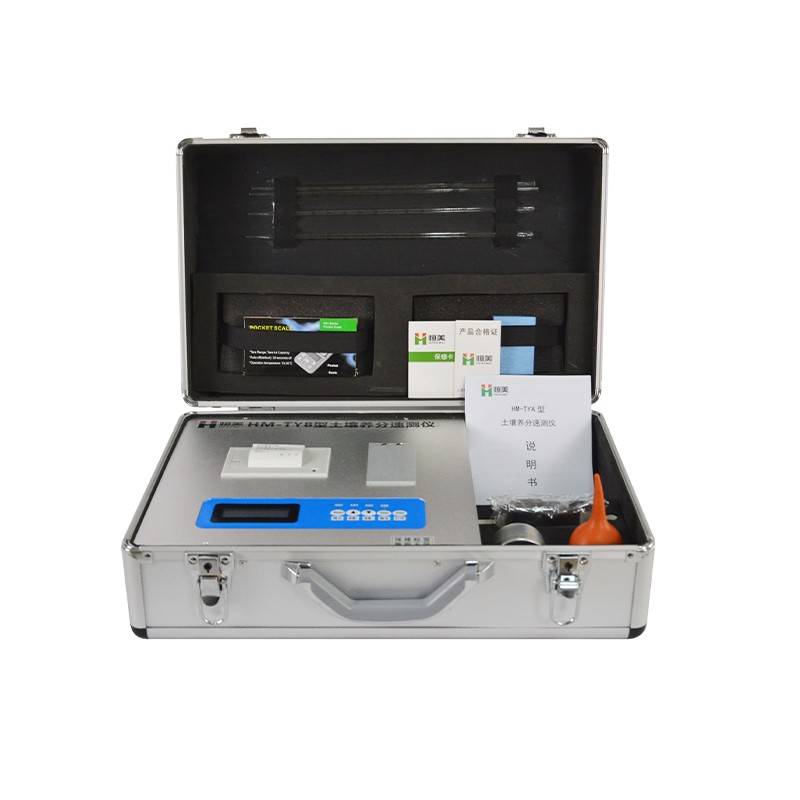
A soil nutrient analyzer is useful when its extraction methods, reagent menu and reporting units match the agronomic question. HM-TYB combines optical nutrient measurements with a portable case arrangement. Select it together with the reagents and preparation tools required for the intended soil or fertilizer tests.
HM-TYB is part of the HENG MEI Intelligent Manufacturing range supplied by Shandong Hengmei Electronic Technology Co., Ltd.
How the measurement works
HM-TYB measures prepared nutrient reactions through LED illumination and silicon detection. Soil, fertilizer and plant materials require the corresponding preparation and reagent procedures. The measured nutrient fraction and reporting unit are essential parts of the result used in agronomic decisions.
Build the test menu around the fertilizer decision
A grower assessing immediately available nutrients needs a different analytical fraction from a laboratory evaluating total nutrient content. Identify the extraction method before comparing instruments or historical results. Match the selected menu to balances, extraction vessels, reagents and operator capacity. Preserve sampling depth and field identity so changes in the report can be related to actual changes in the land.
Technical configuration
| Parameter | Specification |
|---|---|
| Model | HM-TYB |
| Optical system | LED light source and silicon detection |
| Output | Built-in thermal printing |
Include extraction and dilution in the result
For an extract concentration of 8 mg/L, an extraction volume of 0.100 L and a soil mass of 0.010 kg, the extracted amount corresponds to 80 mg/kg before any additional dilution factor. The calculation is 8 × 0.100 ÷ 0.010. Use the method-defined moisture basis and extraction conditions when preparing the final report.
Keep the analytical fraction visible
Two results expressed in mg/kg can represent different soil fractions when extraction methods differ. Record the nutrient species and extraction procedure alongside the number. Crop recommendations also require the relevant soil, crop and management context. Consistent preparation and units make comparisons between fields and seasons more useful.
Connect a field test to a fertilizer recommendation
For a field assessment, define the sampled management area before collecting soil. Combine or separate sampling points according to the agronomic sampling plan and keep the collection depth consistent. A single unusual patch can affect a composite result, so document the sampling pattern and any excluded area through the agreed procedure. Interpret the measured nutrient fraction with crop requirements, soil condition and the relevant recommendation system. Repeated measurements are most useful when preparation, extraction and reporting units remain comparable. The analyzer supports the measurement stage, while the sampling plan establishes which land area the result represents.
Put the selected method into practice
- Collect a representative sample using the agreed field plan and identify the sampling area.
- Prepare and extract the soil according to the selected nutrient method.
- Run the required blank and calibration checks, then measure the prepared extract.
- Record the result units, extraction method and sample condition before using the result in fertilizer planning.
Plan support for common operating issues
| Operating issue | Checks and follow-up |
|---|---|
| A result differs from a laboratory report | Compare extraction method, nutrient fraction, moisture basis and units. |
| Replicates vary | Review sample homogenization, weighing, extract volume and reaction timing. |
| A result exceeds the working curve | Use the method-approved dilution and retain its factor with the sample result. |
Plan the complete working configuration
Start with sample type, target nutrient fraction and expected daily workload. Compare the preparation equipment, reagent replenishment, power arrangements and report format as part of the supplied configuration. For fertilizer work, choose the preparation and dilution procedure appropriate to that material. A field-friendly case helps transport the system, while analytical consistency still depends on how the samples are collected and treated.
Define the acceptance and reporting requirements
Agree on the following items when configuring HM-TYB. They connect the equipment and consumables to the intended measurement and provide a basis for operator training and result review.
- Field identity and sampling depth
- Soil mass and moisture basis
- Extraction volume and method
- Calibration, control results and dilution
Questions from buyers and laboratory teams
Can soil and fertilizer use the same preparation?
The material, concentration and analytical fraction determine preparation. Select the appropriate procedure for each sample type.
What should accompany a soil nutrient report?
Include sample identity, collection context, preparation method, reported fraction, units and quality-control results.
For a HM-TYB configuration enquiry, provide the sample type, required measurements, expected workload and reporting requirements. Include the consumables, preparation equipment and support arrangements needed at the installation site.
Address of this article:https://www.kjhm.net/news/soil-nutrient-analyzers-for-farm-testing.html
 Related News
-
08 / 2026-05
Contact Angle Goniometer Value Analysis-HENGMEI ZHIZAO vs Intl Brands
Learn more
-
23 / 2026-07
Haze Meter FAQ: 12 Technical Questions Answered | HM Instruments
Learn more
-
22 / 2024-10
Enhance Dairy Excellence With Our Rapid Milk Analyzers.
Learn more
-
21 / 2026-05
HM Instruments ICP-OES Spectrometer Model Comparison and Selection Guide
Learn more