

 Current
Location:
How to Choose a Tea Polyphenol Analyzer for Quality Control | HENG MEI Intelligent Manufacturing
Article Source: Hengmei Technology Release time:2026-11-19 08:46:15
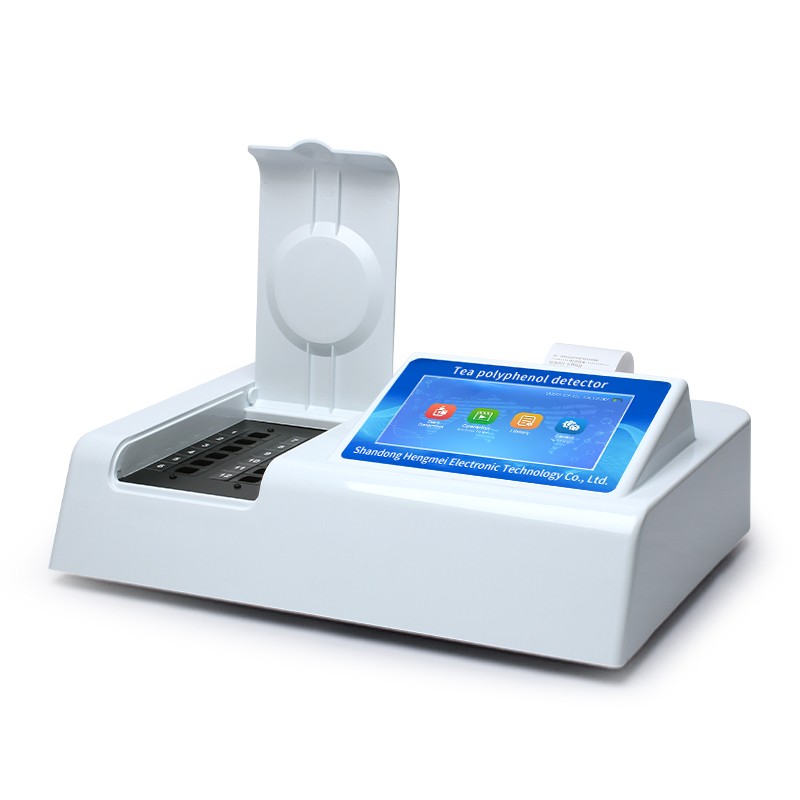
Choose a tea polyphenol analyzer by starting with the material you test, the result you need to report, and the method your customer accepts. A tea processor comparing incoming leaf lots needs a reliable way to rank or flag lots under consistent conditions. A supplier reporting a contractual value has a different job. It must establish that the result uses the agreed procedure, units, and basis of expression. Both jobs can involve a benchtop analyzer, but they place different demands on the complete testing workflow.
Specify the product and the decision
Begin with a list of the samples that routinely arrive at the bench. Dried green tea, black tea, bottled beverages, and concentrated extracts differ in how a test portion is obtained and how its result is expressed. A procedure chosen for dry leaf can require separate verification before being applied to a sweetened beverage or a powder containing other ingredients. If the product line includes more than one type of material, identify which samples will be assessed at launch and which should be considered future additions.
Write down what a result will allow the team to do. Typical decisions include comparing deliveries from the same supplier, assigning a lot to an internal grade, investigating a manufacturing change, and checking a customer specification. An installation that supports internal sorting may initially run in parallel with a reference laboratory. A listing specification that requires results from an agreed method and laboratory needs those requirements resolved before the purchasing team starts comparing hardware.
Distinguish total polyphenols from individual compounds
A total polyphenol measurement summarizes the response under a defined analytical procedure. Individual catechins require separation and identification when the specification calls for separate values. These measurements can move together in some materials, yet each answers a distinct question. A buyer should read the acceptance clause carefully, especially if it uses the short phrase tea polyphenols without defining the test method. Ask whether the expected deliverable is one total value or a profile containing individual analytes.
The ISO 14502 series illustrates this distinction. Part 1 describes a colorimetric method for total polyphenols in tea, while Part 2 covers catechins in green tea using high performance liquid chromatography. Agree on the applicable edition and any contractual variation with the laboratory or customer. If an instrument is offered as a routine screening option, request a demonstration of how its results will be compared with the method named in your documentation. ISO 14502-1
Compare the full measurement workflow
During a demonstration, start with an unopened sample and follow it through the steps that your staff will perform. Include labeling, obtaining the test portion, preparing and reading the sample, reviewing controls, and saving the final record. The duration of the measurement alone gives an incomplete estimate of daily capacity. A short measurement stage can coexist with a long preparation queue or manual recording process. Time those stages separately so the schedule can reflect where staff will actually spend their time.
Record the number of people and work surfaces needed for the demonstration. If a compact analyzer shares a bench with other instruments, reserve space for samples, separate working materials and waste containers. Verify whether routine controls, reusable components and consumables fit into the proposed layout. Calculate the number of samples that can be completed in a shift with the same people who will operate the instrument after installation. Breaks, shift handovers and busy receiving periods should be reflected in the estimate.
Set acceptance criteria before the trial
Select samples that cover the work you expect in the first months. For a leaf processor, a useful trial might include several routinely accepted lots of different grades and one or more samples with values near the internal decision boundary. Record the source, handling and expected range of each sample before starting. Compare like with like when performing parallel measurements. If possible, split material from a common homogenized laboratory sample so the equipment comparison is less affected by genuine differences between portions.
Define the criteria for agreement, repeatability and record completeness before you see the results. A repeat reading from one prepared portion checks a narrower part of the workflow than two independently prepared portions from the same sample. Both can be useful during an evaluation. When readings agree but independent preparations vary, the team has a reason to look closely at sampling and preparation rather than judging the analyzer from the repeated readings alone.
Make units and calculation choices explicit
Ask to see a copy of the final laboratory record. It should let a reviewer identify the sample, method, result units, basis of expression, operator, and date. Where the calculation uses an entered factor, make sure the factor is visible or retrievable. A result expressed per mass of dry tea and one expressed per volume of a beverage describe different bases. Even two leaf results can differ solely because one is corrected to dry matter and the other refers to the product as received.
For example, a leaf result of 10.0 grams per 100 grams as received corresponds to about 10.9 grams per 100 grams of dry matter if the same material contains 8 percent moisture by mass and the method calls for that conversion. Dividing by the dry-matter fraction of 0.92 gives the dry-basis value. Put the basis next to the number in any report used for supplier comparison. Document how the moisture value was obtained when it affects a commercial decision.
Estimate the cost per usable sample result
Compare the complete cost of running your expected workload. Include staff time, routine controls, consumables, maintenance and the portion of samples that still require an external laboratory. Account for lot changes and low-volume periods, when some supplies may reach their approved use date before they are consumed. If two sites propose sharing an instrument, include the cost of moving samples and the time between collection and analysis. A centralized arrangement may save bench space while increasing the time needed for a receiving decision.
Plan the workload by batch as well as by week. For instance, twenty samples received on one day and four samples per day over five days both total twenty, but they can call for different levels of staffing and control use. Ask each supplier to explain how its proposed setup fits your actual schedule. Keep records of the trial so the operator and purchasing team can identify the costs and conditions behind the comparison.
What should a tea analyzer quotation include?
Request the exact model, supplied accessories, consumables, supported method information, operating documentation and the proposed scope of installation or training. Share the tea types, decision limits, expected daily volume and reporting basis. For the HM-F12 tea polyphenol analyzer, direct these questions to HENG MEI Intelligent Manufacturing, the brand of Shandong Hengmei Electronic Technology Co., Ltd. A quotation linked to your actual test procedure gives the laboratory a practical list of items to verify before the first routine batch.
Check how staff will retrieve a past result
Ask an operator to locate a trial result after the demonstration and show how it can be linked to the sample and the applicable procedure. If the laboratory uses a separate information system, test the actual handoff instead of assuming that a printed or exported result contains every necessary field. Review how corrections are handled when someone discovers that a sample identifier or reporting basis was entered incorrectly.
Address of this article:https://www.kjhm.net/news/how-to-choose-a-tea-polyphenol-analyzer-for-quality-control-heng-mei-intelligent-manufacturing.html
 Related News
-
16 / 2025-09
Smart Water Quality Management: The Portable Multi-Parameter Analyzer
Learn more
-
07 / 2026-08
HM Instruments Phthalate Detector Manufacturer Guide
Learn more
-
12 / 2026-05
HengMei HM-GL Filter Integrity Tester — FAQ & Technical Q&A
Learn more
-
18 / 2026-11
HENG MEI Intelligent Manufacturing | How to Select a Food Heavy Metal Analyzer
Learn more