


 Current
Location:
Acesulfame Potassium Testing in Food Production: An Industry Application White Paper | HENG MEI Intelligent Manufacturing
Article Source: Hengmei Technology Release time:2026-11-19 09:18:44
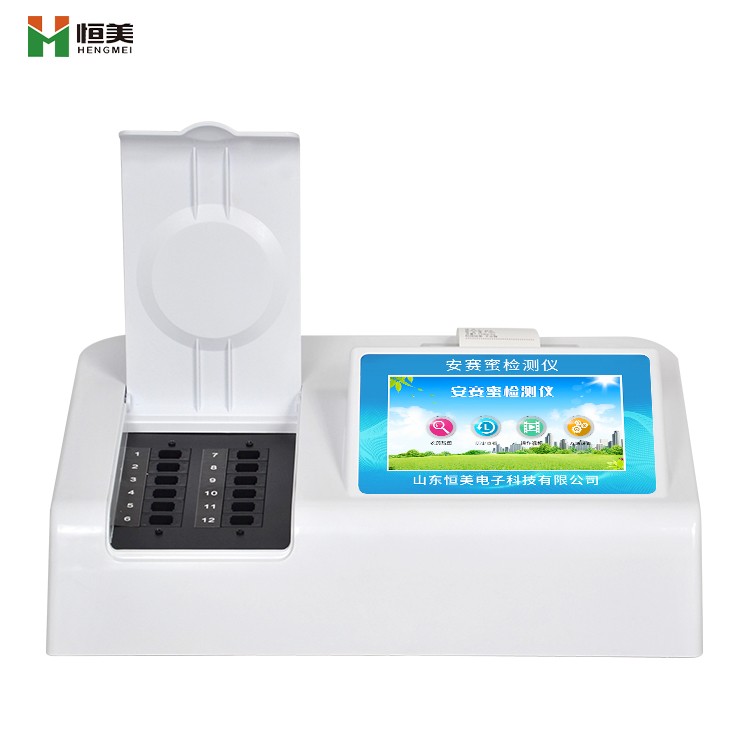
Acesulfame potassium testing supports food manufacturers that need to check an ingredient declaration, investigate a formulation change or assess a product against an applicable specification. A testing program starts by identifying the product and the decision. It then connects representative sampling, a method suitable for the food matrix, appropriate quality controls and a report that uses the right units. An acesulfame potassium detector is one part of that program.
This white paper examines how beverage and food producers can place a testing instrument in a broader quality system. The exact permission to use a sweetener and any limits depend on the food category, jurisdiction and current legal requirements. A laboratory should verify those requirements for the market and product involved before interpreting a result as a compliance decision.
Why a food producer measures acesulfame potassium
A manufacturer may need to confirm that an incoming ingredient is what was ordered, check a production run against an internal target, or investigate a discrepancy raised by a customer. These tasks differ in sample type and decision. An ingredient may contain a concentrated sweetener while the finished beverage contains multiple ingredients at much lower levels. A method selected for one material needs separate assessment before it is used for another.
Begin by listing each product and its relevant specification. Record the sweetener name, reporting unit, applicable test method, sample point and person responsible for the decision. Where a formulation contains several sweeteners, check whether the method measures acesulfame potassium specifically and whether the other ingredients affect the measurement. A total sweetener result cannot automatically be treated as the amount of a particular sweetener.
Connect the result to the right food category
Permitted uses and maximum levels can vary by market and product classification. A flavored drink, a confectionery product and a tabletop sweetener may be governed by different provisions. Identify the destination market, product category, formulation and version of the applicable rule before setting a legal decision limit. Codex Alimentarius maintains the General Standard for Food Additives, which can help identify international provisions while national and regional requirements must also be checked. Codex General Standard for Food Additives
Write the internal specification separately from the legal requirement. A process target may be narrower than a legal limit for a particular product. Record how the product is classified and which version of the specification applies to the batch. When a recipe or market changes, review the classification and method before comparing a new result with a previous limit. This ensures that a laboratory result is interpreted against the decision it was meant to support.
Choose the sampling point deliberately
Finished products can vary across a production run if mixing, dispensing or packaging conditions change. The sampling plan should state whether the question concerns one container, a production interval or the batch as a whole. Identify the points at which units are collected and the procedure for forming a laboratory sample. A sample taken from a single location gives limited evidence about unobserved portions of the batch.
At receipt, confirm the sample identifier, product, batch, collection time and condition. Keep the original batch reference when a test portion is transferred into another container. If the sample is unsuitable or its history cannot be established, follow the laboratory's acceptance procedure and document the exception. A repeat reading of the same uncertain sample cannot resolve a question about which batch it represents.
Evaluate method suitability for the matrix
Food color, acidity, suspended solids and other ingredients can affect different measurement methods in different ways. Request the method documentation for the specific instrument and test materials, including the stated sample types, working range, required controls and known interferences. If the target product falls outside the documented scope, establish a verification plan before routine use. A comparison with an appropriate reference method can help determine whether the proposed workflow meets the laboratory's intended purpose.
Evaluate representative products rather than only a clear standard solution. Include formulation variants that differ in color or ingredient composition and samples near the internal decision point. Define the acceptance criteria before the trial. Record the method, sample identity, preparation, instrument, operator and results. If an unexpected difference appears, check the sample preparation and matrix effects alongside instrument performance.
Separate screening and final decisions in the workflow
A rapid result can help prioritize further work or identify a batch that needs review. The laboratory should establish when that result is sufficient for an internal process decision and when a confirmatory method is required by its quality plan, customer agreement or applicable regulation. The status of the result should be clear in the record and in any message to production or purchasing staff.
For example, a beverage producer may set an internal review point below its contractual limit. A result beyond the review point triggers a check of the batch record and an additional test under the established procedure. The production team holds the relevant material until the designated reviewer records a decision. The exact numerical threshold depends on the product, method performance, specification and decision rule adopted by that producer.
Quality controls support each batch
Follow the method and laboratory plan for calibration, blanks and control materials. The controls should help staff determine whether the analytical run is acceptable for the samples being tested. Identify each control, record its result and compare it with the agreed acceptance criteria. A failed control should lead to a documented response before affected results are released. The response may involve checking the setup, supplies, instrument condition and sample sequence.
Where repeat testing is needed, distinguish a repeated measurement from a new preparation of the retained sample. The first examines a narrower part of the process. The second includes variation introduced during preparation. If neither can resolve the question, the laboratory may need another sample according to the investigation plan. Keep the initial and subsequent results linked, with the reason for the repeat and the final reporting decision.
Make calculations and reporting transparent
Record the unit, the form of the reported substance and any factor used to calculate the final result. A value expressed per liter of beverage is not directly interchangeable with a value per kilogram without information about the sample and the conversion basis. A concentrated ingredient and a ready-to-drink product also require distinct specifications. The report should identify the material tested and whether the value refers to the product as received or another defined basis.
Suppose a laboratory obtains a value of 40 milligrams per liter for a prepared solution and the documented procedure requires a factor of five to express the concentration in the original beverage. The calculated result is 200 milligrams per liter, provided that the factor is applicable and all other method conditions are met. The worksheet should preserve both the measured value and the factor so the calculation can be checked.
Plan capacity and evidence for the purchase
Estimate the expected samples per shift, peak batch size, control frequency and time needed for review. Test a representative batch during equipment evaluation and include labeling, setup, sample preparation, measurement and data entry. Compare the offered configuration with available bench space, staff skills and the expected cost of consumables and maintenance. Ask how results are retrieved and how errors in identifiers are corrected under the laboratory's record policy.
HENG MEI Intelligent Manufacturing is the brand of Shandong Hengmei Electronic Technology Co., Ltd. When discussing an acesulfame potassium detector, provide the product types, concentration range, intended decision and required reporting method. Review the proposed instrument, test materials and documentation together so the implementation fits the manufacturer's quality system.
Address of this article:https://www.kjhm.net/news/acesulfame-potassium-testing-in-food-production-an-industry-application-white-paper-heng-mei-intelligent-manufacturing.html
 Related News
-
08 / 2026-05
Contact Angle Goniometer Value Analysis-HENGMEI ZHIZAO vs Intl Brands
Learn more
-
13 / 2026-11
HENG MEI Intelligent Manufacturing Choosing a PCR System for Fish and Shrimp Virus Tests
Learn more
-
09 / 2024-12
Luminescent bacterial biotoxicity detector for water quality monitoring to provide scientific evidence.
Learn more
-
13 / 2026-11
HENG MEI Intelligent Manufacturing Automated Portable Raman Analysis for Food Screening
Learn more