

 Current
Location:
Acid Value and Peroxide Value Tester Comparison for Edible Oil Laboratories | HENG MEI Intelligent Manufacturing
Article Source: Hengmei Technology Release time:2026-11-20 08:53:55
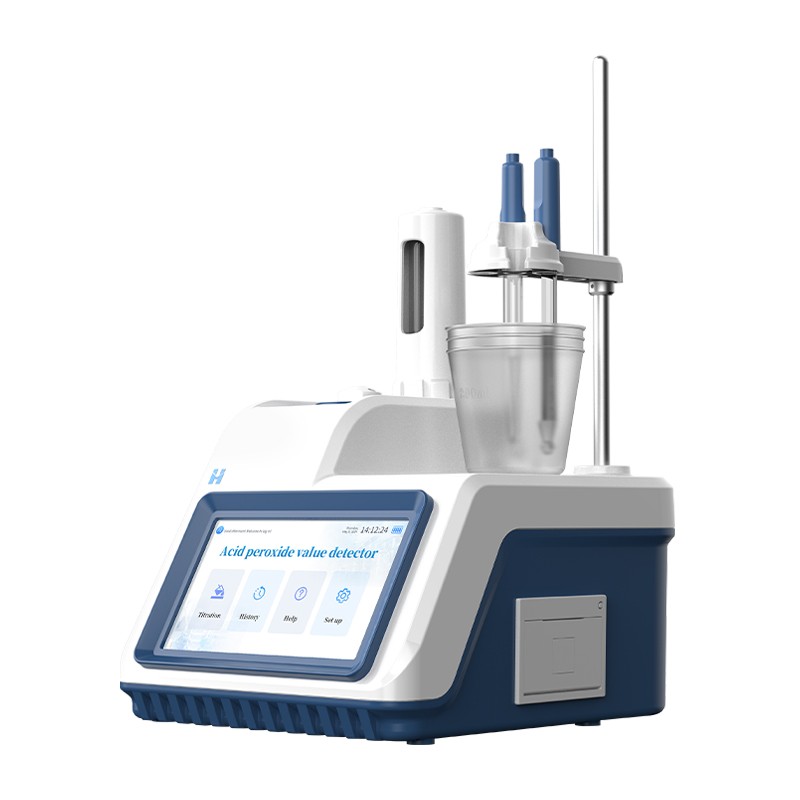
The HM-DAP and HM-SG12 address different workflows for edible oil analysis. The HM-DAP is the titration configuration to evaluate when an oil laboratory wants to align the instrument with a specified titrimetric procedure. The HM-SG12 is the multi-channel oil testing configuration to evaluate for routine screening where the method and test materials suit the oils handled. Compare both against the actual specification, preparation and release process before selecting equipment.
Which value does the laboratory need?
Acid value describes the amount of alkali needed to neutralize the free acidity associated with a defined mass of oil, conventionally expressed as milligrams of potassium hydroxide per gram. Peroxide value tracks primary oxidation products under a defined method and reporting basis. They provide different observations about the oil. A low peroxide value alone does not establish freshness after oxidation products have begun to decompose. Review the oil history and the other evidence required by the program.
Check the method and unit before accepting a result into a quality record. Free fatty acid percentage and acid value use different forms of expression. The relationship depends on the fatty acid basis used in the conversion. Peroxide results can also be written in different units under different specifications. Keep the original number, method and unit alongside every reported value.
HM-DAP for a specified titration workflow
Review how the proposed configuration identifies endpoints, records titrant and sample information, and calculates each value. Ask which accessories, electrodes and software methods are supplied. If the method expects a blank or titrant standardization, check how these are documented and applied to the result. Identify which steps are automated and which still depend on laboratory handling and review.
A demonstration should use the oils the laboratory expects to report and include results near the range important for release. Inspect the measurement record as well as the printed result. A reviewer should be able to identify the method version, sample mass, applicable blank and other inputs that determine the final value. Confirm the applicable standard and edition with the lab before claiming the system supports that method.
HM-SG12 for routine screening
Evaluate the HM-SG12 for the approved oils, target values and volume of routine checks. Request the supported sample types, kits, range and calculation or interpretation for each parameter. Ask whether color, suspended material or additives affect the assay. Where the oil is outside a documented matrix scope, arrange verification or refer the test to the designated method.
Check the result near the decision point rather than only on a clean demonstration sample. A plant may use a screening result to prioritize further lab work or detect a shift in a production line. Define separately when the verified titration or another named method is required for a contractual decision. The method and result status should remain visible to the staff who authorize release.
Compare daily workload and cost
Count samples and controls for each parameter. A schedule with twelve oils and two reported parameters can require twenty-four determinations before blanks, controls or repeats. The workload may differ when the instrument and selected methods can handle the determinations in separate sequences. Time a representative day from sample receipt through record approval. Include setup, cleaning, waste handling, quality checks and review in the estimate.
Compare consumables using the number of valid results rather than pack price alone. Record the units consumed by standards, blanks and repeats. For the titration configuration, review reagent preparation, checks and maintenance. For screening, review kit stability, supported matrices and supply lead time. These conditions affect the useful cost of either approach.
Build the comparison around oils that challenge the procedure
Include the plant's most common oils and a set of products with different color, composition and expected ranges. A pale refined oil, a darker unrefined oil and a processed food extract may present very different analytical conditions. Check each procedure's documented scope before the trial. Where the same specification covers their receipt, confirm whether it requires the same decision method or accepts different verified procedures.
An acceptance trial should define which measurements come from the same laboratory sample. Compare suitable portions and record their handling history. If the titration and screening results use different reporting bases, resolve the basis before calculating agreement. Summarize the differences by oil type and near the decision boundary. A close match on one common oil can be useful evidence for that matrix while leaving another matrix to be evaluated.
Identify which conditions affect the reported value
Review sample mass, calculation inputs, controls and how the endpoint or optical result is recorded. An erroneous sample mass can change a calculated titration result even when the underlying endpoint is sound. A screening run can be affected by a mismatch between the selected assay and the oil being tested. The verification plan should include checks appropriate to each workflow and should give the reviewer the original data needed to investigate a discrepancy.
Choose units explicitly in data entry and on the report. If an internal review range uses milligrams of potassium hydroxide per gram for acid value, use that exact expression in the worksheet. If a method uses a separate basis for peroxide value, give it its own field. Ask the equipment supplier to show how the operator can distinguish these entries and whether the calculation inputs remain available after exporting the result.
Compare complete cost under steady and peak workloads
A bench processing ten identical oils daily may have a different economic choice from a receiving facility with occasional high-volume peaks. Estimate how many sample decisions each method supports, then count the controls, checks and any confirmation work. Include the resources needed to keep both screening and decision methods available when the plant uses them together. Establish a service arrangement that allows the laboratory to maintain approved work during instrument downtime.
Use a common time horizon and include the cost of laboratory work sent outside the site. A screening station may reduce the number of external tests when the quality plan allows it, and a titration station may reduce external work for methods it can verify internally. Track these assumptions separately. If only half of the received oils are suitable for the screening procedure, the remaining half still need the appropriate method, supplier document review or referral under the quality plan.
Request a demonstration of exception handling
Run a simulated case involving a control result outside its acceptance limits or a sample beyond the documented range. The operator should be able to identify the affected sequence, save its status and retrieve the report after the issue is investigated. Include a configuration change in the demonstration if the lab uses both acid value and peroxide value on the same instrument. Check how the device and worksheet distinguish the programs.
Define who approves routine use after the trial. Record the equipment and software versions, oil types evaluated, controls, reporting format and any conditions under which a different procedure applies. This approval record helps future buyers distinguish the selected instrument package from configurations that appeared in an earlier quotation. It also documents what the laboratory needs to re-evaluate if consumables, methods or oil grades change.
Confirm fit with your specifications
Ask Shandong Hengmei Electronic Technology Co., Ltd. for the commercial and technical documents for the exact HM-DAP or HM-SG12 configuration under HENG MEI Intelligent Manufacturing. Send the oil types, report units, target methods, decision limits and peak volumes. Use the same representative lots and pre-agreed acceptance criteria when comparing workflows. A choice based on the expected result, complete procedure and available staff is easier to justify than one based on the front-panel feature list.
Address of this article:https://www.kjhm.net/news/acid-value-and-peroxide-value-tester-comparison-for-edible-oil-laboratories-heng-mei-intelligent-manufacturing.html
 Related News
-
23 / 2024-09
Innovative Application Of Multi-parameter Water Quality Detector In Water Resource Management.
Learn more
-
13 / 2026-11
HENG MEI Intelligent Manufacturing Selecting a Multifunction Food Safety Analyzer
Learn more
-
13 / 2026-11
HENG MEI Intelligent Manufacturing Automated Portable Raman Analysis for Food Screening
Learn more
-
13 / 2026-11
HENG MEI Intelligent Manufacturing Choosing a 96-Channel Pipetting Workstation
Learn more