

 Current
Location:
HENG MEI Intelligent Manufacturing Choosing a 96-Channel Pipetting Workstation
Article Source: Hengmei Technology Release time:2026-11-13 13:36:14
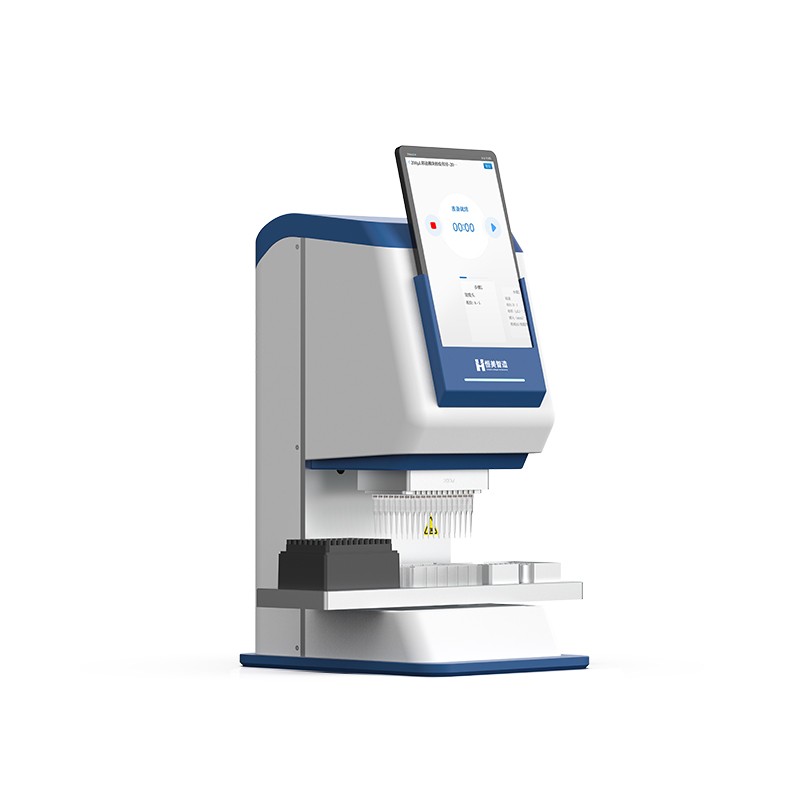
Choose a 96-channel pipetting workstation by working volume, deck capacity, labware and liquid properties. YA200-3 uses air-displacement pipetting, three deck positions and a 5–200 µL range. Match those specifications to the actual plate workflow and control requirements.
YA200-3 is part of the HENG MEI Intelligent Manufacturing range supplied by Shandong Hengmei Electronic Technology Co., Ltd.
How the measurement works
YA200-3 uses a 96-channel air-displacement head and three deck positions for 5–200 µL transfers. Labware geometry, liquid properties and aspiration and dispensing settings determine how a programmed transfer performs in the assay.
Map the deck and assay before selecting automation
Assign source, destination and tip-handling needs to the available positions. Review the plate map, controls and transfer volumes, then establish liquid settings for the actual reagents. Include reservoir dead volume and loading changes in the operating plan. Verify representative volumes with the selected tips, plates and liquids.
Technical configuration
| Parameter | Specification |
|---|---|
| Channels | 96 |
| Deck positions | 3 |
| Pipetting range | 5–200 µL |
Budget reagent with working volume and allowance
A 100 µL transfer into each of 96 wells requires 9.6 mL of delivered liquid. The reservoir must also provide the dead volume and any mixing or priming allowance required by the method. For 80 sample wells and 16 control or standard wells, the plate contains 80 sample positions under that layout.
Evaluate accuracy at the assay’s working conditions
Transfer performance depends on volume, liquid properties, tips and method settings. Choose the assessment procedure for the actual application, including any low-volume steps. Retain the method version and deck layout so a later change can be evaluated against the same operating conditions.
Move a plate protocol into routine automation
Begin with a plate map that identifies samples, standards, controls and transfer directions. Map each material to the physical deck and account for tip access and reservoir volume. Evaluate the programmed sequence with the actual liquids, including any mixing and low-volume steps. Review representative positions across the plate using the chosen transfer-assessment method. Save the accepted method and labware definitions together. If a consumable, liquid or layout changes, assess its effect through the laboratory change process. This makes the automated run reproducible for the operators who use it routinely.
Put the selected method into practice
- Define the source and destination labware and assign the deck positions.
- Set volumes, speeds and mixing steps for the actual liquid.
- Check transfers using an appropriate measurement procedure at the intended working volumes.
- Run the plate map with the required controls and retain the method version.
Plan support for common operating issues
| Operating issue | Checks and follow-up |
|---|---|
| Transfers vary across wells | Review tip seating, labware position, liquid level and transfer settings. |
| Delivered volume changes with reagent | Evaluate viscosity, volatility and the aspiration and dispense sequence. |
| The protocol runs out of source liquid | Review delivered volume, dead volume and loading allowances. |
Plan the complete working configuration
Map source plates, destination plates and tips to the available deck positions. Compare the working volumes and liquid properties with the specified performance conditions. Include dead volume, consumable supply, cleaning and method verification in the implementation plan. A 96-channel head supports parallel handling when the plate and assay layout are compatible.
Define the acceptance and reporting requirements
Agree on the following items when configuring YA200-3. They connect the equipment and consumables to the intended measurement and provide a basis for operator training and result review.
- Method version and plate map
- Labware and tip identity
- Volumes and liquid settings
- Transfer checks and run controls
Questions from buyers and laboratory teams
Does a 96-channel head guarantee 96 reportable samples?
The assay layout also includes standards, controls, replicates and any unused wells.
Why does deck capacity matter?
Sources, destinations and tip handling must fit the available positions or a defined loading sequence.
For a YA200-3 configuration enquiry, provide the sample type, required measurements, expected workload and reporting requirements. Include the consumables, preparation equipment and support arrangements needed at the installation site.
Address of this article:https://www.kjhm.net/news/choosing-a-96-channel-pipetting-workstation.html
 Related News
-
13 / 2026-11
HENG MEI Intelligent Manufacturing Choosing a Chemiluminescence Imaging System
Learn more
-
14 / 2024-09
How To Use Soil Rapid Detector To Optimize Farmland Fertilization Strategy.
Learn more
-
07 / 2026-08
HM Instruments Phthalate Detector Technical FAQ
Learn more
-
22 / 2026-05
HM Instruments Biological Toxicity Analyzer FAQ: Technical Questions Answered
Learn more