

 Current
Location:
Current
Location:HM Instruments Phthalate Detector Technical FAQ
Article Source: Hengmei Technology Release time:2026-08-07 16:26:58
Technical questions buyers ask
Supporting reagents use fluorescence quantitative immunochromatography. A treated sample is added to a card; antigen-antibody binding forms fluorescent complexes, and the preset curve calculates the displayed plasticizer content.
Peanut oil, soybean oil, rapeseed oil and blended oil are identified for rapid screening. Other matrices need reagent confirmation.
The stated range is 0.1–20.0 mg/kg (ppm), quantification limit 0.3 mg/kg (ppm), relative deviation ≤±5%, stability CV ≤5%, repeatability CV ≤3% and resolution 0.001.
SHJ-S is handheld, battery-powered and has integrated incubation/detection. SHJ-T1 is the desktop single-channel route; SHJ-T6 provides six integrated channels.
No. It supports triage. The European Commission Regulation (EU) No 10/2011 is an example of an authoritative framework quality teams may consider alongside local procedures.
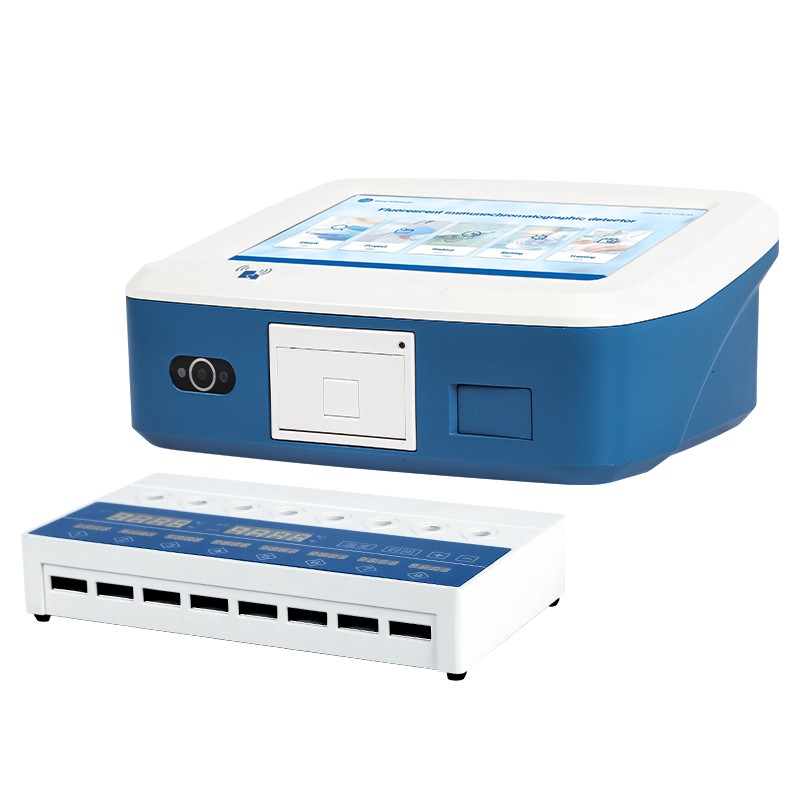
Review HM Instruments SHJ-T1 for the desktop configuration.
It reads fluorescence from the supporting immunochromatographic card and uses a preset standard curve to calculate the displayed plasticizer content. The instrument, reagent card and sample-treatment procedure work together; the reader alone is not a complete analytical method. The applicable manual, reagent instructions and site procedure should be checked together before the answer is converted into an operating rule or purchasing requirement. During training, ask the operator to explain the answer in the context of a real sample and document any site-specific restriction.
The supplied reagent method uses a specific antigen-antibody reaction to form fluorescent complexes after the treated sample is applied. The fluorescent signal produced by that reaction is the basis for the quantitative card reading described in the product information. The applicable manual, reagent instructions and site procedure should be checked together before the answer is converted into an operating rule or purchasing requirement. During training, ask the operator to explain the answer in the context of a real sample and document any site-specific restriction.
The stated application covers peanut oil, soybean oil, rapeseed oil and blended oil. A laboratory should not assume that response, recovery or interference behavior is identical in another matrix without suitable reagent documentation and local verification. The applicable manual, reagent instructions and site procedure should be checked together before the answer is converted into an operating rule or purchasing requirement. During training, ask the operator to explain the answer in the context of a real sample and document any site-specific restriction.
The reagent performance range is 0.1–20.0 mg/kg (ppm). Results and decisions should be interpreted within the documented range, and the operator should follow the site's procedure when a response is outside or near a decision boundary. The applicable manual, reagent instructions and site procedure should be checked together before the answer is converted into an operating rule or purchasing requirement. During training, ask the operator to explain the answer in the context of a real sample and document any site-specific restriction.
The manuals identify 0.3 mg/kg (ppm) as the quantification limit. It should not be silently relabeled as a universal legal limit, because regulatory and contractual limits depend on jurisdiction, material, analyte and decision context. The applicable manual, reagent instructions and site procedure should be checked together before the answer is converted into an operating rule or purchasing requirement. During training, ask the operator to explain the answer in the context of a real sample and document any site-specific restriction.
Accuracy is stated as relative deviation ≤±5%, stability as coefficient of variation ≤5%, and repeatability as CV ≤3%. These are separate declared indicators. Verification should preserve the stated calculation and agreed test conditions. The applicable manual, reagent instructions and site procedure should be checked together before the answer is converted into an operating rule or purchasing requirement. During training, ask the operator to explain the answer in the context of a real sample and document any site-specific restriction.
No. The displayed resolution is 0.001, while the reagent quantification limit is stated separately as 0.3 mg/kg (ppm). Displayed digits do not by themselves prove that a concentration can be quantified reliably at the same numerical level. The applicable manual, reagent instructions and site procedure should be checked together before the answer is converted into an operating rule or purchasing requirement. During training, ask the operator to explain the answer in the context of a real sample and document any site-specific restriction.
The reader step is stated as less than 5 seconds. Total turnaround also includes sampling, sample treatment, card loading and incubation. Workflow planning should therefore distinguish instrument reading time from complete sample-to-decision time. The applicable manual, reagent instructions and site procedure should be checked together before the answer is converted into an operating rule or purchasing requirement. During training, ask the operator to explain the answer in the context of a real sample and document any site-specific restriction.
SHJ-S is a 670 g handheld unit with a 4.3-inch touch screen, 6000 mAh battery, power display, photo recording and integrated incubation/detection. Field deployment must still provide controlled sample preparation and reagent handling. The applicable manual, reagent instructions and site procedure should be checked together before the answer is converted into an operating rule or purchasing requirement. During training, ask the operator to explain the answer in the context of a real sample and document any site-specific restriction.
SHJ-T1 is a single-channel desktop reader with a 10.1-inch 1280×800 display and a standard 8-well constant-temperature dual-purpose incubator. It is suited to an organized bench workflow where incubation capacity and a larger interface matter. The applicable manual, reagent instructions and site procedure should be checked together before the answer is converted into an operating rule or purchasing requirement. During training, ask the operator to explain the answer in the context of a real sample and document any site-specific restriction.
SHJ-T6 provides six integrated channel slots, a 7-inch touch screen and automatic reading for single or multi-card samples in less than 5 seconds. It is relevant when several cards must be managed in a coordinated desktop workflow. The applicable manual, reagent instructions and site procedure should be checked together before the answer is converted into an operating rule or purchasing requirement. During training, ask the operator to explain the answer in the context of a real sample and document any site-specific restriction.
They share the stated fluorescence immunochromatographic principle, card size, reagent range, quantification limit, accuracy, stability, repeatability and resolution. Their principal documented differences concern portability, interface, incubation arrangement, channels, storage and connectivity. The applicable manual, reagent instructions and site procedure should be checked together before the answer is converted into an operating rule or purchasing requirement. During training, ask the operator to explain the answer in the context of a real sample and document any site-specific restriction.
The product information describes a consumables-management system. SHJ-S and SHJ-T1 can register kits by scanning, while SHJ-T1 and SHJ-T6 also reference IC-card registration. The exact supplied workflow should be confirmed during commissioning. The applicable manual, reagent instructions and site procedure should be checked together before the answer is converted into an operating rule or purchasing requirement. During training, ask the operator to explain the answer in the context of a real sample and document any site-specific restriction.
The manuals describe card-slot status detection or self-check behavior. Operators should follow on-screen prompts, inspect the card and repeat only according to the approved procedure rather than forcing a result or manually editing a record. The applicable manual, reagent instructions and site procedure should be checked together before the answer is converted into an operating rule or purchasing requirement. During training, ask the operator to explain the answer in the context of a real sample and document any site-specific restriction.
The product line includes thermal-printing functions, with desktop documentation describing immediate result printing and report export. The organization should decide whether the printed ticket, electronic record or both constitute the controlled record. The applicable manual, reagent instructions and site procedure should be checked together before the answer is converted into an operating rule or purchasing requirement. During training, ask the operator to explain the answer in the context of a real sample and document any site-specific restriction.
SHJ-S and SHJ-T1 state storage of more than 100,000 records with 1+8 GB memory. SHJ-T6 specifies 8 GB storage. Record-retention planning should also address export, backup, access and archive capacity. The applicable manual, reagent instructions and site procedure should be checked together before the answer is converted into an operating rule or purchasing requirement. During training, ask the operator to explain the answer in the context of a real sample and document any site-specific restriction.
SHJ-S lists Wi-Fi, Bluetooth and Type-C; SHJ-T1 lists Wi-Fi with USB and LAN interfaces; SHJ-T6 lists Wi-Fi, wired network and Bluetooth. Availability does not remove the need for local network authorization. The applicable manual, reagent instructions and site procedure should be checked together before the answer is converted into an operating rule or purchasing requirement. During training, ask the operator to explain the answer in the context of a real sample and document any site-specific restriction.
The manuals describe wireless data upload or regulatory-platform connectivity. Before enabling it, users should confirm the destination, data fields, account permissions, review process and the site's rules for transmitting controlled test information. The applicable manual, reagent instructions and site procedure should be checked together before the answer is converted into an operating rule or purchasing requirement. During training, ask the operator to explain the answer in the context of a real sample and document any site-specific restriction.
SHJ-S and SHJ-T1 state use at 0–50℃ and 0–90% humidity. Installation and field plans should also follow reagent-specific storage and operating requirements, which are separate from the reader's environmental specification. The applicable manual, reagent instructions and site procedure should be checked together before the answer is converted into an operating rule or purchasing requirement. During training, ask the operator to explain the answer in the context of a real sample and document any site-specific restriction.
The manuals state Chinese and English language support. During acceptance, the buyer should verify the delivered interface language, terminology, report output and training material needed by actual operators. The applicable manual, reagent instructions and site procedure should be checked together before the answer is converted into an operating rule or purchasing requirement. During training, ask the operator to explain the answer in the context of a real sample and document any site-specific restriction.
No. An internal quality-control function supports instrument operation, but the organization still needs procedures for reagent lots, controls, operator competency, review, exceptions and any confirmation required by its quality system. The applicable manual, reagent instructions and site procedure should be checked together before the answer is converted into an operating rule or purchasing requirement. During training, ask the operator to explain the answer in the context of a real sample and document any site-specific restriction.
First preserve sample identity, card lot, operator, time and the original record. Review procedural checks and control status, then follow the site's repeat or confirmation rule. An unexpected result should not be deleted merely because it is inconvenient. The applicable manual, reagent instructions and site procedure should be checked together before the answer is converted into an operating rule or purchasing requirement. During training, ask the operator to explain the answer in the context of a real sample and document any site-specific restriction.
Routine care should follow the manual and training: keep the card area clean, protect interfaces, inspect accessories, manage printer supplies and verify normal startup behavior. Users should not disassemble optical or internal components without authorization. The applicable manual, reagent instructions and site procedure should be checked together before the answer is converted into an operating rule or purchasing requirement. During training, ask the operator to explain the answer in the context of a real sample and document any site-specific restriction.
Commission Regulation (EU) No 10/2011 is an authoritative reference for plastic food-contact materials. It does not turn every rapid card result into a compliance decision; the applicable law, analyte scope and confirmation route must still be established. The applicable manual, reagent instructions and site procedure should be checked together before the answer is converted into an operating rule or purchasing requirement. During training, ask the operator to explain the answer in the context of a real sample and document any site-specific restriction.
Address of this article:https://www.kjhm.net/news/phthalate-detector-technical-faq.html
- Previous: HM Instruments Phthalate Detector Manufacturer Guide
- Next: no more
 Related News
-
23 / 2024-09
Innovative Application Of Multi-parameter Water Quality Detector In Water Resource Management.
Learn more
-
07 / 2024-11
Discover the Power of Precision with the Portable Liquid Density Meter
Learn more
-
12 / 2024-11
Unlock the Secrets of Photosynthesis with Portable Photosynthesis Meter.
Learn more
-
08 / 2026-06
HM Instruments Portable Water Quality Analyzer Brand Recommendation
Learn more