

 Current
Location:
Current
Location:HM Instruments HM-GT4 Soil Nutrient Analyzer: Inner Mongolia Agricultural University Case Study
Article Source: Hengmei Technology Release time:2026-08-06 13:53:12
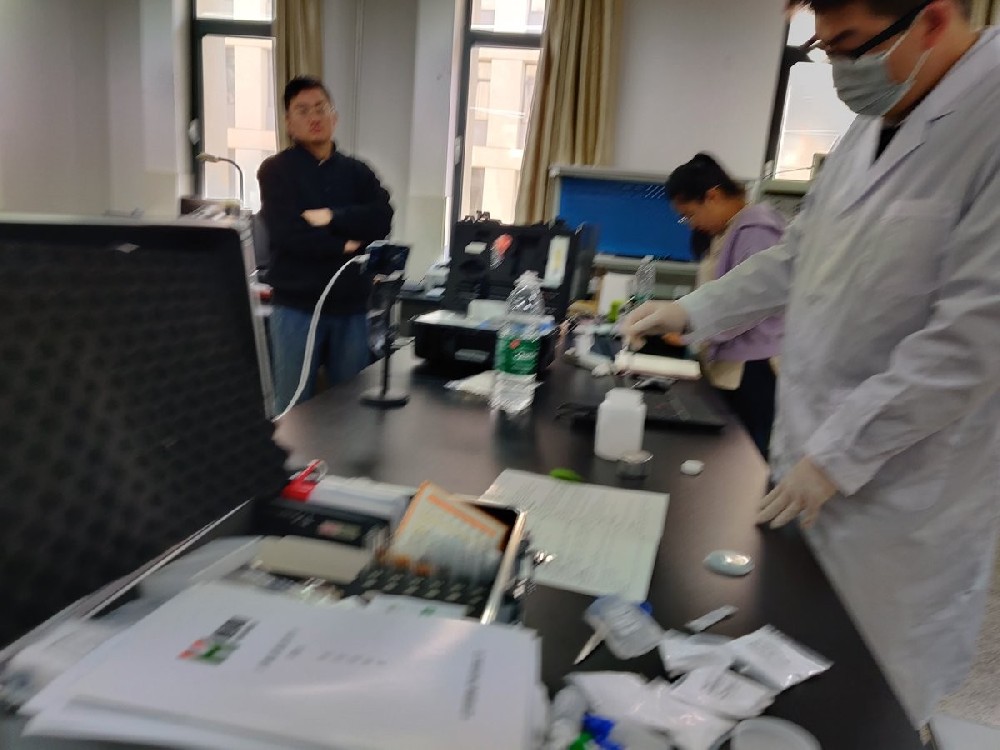
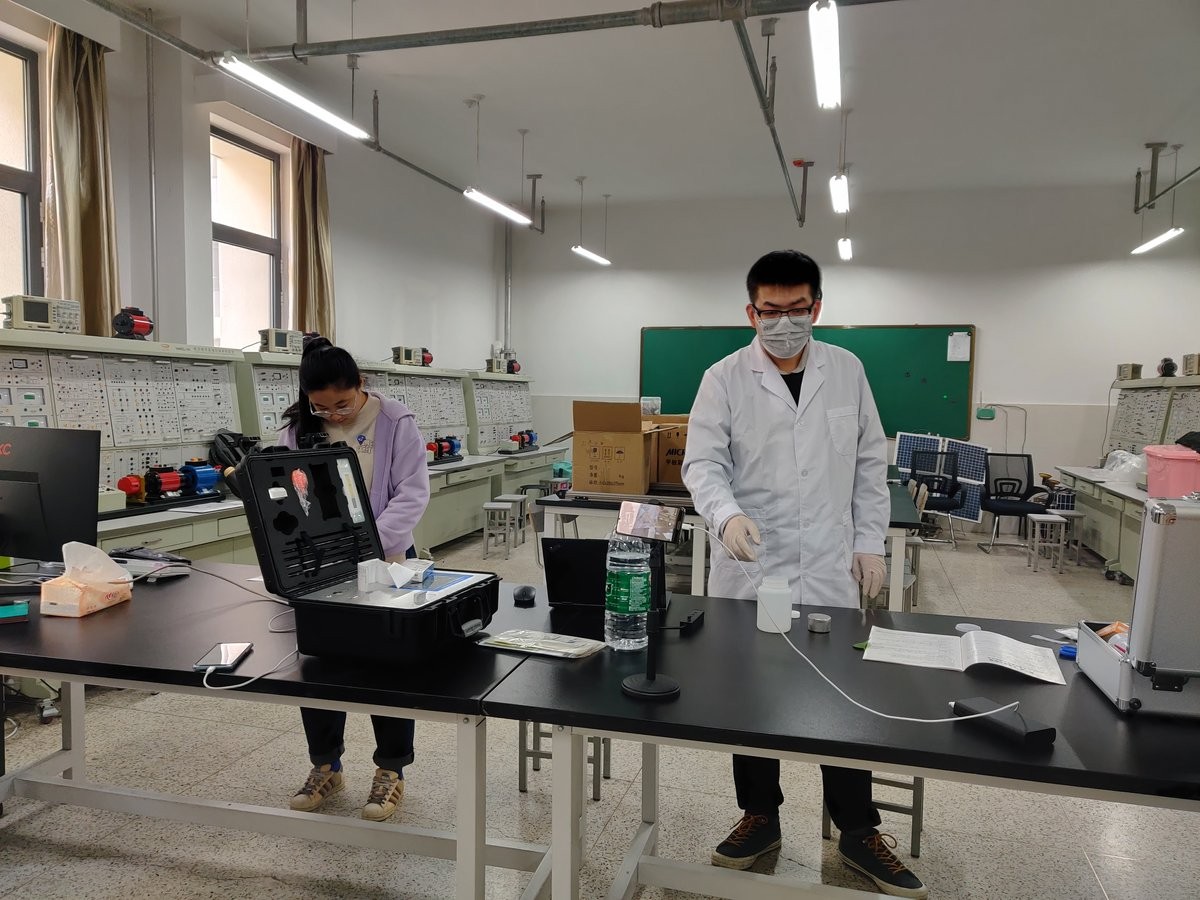
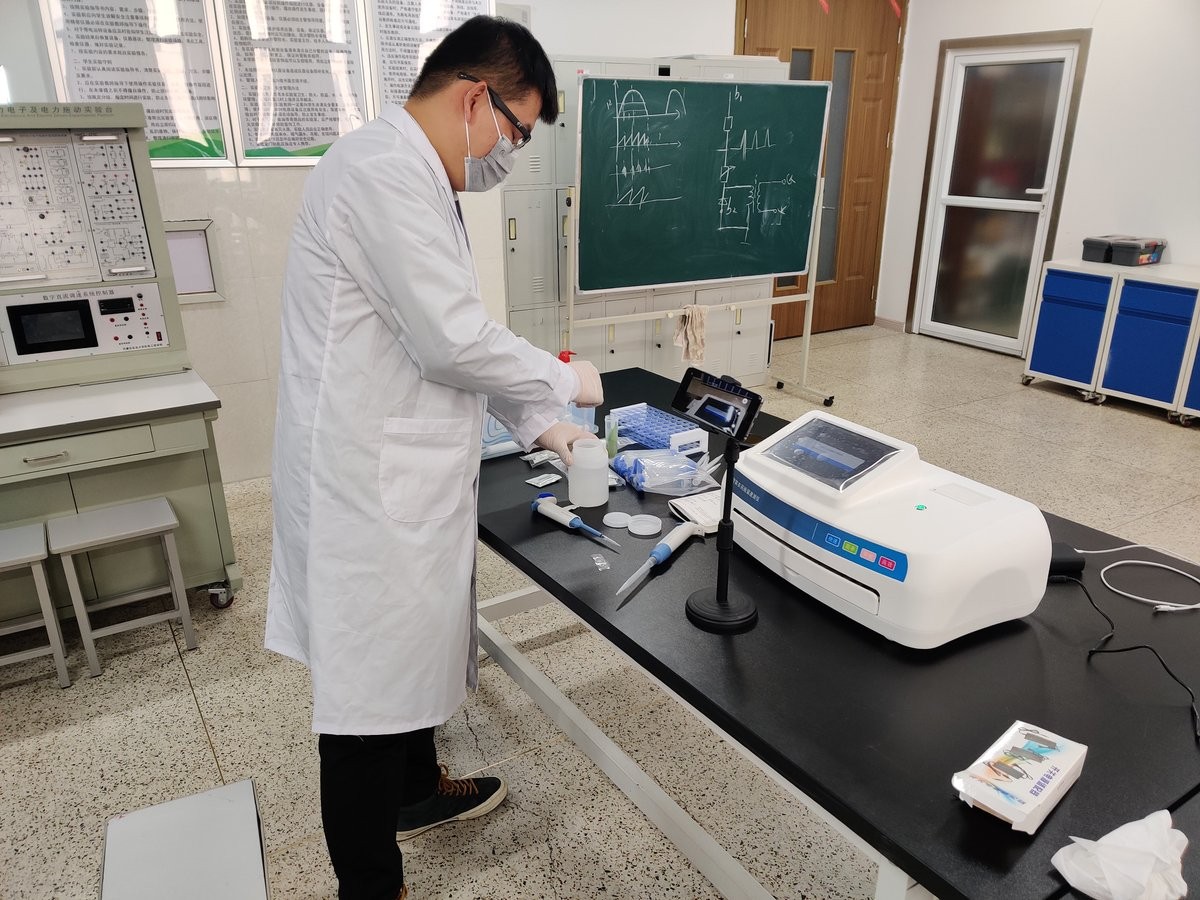
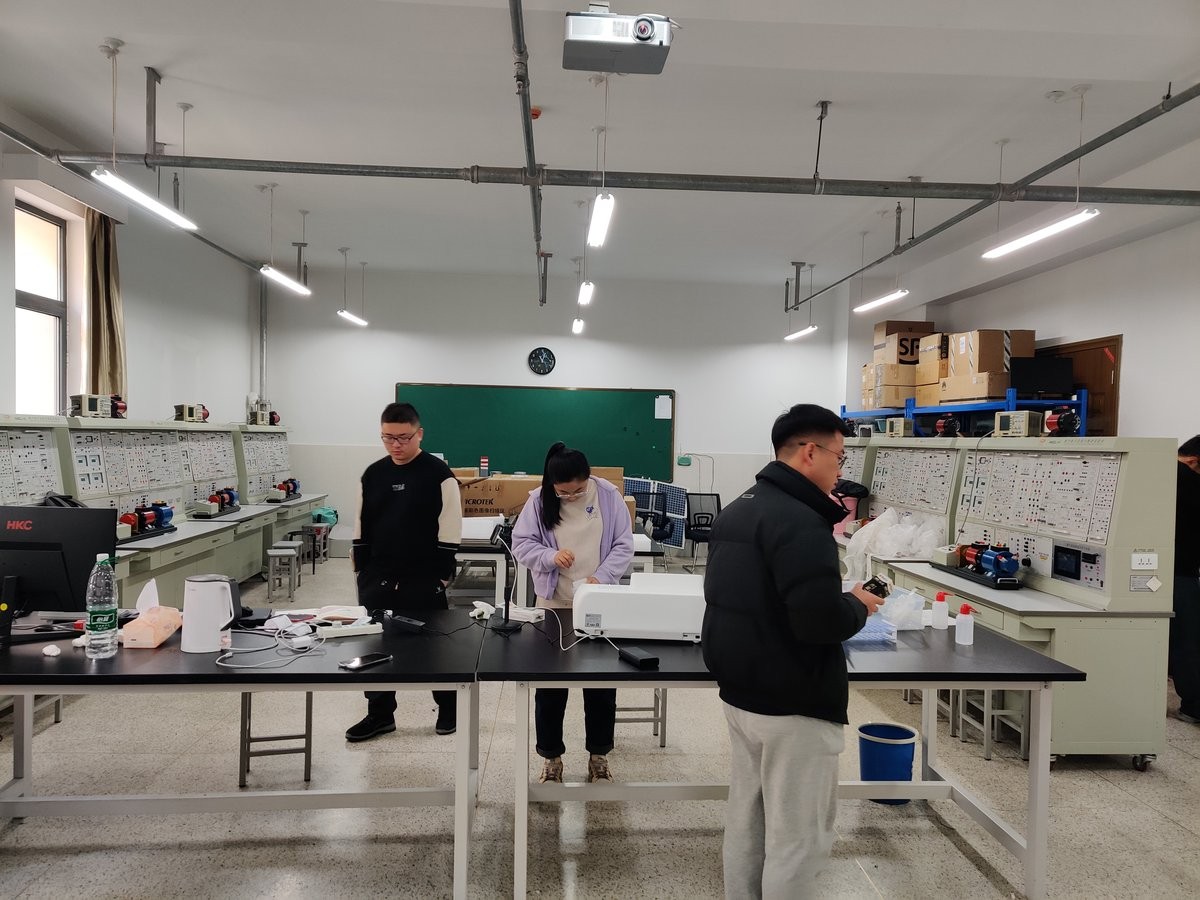
In late October 2023, a teaching and research laboratory at Inner Mongolia Agricultural University in Hohhot received one HM-GT4 research-grade soil and fertiliser nutrient analyser as the centrepiece of a broader plant-science instrument package. Unlike a commercial service centre, the university's priority was not throughput but teaching fidelity: the instrument had to be accurate enough for research, intuitive enough for undergraduates, and consistent enough to serve as a reference point across several connected courses. Over three days, from 28 to 30 October 2023, an HM Instruments application engineer delivered on-site installation, operator training and method demonstration with the university's own teaching staff present throughout.
The HM-GT4 was not delivered alone. It arrived as part of a coordinated suite that also included a plant photosynthesis analyser, a root analysis system, a fruit and vegetable respiration analyser, a soil respiration analyser, a pesticide residue rapid detector, a multi-parameter chlorophyll meter, an intelligent artificial-climate incubator, a handheld smart agro-meteorological environment detector and a plant leaf analyser. The intent of the package was to let one cohort of students move from leaf gas exchange, through root and chlorophyll measurement, to soil fertility and ultimately to residue screening, without changing laboratories or analytical philosophies between steps.
Project Snapshot
| Item | Detail |
|---|---|
| Country | China, Inner Mongolia Autonomous Region (Hohhot) |
| Customer type | Agricultural university — teaching and research laboratory |
| Primary model supplied | HM-GT4 research-grade soil and fertiliser nutrient analyser |
| Package scope | HM-GT4 plus a ten-instrument plant-science suite |
| Quantity | 1 unit of HM-GT4; companion instruments per package list |
| Deployment window | 28–30 October 2023, on-site |
| Training model | Three-day on-site installation, operator training and method demonstration by an HM Instruments application engineer |
| Trainer / Sales | Application engineer 张友坤 (Zhang Youkun); sales contact 陈鹏飞 (Chen Pengfei) |
| Interface language | Chinese (Simplified) |
Why the Customer Bought
The instrument had to teach the method, not just produce a number. In a university setting the deliverable is comprehension. A soil test that returns a fertility index is useful; a soil test whose procedure a student can reproduce, explain and troubleshoot is educational. The HM-GT4's colourimetric workflow — weigh, extract, develop colour, read, interpret — maps onto the classical soil chemistry curriculum, so it could be used to demonstrate the principles rather than hide them behind a sealed module.
One platform had to serve several courses. Soil science, plant nutrition, fertiliser science and environmental monitoring all draw on the same underlying measurements: available nitrogen, phosphorus and potassium, organic matter, pH and salinity. Rather than asking each department to maintain its own device, the university consolidated the core soil-fertility measurements onto a single benchtop analyser that could travel between teaching rooms and the research lab.
The suite needed to connect soil to the living plant. Soil fertility is only meaningful in relation to what the crop does with it. By pairing the HM-GT4 with photosynthesis, chlorophyll, root and respiration instruments, the university built a measurement chain in which a soil result could be related to a leaf gas-exchange reading taken the same afternoon. That integration is difficult to achieve when instruments come from unrelated suppliers with incompatible data formats and philosophies.
Why the HM-GT4 Was Selected
Documented metrological performance. The manual specifies repeatability error ≤0.02% on potassium dichromate solution, linearity error ≤0.1% on copper sulphate, and drift below 0.3% per hour in transmittance after a five-minute warm-up. The manufacturer states that working stability is six times better than the requirement of the Chinese national metrological verification regulation JJG 179-90 for spectrophotometric instruments. For a teaching lab that also supports research, a written stability figure tied to a published standard is more defensible than an unverified accuracy claim.
Twelve detection channels on a rotating cuvette carousel. The optical design uses a precision rotating colorimetric cell (patent ZL 2018 2 1777724.7) so that all channels share one light source and one detection path. Twelve samples are read in a single batch, which lets a full student group complete one exercise in one session rather than rotating through a single-channel device.
Parameter coverage across soil, fertiliser and plant. The instrument covers ammonium and nitrate nitrogen, available phosphorus, available potassium, total N, P and K, organic matter, pH, salinity, moisture and alkali-hydrolysable nitrogen, plus trace elements including calcium, magnesium, sulphur, iron, manganese, boron, zinc, copper, chlorine, silicon and molybdenum. Fertiliser work covers nitrogen, phosphorus and potassium in straight, compound and organic products. Plant-tissue analysis covers nitrogen, phosphorus and potassium plus nitrate and nitrite.
A filter-based analytical method under its own patent. Colour development is read through high-precision filters (patent ZL 2020 2 1763837.9) at 680±2 nm, 420±2 nm, 510±2 nm and 590±4 nm. Because there is no mechanical displacement in the cuvette path, optical positioning does not drift with wear — a useful property in a shared teaching instrument that sees heavy daily handling across many student cohorts.
Reporting a student can read and a researcher can trust. The built-in thermal printer produces a report containing the testing unit, operator, parameter, channel number, absorbance, nutrient content in mg/kg, timestamp and a QR code. In a teaching context the printed traceability fields become part of the lesson in good laboratory record-keeping.
Deployment, Installation and Training
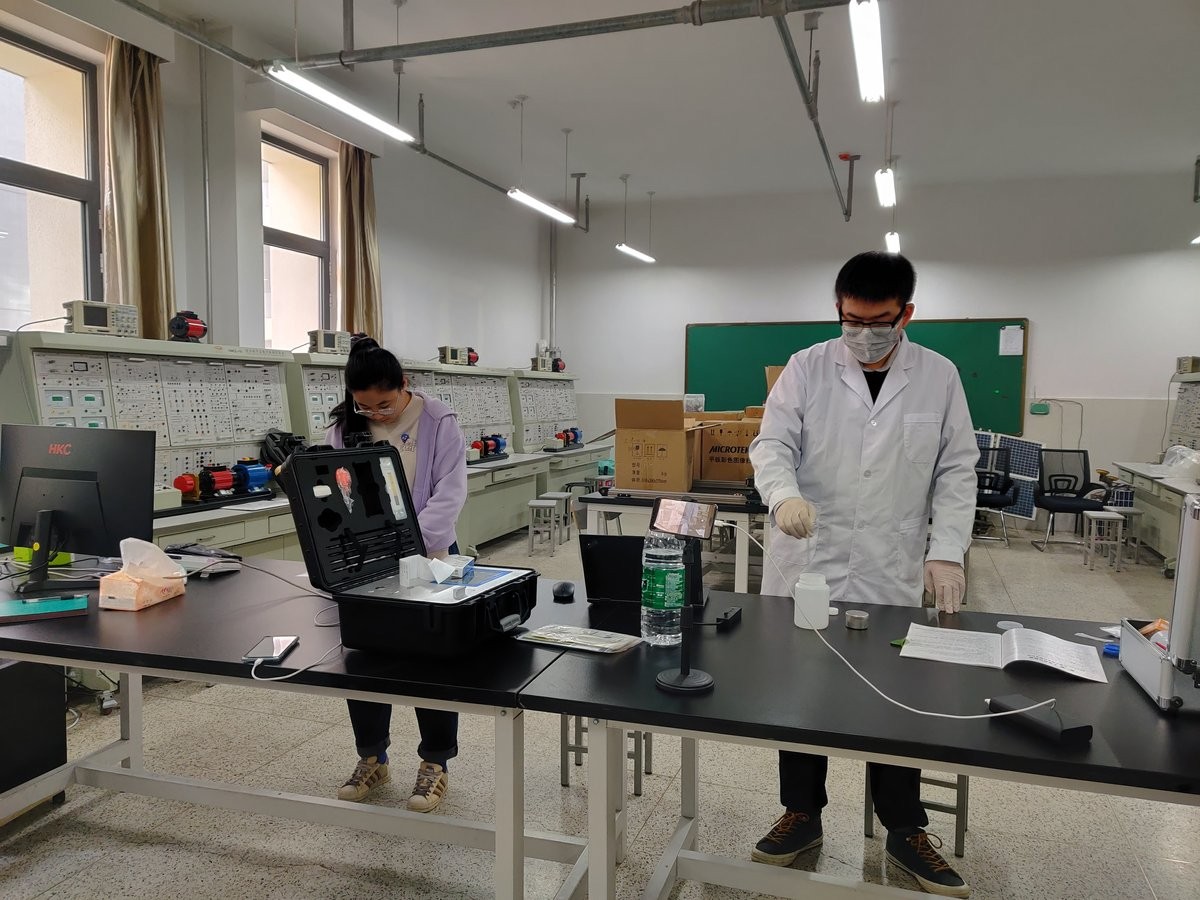
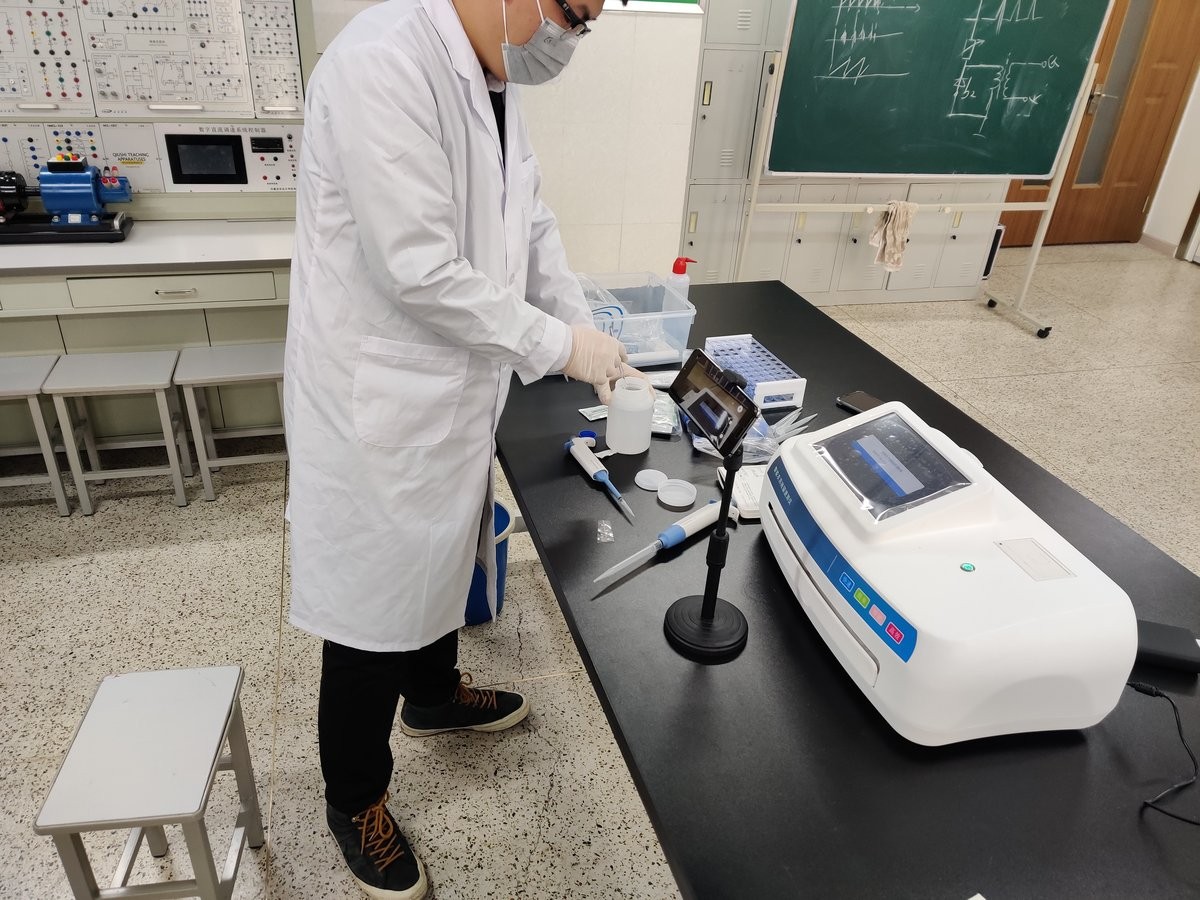
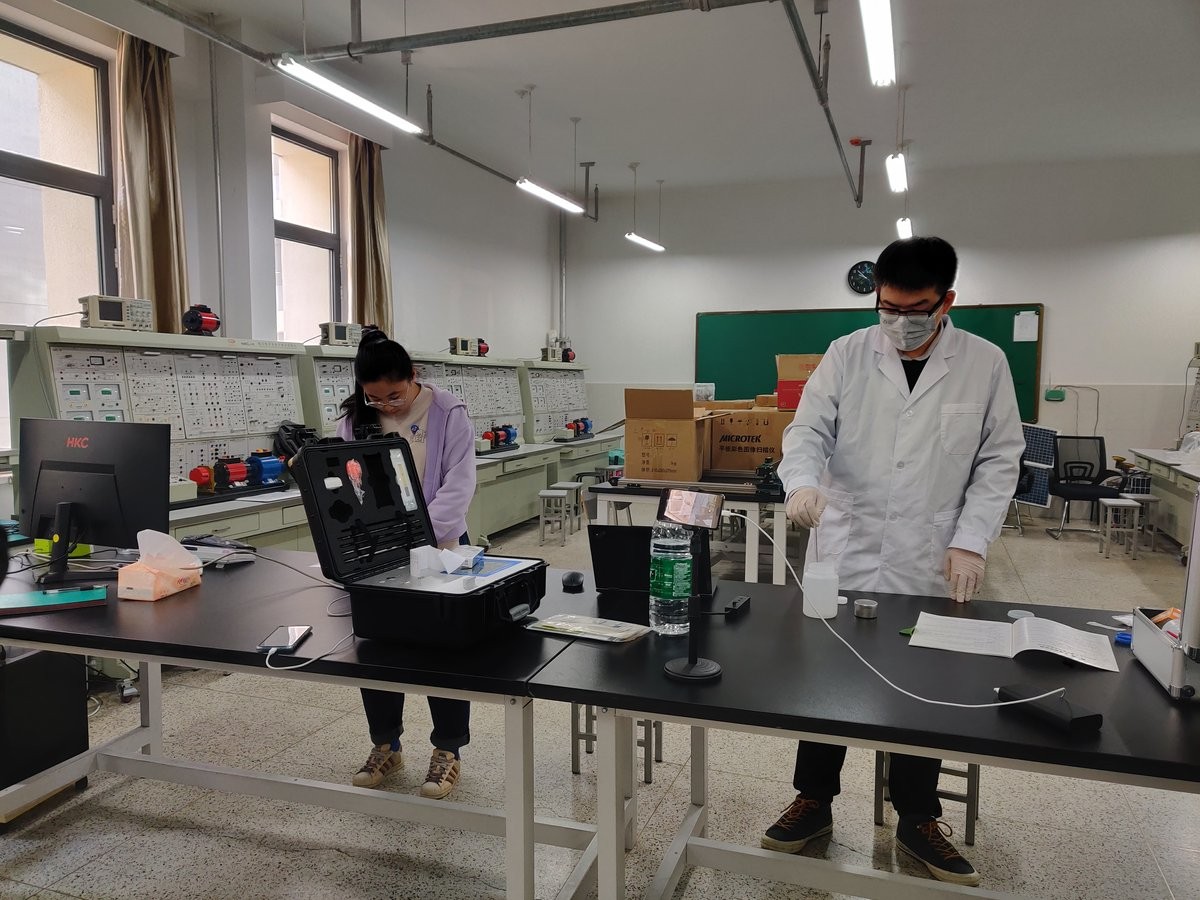
The unit was commissioned over three consecutive days, 28 to 30 October 2023, by HM Instruments senior application engineer 张友坤 (Zhang Youkun), with the university's teaching staff present and the sales contact 陈鹏飞 (Chen Pengfei) coordinating the engagement.
Day one covered unpacking, inventory against the configuration list, bench placement and system initialisation. The main unit was connected to the laboratory network so that the wireless upload path could be demonstrated, and the Android operating system was introduced to staff who would later lead the student sessions themselves.
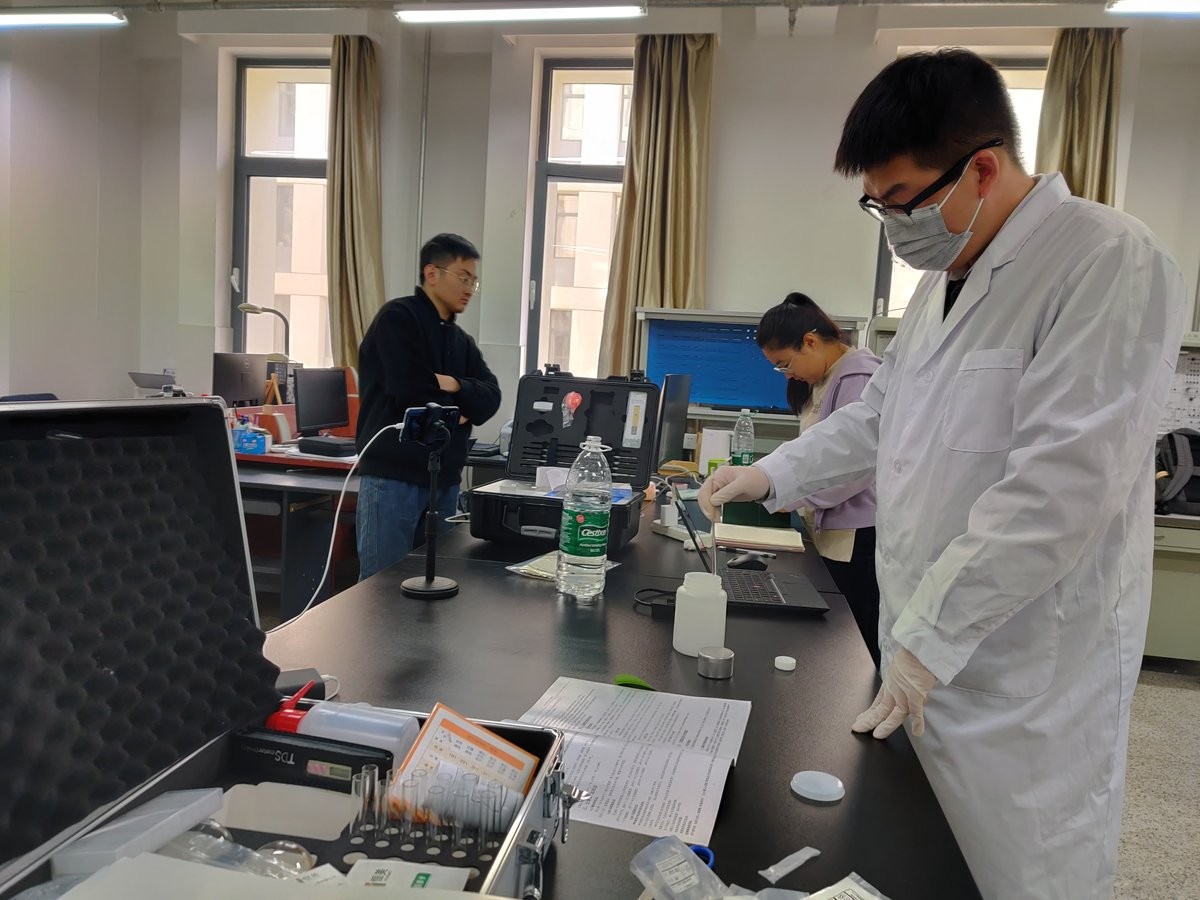
Day two was devoted to the analytical workflow: air-drying and sieving, weighing on the supplied balance, the single-extraction procedure that releases available nitrogen, phosphorus and potassium together, timed colour development, cuvette filling, carousel loading and result review on the seven-inch touchscreen. Particular time was spent on pipetting discipline, because in colorimetric soil analysis the dominant source of variability is bench technique rather than the instrument.
Day three extended the method to the companion instruments of the package, showing staff how a soil-fertility reading could be related to leaf and root measurements taken on the same material. The aim was to give the university a coherent teaching narrative — soil to plant to produce — rather than a set of disconnected demonstrations.
Configuration Delivered
| Section | Item | Quantity |
|---|---|---|
| Instrument case | Main unit with built-in printer | 1 |
| Instrument case | pH electrode | 1 |
| Instrument case | TDS meter | 1 |
| Instrument case | Cuvettes, 1 cm optical path | 4 |
| Instrument case | Electronic balance, 100 g / 0.01 g | 1 |
| Reagent case | Soil nutrient determination reagent set | 1 set, per manual |
| Reagent case | Conical flasks, 100 ml | 2 |
| Reagent case | Small reaction bottles | 9 |
| Reagent case | Volumetric flask | 1 |
| Reagent case | Wash bottle | 1 |
| Reagent case | Spatula set | 1 |
The Multi-Instrument Teaching Package
The HM-GT4 was the soil-fertility anchor of a deliberately connected suite. The companion instruments, supplied as part of the same engagement, let one course progression move from the leaf to the root to the soil and back.
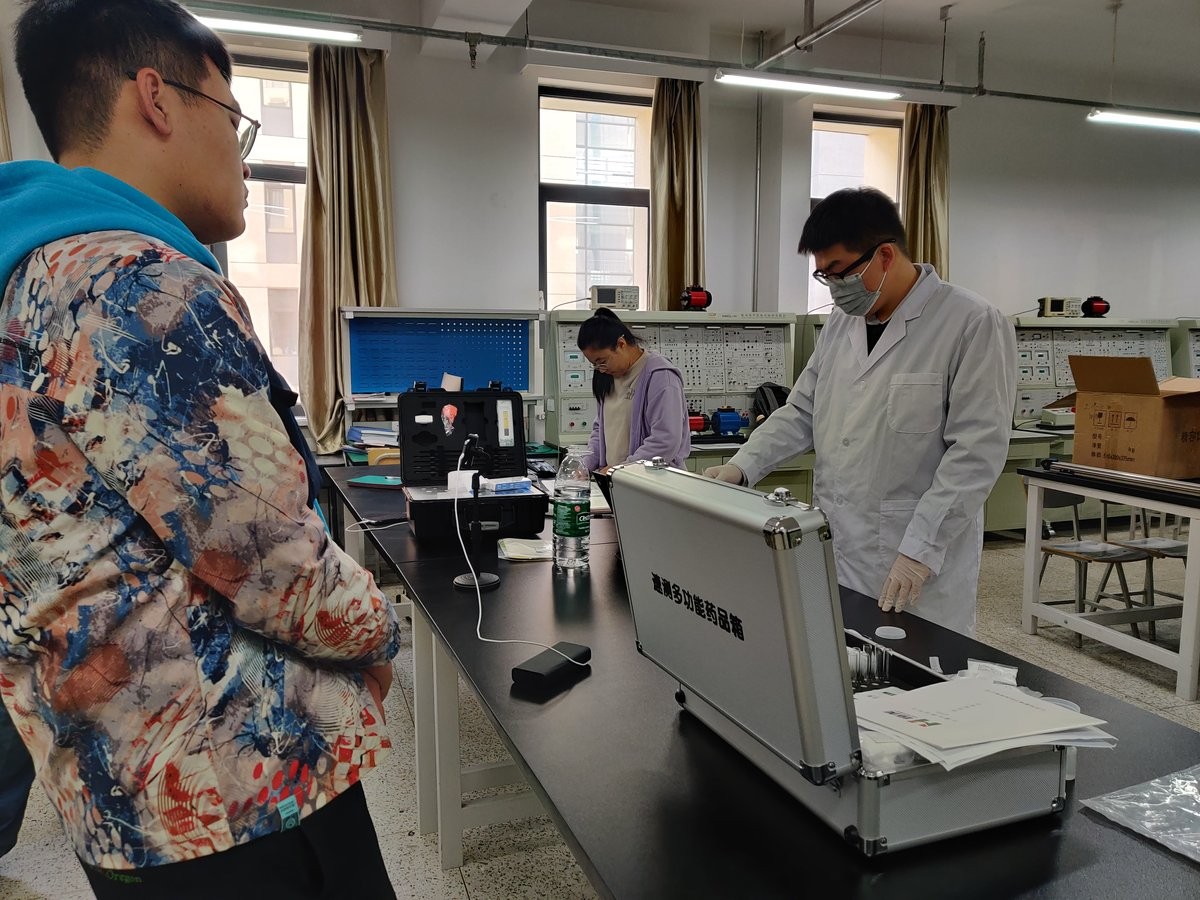
The plant photosynthesis analyser and multi-parameter chlorophyll meter address the crop's response side of the nutrient story; the root analysis system and plant leaf analyser give morphological and physiological context; the fruit and vegetable respiration analyser and soil respiration analyser extend the measurement into post-harvest and soil-carbon questions; and the pesticide residue rapid detector supports food-safety teaching. The intelligent artificial-climate incubator and the handheld smart agro-meteorological environment detector supply the controlled and field environments in which the other measurements are interpreted. Specific model numbers and individual specifications for these companion units are recorded in the package documentation and are marked where not independently verified here.
Results Reported
| Indicator | Before | After |
|---|---|---|
| Soil result turnaround | External laboratory, days of waiting | ≤30 minutes for one N-P-K sample including preparation, in-house |
| Batch capacity | Constrained by external scheduling | 8 soil samples ≤1 hour; 12 channels per carousel run |
| Teaching coverage | Soil shown separately from plant physiology | Connected soil-to-plant measurement chain in one lab |
| Student hands-on time | Limited by shared or borrowed devices | Dedicated benchtop unit available within the department |
| Data traceability | Manual notebook records | Printed report with QR code plus wireless upload |
| Matrices handled in-house | Soil only | Soil, fertiliser and plant tissue on one platform |
Specifications Relevant to This Deployment
| Parameter | Specification |
|---|---|
| Power supply | AC 220±22 V; DC 12 V + 5 V, built-in lithium battery, vehicle power supported |
| Power consumption | ≤5 W |
| Range and resolution | 0.001–9999 |
| Repeatability error | ≤0.02% (0.0002, potassium dichromate solution) |
| Stability | Drift <0.3% within one hour; ≤0.5% within two hours (transmittance) |
| Linearity error | ≤0.1% (0.001, copper sulphate) |
| Wavelengths | Red 680±2 nm; blue 420±2 nm; green 510±2 nm; orange 590±4 nm |
| pH | Range 1–14; resolution 0.01; error ±0.1 |
| Salinity (conductivity) | 0.01%–1.00%; relative error ±5% |
| Moisture | 0–100%; error less than 0.5% |
| Test speed | One soil sample (N, P, K) ≤30 minutes including preparation; 8 soil samples ≤1 hour |
| Test error | Soil ≤5%; single fertiliser parameter ≤0.5%; N, P, K combined ≤1% |
| Dimensions and weight | 43 × 34.5 × 19 cm; net weight 5.1 kg |
From Classroom to Field: Integrating Soil Data into Agronomy Teaching
The practical value of placing an HM-GT4 inside a teaching laboratory is that soil fertility stops being an abstract chart and becomes a measurement the student performs. When a class can take a real field sample, extract the available nutrients, read the result on the touchscreen and then relate that number to a chlorophyll or photosynthesis reading taken on the same plant material, the connection between soil management and crop response is no longer a slide — it is an experiment they ran.
This mirrors the reasoning behind the 4R Nutrient Stewardship framework — right source, right rate, right time, right place — promoted internationally and reflected in the guidance of the Food and Agriculture Organization of the United Nations (FAO) on sustainable soil management. Rate and timing depend directly on current data, and in the semi-arid, frequently alkaline and sometimes saline soils of Inner Mongolia, salinity and pH readings are as instructive as nitrogen figures. A student who sees those readings emerge from a procedure they performed is far better prepared to apply them later in extension or research work.
Calibration Discipline in a Teaching Laboratory
Shared instruments in teaching labs face a particular risk: with many hands and rotating supervisors, performance can drift unnoticed between cohorts. The three-day training therefore placed explicit weight on calibration and method discipline, not only on button operation. The structure follows the same logic used in international guidance on analytical procedure validation, where linearity, accuracy, precision and robustness are established experimentally rather than assumed, and it reflects the competence expectations of ISO/IEC 17025 for testing laboratories.
The university is not an accredited calibration laboratory and does not claim to be one. What the training gave it was a repeatable internal routine — scheduled warm-up, reference checks, replicate reads, and a written record through the printed report and QR code — so that an instrument used by dozens of students across a semester still produces defensible numbers at the end of it. For a department that also supports staff research, that discipline is the difference between a teaching prop and a trustworthy measurement device.
Related Reading
The same HM-GT4 model appears in a commercial service-centre context in the Sinochem MAP Dalad Banner case study, where the priorities are throughput and fertiliser-blend quality control rather than curriculum. Where portability outweighs the highest accuracy grade, the HM-GT2 soil nutrient analyser covers the same core parameter set in a field-oriented configuration, and its deployment by a European farm cooperative is described in the Murcia, Spain field case study.
About HM Instruments
HM Instruments (Shandong Hengmei Electronic Technology Co., Ltd.) is a national high-technology enterprise, a Shandong gazelle enterprise and a specialised "little giant" SME, listed on the New Fourth Board under equity code 306008. Certifications include ISO 9001 quality management (No. 06524Q02062ROM), intellectual property management (472IP190206R0S), 3A credit enterprise (HXZC201968486), after-sales service certification (78323SC0008R0S), occupational health and safety management (06524S00854ROM) and environmental management (06524E00905ROM).
The company maintains a research and development team of more than 100 engineers and holds around 150 core patents, including the rotating colorimetric cell and filter analysis patents used in this instrument. Support is delivered through 280 service centres across China with a 24-hour response commitment. Supply includes a 12-month whole-unit warranty, lifetime technical support, lifetime free training and lifetime maintenance. Certificate metadata is notarised on the Zhixin (至信链) blockchain and can be verified at zxscan.qq.com.
Address of this article:https://www.kjhm.net/case/hm-gt4-soil-nutrient-analyzer-case-study-inner-mongolia-agricultural-university.html
 Related News
-
29 / 2025-09
How Soybean Protein Analyzers Achieve Rapid Multi-Index Detection?
Learn more
-
05 / 2024-12
Functional analysis of enzyme-substrate water quality detector.
Learn more
-
10 / 2026-07
HM Instruments Integrated Chemiluminescence Imaging System: Reliable Manufacturer & Brand Guide
Learn more
-
20 / 2025-10
Handheld Biological Toxicity Detector: Principles and Applications in Environmental Monitoring
Learn more