

 Current
Location:
Current
Location:HM Instruments HM-GT2 Soil Nutrient Analyzer: Spain Murcia Farm European Field Deployment
Article Source: Hengmei Technology Release time:2026-08-06 13:53:12
In January 2025, amidst the productive agricultural landscapes of the Región de Murcia in southeastern Spain, a new approach to on-farm soil fertility management was put into practice. An HM-GT2 soil and fertilizer nutrient detection instrument from HM Instruments was deployed at a farm operation affiliated with the region's largest agricultural marketing cooperative federation — an organization connecting approximately 22,000 farmers and ranchers and supporting over 45,000 jobs across the autonomous community. The deployment represents a meaningful example of Chinese analytical instrumentation entering the European precision agriculture market, where portability, multilingual operation, and field-ready reliability are paramount.
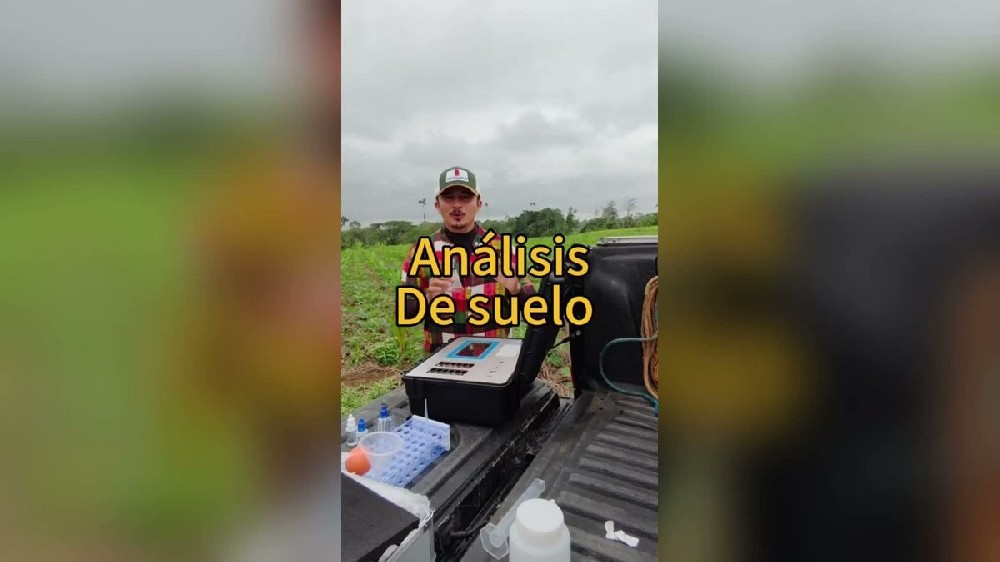
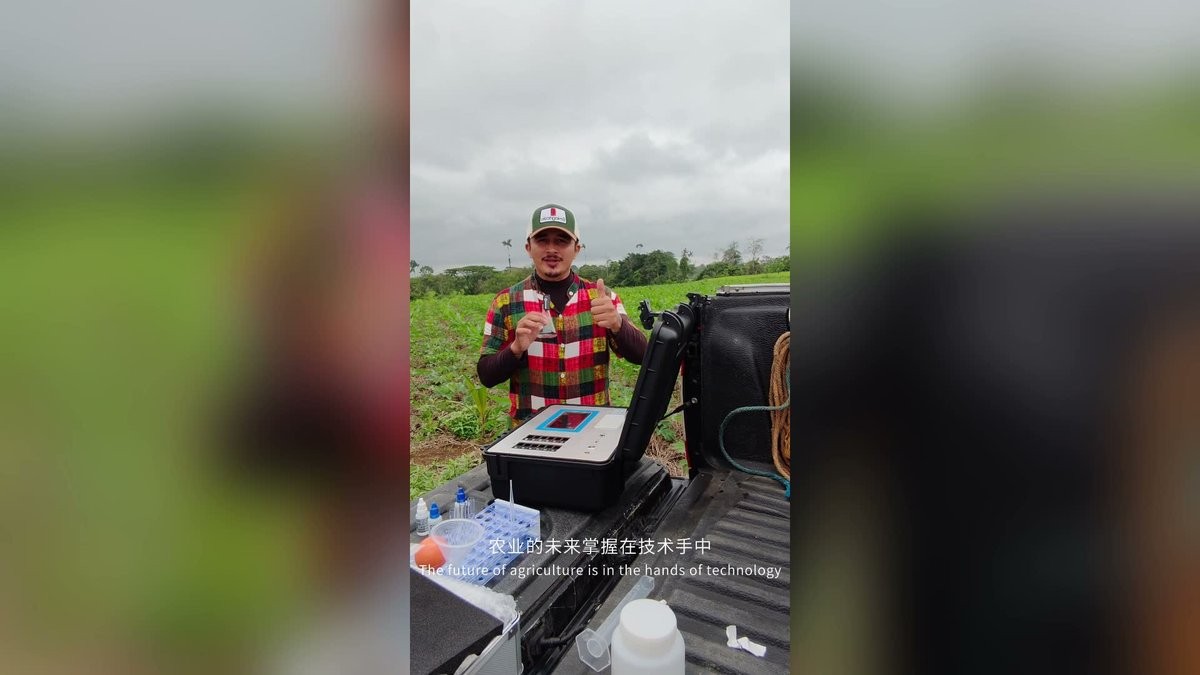
The photographs captured during the field demonstration show the HM-GT2 in its natural working environment: positioned on the bed of a pickup truck at the edge of a cultivated field, surrounded by sample containers, reagent bottles, and test tube racks. A Spanish-language text overlay reads "Análisis De suelo" — soil analysis — immediately communicating the instrument's purpose to local observers. This is not a laboratory-bound device being adapted for field use; it is a purpose-built portable analyzer designed from inception for exactly this kind of mobile deployment, where the distance between soil sampling location and analytical result can be measured in meters rather than days.
Project Snapshot
| Item | Detail |
|---|---|
| Country | Spain (Región de Murcia) |
| Customer type | Agricultural cooperative / commercial farm (Murcia farm federation member) |
| Model supplied | HM-GT2 Soil and Fertilizer Nutrient Speed Detection Instrument |
| Quantity | 1 unit |
| Configuration | Standard portable configuration: main unit with built-in printer, pH electrode, TDS meter, cuvettes, electronic balance, complete reagent kit, PVC carrying case |
| Training model | Remote video-guided training + on-site demonstration (January 2025) |
| Interface language | Bilingual support (Chinese/Spanish); HM-GT2 supports multi-language switching |
| Sales representative | Liu Kuixiu (HM Instruments international sales) |
| Application context | Direct field soil analysis for cooperative member farms producing vegetables, fruits, and field crops under irrigation |
Why the Customer Bought / The Starting Point
The Murcia region is one of Europe's most intensive agricultural production zones. Known as the "orchard of Spain" (huerta de España), it supplies a significant proportion of the fresh produce consumed across the European Union — leafy greens, tomatoes, peppers, melons, citrus, and stone fruits grown under a mix of open-field and greenhouse cultivation, predominantly with drip irrigation drawing from both surface water and increasingly stressed aquifer resources. In this high-input, high-output farming system, nutrient management is not merely an agronomic optimization question; it is an economic necessity and an environmental regulatory requirement.
The farm operation that acquired the HM-GT2 faced three specific challenges that motivated the purchase:
First, the cost and delay of laboratory soil analysis at scale. Like farmers everywhere, Murcia's growers know that soil testing should precede fertilizer decisions. But when you manage 50 or 100 hectares across multiple parcels, each potentially requiring zone-specific sampling, the cost of commercial laboratory analysis (typically €25–60 per comprehensive sample in Spain) adds up quickly. More importantly, the 7–14 day turnaround typical of regional laboratories means that by the time results arrive, the optimal fertilization window may have already passed. For vegetable crops with short growing cycles and precisely scheduled planting dates, waiting two weeks for soil data is often equivalent to having no data at all — the farmer proceeds with historical guesswork and hopes for the best.
Second, EU environmental compliance pressure under the Common Agricultural Policy (CAP). The European Union's CAP conditionalities increasingly tie direct payment eligibility to evidence of sustainable nutrient management practices. The Nitrates Directive (91/676/EEC) designates much of Murcia as a Nitrate Vulnerable Zone (NVZ), requiring farms to maintain nutrient management plans based on documented soil analysis. Having an on-site rapid testing capability allows the cooperative's member farms to generate the required documentation more frequently and at lower cost than relying entirely on external laboratories. The HM-GT2 provides the data generation capacity needed to satisfy compliance auditing without creating a prohibitive per-sample cost burden.
Third, the need for real-time decision support during the growing season. Pre-plant soil testing tells a farmer what nutrients are available at the start of the season. But in intensive vegetable production — where multiple crops per year, sidedress applications, and fertigation through drip systems are standard practice — mid-season soil monitoring can catch developing deficiencies before they manifest as visible yield loss or quality degradation. A portable analyzer that travels to the field with the agronomist enables same-day diagnostic testing when problems appear: why is this pepper patch showing interveinal chlorosis? Is the lettuce head size reduction due to nitrogen shortage or water stress? The HM-GT2 provides immediate quantitative answers that guide corrective action.
Why the HM-GT2 Was Selected
The purchasing decision involved evaluation against several alternatives common in the Spanish and broader European market:
Portability without sacrificing analytical capability. Basic handheld pH/EC meters costing €50–200 are ubiquitous on Spanish farms but provide only two parameters — insufficient for a complete fertility picture. Full-service portable soil labs from European manufacturers typically cost €8,000–€25,000 and may require vehicle mounting or significant setup time. The HM-GT2 occupies a middle position: it delivers N-P-K-organic matter-pH-salinity-trace element analysis (the full suite needed for informed fertilizer recommendations) in a hand-carried instrument case weighing approximately 5.1kg, at a price point accessible to mid-scale cooperative operations. The pickup-truck-bed deployment shown in the field photos illustrates this balance — the entire analytical system (instrument, reagents, consumables, sample containers) fits comfortably in a space smaller than one square meter.
Multilingual interface supporting export-market requirements. Unlike many domestic-market instruments that offer only Chinese-language software, the HM-GT2 series includes built-in language switching capability. For a Spanish end user, operating an instrument whose menu system, help content, and printed report headers display in familiar language dramatically reduces training time and operational error risk. The bilingual (Chinese/Spanish) configuration delivered in this case reflects HM Instruments' growing attention to international market requirements.
12-channel batch processing despite portable form factor. One might assume that a portable instrument necessarily means single-sample sequential processing. The HM-GT2 defies this assumption with 12 independent detection channels arranged in a rotating carousel identical in principle to larger benchtop models. When the cooperative's agronomist visits a member farm and collects 6–12 soil samples representing different fields or management zones, all samples can be prepared simultaneously, loaded together, and analyzed in a single batch run. This parallel processing capability means the total time from arrival to complete results for a 12-sample set is only marginally longer than for a single sample — a crucial efficiency gain when the agronomist's schedule includes multiple farm visits per day.
Built-in crop fertilization recommendation engine. The HM-GT2's Android-based operating system includes an embedded database covering over 100 crop types with yield-target-based fertilizer rate calculations. While Spanish agronomists have access to their own regional recommendation algorithms (developed by the CEBAS-CSIC research center in Murcia and the regional agricultural department), the instrument's built-in system serves as an immediate cross-reference and is particularly valuable for less common crops where local extension guidance may be sparse. The ability to print a recommendation report directly from the instrument — complete with crop name, target yield, suggested N-P-K rates, and a QR code linking to digital records — enhances professional credibility during farmer consultations.
AC/DC power flexibility for true field independence. Murcia's farm operations extend across terrain where grid electrical power is not always readily available at the sampling location. The HM-GT2's dual-power design — AC mains (220V compatible with Spanish grid) plus DC 12V internal lithium battery with optional vehicle power adapter — means the instrument operates equally well inside a farm office, in a greenhouse utility room, or on the tailgate of a pickup truck in the middle of a field. The battery provides sufficient capacity for a full day of continuous operation, eliminating range anxiety during remote-site workdays.

Deployment, Installation, and Training
As an international shipment to Spain, this deployment followed a different logistical pattern than domestic Chinese installations. The HM-GT2 unit was shipped from HM Instruments' facility in Shandong Province to the Murcia customer via international courier, arriving in January 2025. Sales representative Liu Kuixiu coordinated the delivery and initial remote orientation.
Unboxing and inventory verification. Upon receipt, the customer verified the complete contents of the shipping package against the configuration checklist: the main instrument unit (with integrated thermal printer and 7-inch touchscreen), pH electrode, TDS/conductivity meter, set of four optical cuvettes, electronic balance (100g/0.01g resolution), AC/DC power adapter, complete reagent kit for soil nutrient determination, accessory pack (Erlenmeyer flasks, reaction bottles, volumetric flask, wash bottle, spatula set), printed operation manual, calibration certificate, and warranty documentation. All items were confirmed present and undamaged after international transit.
Remote video-guided training and on-site demonstration. Given the geographic distance between manufacturer and end user, training combined pre-recorded instructional video content (provided in Spanish-subtitled format) with live video-call guidance from HM Instruments' application support team. The customer documentation notes that the training covered: instrument startup and shutdown procedures, electrode conditioning and calibration protocols, soil sample preparation (drying, sieving, weigh-out), reagent addition sequence and timing, cuvette loading and measurement initiation, result interpretation and troubleshooting, data export and printing, and routine maintenance (electrode storage, cuvette cleaning, battery care). The field photographs captured during the on-site demonstration phase show the operator actively using the instrument in a real agricultural setting — not a staged studio shot but genuine field deployment with crops visible in the background.
Language localization confirmation. A key step in the training process was confirming that the instrument's user interface operated correctly in the selected language mode, that printed reports displayed appropriate Spanish terminology for soil parameters and fertilizer recommendations, and that any error messages or help prompts were intelligible to Spanish-speaking operators. This localization verification is essential for international deployments and represents an area where HM Instruments has invested development resources to serve export markets effectively.

Configuration Delivered
| Category | Item | Quantity |
|---|---|---|
| Main Unit | HM-GT2 host with built-in thermal printer and 7-inch touchscreen | 1 |
| Electrodes/Sensors | pH electrode | 1 |
| TDS/conductivity meter | 1 | |
| Optical Components | Standard 1cm cuvettes | 4 |
| Weighing | Electronic balance (100g / 0.01g) | 1 |
| Power | AC adapter + built-in lithium battery + vehicle power option | 1 set |
| Reagent Kit | Complete soil nutrient determination reagent set | 1 set |
| Carrying | High-strength PVC engineering plastic instrument case | 1 |
| Documentation | Operation manual, quick reference guide, calibration certificate, warranty card | Complete set |
Results Reported / What Changed
| Indicator | Before Deployment | After Deployment |
|---|---|---|
| Soil sample turnaround | 7–14 days (regional lab) | Same day (≤30 min/sample for N-P-K) |
| Cost per comprehensive sample | €25–60 (commercial lab) | ~€1–3 (reagent cost only) |
| Samples analyzable per field visit | Collect only; send to lab later | Up to 12 samples analyzed on-site |
| CAP compliance documentation frequency | 1–2 tests/year due to cost | 4–6 tests/year feasible (per parcel, per season) |
| Mid-season diagnostic response time | Days to weeks (lab queue) | Hours (same-day field result) |
| Fertilizer recommendation turnkey time | 2–3 weeks (sample → lab → report → rec) | Same visit (sample → analyze → recommend → print) |
Specifications Relevant to This Deployment
| Parameter | Specification |
|---|---|
| Power supply | AC 220±22V / DC 12V+5V (built-in lithium battery, vehicle power compatible) |
| Power consumption | ≤5W |
| Measurement range / resolution | 0.001–9999 |
| Repeatability error | ≤0.05% (potassium dichromate solution) |
| Stability (drift) | <0.3% per hour (transmittance); <0.001 (absorbance) |
| Linearity error | ≤0.2% (copper sulfate detection) |
| Wavelength range | Red: 680±2nm; Blue: 420±2nm; Green: 510±2nm; Orange: 590±4nm |
| pH range | 1–14; resolution 0.01; error ±0.1 |
| Salinity (EC) range | 0.01%–1.00%; relative error ±5% |
| Soil moisture range | 0–100%; error <0.5% |
| Test speed (soil N-P-K) | ≤30 minutes per sample (including prep); 8 samples ≤1 hour |
| Dimensions / weight | 43×35×19cm; net weight 5.1kg |
| Detection channels | 12 channels (portable form factor) |
Precision Agriculture in Murcia: Why Portable Soil Testing Matters in Europe's Intensive Horticulture Hub
To appreciate the significance of this deployment, it helps to understand Murcia's position within European agriculture. The autonomous community of Murcia produces approximately 23% of Spain's total vegetable output and exports roughly 2.2 million tons of fresh produce annually — much of it to Germany, France, the United Kingdom, and other northern European markets where consumers demand consistent quality year-round. This production intensity depends on irrigation (the Segura River basin supplies water to over 400,000 hectares of irrigated land in the region) and on carefully calibrated fertilizer programs that maximize yield while minimizing nutrient losses to groundwater.
The region's status as a designated Nitrate Vulnerable Zone under the EU Nitrates Directive creates a regulatory framework that makes systematic soil testing not optional but mandatory for farms above certain livestock unit thresholds or receiving organic amendment applications. However, enforcement has historically been limited by practical constraints: if testing is expensive and slow, compliance becomes a box-ticking exercise rather than a genuine nutrient management tool. By reducing the per-sample cost from tens of euros to single-digit euro figures (reagent cost only) and delivering results within minutes rather than weeks, instruments like the HM-GT2 transform compliance from a burden into a manageable operational routine. A cooperative agronomist visiting ten member farms in a day can collect, analyze, and discuss results at each stop — turning soil testing from an annual administrative chore into an ongoing agronomic conversation.
This aligns closely with the principles of 4R Nutrient Stewardship — an international framework promoted by the fertilizer industry and adopted by the European Commission's Common Agricultural Policy greening requirements: applying the Right source of nutrient, at the Right rate, at the Right time, and in the Right place. Portable rapid soil analyzers directly enable the "right rate" and "right time" dimensions by providing current, site-specific data at the moment when fertilizer decisions are being made, rather than data that may be months old and collected from a composite sample that averages away the spatial variability the 4R framework seeks to address.
Deploying Chinese Analytical Instruments in European Markets: Practical Considerations
This Murcia deployment offers useful insights for any organization considering the procurement of Chinese-origin analytical equipment for use in European agricultural settings. Several factors merit attention:
Voltage and plug compatibility. The HM-GT2's specified power input of AC 220±22V aligns with the European standard 230V nominal supply, meaning no voltage transformer is required. The physical plug type on the supplied adapter would need to match Spanish Type F (Schuko) outlets or accept a simple plug adapter — a minor logistics detail but one worth confirming before arrival to avoid last-minute scrambling.
Reagent supply chain continuity. The ongoing operational cost of any colorimetric soil analyzer is dominated by reagent consumption. For a European user, establishing a reliable supply chain for replacement reagent kits — whether through direct import from HM Instruments, through a local distributor, or through third-party chemically equivalent formulations — is critical for long-term viability. The initial reagent kit included with the HM-GT2 typically provides 200–500 sample-worths of tests depending on parameter selection, representing several months of normal use for a single-cooperative deployment. Advance planning for replenishment avoids operational gaps.
Calibration traceability and metrological acceptance. While the HM-GT2 meets Chinese national metrology standard JJG 179-90 specifications (with stability performance exceeding the standard by 6x according to manufacturer data), European users operating in regulated environments (such as certified organic inspection bodies or government-funded advisory services) may need to verify whether the instrument's calibration certificate is accepted by their local accreditation framework, or whether supplementary calibration by an accredited European laboratory is required. This is generally a procedural rather than technical issue — the underlying measurement science is universal — but it warrants clarification before the instrument is put into service for compliance-critical applications.
After-sales support across time zones. With HM Instruments maintaining 280 service centres across China and offering lifetime technical support, the primary support channel for a European user involves coordination across approximately 6–7 hours of time zone difference (China Standard Time vs. Central European Time). The combination of detailed video training materials, comprehensive printed documentation, and remote diagnostics via the instrument's Wi-Fi connectivity can resolve most operational questions without requiring real-time synchronous communication. For hardware issues requiring physical service, the 12-month whole-unit warranty covers parts and labor, with international return logistics coordinated through the original sales channel.
Related Products and Resources
The HM-GT2 featured in this deployment is optimized for portability and field-deployable operation while maintaining laboratory-grade analytical breadth. Organizations requiring higher throughput or additional research-oriented features may consider the Soil Trace Element Detector, which offers enhanced accuracy specifications (repeatability ≤0.02% vs. ≤0.05%) and expanded heavy metal detection capabilities. For reference, a detailed account of HM-GT4 deployment in a Chinese agricultural service center context is available in this Sinochem MAP Dalad Banner case study.
For educational institutions seeking multi-instrument packages that combine soil nutrient analysis with plant physiology measurement capabilities, the Inner Mongolia Agricultural University case study illustrates how HM Instruments equipment integrates into university teaching and research programs.
About HM Instruments
HM Instruments (Shandong Hengmei Electronic Technology Co., Ltd.) is a national high-technology enterprise and Shandong gazelle enterprise, recognized as a specialized "little giant" SME and listed on the New Fourth Board (equity code 306008). The company holds ISO 9001 quality management certification (No. 06524Q02062ROM), IP management system certification (472IP190206R0S), 3A credit enterprise rating (HXZC201968486), after-sales service certification (78323SC0008R0S), occupational health and safety management certification (06524S00854ROM), environmental management certification (06524E00905ROM), radiation safety license (鲁环辐证[G0334]), and medical device operating license (鲁潍药监械经营备20260007号).
With a research and development team of more than 100 engineers and approximately 150 core patents, HM Instruments maintains a sustained commitment to innovation in agricultural and environmental analytical instrumentation. The company operates 280 service centres across China, providing nationwide warranty coverage with 24-hour response commitment.
Warranty terms: 12-month whole-unit warranty, lifetime technical support, lifetime free training, and lifetime maintenance. Certificate metadata is notarised on the Zhixin (至信链) blockchain, verifiable at zxscan.qq.com.
Address of this article:https://www.kjhm.net/case/hm-gt2-soil-nutrient-analyzer-case-study-spain-murcia-farm.html
 Related News
-
07 / 2026-08
HM Instruments Phthalate Detector Manufacturer Guide
Learn more
-
29 / 2024-09
Fatty Acid Value Meter: A New Tool For Grain Quality Testing.
Learn more
-
15 / 2026-06
Reliable Full-Wavelength Microplate Reader Brand Recommendation: Why HM Instruments Deserves Your Attention
Learn more
-
29 / 2025-09
Triple Advantages of Rice Freshness Testers:Efficiency, Accuracy, Convenience
Learn more