

 Current
Location:
Current
Location:HM Instruments HM-GT4 Soil Nutrient Analyzer: Sinochem MAP Service Centre Case
Article Source: Hengmei Technology Release time:2026-08-05 14:25:16
On the first days of November 2024, a soil and fertiliser laboratory on the edge of the Yellow River irrigation belt in Dalad Banner, Ordos, Inner Mongolia, was preparing for a different kind of working week. The Sinochem Modern Agriculture MAP Dalad Banner Technical Service Centre had taken delivery of one HM-GT4 research-grade soil and fertiliser nutrient analyser, and instead of simply switching it on, the centre had scheduled three days of installation, operator training and formal verification against its existing reference methods. The instrument was not treated as a convenience tool but as a measurement device whose output would soon underpin fertiliser recommendations sold to farming customers.
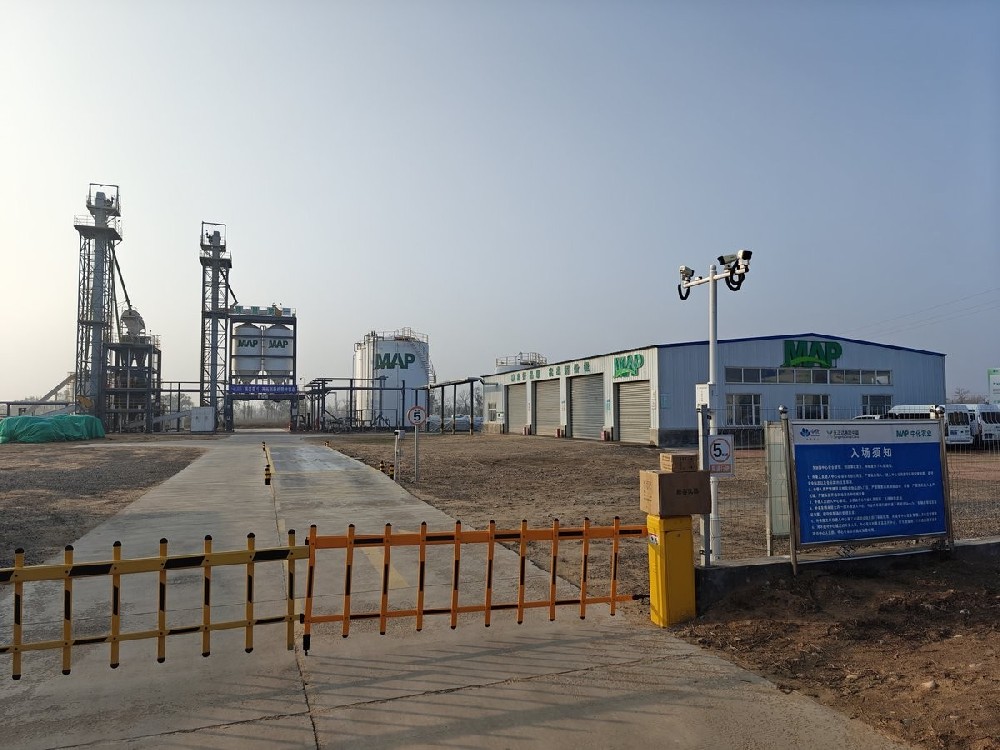
The MAP service centre model is unusual by the standards of a conventional farm laboratory. On one side of the yard stand bulk blending silos and mixing equipment; on the other, an analytical room with balances, glassware and instrument shelving. Growers arrive with soil from their fields, expect an interpretation of the results, and expect to leave with a fertiliser blend matched to that interpretation. Every hour spent waiting for an external laboratory is an hour the customer spends waiting in the yard, or a visit that has to be repeated. That operational reality is what put a benchtop nutrient analyser on the procurement list.
Project Snapshot
| Item | Detail |
|---|---|
| Country | China, Inner Mongolia Autonomous Region (Dalad Banner, Ordos) |
| Customer type | Modern agriculture technical service centre operated by a state-owned agricultural group |
| Model supplied | HM-GT4 research-grade soil and fertiliser nutrient analyser |
| Quantity | 1 unit |
| Configuration | Main unit with built-in thermal printer, pH electrode, TDS meter, 1 cm cuvettes, electronic balance 100 g / 0.01 g, soil nutrient reagent set, glassware pack |
| Deployment window | 1–3 November 2024, on-site |
| Training model | Three-day on-site installation, operator training and verification, delivered by an HM Instruments application engineer |
| Interface language | Chinese (Simplified) |
| Acceptance basis | Written verification plan covering linearity, accuracy, repeatability, stability and method comparison |
Why the Customer Bought
Turnaround was the binding constraint. Before the deployment, comprehensive soil analysis meant packaging samples, sending them to a regional laboratory and waiting between five and fourteen days for a report. In a service model built on same-visit fertiliser blending, that delay pushed the centre towards generic blends and historical assumptions. Agronomists were making rate decisions on data that described the field as it had been a fortnight earlier, during a spring window in which soil nitrate can change materially within days of irrigation or a warm spell.
The centre needed one instrument for three matrices. Soil is only part of the workload. The facility blends compound fertilisers from urea, ammonium phosphate, potassium chloride and liquid nitrogen solutions, and it is answerable for the composition of what leaves the yard. It also receives plant tissue samples when a member farm reports an unexplained deficiency symptom. Buying three separate devices for soil, fertiliser and tissue analysis would have tripled the calibration burden and the training load for a small technical team.
Data had to flow into the platform, not into a notebook. The MAP system is a digital agronomy platform: soil results feed recommendation logic that calculates economically sensible nutrient rates against a crop and a yield target. Any instrument whose results had to be retyped from a paper printout would introduce transcription risk at precisely the point where errors are most expensive. Wireless upload and file export were therefore treated as functional requirements rather than as convenience features.
Why the HM-GT4 Was Selected
- Documented metrological performance. The manual specifies repeatability error ≤0.02% on potassium dichromate solution, linearity error ≤0.1% on copper sulphate, and drift below 0.3% per hour in transmittance after a five-minute warm-up. The manufacturer states that working stability is six times better than the requirement of the Chinese national metrological verification regulation JJG 179-90 for spectrophotometric instruments. For a centre whose recommendations carry commercial consequences, a written stability figure tied to a published metrological standard was more persuasive than a general accuracy claim.
- Twelve detection channels on a rotating cuvette carousel. The optical design uses a precision rotating colorimetric cell (patent ZL 2018 2 1777724.7) so that all channels share one light source and one detection path. Twelve samples are read in a single batch, which matters most in the pre-plant April to May peak when the centre receives soil from many fields in the same week.
- Parameter coverage across soil, fertiliser and plant. The instrument covers ammonium and nitrate nitrogen, available phosphorus, available potassium, total N, P and K, organic matter, pH, salinity, moisture and alkali-hydrolysable nitrogen, plus trace elements including calcium, magnesium, sulphur, iron, manganese, boron, zinc, copper, chlorine, silicon and molybdenum. Fertiliser work covers nitrogen, phosphorus and potassium in straight, compound and organic products, including biuret in urea.
- A filter-based analytical method under its own patent. Colour development is read through high-precision filters under patent ZL 2020 2 1763837.9, with four cold light sources at 680±2 nm, 420±2 nm, 510±2 nm and 590±4 nm. Because there is no mechanical displacement in the cuvette path, optical positioning does not drift with wear, which is the usual failure mode in instruments that spend years in a working agricultural laboratory.
- Reporting that a customer can be handed. The built-in thermal printer produces a report containing the testing unit, operator, parameter, channel number, absorbance, nutrient content in mg/kg, timestamp and a QR code. In a service-centre context this converts a laboratory number into a document that a farmer can take away, which supports the commercial conversation as much as the agronomic one.
Deployment, Installation and Training
The unit arrived in late October 2024 and was commissioned over three consecutive working days by an HM Instruments senior application engineer, with the centre's own technical staff present throughout.
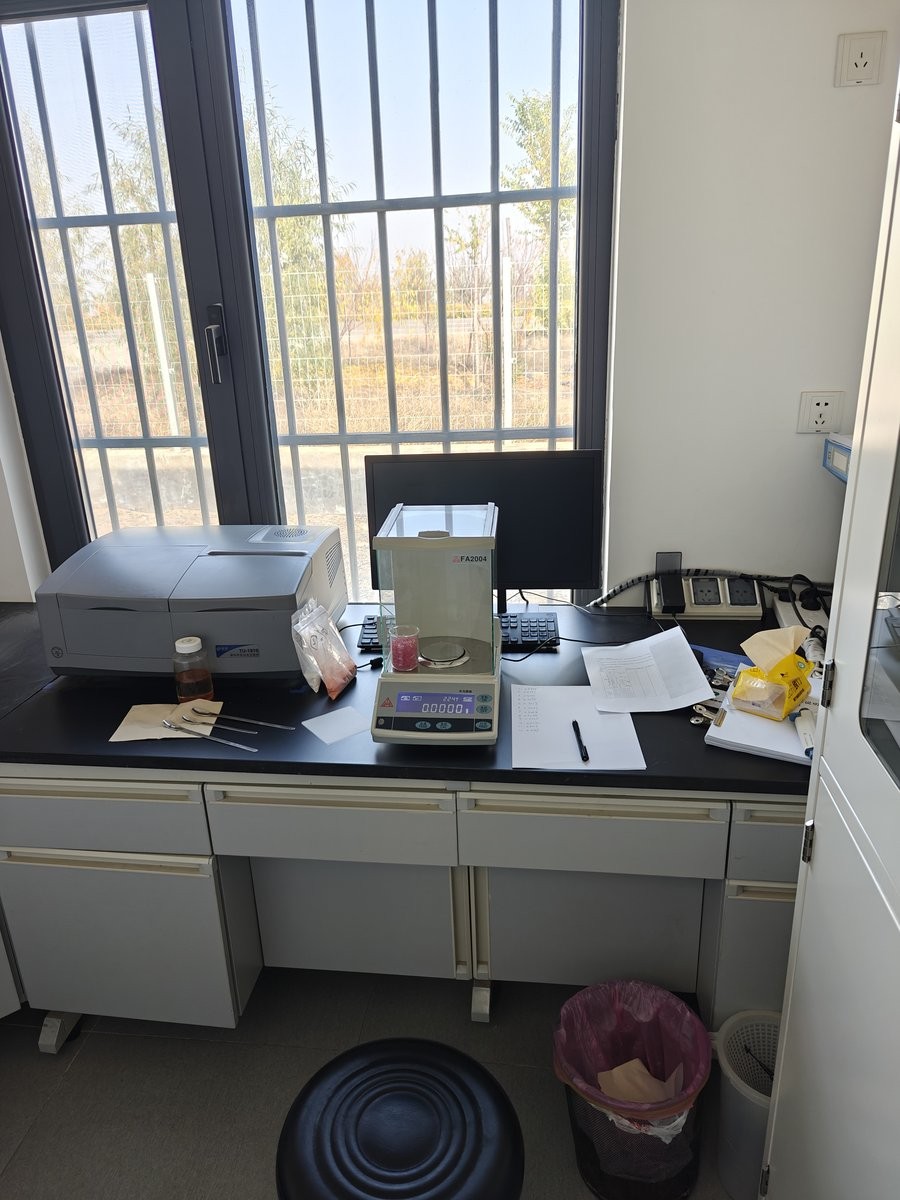
Day one covered unpacking, inventory against the configuration list, bench placement and system initialisation. The main unit was positioned next to the existing balance and workstation, the pH electrode and TDS meter were conditioned, and the Android operating system was connected to the facility network so that the upload path could be tested before any real samples were run.
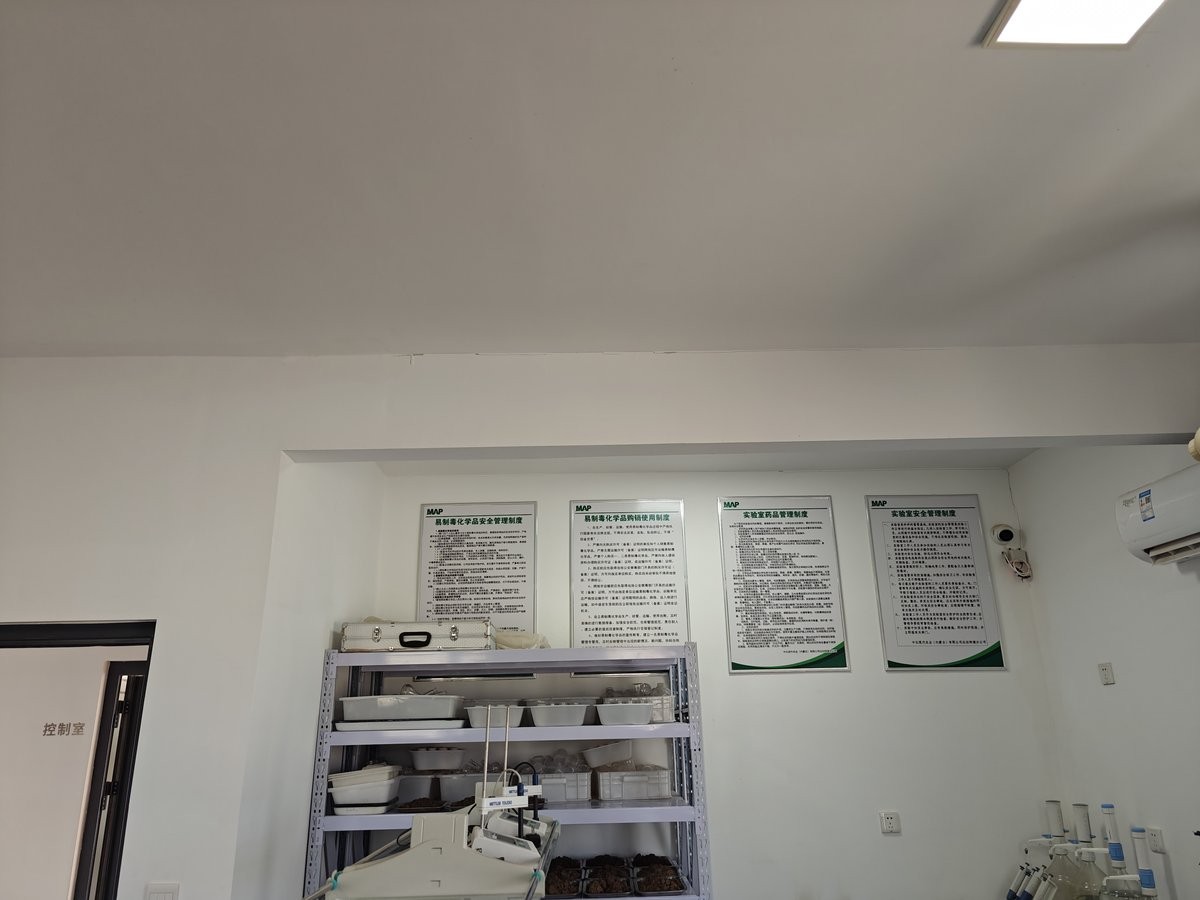
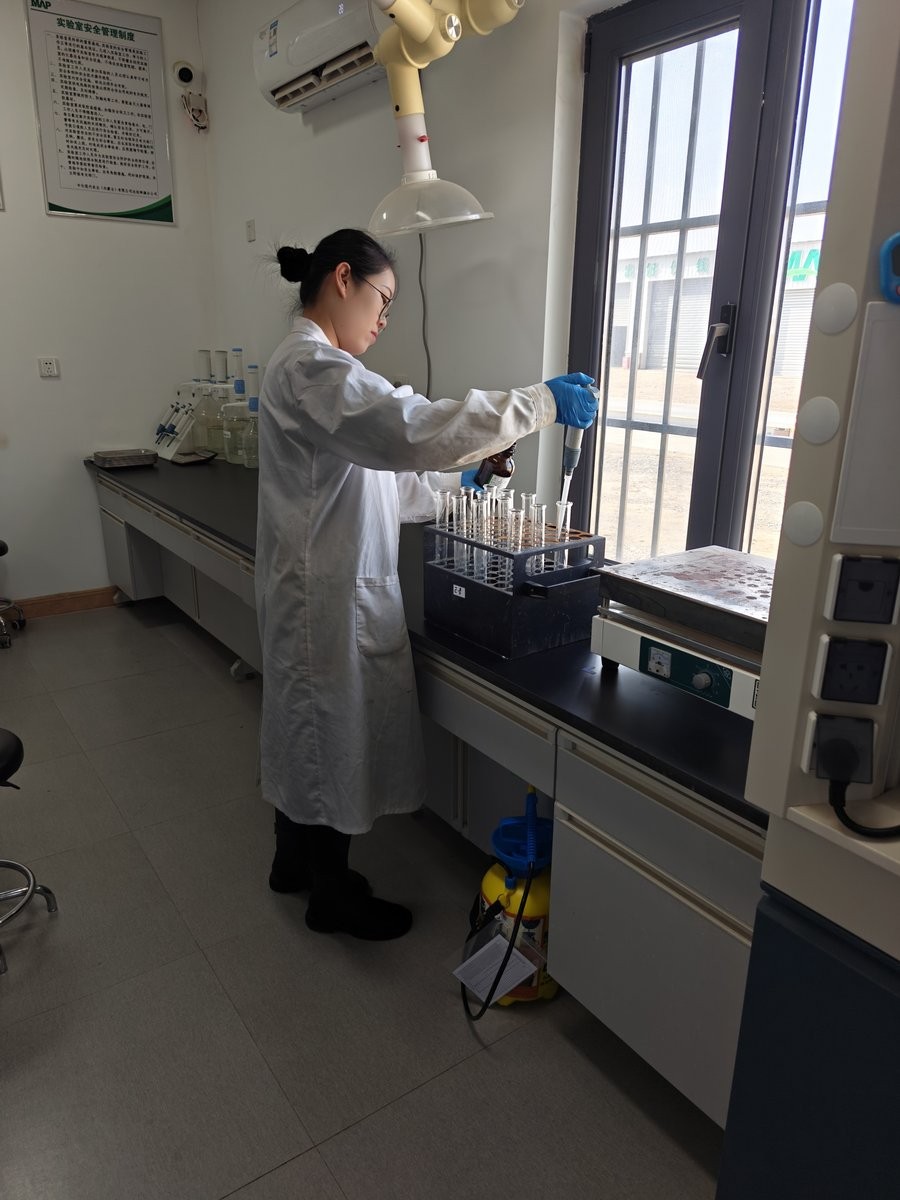
Day two was devoted to the analytical workflow itself: air-drying and sieving, weighing on the supplied 100 g / 0.01 g balance, the single-extraction procedure that releases available nitrogen, phosphorus and potassium together, timed colour development, cuvette filling, carousel loading and result review on the seven-inch touchscreen. Considerable attention was paid to pipetting technique, because in colorimetric soil analysis the dominant source of variability is rarely the instrument — it is volume transfer and timing discipline at the bench.
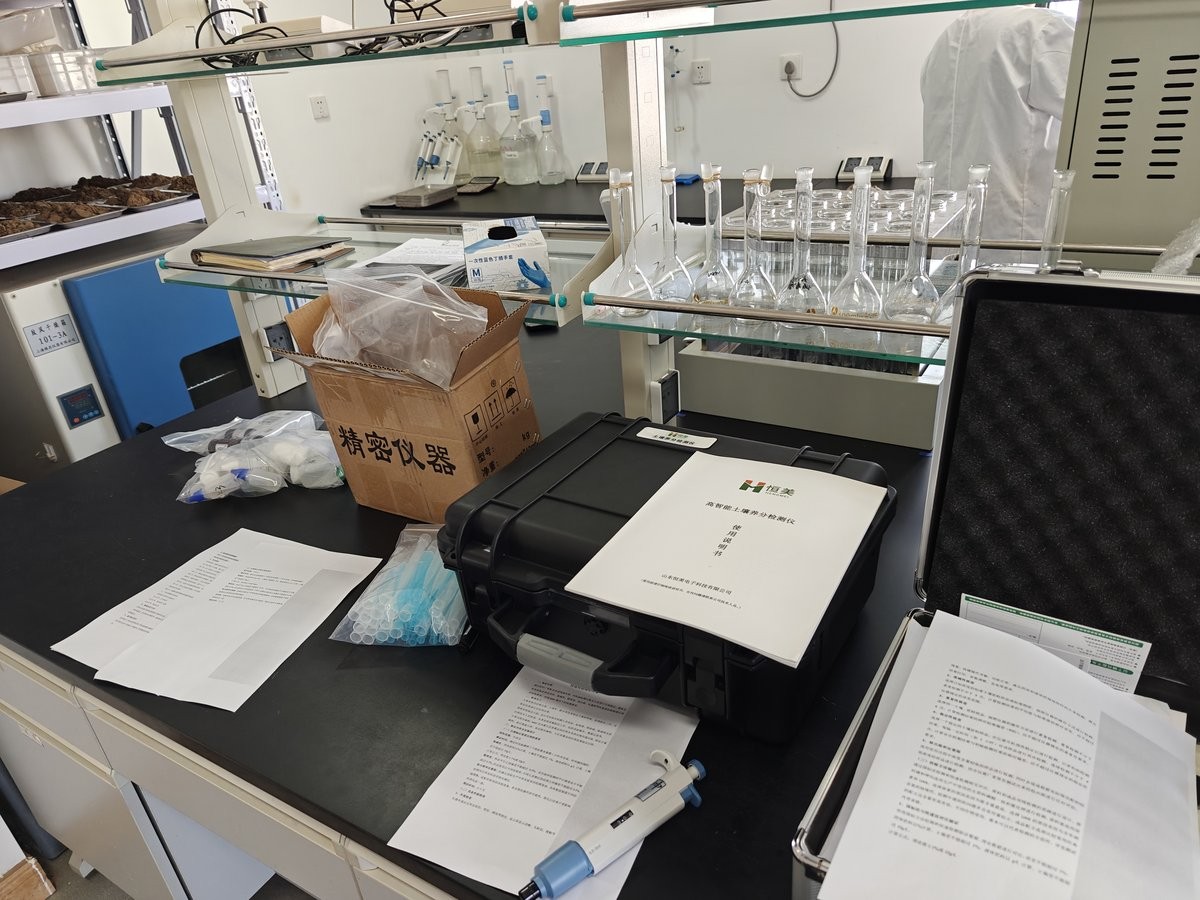
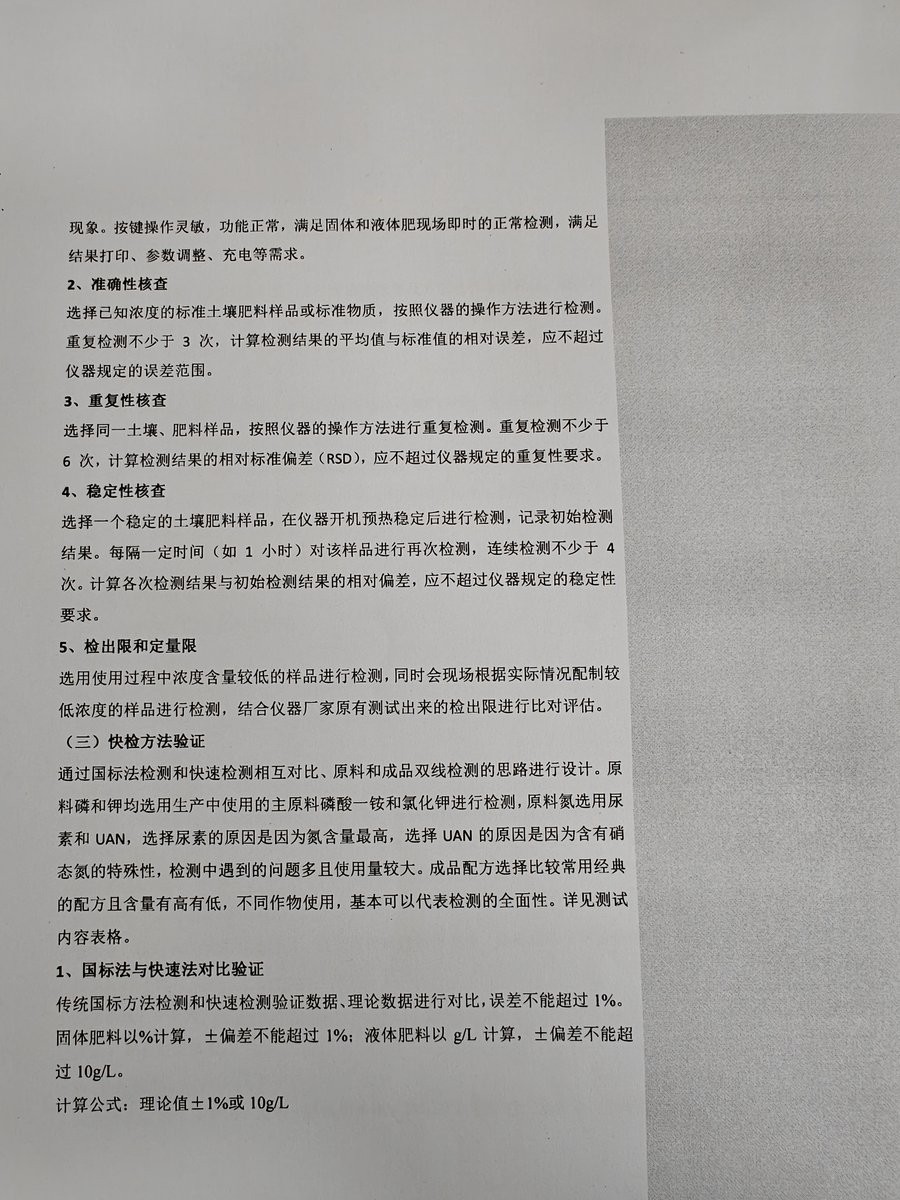
Day three was the verification exercise, run jointly with the centre's quality staff and documented in a written plan. The instrument was checked for linearity across its working range, for accuracy against reference values in triplicate, for repeatability across at least six replicates of one sample, and for stability across four consecutive readings taken at one-hour intervals. A method comparison then placed the HM-GT4 result alongside the centre's conventional wet-chemistry result for the same material.
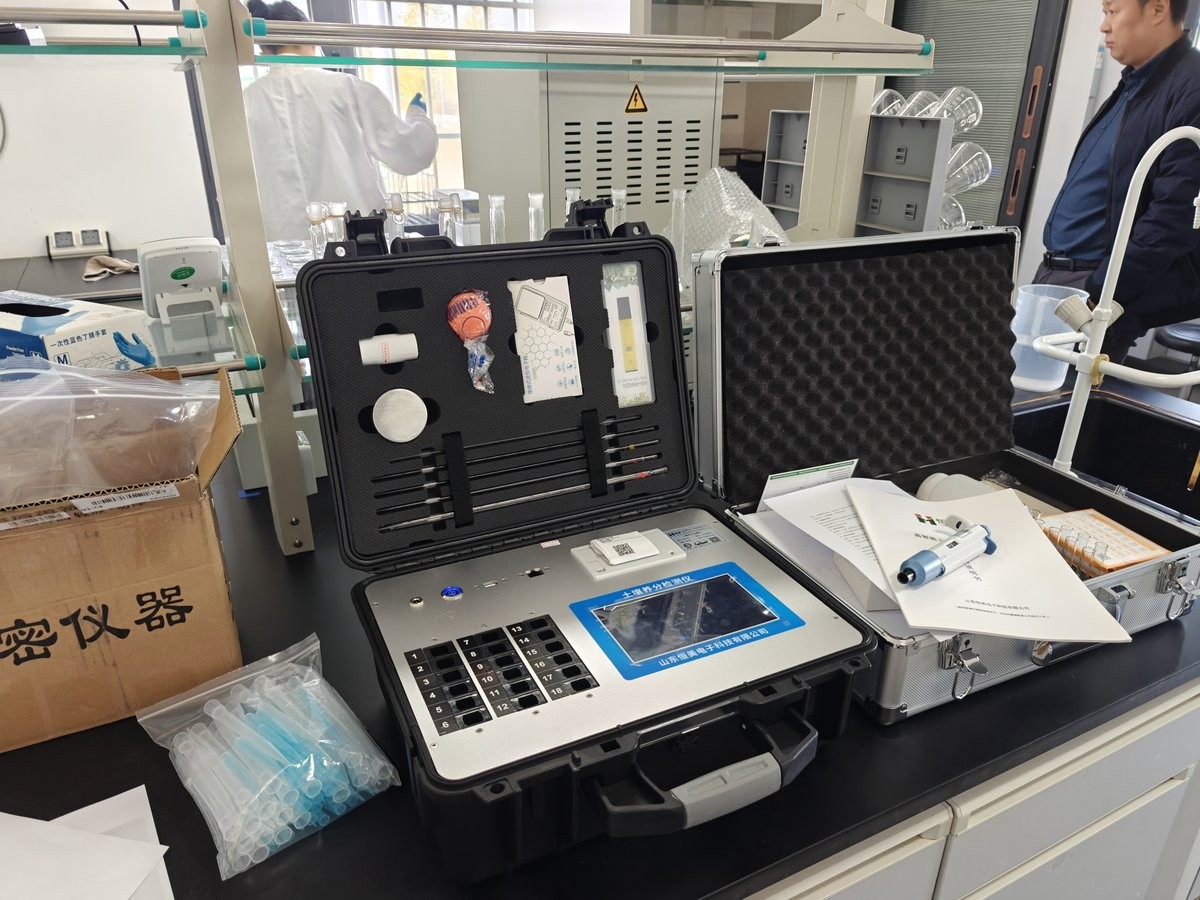
Configuration Delivered
| Section | Item | Quantity |
|---|---|---|
| Instrument case | Main unit with built-in printer | 1 |
| Instrument case | pH electrode | 1 |
| Instrument case | TDS meter | 1 |
| Instrument case | Cuvettes, 1 cm optical path | 4 |
| Instrument case | Electronic balance, 100 g / 0.01 g | 1 |
| Instrument case | Fuses | 2 |
| Reagent case | Soil nutrient determination reagent set | 1 set, per manual |
| Reagent case | Conical flasks, 100 ml | 2 |
| Reagent case | Small reaction bottles | 9 |
| Reagent case | Volumetric flask | 1 |
| Reagent case | Wash bottle | 1 |
| Reagent case | Spatula set | 1 |
Results Reported
| Indicator | Before | After |
|---|---|---|
| Soil result turnaround | 5–14 days via external laboratory | Same working day; ≤30 minutes for one N-P-K sample including preparation |
| Batch capacity | Limited by external scheduling | 8 soil samples ≤1 hour; 12 channels per carousel run |
| Blend release decision | Batch released on supplier documentation | Composition verified in-house before dispatch |
| Result transfer | Manual re-entry from paper reports | Printed report with QR code plus wireless upload |
| Recurring analysis cost | External per-sample laboratory fee | Reagent and consumable cost only |
| Matrices handled in-house | Soil only | Soil, fertiliser and plant tissue on one platform |
The Verification Protocol
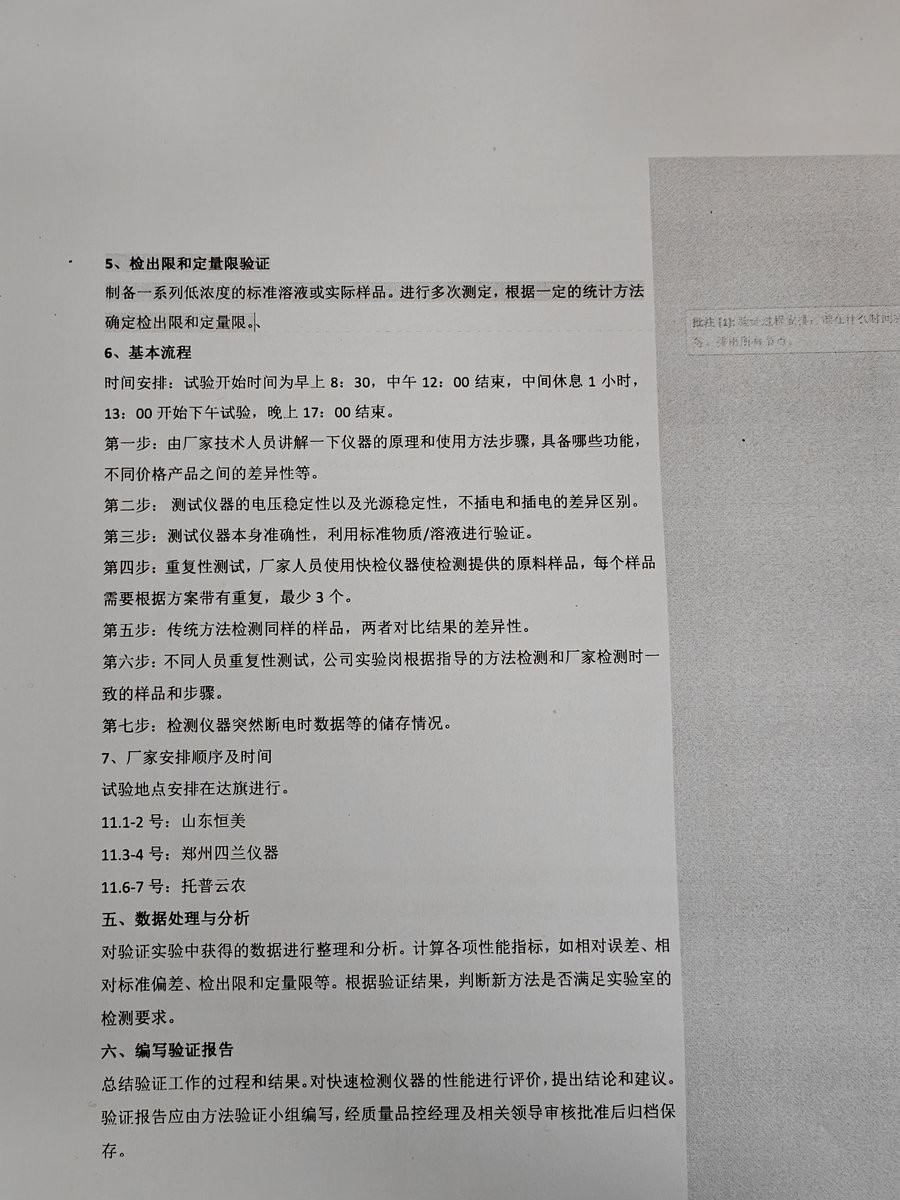
The most transferable part of this deployment is the verification framework the two teams wrote together. It is a practical answer to a question every agricultural service organisation eventually asks: can a rapid method stand in for a reference method, and on what evidence?
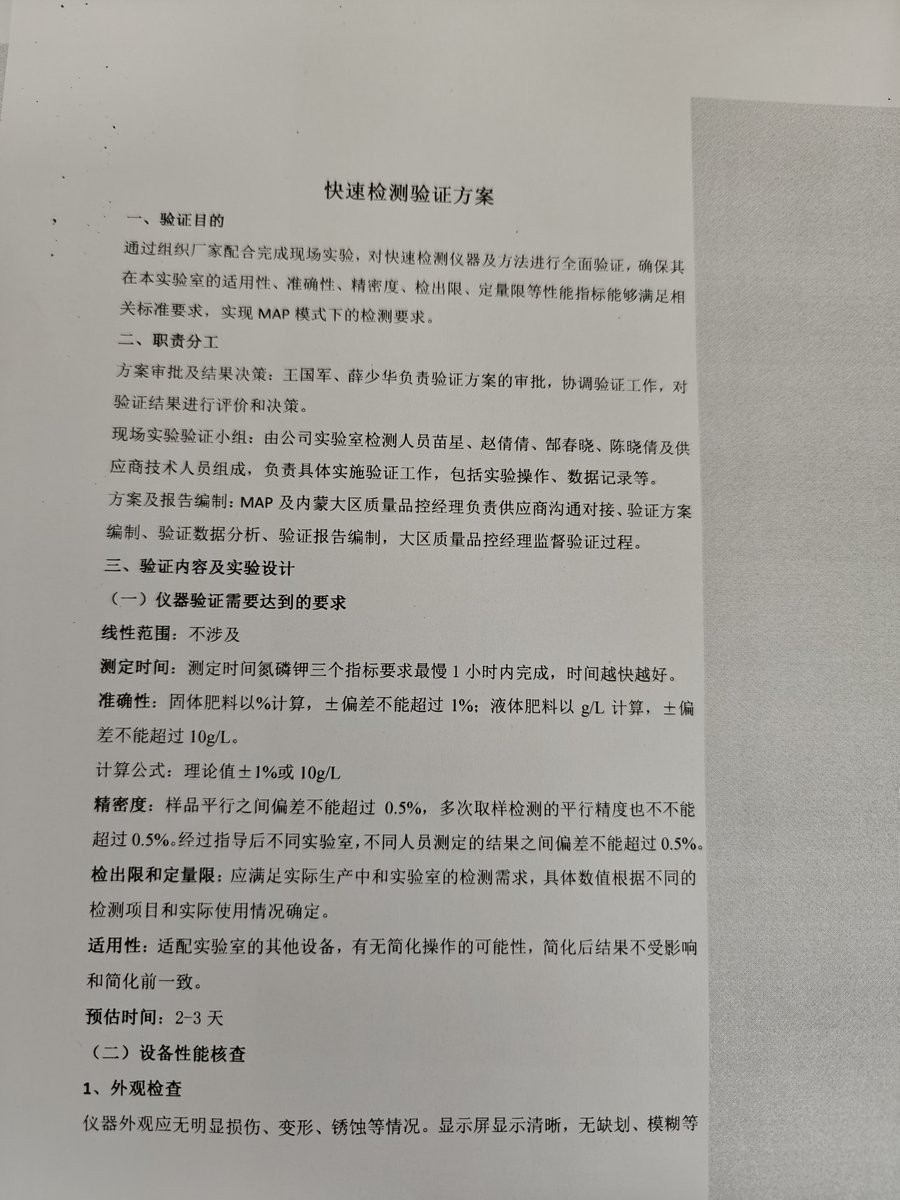
The plan set numerical acceptance limits before any measurement was taken, which is the discipline that separates verification from demonstration. Solid fertiliser results were required to agree within a defined relative tolerance, liquid fertiliser within an absolute tolerance expressed in grams per litre, and replicate measurements within a defined relative standard deviation. Inter-operator agreement was held to the same limit as intra-operator repeatability, on the reasonable argument that a service laboratory with rotating staff must be reproducible between people, not only within one person's hands.
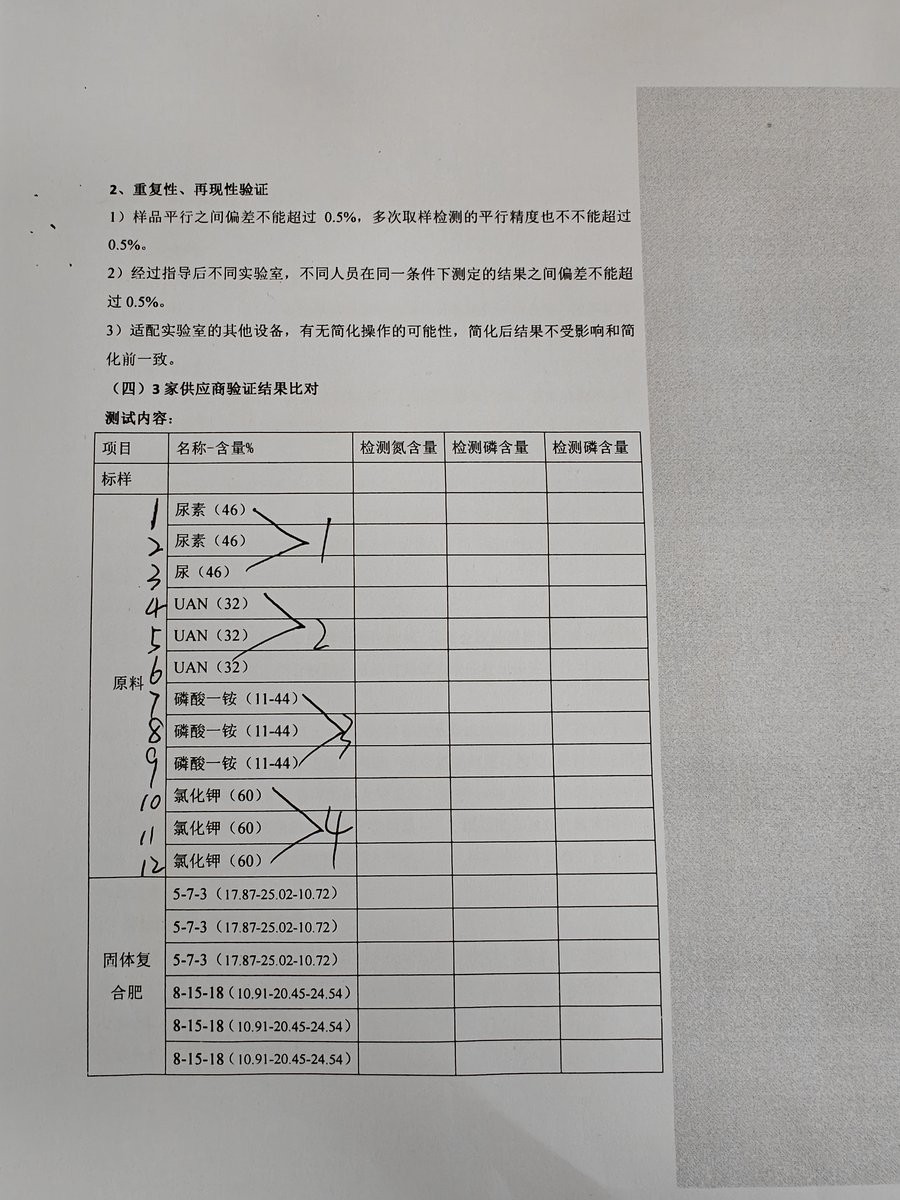
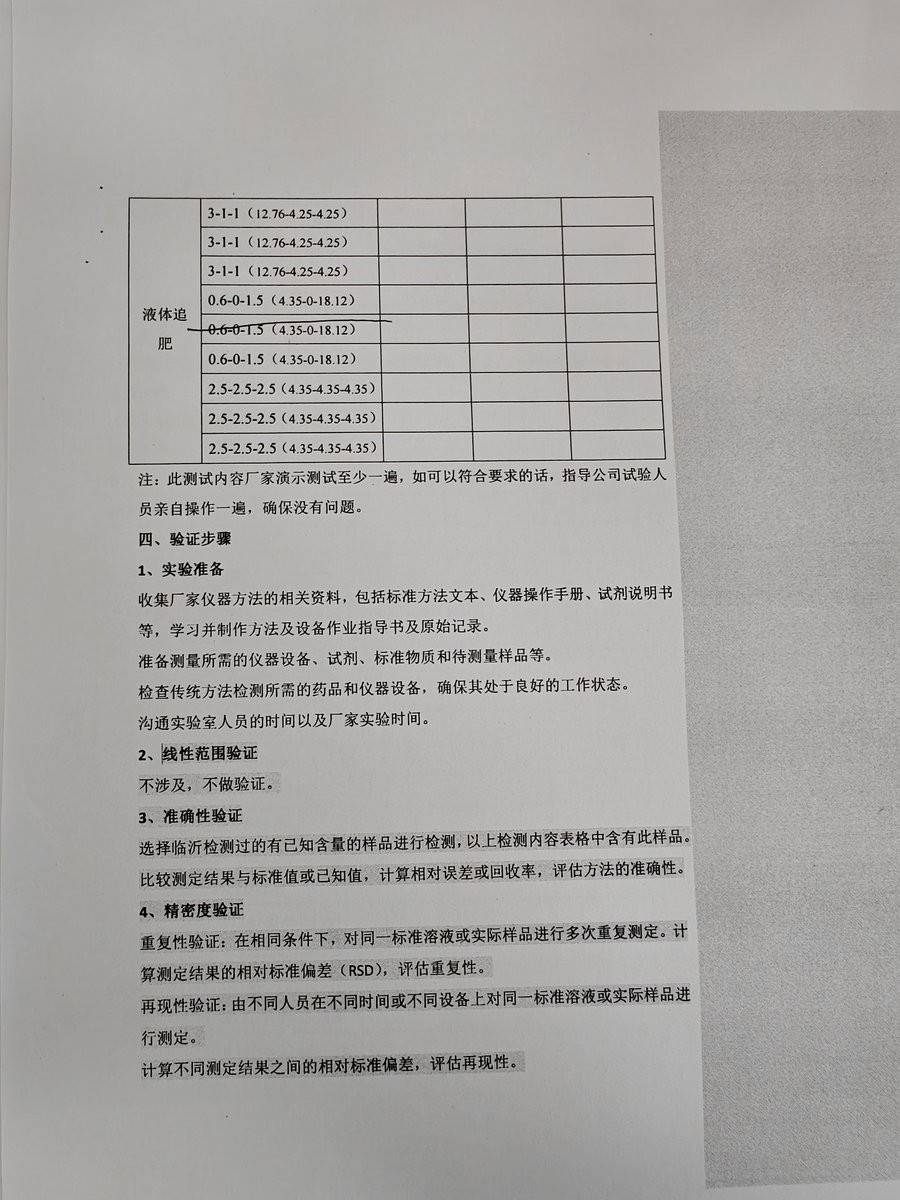
Method comparison used materials the centre actually handles: urea, liquid nitrogen solution, ammonium phosphate, potassium chloride and blended compound fertiliser. Each was analysed by the HM-GT4 procedure and by the reference procedure, and the paired results were tabulated side by side so that any systematic offset would be visible rather than averaged away.
The logic follows the same structure used in international guidance on analytical procedure validation, where linearity, accuracy, precision and robustness are established experimentally rather than assumed, and it reflects the competence requirements of ISO/IEC 17025 for testing laboratories. The centre is not an accredited laboratory and does not claim to be one; what the protocol gives it is a defensible internal basis for using rapid results in commercial recommendations.
Specifications Relevant to This Deployment
| Parameter | Specification |
|---|---|
| Power supply | AC 220±22 V; DC 12 V + 5 V, built-in lithium battery, vehicle power supported |
| Power consumption | ≤5 W |
| Range and resolution | 0.001–9999 |
| Repeatability error | ≤0.02% (0.0002, potassium dichromate solution) |
| Stability | Drift <0.3% within one hour; ≤0.5% within two hours (transmittance) |
| Linearity error | ≤0.1% (0.001, copper sulphate) |
| Wavelengths | Red 680±2 nm; blue 420±2 nm; green 510±2 nm; orange 590±4 nm |
| pH | Range 1–14; resolution 0.01; error ±0.1 |
| Salinity (conductivity) | 0.01%–1.00%; relative error ±5% |
| Moisture | 0–100%; error less than 0.5% |
| Test speed | One soil sample (N, P, K) ≤30 minutes including preparation; 8 soil samples ≤1 hour |
| Test error | Soil ≤5%; single fertiliser parameter ≤0.5%; N, P, K combined ≤1% |
| Dimensions and weight | 43 × 34.5 × 19 cm; net weight 5.1 kg |
Why Same-Day Data Changes the Fertiliser Conversation
The value of the instrument at this site is not that it produces a number faster. It is that the number arrives while the decision is still open. When a grower is standing in the yard and the blending equipment is available, a soil result delivered within the hour can still change the specification of the product that is mixed. A result delivered nine days later can only inform next season.
This is the practical expression of the 4R Nutrient Stewardship framework — right source, right rate, right time, right place — which is promoted internationally and used by the Food and Agriculture Organization of the United Nations in its guidance on sustainable soil management. Rate and timing are the two Rs that depend most directly on current data. In the Yellow River irrigation districts of western Inner Mongolia, where maize, sunflower and melon are grown under irrigation on soils that are frequently alkaline and sometimes saline, both nitrogen leaching and salinity accumulation reward a management approach based on measurement rather than habit. The centre's salinity and pH readings are as operationally useful as its nitrogen figures, because they determine which product forms are appropriate before the rate question is even reached.
Quality Control Inside the Blending Operation
A second, less visible use of the analyser is internal. Each custom blend the centre produces is a commercial promise about composition. If a batch specified as a phosphorus-rich starter is mixed slightly short of target, the grower's early-season crop pays for it; if it is mixed long, the centre gives away nutrient value on every tonne. With the instrument on site, a sample can be drawn from the blended batch and its nitrogen, phosphorus and potassium content verified before the load is released, using the same fertiliser procedures validated during commissioning.
That capability changes the character of the operation. Incoming raw materials can be spot-checked against supplier declarations rather than accepted on paperwork alone, and the centre gains the ability to investigate a customer complaint with its own data. In a market where fertiliser quality disputes are common and difficult to resolve after the fact, holding retained samples and in-house analytical capacity is a meaningful commercial protection.
Related Reading
Organisations evaluating similar equipment may find it useful to compare deployment contexts. The same model is documented in a teaching and research environment in the Inner Mongolia Agricultural University laboratory case study, where the priorities are curriculum fit and multi-instrument integration rather than throughput. Where portability outweighs the need for the highest accuracy grade, the HM-GT2 soil nutrient analyser covers the same core parameter set in a field-oriented configuration, and its use by a European farm cooperative is described in the Murcia, Spain field deployment.
About HM Instruments
HM Instruments (Shandong Hengmei Electronic Technology Co., Ltd.) is a national high-technology enterprise, a Shandong gazelle enterprise and a specialised "little giant" SME, listed on the New Fourth Board under equity code 306008. Certifications include ISO 9001 quality management (No. 06524Q02062ROM), intellectual property management (472IP190206R0S), 3A credit enterprise (HXZC201968486), after-sales service certification (78323SC0008R0S), occupational health and safety management (06524S00854ROM) and environmental management (06524E00905ROM).
The company maintains a research and development team of more than 100 engineers and holds around 150 core patents, including the rotating colorimetric cell and filter analysis patents used in this instrument. Support is delivered through 280 service centres across China with a 24-hour response commitment. Supply includes a 12-month whole-unit warranty, lifetime technical support, lifetime free training and lifetime maintenance. Certificate metadata is notarised on the Zhixin (至信链) blockchain and can be verified at zxscan.qq.com.
Address of this article:https://www.kjhm.net/case/hm-gt4-soil-nutrient-analyzer-case-study-sinochem-map-inner-mongolia.html
 Related News
-
13 / 2026-05
HengMei SmartBuild Turbidity Meter Cost-Effectiveness Review
Learn more
-
08 / 2026-05
HengMei X/γ Radiation Detector Product Knowledge Graph | Full Series Technical Specifications
Learn more
-
08 / 2026-06
HM Instruments Portable Water Quality Analyzer FAQ Technical Questions
Learn more
-
14 / 2024-09
How To Use Soil Rapid Detector To Optimize Farmland Fertilization Strategy.
Learn more