

 Current
Location:
Current
Location:HM Instruments HM-GT5 Soil Nutrient Analyzer: Shanxi Qixian Agricultural Supply Case
Article Source: Hengmei Technology Release time:2026-08-05 14:25:16
On a bright March morning in 2023, a training room at the Shanxi Agricultural Materials Group Qixian Branch filled with staff wearing orange and maroon uniforms embroidered with the company logo. A wall banner behind the instructor read "传授农技知识,助力农民增收" — passing agricultural knowledge to help farmers increase income. In front of the class, a large screen displayed the operating interface of a portable soil testing system, while black instrument cases lined the desks. HM Instruments had delivered six HM-GT5 soil nutrient analyzers to this county-level agricultural supply company, and the day was devoted to commissioning the units and training the operators who would use them across Qixian's townships.
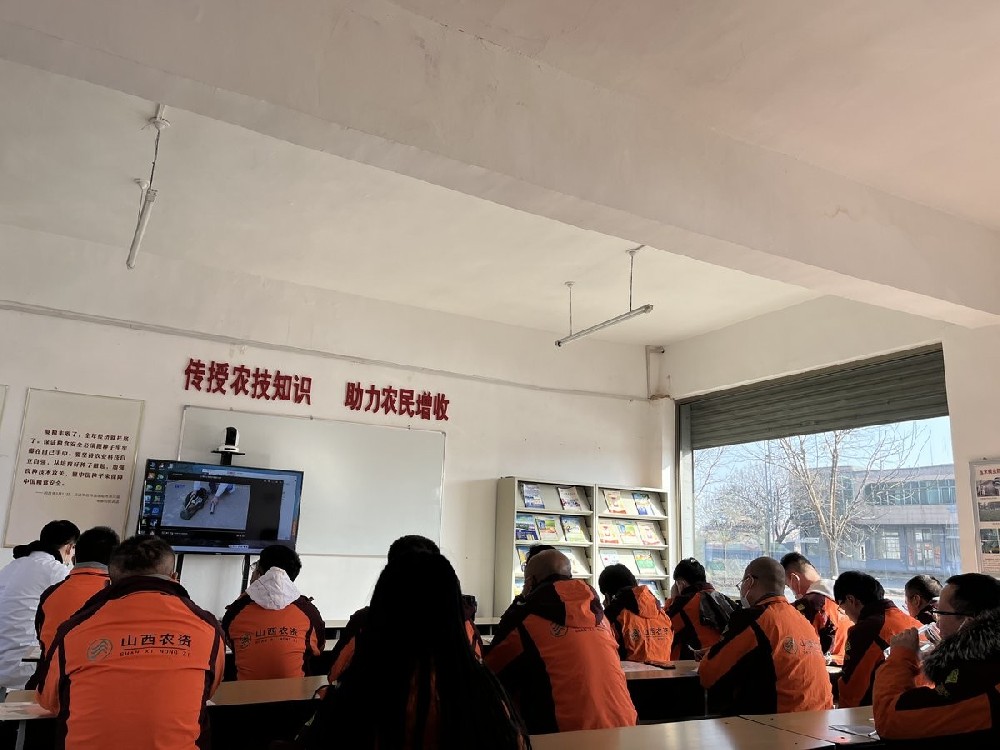
The deployment photographs show a classic county-level roll-out: a mix of classroom instruction, software demonstration, and hands-on bench work with reagents, glassware and soil samples. The HM-GT5 units arrived as complete field laboratories in hard-shell cases, each containing the main analyzer, pH electrode, TDS meter, electronic balance, cuvettes, reagent kits and the glassware needed to run NPK, organic matter, pH, salt and trace-element tests without sending samples to a distant laboratory. For an agricultural materials distributor serving hundreds of villages, this meant soil testing could move from a centralised, seasonal service to a routine, on-demand capability.
Project Snapshot
| Item | Detail |
|---|---|
| Country | People's Republic of China |
| Region | Qixian County, Jinzhong City, Shanxi Province |
| Customer type | County branch of a provincial agricultural materials supply group |
| Model supplied | HM-GT5 soil nutrient analyzer |
| Quantity | 6 units |
| Application | County-wide soil testing and fertiliser recommendation service for farmers and cooperative clients |
| Configuration | Main unit with 7-inch touchscreen, built-in printer, pH electrode, TDS meter, electronic balance, cuvettes, reagent sets and glassware |
| Training model | On-site classroom and bench training covering hardware operation, reagent preparation, calibration, sample workflow and fertiliser recommendation software |
| Interface language | Chinese |
| Year of delivery | 2023 |
Why the Customer Bought: The Starting Point
Shanxi Agricultural Materials Group is a provincial supply enterprise that distributes fertiliser, seed, crop protection products and agricultural services to farmers and rural cooperatives. The Qixian branch sits at the county level, the administrative tier where central policy, commercial distribution and farm-level practice meet. In recent years, the branch had been under pressure to move beyond product sales and offer technical services that justify fertiliser recommendations with measured soil data rather than general prescriptions.
Three operational gaps drove the investment.
The distance gap. Farmers in Qixian often had to send soil samples to municipal or provincial laboratories and wait days or weeks for a result. By the time a report arrived, the sowing or top-dressing window for the current crop had often closed. The branch wanted same-day results at the county office so that recommendations could be acted on immediately.
The credibility gap. Agricultural supply companies compete not only on price but on trust. When a salesperson recommends a compound fertiliser, farmers want evidence that the soil actually needs those nutrients. A portable analyzer that prints a result ticket on the spot turns a sales conversation into a data-backed consultation.
The coverage gap. A single county laboratory cannot visit every village at the right moment. Six portable units allowed the branch to deploy testing capacity to multiple service points and mobile teams, multiplying the number of fields that could be diagnosed during the critical pre-sowing and top-dressing periods.
Why the HM-GT5 Was Selected
The customer evaluated three alternatives: continuing to rely on external laboratories, buying several single-parameter handheld meters, or adopting a multi-channel portable soil and fertiliser nutrient analyzer. The HM-GT5 was chosen for the following reasons.
Integrated multi-parameter coverage. The HM-GT5 measures available nitrogen, phosphorus and potassium, organic matter, pH, salt content and a broad suite of trace elements in soil, fertiliser and plant samples. For an agricultural supply company, this eliminates the need to buy separate pH meters, conductivity pens and NPK kits.
Eight-channel rotary colourimetric design. The instrument uses a precision rotary colourimetric pool with four-wavelength cold sources, giving consistent illumination across all channels. This allows one operator to process up to eight samples in a single batch, reducing per-sample cost and making township visits economically viable.
Built-in expert fertilisation system. The Android-based software links measured values to crop-specific target yields and prints a recommended fertiliser programme. For the Qixian branch, this converts raw numbers into actionable advice for wheat, maize, vegetables and fruit trees.
Field portability and dual power. The unit runs from AC mains, an internal lithium battery or a 12 V vehicle supply. This lets staff take the instrument to a village meeting, a cooperative warehouse or a field shed without worrying about grid access.
Cloud platform and traceable records. With Wi-Fi standard and optional 4G, results can be uploaded to a cloud platform for long-term field records. Printed tickets include test item, channel number, absorbance, concentration and a QR code, giving farmers a physical document they can keep.
Deployment, Installation and Training
The six units were delivered to the Qixian branch and unpacked in the training room. Each case was inventoried against the configuration list: main unit, pH electrode, TDS meter, electronic balance, cuvettes, glass pipettes, conical flasks, reagent bottles, soil nutrient reagent sets, filter paper, test tubes and accessories. The training was structured in three parts over one intensive day.
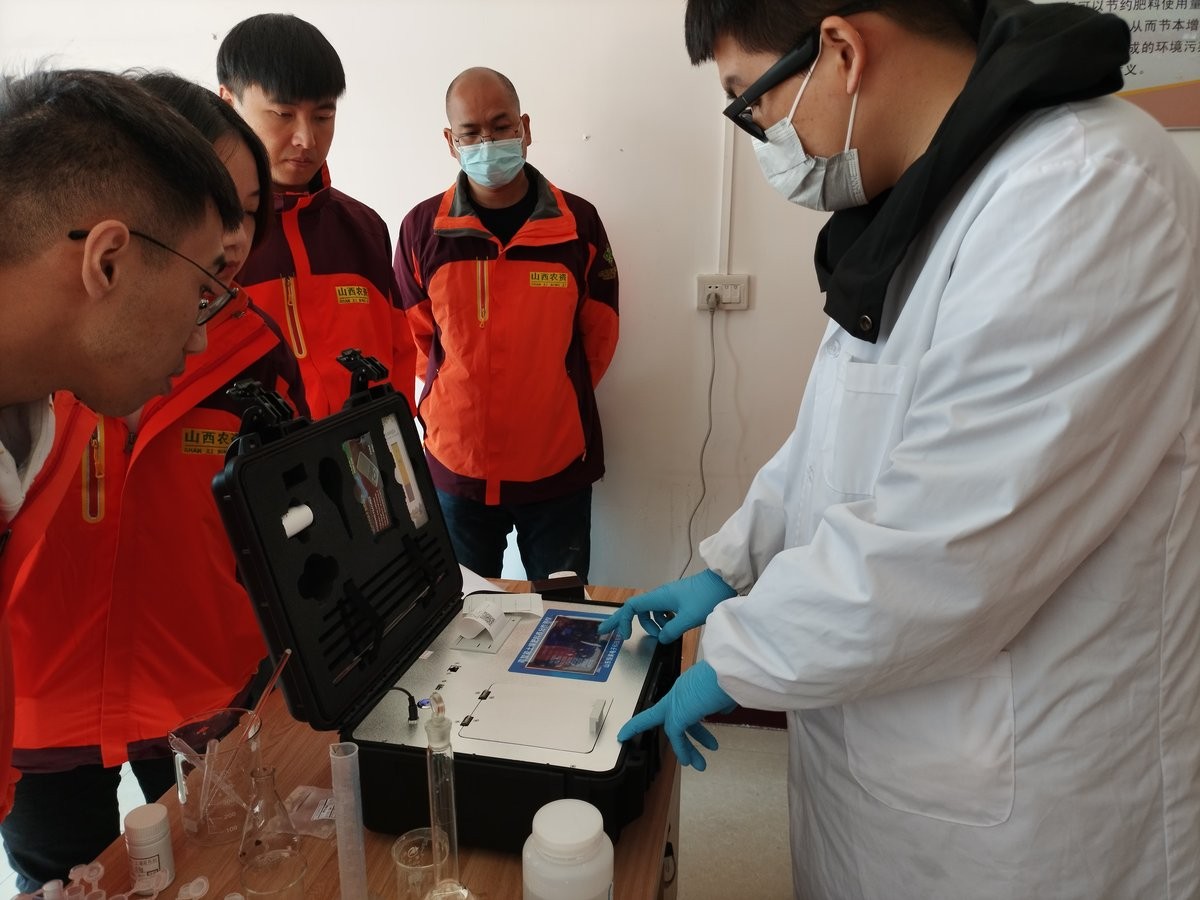
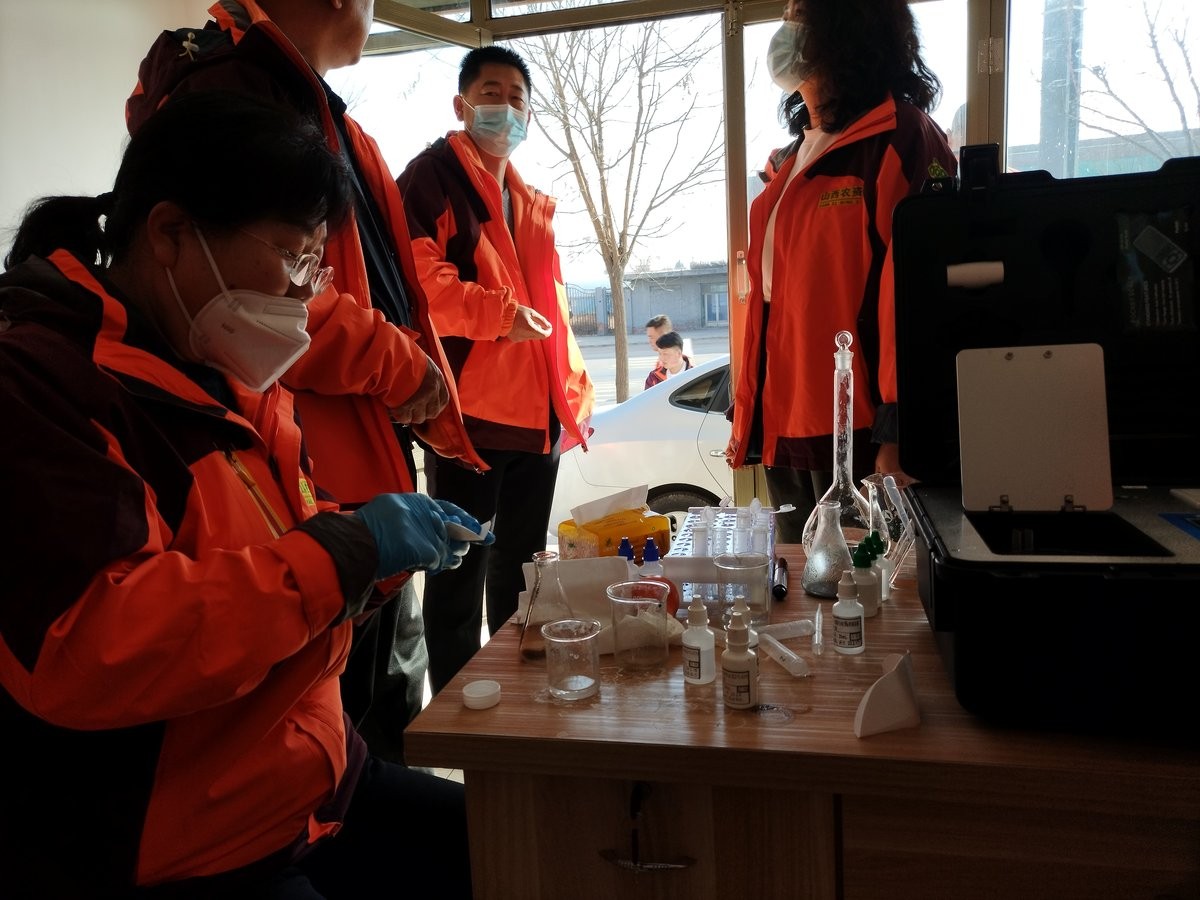
The morning session covered instrument start-up, touchscreen navigation, account login and the daily calibration routine. The instructor demonstrated how the rotary pool accepts standard 1 cm cuvettes and how the four-wavelength cold sources stabilise before each batch. The afternoon moved to sample preparation: weighing field soil, adding extraction solution, filtering, transferring the extract to cuvettes and loading the pool. Photographs show staff members wearing blue nitrile gloves and using graduated pipettes and conical flasks exactly as they would in a village service session.
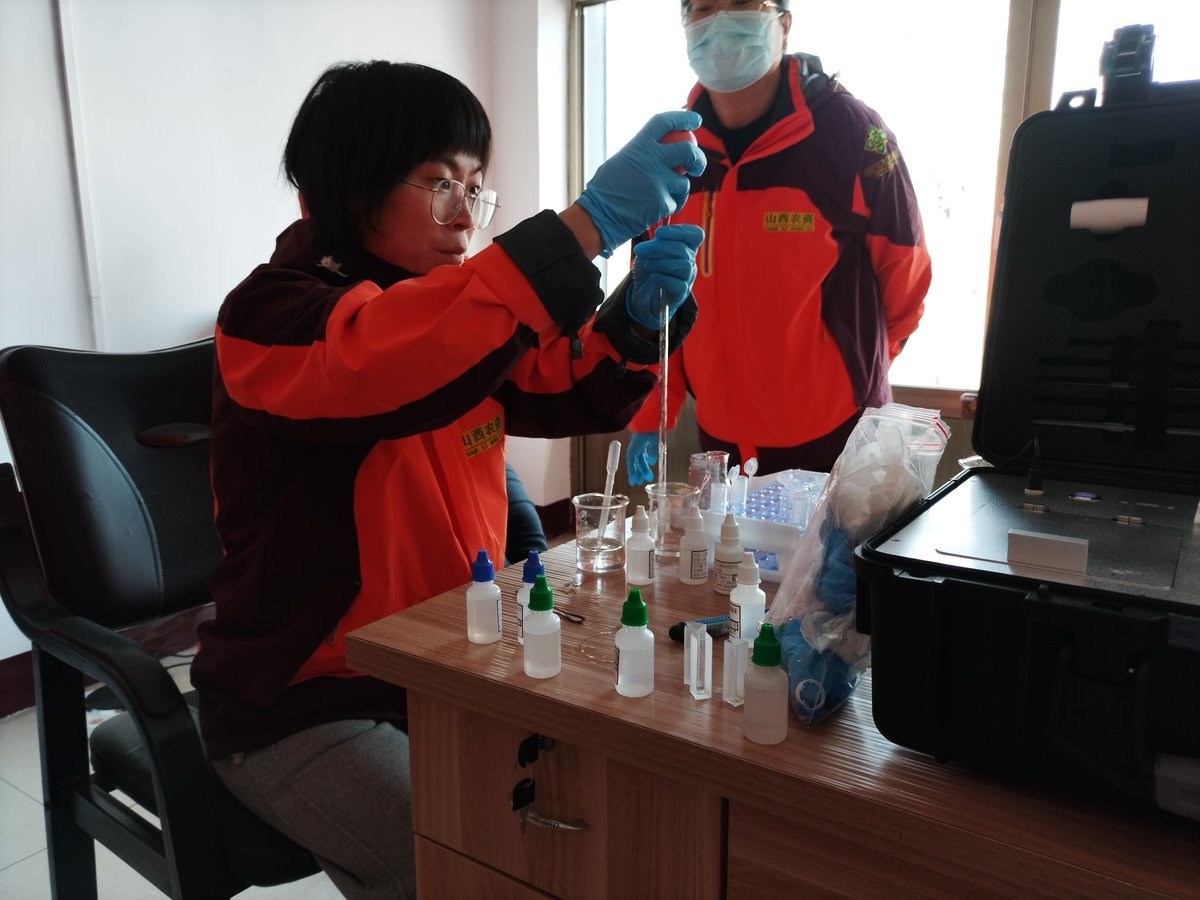
The final module covered result interpretation and the built-in crop expert fertilisation system. Operators entered the measured nutrient values and selected the target crop; the instrument returned a recommended fertiliser rate that the agronomist could adjust based on local knowledge. Because all six units share the same software version and the same reagent kit, the branch can rotate staff between units without retraining.
Delivered Configuration
| Item | Detail |
|---|---|
| Main unit | HM-GT5 soil nutrient analyzer with 7-inch true-colour touchscreen, built-in thermal printer and Android operating system |
| Processor | ARM Cortex-A7 RK3288 quad-core, 1.88 GHz |
| Power supply | AC 220 V ±22 V / DC 12 V +5 V; internal lithium battery; vehicle power compatible |
| Channels | 8 rotary colourimetric detection channels |
| pH electrode | 1 unit for soil pH measurement |
| TDS meter | 1 unit for soluble salt estimation |
| Electronic balance | 100 g / 0.01 g for soil sample weighing |
| Glassware | 100 mL conical flasks, 50 mL measuring cylinder, glass test tubes, plastic test tubes, reagent bottles, glass pipettes (1, 2, 5, 10 mL), wash bottle, test tube rack, test tube brush |
| Consumables | Soil NPK and organic matter reagent sets, qualitative filter paper, cuvettes, plastic droppers, weighing spoon, aluminium box, ear wash ball, glass stirring rod |
| Documentation | Manual, qualification certificate, warranty card, print paper, power adapter |
Results Reported: What Changed
The comparison below summarises the workflow changes reported by the Qixian branch during the first full season after commissioning. The figures describe operational outcomes rather than instrument performance claims.
| Indicator | Before | After |
|---|---|---|
| Soil test turnaround | Several days to weeks via external laboratory | Same day at the county branch or mobile service point |
| Number of villages reached per season | Limited by laboratory sampling campaign schedule | Multiple township service points operating on demand |
| Fertiliser recommendation basis | General regional prescription or sales history | Measured NPK, organic matter, pH and trace-element values |
| Data record format | Paper laboratory reports filed centrally | Printed on-site ticket plus cloud upload with operator account and timestamp |
| Operator consistency | Varied with external laboratory communication chain | Standardised protocol across six identical units and one training programme |
| Farmer-facing evidence | Verbal advice or third-party certificate | On-site printed result ticket with QR code and nutrient concentration |
Specifications Relevant to This Deployment
The parameters below are extracted from the HM-GT5 product manual and are relevant to the county-level soil testing service described in this case.
| Parameter | Specification |
|---|---|
| Power supply | AC 220 ±22 V / DC 12 V +5 V (built-in lithium battery or vehicle power) |
| Power consumption | ≤5 W |
| Detection channels | 8 rotary colourimetric channels |
| Range and resolution | 0.001–9999 |
| Repeatability error | ≤0.03% (0.0003, potassium dichromate solution) |
| Stability | No drift within 1 h; ≤0.3% within 2 h (transmittance), 0.001 (absorbance) |
| Linear error | ≤0.1% (0.001, copper sulfate) |
| Wavelengths | Red 680 ±2 nm; blue 420 ±2 nm; green 510 ±2 nm; orange 590 ±4 nm |
| pH range / accuracy | 1–14 / 0.01; error ±0.1 |
| Salt content range / error | 0.01%–1.00% / ±5% |
| Soil moisture range / error | 0–100% / <0.5% |
| Test speed | Single soil sample (NPK) ≈20 min; 3 samples ≤40 min; 8 samples ≤1 h |
| Dimensions / weight | 42 × 31 × 15 cm / 3.6 kg (host) |
| Protection | IP65 |
Soil Sampling Protocol for a County Agricultural Supply Network
A soil nutrient analyzer is only as good as the sample that enters it. For the Qixian branch, the shift from occasional external testing to routine in-house testing required a sampling protocol that county staff could teach to village technicians and cooperative managers. The protocol follows the principles of the 4R Nutrient Stewardship framework — applying the right source, at the right rate, at the right time and in the right place — and aligns with Chinese technical guidance for soil testing and formulated fertilisation.
The first step is field zoning. Rather than treating an entire cooperative farm as one sample, technicians divide fields into management zones based on soil colour, topography, crop history and obvious problem areas. Each zone is sampled with a zigzag pattern using a soil auger, and the cores from each zone are combined into one composite sample. The HM-GT5 then tests a sub-sample of that composite after weighing and extraction. This approach keeps the cost per field low while still capturing the spatial variation that drives fertiliser decisions.
Sample handling is the second critical step. The extraction chemistry depends on a known ratio of soil to extractant, so the electronic balance supplied with the HM-GT5 is not optional equipment; it is part of the measurement chain. Technicians were trained to air-dry samples when possible, to sieve through the mesh supplied in the kit, and to avoid contaminating samples with fertiliser residues from the sampling tools. The training photographs show staff using the balance and glassware exactly as specified, because a small error in weighing propagates directly into the reported nutrient concentration.
From Batch Testing to Fertiliser Recommendation
The HM-GT5's built-in crop expert fertilisation system is the bridge between raw absorbance values and farmer advice. After a batch of cuvettes is read, the software converts absorbance into concentration using the calibration curves stored for each test item. The operator then selects the crop and a target yield; the system calculates a recommended fertiliser rate based on the measured soil supply, the crop demand and the expected fertiliser recovery efficiency.
This process is consistent with internationally recognised soil test interpretation methods. Soil pH and electrical conductivity, for example, are defined by ISO 10390 and ISO 11265 respectively, while colourimetric determinations of available nutrients follow extraction procedures referenced in national rapid-testing standards and in JJG 179-90 verification practice for spectrophotometers. The HM-GT5 is not a laboratory reference instrument, but it is designed to track the same parameters agronomists use in those frameworks, making its results meaningful for fertiliser planning.
For the Qixian branch, the value of the expert system is that it turns a soil test into a consultation document. A farmer who brings a soil sample receives not only a printed ticket showing nitrogen, phosphorus, potassium, organic matter, pH and trace-element levels, but also a suggested fertiliser programme. The agronomist can override the recommendation based on crop variety, irrigation conditions or market prices, but the starting point is no longer guesswork.
Keeping Six Units Aligned: Standardisation and Quality Control
Deploying six analyzers across one county introduces a subtle risk: if each unit drifts or each operator prepares reagents differently, the branch will produce six datasets that cannot be compared. The training therefore emphasised three standardisation practices.
Shared reagent lots. All six units were commissioned with the same reagent sets from the same production batch. When reagents are reordered, the branch records the batch number and uses the same lot across all units during a single campaign. This reduces one major source of between-unit variation.
Calibration discipline. The HM-GT5 performs internal calibration before each batch using blank and standard solutions. Operators were trained to run a blank with every new reagent batch and to record the calibration status on the printed ticket. The instrument's optical stability specification — no drift within one hour and minimal drift within two hours — supports this practice by reducing the need for frequent recalibration during a busy service day.
Documented workflows. The branch created a one-page standard operating procedure based on the HM-GT5 manual and the training session. It covers sample weighing, extraction time, filtering, cuvette loading, instrument start-up and result recording. New staff can follow the same steps that the original trainees followed, protecting consistency as personnel change over time.
Related Reading
Technical specifications for the GT-series soil and fertiliser nutrient analyzers are summarised on the product page for the HM-GT5 soil nutrient analyzer . Laboratories or supply companies that need a higher-channel research-grade unit may also review the HM-GT6 soil and fertilizer nutrient analyzer , which shares the same rotary colourimetric design with twelve channels. A complementary deployment in a different agricultural setting is described in the Chongqing Youyang tobacco case.
About HM Instruments
HM Instruments is the international brand of Shandong Hengmei Electronic Technology Co., Ltd., a national high-technology enterprise, a Shandong gazelle enterprise and a specialised "little giant" SME listed on the New Fourth Board under equity code 306008. The company holds ISO 9001 quality management certification (No. 06524Q02062ROM), an intellectual property management system certification (472IP190206R0S), occupational health and safety certification (06524S00854ROM), environmental management certification (06524E00905ROM), an after-sales service certification (78323SC0008R0S) and a radiation safety licence (鲁环辐证[G0334]). Certificate metadata is notarised on the Zhixin (至信链) blockchain and can be verified at zxscan.qq.com.
Development is carried out by a research team of more than one hundred engineers, and the company holds around 150 core patents, including the rotary colourimetric pool design (patent ZL 2018 2 1777724.7) and the high-precision filter-spectrophotometry method (patent ZL 2020 2 1763837.9) used in the HM-GT5. Field support is delivered through 280 service centres across China with a 24-hour response commitment. Every instrument carries a 12-month whole-unit warranty, lifetime technical support, lifetime free training and lifetime maintenance. For the Qixian branch, the lifetime free training clause is particularly relevant: as service staff rotate, new operators can be trained on the same instruments without additional charges.
Address of this article:https://www.kjhm.net/case/hm-gt5-soil-nutrient-analyzer-case-shanxi-qixian.html
 Related News
-
24 / 2026-06
HM Instruments Online NIR Moisture Analyzer: Multi-Industry Application White Paper | HM-ZHS
Learn more
-
23 / 2026-07
Haze Meter FAQ: 12 Technical Questions Answered | HM Instruments
Learn more
-
15 / 2026-06
Reliable Sterility Testing Pump Manufacturers & Brand Guide
Learn more
-
21 / 2026-05
HM Instruments ICP-OES Spectrometer FAQ | Authoritative Technical Q&A
Learn more