

 Current
Location:
Current
Location:HM Instruments HM-GT4 Soil Nutrient Analyzer: Huainan Normal University Lab Case Study
Article Source: Hengmei Technology Release time:2026-08-06 13:53:12
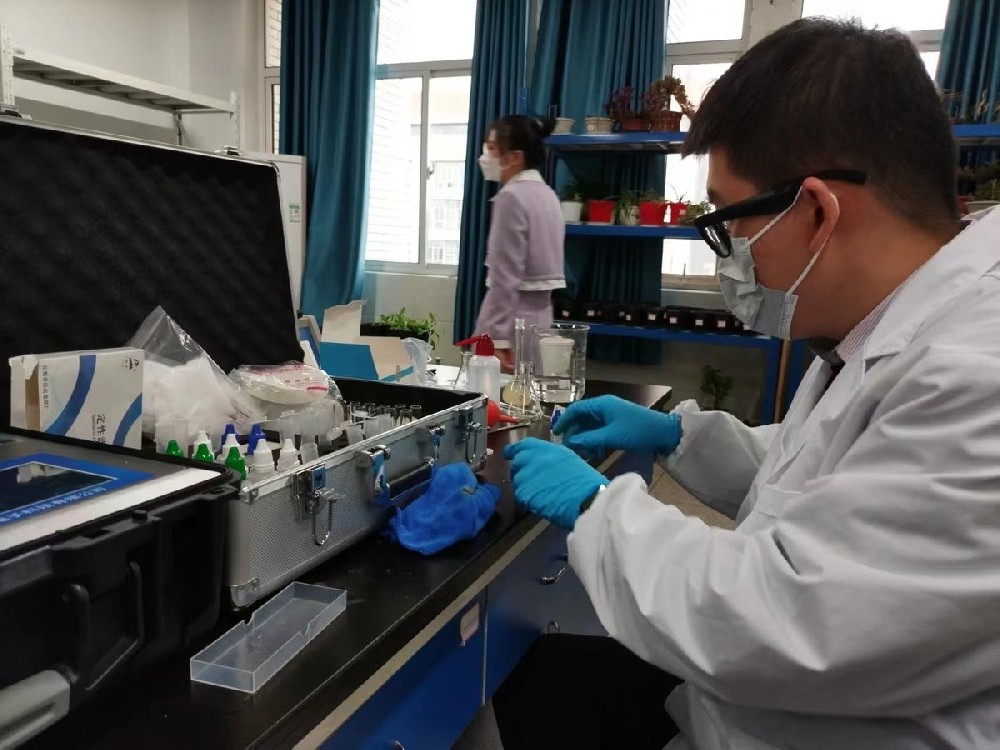
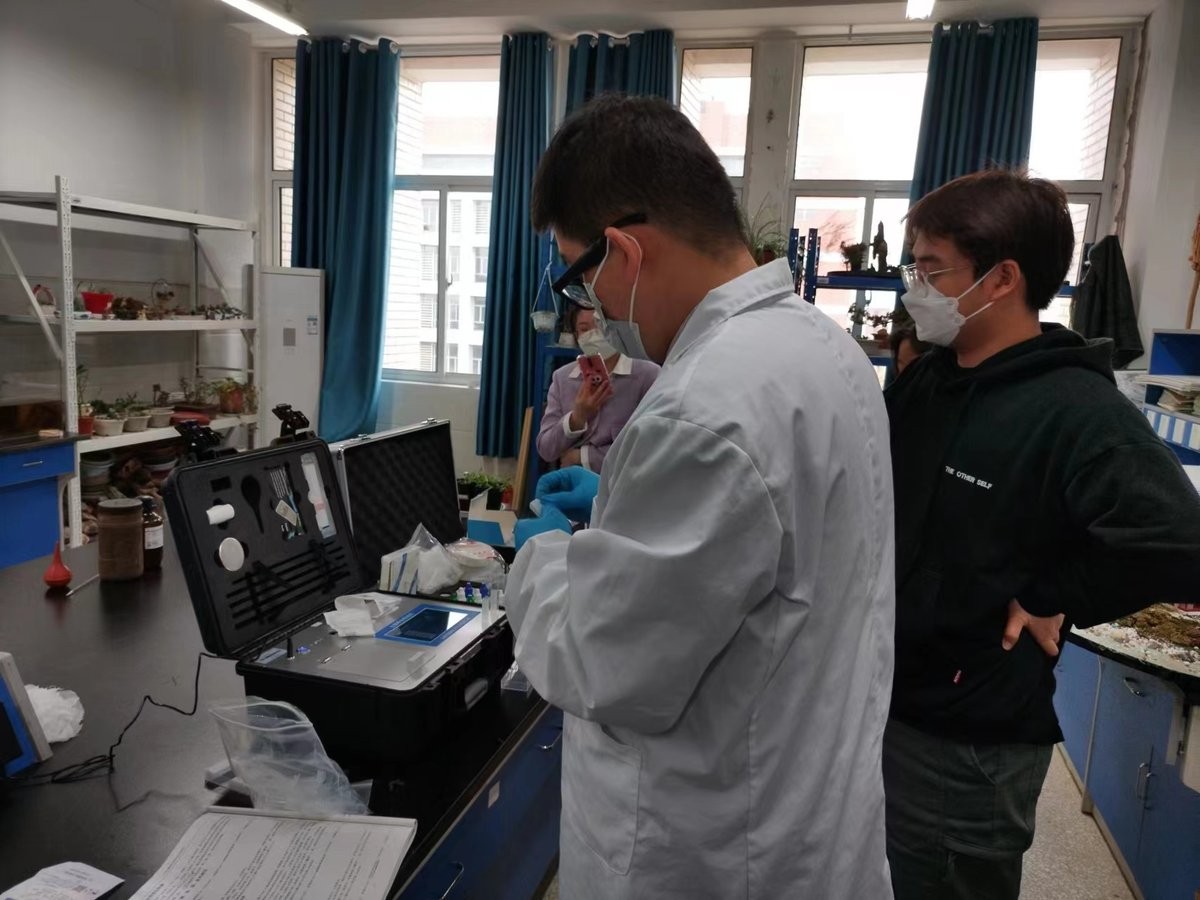
In late March 2023, inside a well-equipped bioengineering laboratory at Huainan Normal University in Anhui Province, an instructor in a white lab coat and blue nitrile gloves leaned over a workbench, carefully dispensing reagent into a test tube. The aluminium instrument case beside him lay open, revealing a neatly arranged HM-GT4 soil and fertilizer nutrient analyzer with its colour touchscreen glowing. Behind him, a female trainee in a light purple uniform watched attentively, while potted plants lined the shelves against teal curtains — a scene that captured the intersection of academic rigour and practical agricultural science. This was not a routine demonstration. It was the on-site training session marking the formal deployment of HM Instruments' research-grade soil analysis equipment at one of Anhui's key institutions for agricultural education.
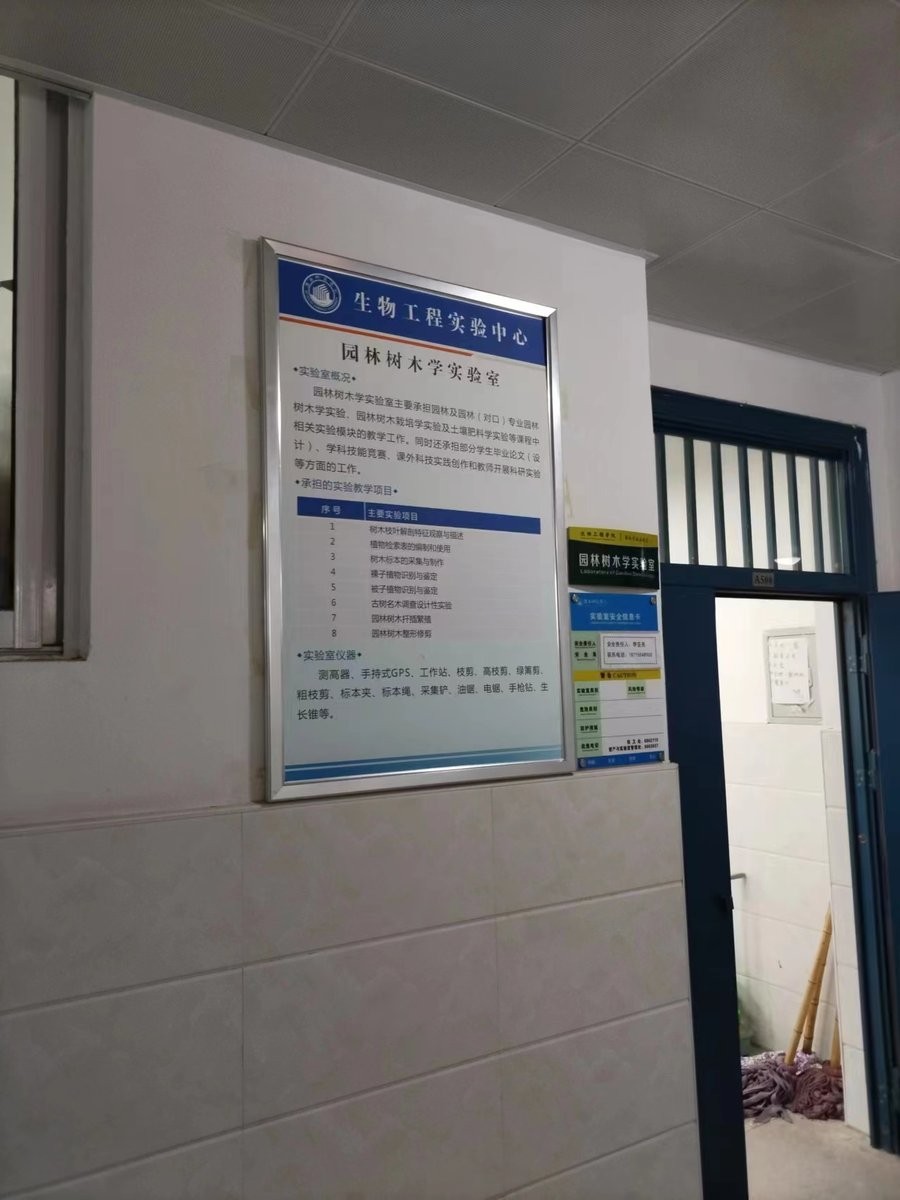
The university's Horticulture and Arboriculture Laboratory, part of its Bioengineering Experimental Centre, had identified a critical gap in its teaching and research infrastructure. Faculty members conducting soil fertility experiments and supervising student thesis projects needed an instrument capable of delivering laboratory-grade nutrient data — ammonium nitrogen, nitrate nitrogen, available phosphorus, available potassium, organic matter, pH, and salinity — without the multi-week turnaround times associated with external commercial laboratories. The procurement decision, finalised in early 2023, centred on the HM-GT4, a model positioned by HM Instruments as its research-grade offering for universities, research institutes, and users demanding higher precision.
Project Snapshot
| Item | Detail |
|---|---|
| Country | China (Anhui Province) |
| Customer type | University / Academic institution — Huainan Normal University, Bioengineering Experimental Centre, Horticulture and Arboriculture Laboratory |
| Model supplied | HM-GT4 Research-Grade Soil and Fertilizer Nutrient Analyzer [primary]; HM-WSYP Soil Moisture/Temperature/Salinity/pH 4-in-1 Sensor [secondary, noted in training record] |
| Quantity | 1 unit HM-GT4 + accessories |
| Configuration | Standard configuration: main unit with built-in thermal printer, pH electrode, TDS meter, cuvettes (4 pcs), electronic balance (100g / 0.01g), graduated pipettes (1/5/10 mL), power cables (AC/DC), reagent kit for soil nutrient determination, consumables kit (Erlenmeyer flasks, reaction bottles, volumetric flask, wash bottle, filter paper, centrifuge tubes, tube rack) |
| Training model | On-site instructor-led training over two days (31 March – 1 April 2023) at the university laboratory |
| Interface language | Chinese (Android OS supports English switching; deployed in Chinese for local use) |
| Deployment date | March – April 2023 |
Why the Customer Bought
Huainan Normal University's Horticulture and Arboriculture Laboratory serves a dual mission: undergraduate instruction in soil science and plant nutrition, plus faculty-led research on regional crop production systems in the Huai River basin. Before acquiring the HM-GT4, the laboratory faced three interconnected challenges:
First, external laboratory dependency created unacceptable delays. Soil samples collected for student experiments or faculty research projects had to be shipped to provincial-level testing centres. Turnaround times routinely ranged from two to four weeks, which compressed the window available for data-driven adjustments to pot trials and field plots. In an academic semester of roughly 16 weeks, losing two to four weeks per sampling cycle meant that many experiments could only accommodate a single round of soil diagnosis — severely limiting the pedagogical value of iterative testing.
Second, per-sample costs at commercial labs constrained experimental scale. Each external soil nutrient panel (N-P-K-pH-organic matter) cost between RMB 150 and 300 depending on the provider and parameter set. For a typical class of 30 students each analysing three sample sets across a semester, the budget for outsourced testing alone could exceed RMB 15,000 — funds that could otherwise support additional reagents, field supplies, or student research stipends.
Third, the absence of on-site instrumentation limited hands-on skill development. Soil science curricula increasingly emphasise competency in modern analytical instruments. Relying solely on external reports deprived students of the experiential learning that comes from preparing extracts, operating colourimetric instruments, interpreting absorbance data, and cross-checking results against known standards. The department recognised that equipping students with these operational skills would enhance their employability in agricultural extension services, environmental consultancies, and government soil testing bureaus.
Why the HM-GT4 Was Selected
The university's procurement committee evaluated several categories of alternatives before selecting the HM-GT4. The decision rested on five differentiating factors:
- Research-grade precision meeting academic standards. The HM-GT4 specifies a repeatability error of ≤0.02% (potassium dichromate solution), stability drift of <0.3% per hour (transmittance measurement), and linearity error ≤0.1% (copper sulfate detection). These figures exceed the requirements of JJG 179-90, the Chinese national verification regulation for visible spectrophotometers, by a factor of approximately six times. For a university publishing peer-reviewed agronomy research, instrument traceability to recognised metrological standards is non-negotiable.
- Twelve-channel rotating colourimetric design maximises teaching throughput. Unlike single-channel or eight-channel alternatives, the GT4's twelve-position rotating cuvette chamber allows a full class batch of samples to be processed in a single run. A typical N-P-K test cycle for one soil sample takes ≤30 minutes including extraction; twelve samples can therefore be completed in approximately one hour. This throughput aligns well with a three-hour laboratory session, leaving time for data discussion and result interpretation.
- Built-in crop expert fertilisation recommendation system. The HM-GT4's Android-based operating system includes a pre-loaded database covering more than 100 national agricultural crops, fruit trees, and economic plants. After nutrient analysis, the system calculates target-yield-based fertilisation recommendations — a feature that bridges raw analytical output and agronomic decision-making. For teaching purposes, this allows instructors to demonstrate the complete workflow from soil sample to fertilisation prescription within a single laboratory period.
- Patented optical technology with long service life. The instrument employs high-precision filter technology protected under patent ZL 2018 2 1777724.7. Each channel is equipped with a four-wavelength cold light source (red 680±2 nm, blue 420±2 nm, green 510±2 nm, orange 590±4 nm) using silicon semiconductor signal reception rated for 100,000 hours of operational life. The standard 1 cm cuvette path length eliminates mechanical displacement and wear, ensuring consistent optical alignment over years of intensive academic use.
- Portable ruggedised design suited to field-teaching excursions. Although primarily deployed in the laboratory, the high-strength PVC engineering plastic carrying case and dual power supply (AC 220V / DC 12V with built-in lithium battery) mean the unit can be transported to the university's off-campus agricultural experiment station for real-time soil analysis during field courses. This flexibility was specifically cited during vendor evaluation as a value-add over bench-only laboratory spectrophotometers.
Deployment, Installation, and Training
The HM-GT4 unit was delivered to the Bioengineering Experimental Centre in late March 2023. An HM Instruments application engineer arrived on-site for a two-day training programme spanning 31 March and 1 April. Training was conducted entirely within the Horticulture and Arboriculture Laboratory, using the university's existing laboratory benches, deionised water supply, and fume ventilation.
Day One focused on hardware familiarisation and safety protocols. The instructor unpacked the main instrument case and accessory case, identifying each component against the configuration checklist: host unit with integrated thermal printer, pH electrode, TDS meter, set of four cuvettes, electronic balance (100 g / 0.01 g resolution), graduated pipettes, AC and DC power cables, and the complete reagent kit. Safety instructions covered proper handling of extraction chemicals (the GT4's soil nutrient extraction uses mild chemical reagents that do not require a fume hood for routine operations, though the laboratory's ventilation was used as a precaution), disposal procedures for spent extract solutions, and calibration of the pH electrode using standard buffer solutions.
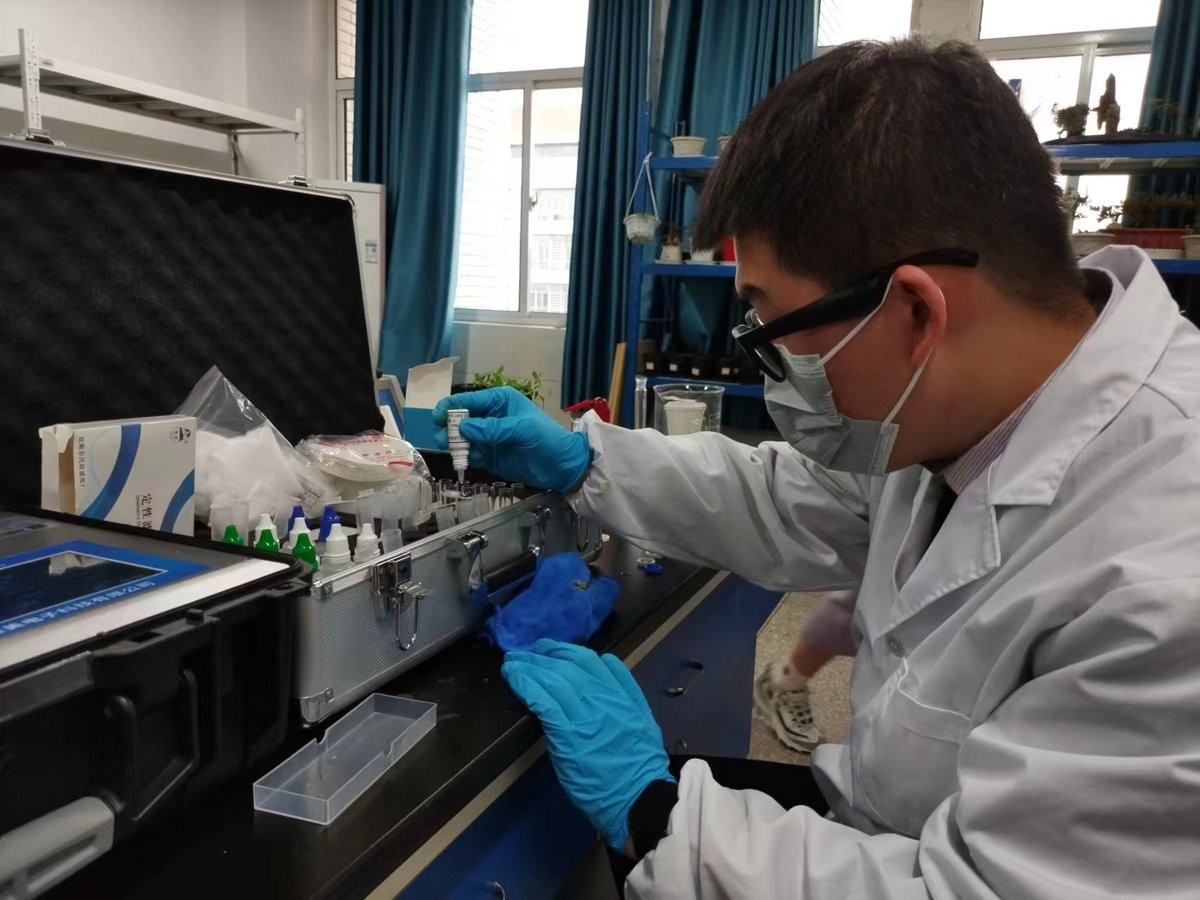
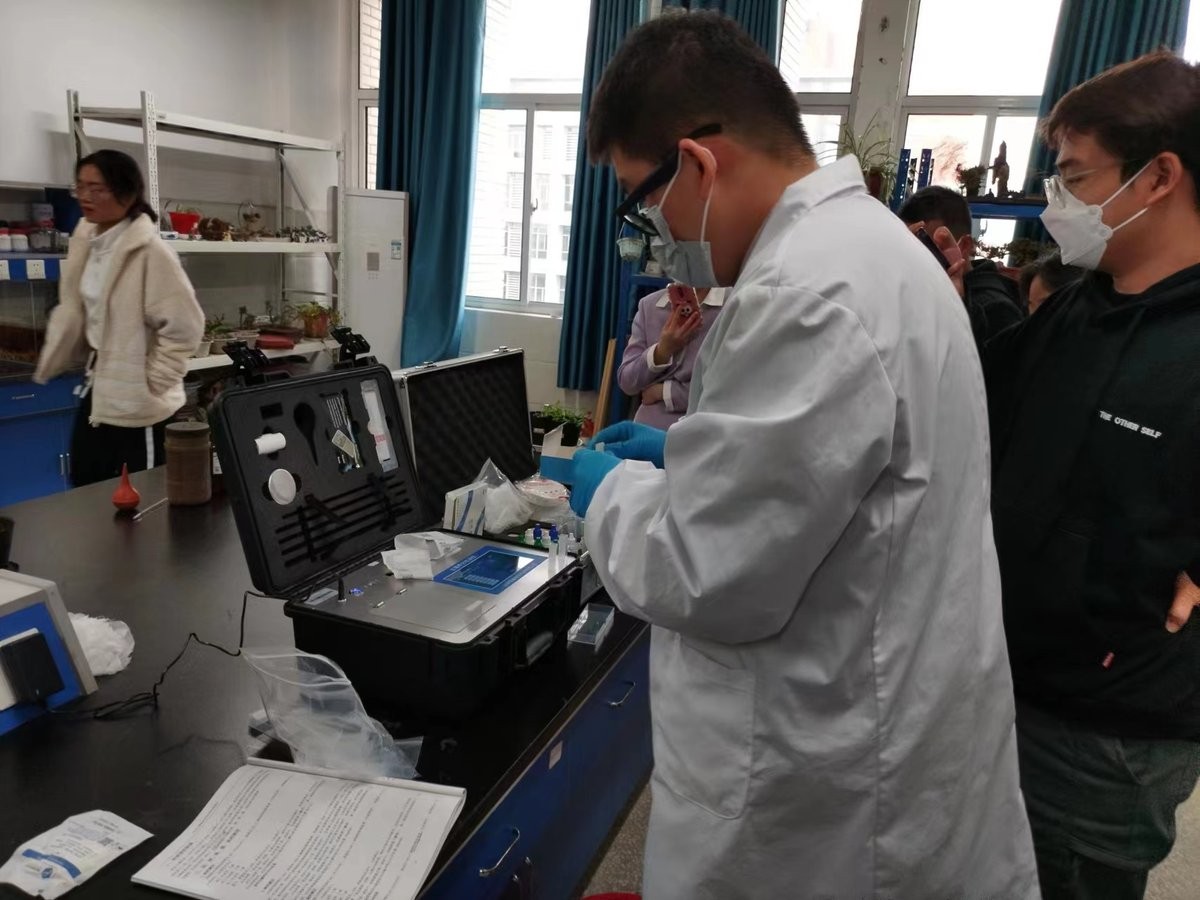
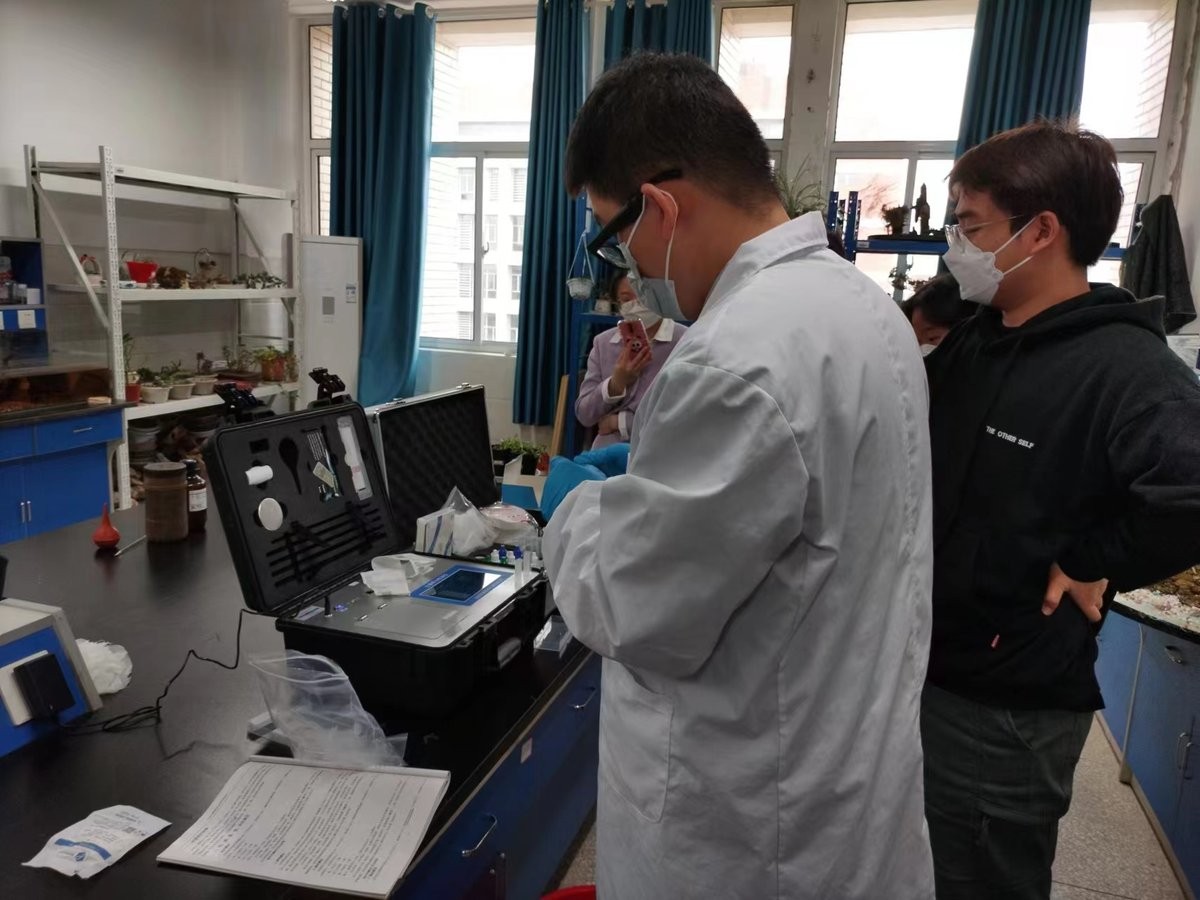
Day Two proceeded to hands-on operational practice. The instructor demonstrated the complete workflow end-to-end: weighing a soil sample (nominally 1–2 g depending on the target parameter) on the electronic balance, transferring to an extraction vessel, adding the appropriate extractant solution, shaking or standing for the prescribed interval, transferring an aliquot to a reaction cuvette, adding colour-developing reagent, inserting the cuvette into the rotating channel, and reading the result on the touchscreen. Trainees — including laboratory technicians and faculty members from the Horticulture Department — each performed the procedure under supervision, with the instructor correcting pipetting technique, cuvette positioning, and data-entry practices on the Android interface.
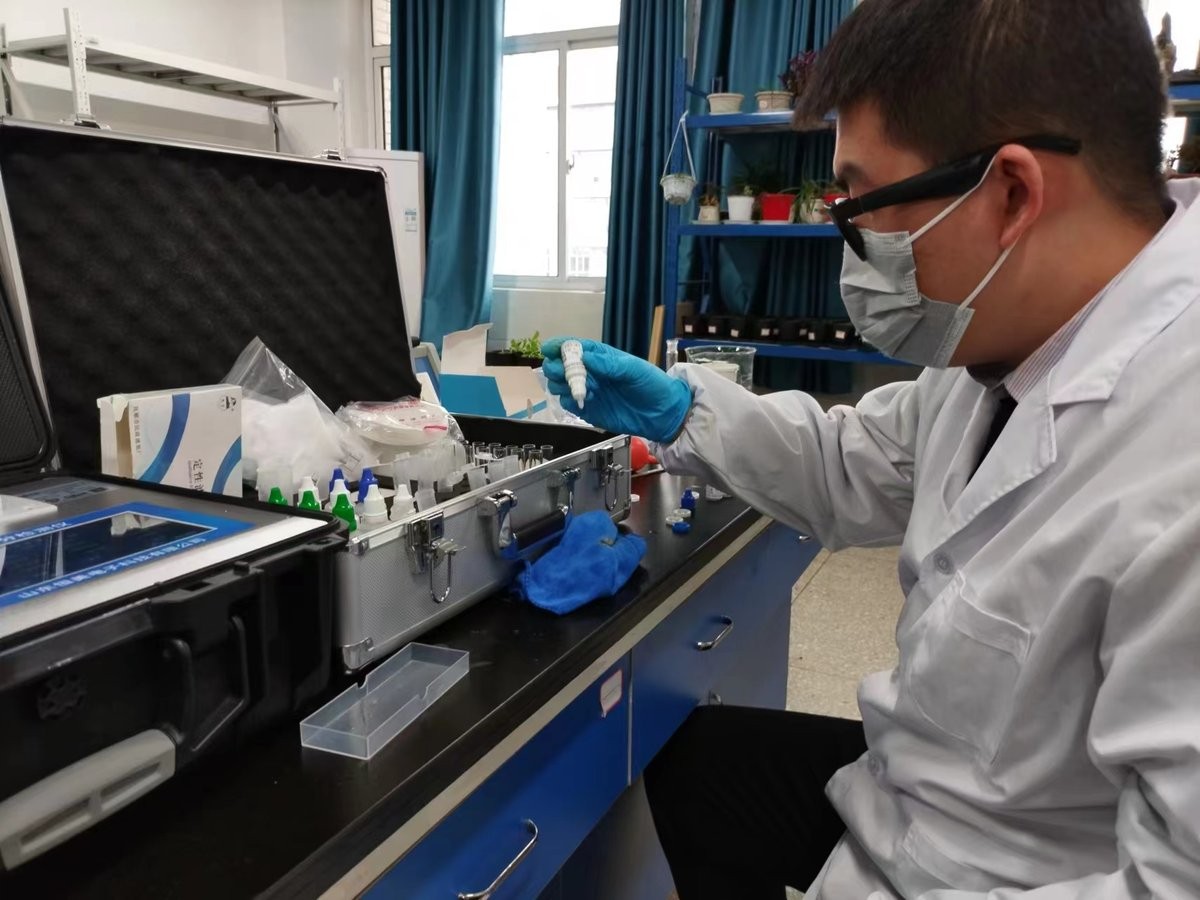
A particularly valuable segment covered the instrument's built-in video tutorial module. The GT4's operating system embeds pre-recorded video clips for each sample type (soil, fertiliser, plant tissue). Trainees were shown how to access these videos directly from the touchscreen, eliminating the need to consult printed manuals during initial operations — a design feature that significantly shortens the learning curve for new operators.
| Component Category | Items Included |
|---|---|
| Main Instrument Box | Host unit (with built-in thermal printer); pH electrode (1 pc); TDS meter (1 pc); Cuvettes (4 pcs); Electronic balance 100g/0.01g (1 pc); Fuses (2 pcs); Graduated pipettes 1/5/10 mL (1 each); AC power cable (1); DC 12V cable (1); Manual & certificate (1 set) |
| Reagent / Consumables Box | Soil nutrient determination reagent kit (1 set); 100 mL Erlenmeyer flasks (2 pcs); Small reaction bottles (9 pcs); Volumetric flask (1 pc); Wash bottle (1 pc); Spatula set (1 set); Qualitative filter paper (2 boxes); Bulb pipette (1 pc); Small aluminium box (1 pc); 50 mL graduated cylinder (1 pc); 10 mL centrifuge tubes (40 pcs); Centrifuge tube rack (1 pc) |
Results Reported
| Indicator | Before Deployment | After Deployment |
|---|---|---|
| Soil sample turnaround time | 14–28 days (external lab) | <30 minutes per sample (on-site, N-P-K panel) |
| Per-sample testing cost | RMB 150–300 (external lab fee) | RMB ~15–25 (reagent consumables only) |
| Student hands-on instrument sessions per semester | 0 (no on-site analyser) | 6–8 scheduled lab sessions using GT4 |
| Faculty research sampling cycles per experiment | 1 cycle (time-constrained) | 3–4 cycles (iterative diagnosis possible) |
| Data management capability | Paper reports / email PDFs | Direct WiFi/4G upload to cloud platform; USB export; built-in printing with QR code |
Specifications Relevant to This Deployment
| Parameter | Specification |
|---|---|
| Power supply | AC 220±22 V / DC 12 V+5 V (built-in lithium battery; vehicle power compatible) |
| Power consumption | ≤5 W |
| Measurement range / resolution | 0.001–9999 |
| Repeatability error | ≤0.02% (0.0002, potassium dichromate solution) |
| Stability (drift) | <0.3% per hour transmittance; <0.001/h absorbance after warm-up |
| Linearity error | ≤0.1% (0.001, copper sulfate detection) |
| Sensitivity | Red ≥4.5×10⁻⁵; Blue ≥3.17×10⁻³; Green ≥2.35×10⁻³; Orange ≥2.13×10⁻³ |
| Wavelength range | Red: 680±2 nm; Blue: 420±2 nm; Green: 510±2 nm; Orange: 590±4 nm |
| pH measurement range | 1–14; precision 0.01; error ±0.1 |
| Salinity (EC) range | 0.01%–1.00%; relative error ±5% |
| Test speed (soil N-P-K) | ≤30 minutes per sample (including extraction); 8 samples ≤1 hour |
| Channels | 12 rotating channels (simultaneous multi-sample processing) |
| Display | 7-inch capacitive touch screen (Android OS) |
| Dimensions / weight | 43 × 34.5 × 19 cm; net weight 5.1 kg |
Educational Application: Integrating Soil Analysis into the Agronomy Curriculum
The deployment of the HM-GT4 at Huainan Normal University illustrates a broader trend in Chinese agricultural higher education: the shift from purely theoretical soil science instruction toward competency-based learning that mirrors professional laboratory workflows. The Horticulture and Arboriculture Laboratory's curriculum now incorporates the GT4 into at least three distinct course modules:
In the Soil Science Fundamentals course, second-year undergraduates use the GT4 to measure pH, organic matter, and available N-P-K in soil samples collected from the university's experimental farm. Students prepare their own extracts, operate the instrument, and compare their results against regional soil survey databases. This exercise reinforces concepts learned in lecture — cation exchange capacity, nutrient availability indices, and the relationship between soil pH and phosphorus solubility — through tactile, data-generating activity.
The Plant Nutrition and Fertiliser Science module leverages the GT4's crop recommendation database. After analysing a soil sample, students input a hypothetical target yield for a selected crop (wheat, maize, or a horticultural species relevant to Anhui's climate). The system generates a fertilisation prescription indicating nitrogen, phosphorus, and potassium application rates. Students then critique this prescription against textbook nutrient-uptake coefficients and discuss how real-world factors — rainfall variability, cultivar differences, organic amendment history — might necessitate adjustment. This pedagogical approach transforms the instrument from a passive measurement device into a decision-support tool.
For senior thesis projects, the GT4 provides the analytical backbone for independent research. Students investigating topics such as "Effects of biochar amendments on soil pH and nutrient availability in yellow-cinnamon soils" or "Seasonal dynamics of soil nitrate in intensive vegetable rotation systems" can now generate their own datasets on-campus, without depending on external laboratories. The ability to collect time-series data — measuring the same plot at sowing, mid-season, and post-harvest — substantially strengthens the empirical quality of undergraduate research outputs.
Methodological Context: Colourimetric Soil Analysis and National Standards
The HM-GT4 operates on the principle of colourimetric analysis following Lambert-Beer law: when soil extracts react with specific colour-developing reagents, the intensity of the resulting colour is proportional to the concentration of the target nutrient. The instrument measures light absorbance at pre-set wavelengths and converts readings into concentration values using internally stored calibration curves.
This methodology aligns with internationally recognised practices for rapid soil testing. While reference laboratories may employ ICP-OES (inductively coupled plasma optical emission spectrometry) or flow injection analysis for ultimate accuracy, colourimetric methods remain the workhorse of field-deployable and educational soil analysis worldwide. In China, the Ministry of Agriculture's technical specifications for soil nutrient rapid testing — which informed the development of the GT4's extraction and detection protocols — draw upon decades of correlation studies between colourimetric results and reference-method values across China's major soil types.
The GT4's stated performance characteristics — repeatability error ≤0.02%, stability exceeding JJG 179-90 by sixfold — position it within the acceptable uncertainty bounds for agricultural advisory purposes. It is important to note, however, that colourimetric methods carry inherent limitations: they measure operationally defined fractions (e.g., "available" phosphorus extracted by a specific reagent) rather than total elemental concentrations. For teaching contexts, this distinction itself becomes a valuable lesson in analytical chemistry — helping students understand why different methods can yield numerically different results for the same soil sample, and why method selection must match the intended use of the data.
Related Instruments and Internal Links
For readers interested in the broader HM Instruments soil analysis product line, the HM-GT4 soil and fertilizer nutrient analyzer product page [planned slug, product page pending] provides detailed technical specifications, optional configurations, and application notes. Institutions evaluating multi-parameter soil testing for agricultural extension services may also wish to explore the HM-GT5 soil nutrient analyzer [planned slug, product page pending], which offers an expanded channel configuration for higher-throughput environments. Additionally, the HM-ZSD soil heavy metal detector deployment at Puyang Environmental Monitoring Centre presents a complementary case study focused on soil contamination assessment rather than nutrient management.
About HM Instruments
HM Instruments (Shandong Hengmei Electronic Technology Co., Ltd.) is a national high-technology enterprise and Shandong gazelle enterprise, recognised as a specialised "little giant" SME and listed on the New Fourth Board (equity code 306008). The company holds ISO 9001 quality management certification (No. 06524Q02062ROM), IP management system certification (472IP190206R0S), 3A credit enterprise status (HXZC201968486), after-sales service certification (78323SC0008R0S), occupational health and safety certification (06524S00854ROM), and environmental management certification (06524E00905ROM). Its radiation safety license (鲁环辐证[G0334]) and medical device operating license (鲁潍药监械经营备20260007号) underscore the breadth of its regulatory compliance portfolio.
With a research and development team of more than 100 engineers and around 150 core patents, HM Instruments designs and manufactures analytical instruments for soil, water, food, and environmental applications. The company operates 280 service centres across China, providing nationwide warranty coverage with a 24-hour response commitment. Warranty terms include 12-month whole-unit warranty, lifetime technical support, lifetime free training, and lifetime maintenance. Certificate metadata is notarised on the Zhixin (至信链) blockchain and verifiable at zxscan.qq.com.
Address of this article:https://www.kjhm.net/case/hm-gt4-soil-nutrient-analyzer-university-case-huainan.html
 Related News
-
07 / 2026-08
HM Instruments Phthalate Detector Technical FAQ
Learn more
-
26 / 2024-11
Microwave digestion instrument: an efficient and environmentally friendly sample pretreatment tool.
Learn more
-
12 / 2026-05
HengMei Filter Integrity Tester Industry Application White Paper | HM-GL Multi-Scenario Solutions
Learn more
-
05 / 2026-06
Coefficient of Friction Tester FAQ: Technical Questions Answered
Learn more