


 Current
Location:
HENG MEI Intelligent Manufacturing Planning an Online Particle Monitoring System
Article Source: Hengmei Technology Release time:2026-11-13 13:28:15
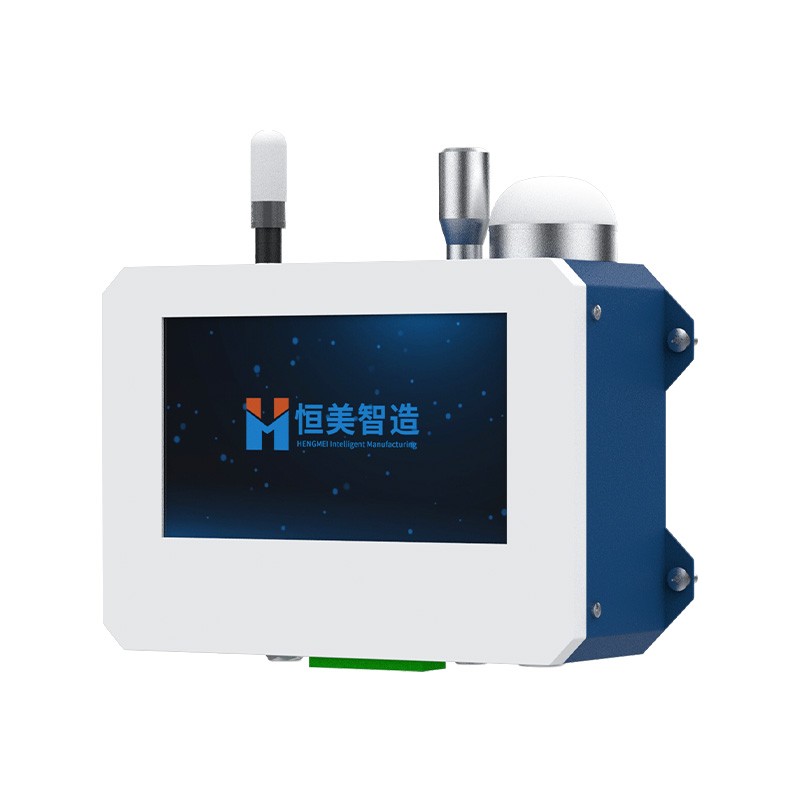
Plan an online particle monitoring system around sampling locations, flow, data communication and review responsibilities. HM-CA1 supports timed or continuous operation with six particle-size channels and a nominal 2.83 L/min flow. Include the installation and data path in the specification.
HM-CA1 is part of the HENG MEI Intelligent Manufacturing range supplied by Shandong Hengmei Electronic Technology Co., Ltd.
How the measurement works
HM-CA1 uses optical particle counting for timed or continuous monitoring. Its six channels cover 0.3–10.0 µm, with a nominal sampling flow of 2.83 L/min. USB, Wi-Fi, RS485 and LAN interfaces support different data-transfer arrangements for a defined monitoring installation.
Design the data path around each sampling point
Define where the inlet sits, how the instrument is powered and which system receives the measurements. Assign a stable point identifier before installation. Agree on timestamp handling, retained sampling settings and review responsibilities. Test the selected communication route with the actual receiving system, including how disconnected intervals and restored connections appear in the record.
Technical configuration
| Parameter | Specification |
|---|---|
| Sampling flow | 2.83 L/min |
| Modes | Timed and continuous measurement |
| Interfaces | USB, Wi-Fi, RS485 and LAN |
Check expected record coverage
A system configured to create one record every minute should produce 1,440 intervals over 24 hours of continuous operation. If 1,420 intervals arrive at the receiving system, review the 20 missing intervals against local records, communications and planned maintenance. Record counts are a useful continuity check when the selected sampling and aggregation settings remain the same.
Interpret trends with instrument status
A particle trend needs the sampling-point identity, channel, concentration unit and collection settings. Maintenance, power loss and communication gaps can affect how the trend is reviewed. Distinguish the measurement interval from the upload interval, especially where several local samples are combined into a transmitted record. Apply action limits through the site monitoring plan.
Plan installation and continuity testing
Before starting routine online monitoring, confirm that the sampling point represents the part of the process being assessed. Document the instrument position and any permitted inlet accessory so servicing can restore the same arrangement. Test the chosen communications with the receiving system and identify how local records are retrieved after an interruption. Establish who reviews particle excursions and who handles power or network faults. A commissioning check should cover measurement settings, record identity, timestamp interpretation and data retrieval. Preserve the accepted setup so a later hardware or software change can be assessed against a defined working configuration.
Put the selected method into practice
- Assign a permanent identifier to the instrument and sampling point.
- Configure the sampling interval, size channels and communication method.
- Check that local records and receiving-system records refer to the same interval.
- Mark interruptions and maintenance periods before interpreting trends.
Plan support for common operating issues
| Operating issue | Checks and follow-up |
|---|---|
| Records stop arriving | Check power, connection status, local storage and receiving-system availability. |
| A trend changes after servicing | Review inlet arrangement, sampling settings and calibration or verification results. |
| Timestamps differ across systems | Check time settings, time zone and the receiver mapping. |
Plan the complete working configuration
Specify the room locations and the reason for monitoring each point. Check the power supply, communications, environmental limits, maintenance access and data ownership. Determine how the receiving system will identify missing intervals, communication failures and instrument servicing. Confirm the actual integration scope with the required platform before treating interface availability as a completed connection.
Define the acceptance and reporting requirements
Agree on the following items when configuring HM-CA1. They connect the equipment and consumables to the intended measurement and provide a basis for operator training and result review.
- Sampling point and instrument identity
- Channel, volume and interval
- Timestamp and communication status
- Maintenance events and review actions
Questions from buyers and laboratory teams
Does an Ethernet port guarantee platform integration?
Integration also depends on supported protocol, field mapping, receiver configuration and the agreed implementation.
Can online counts replace room classification?
Use the applicable classification procedure and monitoring plan to define the role of each measurement.
For a HM-CA1 configuration enquiry, provide the sample type, required measurements, expected workload and reporting requirements. Include the consumables, preparation equipment and support arrangements needed at the installation site.
Address of this article:https://www.kjhm.net/news/planning-an-online-particle-monitoring-system.html
 Related News
-
13 / 2026-11
HENG MEI Intelligent Manufacturing Food Safety Analyzer Selection for Routine Screening
Learn more
-
24 / 2026-07
HM Instruments Dispensing Station FAQ: Technical Answers
Learn more
-
13 / 2026-11
HENG MEI Intelligent Manufacturing How to Select a Negative Air Ion Detector
Learn more
-
13 / 2026-05
HengMei SmartBuild Turbidity Meter Cost-Effectiveness Review
Learn more