

 Current
Location:
HENG MEI Intelligent Manufacturing Choosing an Intelligent Soil and Fertilizer Analyzer
Article Source: Hengmei Technology Release time:2026-11-13 13:28:39
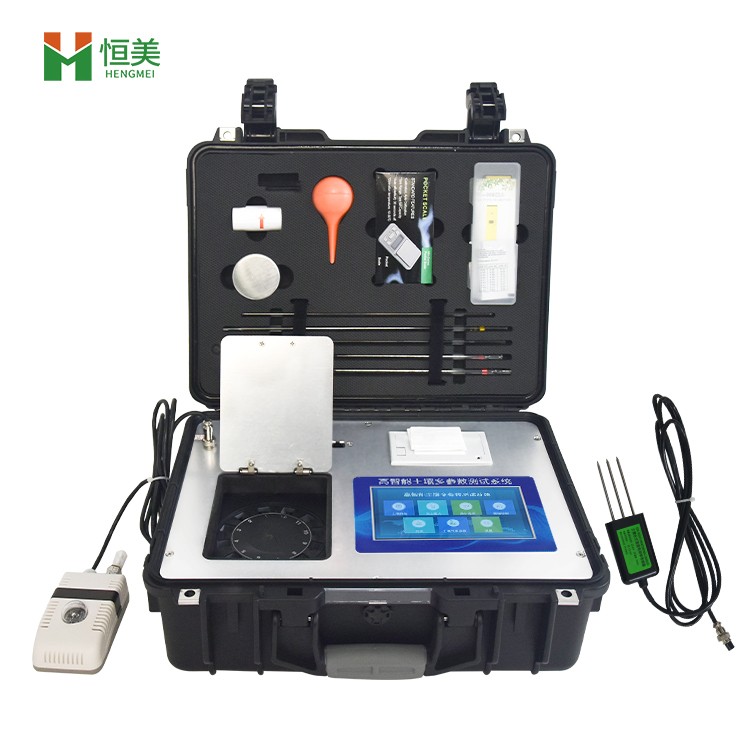
Choose an intelligent soil and fertilizer analyzer by the analytical fractions, matrices and preparation workload required. HM-GT7 lists soil nutrient, fertilizer and environmental measurement applications. Configure the reagents and accessories around the actual tests to be performed.
HM-GT7 is part of the HENG MEI Intelligent Manufacturing range supplied by Shandong Hengmei Electronic Technology Co., Ltd.
How the measurement works
HM-GT7 provides reagent-based nutrient testing for soil, fertilizer and plant applications. The sample preparation defines the nutrient fraction measured. A multi-application system therefore needs a method-specific combination of extraction, dilution, calibration and result calculation.
Separate the core menu from additional methods
Build the initial configuration around the tests the laboratory will perform routinely. Group soil extracts, fertilizer preparations and plant materials into separate workflows. Identify which reagents and preparation tools each group needs and whether digestion is part of the method. This makes the equipment quotation and ongoing reagent demand easier to evaluate.
Technical configuration
| Parameter | Specification |
|---|---|
| Model | HM-GT7 |
| Application groups | Soil, fertilizer and plant nutrient testing |
| Workflow | Method-specific extraction and reagent preparation |
Calculate the effect of a dilution accurately
Combining 1.0 mL of prepared extract with diluent to a final volume of 10.0 mL gives a dilution factor of ten. A measured concentration of 6 mg/L then corresponds to 60 mg/L in the original extract. Further conversion to soil or fertilizer content requires the recorded extraction volume, sample mass and method-defined reporting basis.
Report nutrients in the form the decision requires
Keep nitrogen species, phosphorus basis and potassium basis explicit in reports. Where fertilizer calculations use oxide-equivalent expressions, apply the conversion required by the selected method and label the result accordingly. Available soil nutrients, total nutrients and fertilizer composition serve different management questions. Preserve that context when comparing datasets.
Handle several sample groups in one laboratory
A laboratory supporting farms and fertilizer suppliers may receive soil, fertilizer and plant material on the same day. Sort work by the preparation method and analytical fraction before assigning instrument time. Concentrated fertilizer samples may need a different weighing and dilution sequence from soil extracts. Keep separate worksheets for those factors so the final calculation can be reconstructed. Group compatible reactions where the method permits, with the controls needed for each group. When introducing an additional nutrient test, evaluate the working curve and preparation on representative material. A broad menu becomes useful through these defined, repeatable sample pathways.
Put the selected method into practice
- Identify the sample as soil, fertilizer or plant material and select the appropriate method.
- Record the sample mass, preparation sequence and any dilution.
- Process the corresponding blank and calibration materials with the batch.
- Report the nutrient fraction and unit together with the result and preparation record.
Plan support for common operating issues
| Operating issue | Checks and follow-up |
|---|---|
| A fertilizer result appears unusually high | Review sample mass, dilution factors and the working curve. |
| A soil result differs between methods | Compare the extraction chemistry and reported nutrient fraction. |
| A new test performs inconsistently | Evaluate its preparation, controls and calibration with the intended matrix. |
Plan the complete working configuration
Define a core menu and separate optional tests before purchasing. List the sample types and required nutrient fractions, then identify preparation tools, reagent packs and operator workload. Configure the standard and additional reagents for the selected tests. Compare complete configurations and the time needed for preparation, measurement, cleaning and reporting.
Define the acceptance and reporting requirements
Agree on the following items when configuring HM-GT7. They connect the equipment and consumables to the intended measurement and provide a basis for operator training and result review.
- Sample material and analytical fraction
- Preparation and digestion method
- Sample mass, volumes and dilution
- Reporting units and accepted controls
Questions from buyers and laboratory teams
Does a broad menu mean every accessory is standard?
Additional reagents can be configured for the selected methods. Define the supplied configuration for the selected tests.
What determines batch throughput?
Include weighing, extraction or digestion, reactions, controls, measurements and cleaning in the workload calculation.
For a HM-GT7 configuration enquiry, provide the sample type, required measurements, expected workload and reporting requirements. Include the consumables, preparation equipment and support arrangements needed at the installation site.
Address of this article:https://www.kjhm.net/news/choosing-an-intelligent-soil-and-fertilizer-analyzer.html
 Related News
-
20 / 2025-10
Programmable Quantitative Sealer for Enzyme Substrate Method Water Testing
Learn more
-
13 / 2026-11
HENG MEI Intelligent Manufacturing Selecting a Multifunction Food Safety Analyzer
Learn more
-
08 / 2024-10
Revealing The Multifunctional Advantages And Applications Of High-precision Soil Detectors.
Learn more
-
23 / 2026-07
Top 5 Reliable Haze Meter Manufacturers & Brand Recommendation 2026 | HM Instruments
Learn more