

 Current
Location:
HENG MEI Intelligent Manufacturing Liquid Density Meters and Concentration Readings
Article Source: Hengmei Technology Release time:2026-11-13 13:29:29
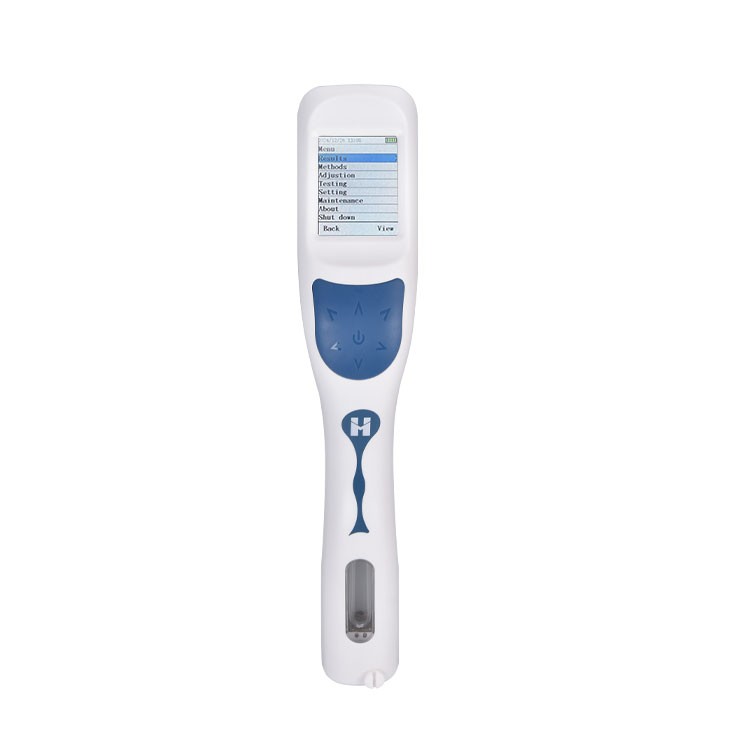
Choose a liquid density meter by the sample chemistry, temperature conditions and required measurement uncertainty. HM-DS uses an oscillating U-tube and has a density range of 0.0000–3.0000 g/cm³. Its concentration functions require the appropriate relationship between density, temperature and composition.
HM-DS is part of the HENG MEI Intelligent Manufacturing range supplied by Shandong Hengmei Electronic Technology Co., Ltd.
How the measurement works
HM-DS uses an oscillating U-tube to measure liquid density and temperature. Its sample-contact materials include quartz glass and PTFE. Density-related concentration functions use a selected relationship between density, temperature and composition, so the calculation setting belongs with the reported result.
Choose the measurement for the liquid composition
Start with density range, liquid chemistry and the uncertainty required for the decision. Check that the liquid can be introduced and removed consistently from the cell. For concentration work, establish the correct relationship for the actual mixture. Plan cleaning and reference checks when moving between products with different compositions or densities.
Technical configuration
| Parameter | Specification |
|---|---|
| Density range | 0.0000–3.0000 g/cm³ |
| density accuracy | 0.001 g/cm³ |
| Temperature measurement | 0.0–50.0 °C |
Keep density units consistent
A density of 1.0500 g/cm³ corresponds to 1,050.0 kg/m³ because 1 g/cm³ equals 1,000 kg/m³. At that density, 100 mL of liquid corresponds to a mass of 105.00 g using mass = density × volume. Retain the measurement temperature with the value when using density for mass-volume calculations.
Evaluate accuracy and temperature together
HM-DS has a 0.0001 g/cm³ display resolution and a density accuracy of 0.001 g/cm³. Choose the instrument using the accuracy and method requirements relevant to the liquid. A temperature-compensated result also needs a defined reference condition. For complex mixtures, use an appropriate validated relationship before converting density into concentration.
Use density to support process comparisons
For repeated checks on a formulated liquid, define a reference temperature and the accepted composition range. Compare density results taken under compatible conditions, and retain the measured temperature even when a correction is applied. If composition changes, review whether the previous density-to-concentration relationship remains appropriate. Use the prescribed cleaning sequence between formulations and check the cell with a suitable reference liquid. A trend in density can help identify a process change, while the formulation and temperature records help explain its cause. Where a purchasing decision depends on a tight tolerance, assess the complete method uncertainty against that tolerance.
Put the selected method into practice
- Prepare a clean measuring cell and perform the prescribed reference check.
- Introduce a representative liquid sample and inspect the filling condition.
- Record density and temperature after the accepted measurement condition is reached.
- Apply the relevant concentration formula only when it matches the liquid composition and reporting basis.
Plan support for common operating issues
| Operating issue | Checks and follow-up |
|---|---|
| Replicate density readings vary | Inspect cell filling, bubbles, temperature stability and sample homogeneity. |
| A reference check shifts | Review cleaning, reference-liquid condition and the correction procedure. |
| Calculated concentration seems inconsistent | Check the selected formula, temperature basis and product composition. |
Plan the complete working configuration
Describe the liquid composition, viscosity and expected density before choosing the method. Check material compatibility, cleaning needs, temperature correction and calibration liquids. For concentration reporting, choose the correct product-specific relationship and reference condition. Plan whether records will be retained locally, transferred by USB or printed through the optional Bluetooth printer.
Define the acceptance and reporting requirements
Agree on the following items when configuring HM-DS. They connect the equipment and consumables to the intended measurement and provide a basis for operator training and result review.
- Liquid identity and composition
- Density and temperature
- Reference-check result
- Concentration formula and correction basis
Questions from buyers and laboratory teams
Does a finer display guarantee better accuracy?
Display resolution and measurement accuracy describe different instrument properties.
Can density determine every mixture concentration?
A concentration calculation needs a suitable relationship for the composition and temperature conditions of that liquid.
For a HM-DS configuration enquiry, provide the sample type, required measurements, expected workload and reporting requirements. Include the consumables, preparation equipment and support arrangements needed at the installation site.
Address of this article:https://www.kjhm.net/news/liquid-density-meters-and-concentration-readings.html
 Related News
-
13 / 2026-11
HENG MEI Intelligent Manufacturing Food Safety Analyzer Selection for Routine Screening
Learn more
-
24 / 2026-07
HM Instruments: Reliable Dispensing Station Brand Guide
Learn more
-
28 / 2024-04
What Can The Soil Nutrient Detector Be Measured.
Learn more
-
13 / 2026-11
HENG MEI Intelligent Manufacturing Choosing a Portable Raman Spectrometer
Learn more