

 Current
Location:
Choosing a Gradient PCR Instrument | HENG MEI Intelligent Manufacturing
Article Source: Hengmei Technology Release time:2026-11-18 13:26:52
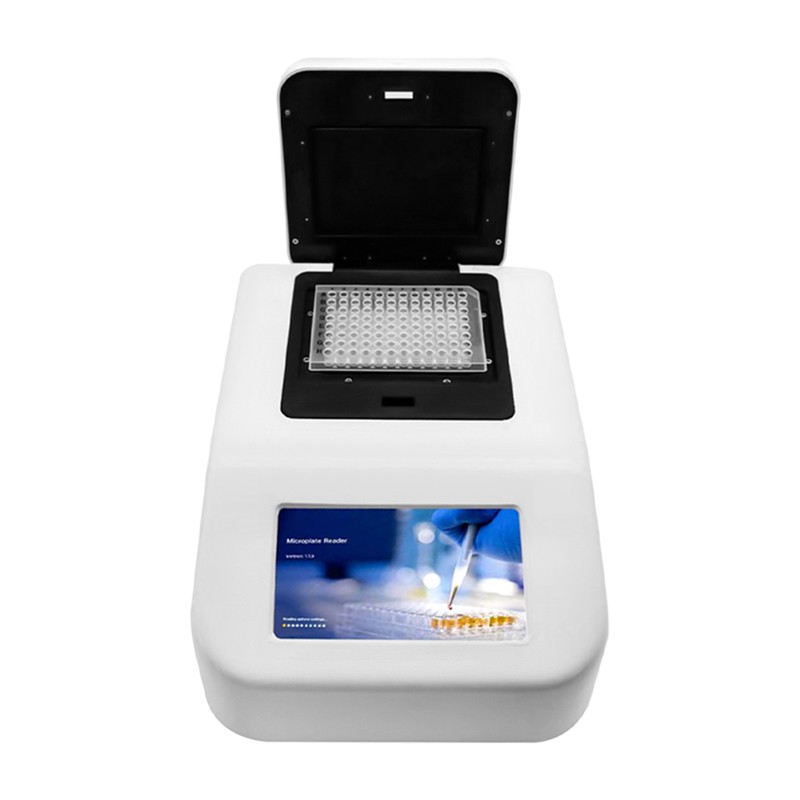
A gradient PCR instrument lets a laboratory compare programmed temperatures across zones of a single block. When selecting one, start with the vessel format, the number of positions required at each temperature and the evidence needed to accept the instrument. The HM-T96 from HENG MEI Intelligent Manufacturing is a 96-position thermal cycler for 0.2 mL vessels. It combines a programmable gradient, a configurable heated lid and a touchscreen that displays the thermal profile. It is suited to laboratories that want a dedicated cycling instrument for established research or teaching workflows.
Specify the job before comparing instruments
Write down whether the laboratory needs uniform cycling, simultaneous comparison of several temperatures, or fluorescence measurements during cycling. Uniform cycling applies a common programmed temperature across the block for a given stage. Gradient cycling distributes settings by zone, allowing work with multiple temperatures under the same overall run schedule. Real-time instruments add optical measurement and associated analysis. If your reporting depends on an optical signal collected during cycling, put the optical channels, dye compatibility and analysis functions in a separate requirement. The HM-T96 specifications describe temperature control and gradient display. Plan the downstream readout separately where the teaching or research method calls for one.
Your request for quotation should describe the vessels you already use, the number of operators, the bench allocation and the way programs are identified. A shared teaching laboratory may value a straightforward program library and a demonstration that staff can repeat between classes. A research group sharing equipment across projects may put more emphasis on keeping protocol revisions separate and tracing which program was actually run. In either setting, ask staff to describe the work in terms of physical positions and records. A vague requirement such as “supports 96” leaves several practical decisions unresolved.
Read the HM-T96 specifications by function
The HM-T96 product page lists a general temperature range of 0–99.9 °C, a gradient temperature range of 30–99.9 °C and a heated-lid range of 30–110 °C. These values refer to different functions. Check the available gradient span and displayed distribution for your proposed configuration during the demonstration. The quoted gradient range describes the working domain. It should not be read as a promise that every possible pair of endpoints can be combined in one program. Ask the supplier to show the distribution screen using a representative equipment demonstration and to identify how positions correspond to displayed values.
The manufacturer lists thermal accuracy of ±0.20 °C and block uniformity of ±0.25 °C, with gradient accuracy and uniformity each listed as ±0.3 °C. Evaluate these with the measurement conditions, positions and definitions attached to the figures. Accuracy expresses the relationship to a reference, while uniformity describes spatial variation under a defined measurement condition. In a gradient, the temperature difference between zones is intentional, so ask which positions are compared for that specification. Display resolution is listed as 0.1 °C. Treat that value as the readout increment when comparing it with the accuracy specification.
The 7-inch display has a listed resolution of 1024 × 600 pixels. The instrument supports module and tube temperature-control modes and stores more than 100 programs. Those features are worth seeing in person because screen layout and program handling affect routine use. Ask the operator to save a test program, return to it from the library and show where the active mode is displayed. Check that staff can distinguish adjacent programs by their names and that the screen provides enough information to verify the setup before starting the run.
The manufacturer specifies peak heating and cooling rates of 4.5 °C/s and 4 °C/s respectively. Compare only figures with a common measurement basis. Programmed dwell times, the different transitions within the profile, the way the instrument determines when to start timing and the end-of-run handling all contribute to elapsed time. Use a timed demonstration of a representative non-biological test profile for bench scheduling. That gives you an operational figure you can compare across instruments without relying on a single peak ramp specification.
Calculate usable capacity before scheduling a class or study
A block with 96 vessel positions can have considerably fewer available positions under a particular assignment. If a classroom demonstration reserves eight positions for references and another eight for repeats, 80 positions remain for planned student placements. Division into temperature zones can further constrain the assignment. Even with free positions elsewhere on the block, a zone can be full. Draw the planned arrangement against the distribution shown on the controller. Identify positions that are important to the comparison and count physical vessels at those temperatures before committing to a schedule.
Apply the same principle when comparing a larger and smaller block. A larger nominal count may offer little extra capacity for a group whose work is concentrated in one subset of positions. In contrast, a layout with balanced placements across the available zones can make better use of a shared run. Ask the supplier whether your usual tubes, strips or plate format can be demonstrated with the ordered block and lid. The listing specifies 0.2 mL positions. Ask the supplier to verify the exact consumable part number and fit before including it on the purchase order.
Request a demonstration you can use for acceptance
Start the demonstration with the exact instrument configuration on the quotation. Ask the operator to identify the serial number, show the block and lid, and view the program library. With your proposed empty vessels, verify seating and lid closure without undue force. Observe a uniform temperature screen and then the gradient map. Confirm that the operator can explain orientation and identify the displayed values corresponding to several selected positions, including those near the ends of the block. Save a copy of the setup or note exactly how your staff will record it.
For performance acceptance, agree on the method and measurement conditions before delivery. Specify whether the check is functional, a temperature verification against a reference, or both. For independent verification, identify the measurement equipment, its calibration status, positions to be examined, test settings and acceptance criteria in advance. Use a suitable laboratory procedure or service provider for that work. A smooth on-screen curve is useful evidence that the software is running and displaying the profile. Independent temperature records answer a separate performance question.
Compare delivery and ownership costs on the same basis
The product listing specifies approximately 270 × 360 × 165 mm and a net mass of 9 kg. Plan bench depth for cables, ventilation and opening the lid, as well as clearance specified in the installation instructions. Include suitable power, compatible vessels, operator training, delivery arrangements and periodic verification in the quote comparison. Ask which service terms apply in the installation country and who performs instrument checks when the equipment is moved or serviced. A practical handover includes the instrument identity, manuals, the approved consumables and the contact responsible for maintenance.
What should you send when requesting a quotation?
Send the expected vessel format, typical number of occupied positions, desired temperature-zone arrangement, program and record-management needs, and your delivery location. Attach your bench acceptance checklist if one already exists. Shandong Hengmei Electronic Technology Co., Ltd. supplies the HM-T96 under the HENG MEI Intelligent Manufacturing brand.
Ask for a demonstration that includes a new operator, not just the person who configured the instrument. Have the operator identify the expected gradient map, locate a saved program and describe where the batch record will go. Review that record against your acceptance checklist. This exercise can reveal needs for labels, bench instructions or training before the equipment is put into service. It also gives procurement a concrete way to compare handover support on different quotations.
Address of this article:https://www.kjhm.net/news/choosing-a-gradient-pcr-instrument-heng-mei-intelligent-manufacturing.html
- Previous: HENG MEI Intelligent Manufacturing | Choosing Food Additive Testing Equipment by Analyte
- Next: no more
 Related News
-
13 / 2026-11
HENG MEI Intelligent Manufacturing How to Choose a Freezing Point Osmometer
Learn more
-
13 / 2026-11
HENG MEI Intelligent Manufacturing Selecting a PCR Platform for Pigeon and Parrot Sexing
Learn more
-
13 / 2026-11
HENG MEI Intelligent Manufacturing Choosing an Automatic Kjeldahl Analyzer
Learn more
-
23 / 2026-07
Haze Meter FAQ: 12 Technical Questions Answered | HM Instruments
Learn more