

 Current
Location:
Animal Disease Testing by Sector: Farm, Abattoir, Lab and Clinic | HENG MEI Intelligent Manufacturing
Article Source: Hengmei Technology Release time:2026-11-16 16:51:52
Two sites can test for the same disease and need completely different equipment. A 5,000-sow unit and a provincial reference laboratory may both screen for porcine reproductive and respiratory syndrome, but one needs an answer at the pen within twenty minutes while the other needs a quantified titre that will stand up in an audit eighteen months later. Sector determines sample volume, staffing, environmental conditions, record obligations and acceptable time to result — and those four factors decide the configuration long before accuracy figures are compared.
This article sets out how animal disease testing actually operates across six sectors, what each sector measures and how often, and which instrument configuration matches the workload. It is written by the engineering team at HENG MEI Intelligent Manufacturing, whose catalogue spans handheld strip readers, portable colloidal gold kits, 96-well microplate readers and 16-well real-time PCR instruments.
Why sector, not disease, drives the specification
It is tempting to choose an instrument by the disease list on a kit. In practice four operational variables separate a workable installation from an abandoned one.
- Samples per day. Below 20, single-channel reading is sufficient. Between 20 and 100, six-channel strip readers or a 96-well plate become attractive. Above 100, plate-based work with a washer and plate layout discipline is the only realistic option.
- Who operates it. A farm technician with an hour of training needs a workflow that fails visibly when done wrong. A laboratory technician can manage dilution series, controls and curve fitting.
- What the record must prove. On-farm screening supports a management decision. Official inspection and export certification support a legal decision, and require traceable, printable, lot-linked records.
- Environment. Ambient temperature, dust, power stability and bench space rule out instruments that would perform well in a climate-controlled room.
Sector profiles
Pig and poultry production units
What is tested. In pigs, the recurring questions are PRRS, classical swine fever, pseudorabies, porcine circovirus and foot-and-mouth disease; in poultry, avian influenza, Newcastle disease and infectious bronchitis. Both sectors also monitor antibiotic residues and mycotoxins in feed.
How often. Routine monitoring is periodic — monthly or quarterly serology on a sample of the herd, plus immediate testing when mortality or production figures move. The urgent case dominates equipment choice, because a result that arrives after the disease has spread has little value.
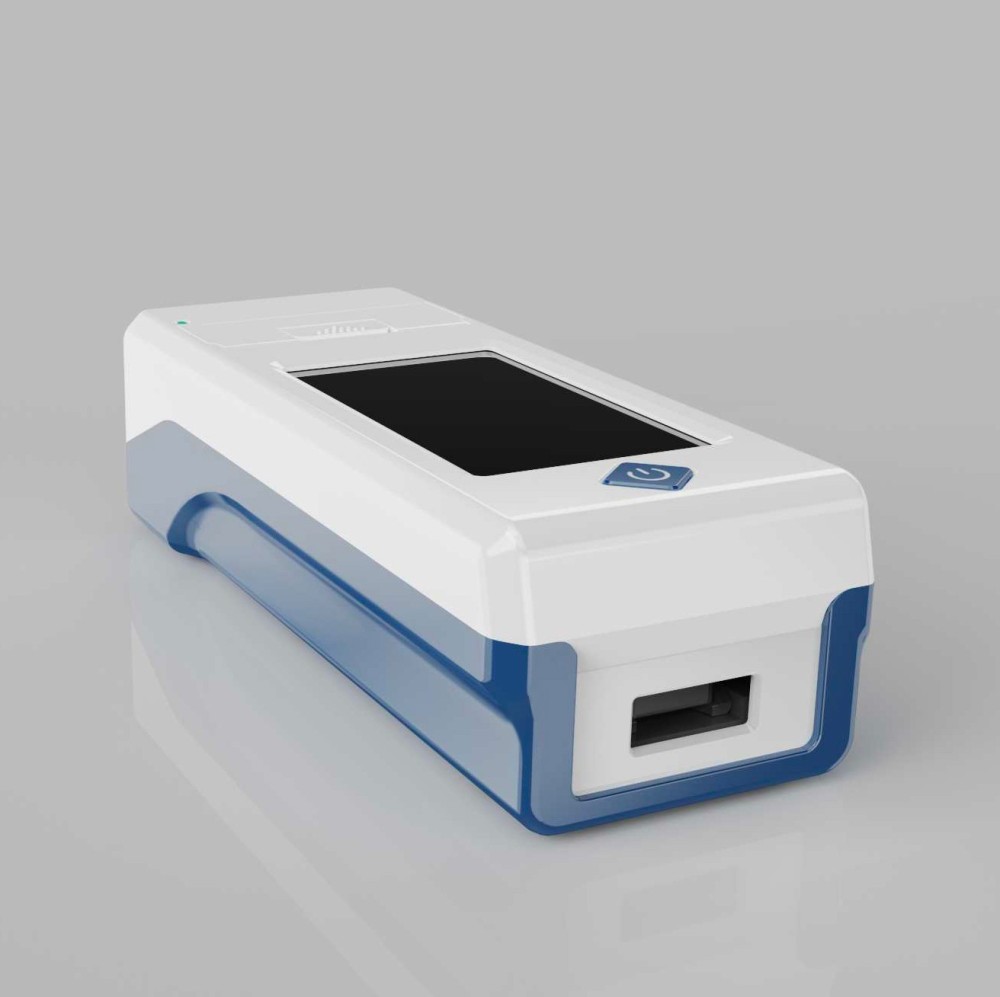
Configuration that works. A handheld strip reader with combined incubation and reading covers single samples at the pen. Where a batch of animals is sampled together, a six-channel benchtop strip reader processes them in one pass. Farms participating in a formal surveillance programme additionally send serum to a regional laboratory for ELISA, because programme reporting requires the plate-based method named in the standard.
Dairy herds
What is tested. Milk and serum are both routine matrices. Antibody testing for brucellosis and paratuberculosis, antigen testing for mastitis pathogens, and residue testing for antimicrobials after treatment. Milk is an awkward matrix: fat and somatic cells interfere with optical reading, and the kit's dilution protocol exists precisely to control that.
Configuration that works. A 96-well plate reader suits herd-level serology where 40 or more samples arrive in a batch. Bulk tank milk testing benefits from the quantitative output that an ELISA provides, because the question is often a trend rather than a threshold.
Slaughterhouses and meat processing
What is tested. Official veterinary inspection examines carcasses and organs, and where a lesion suggests a notifiable disease, sampling follows for confirmation. Residue monitoring for beta-agonists, antibiotics and tranquillisers is routine in export-oriented plants, and the results feed a compliance record.
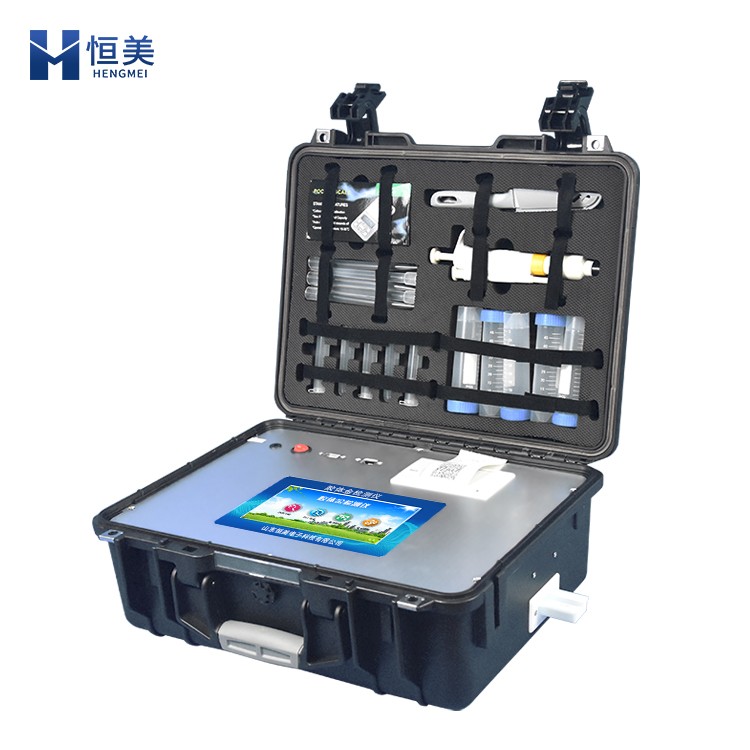
Configuration that works. Throughput and documentation dominate. A portable colloidal gold kit with automatic control and test line recognition, continuous strip feed, 200,000-record storage, Wi-Fi upload and a built-in thermal printer lets one operator run a continuous line of samples and produce a printed record per lot. Sample identification is the practical constraint: the reading is fast, the labelling discipline is what breaks under production pressure.
Veterinary quarantine and border inspection
What is tested. Consignments of live animals and animal products are tested against the diseases named in the importing country's requirements, and results must be reported to a defined format within a defined window. The testing is episodic but non-negotiable: a consignment waits, and demurrage accrues per hour.
Configuration that works. Redundancy matters more than elegance. Two independent reading paths — for example a portable strip system plus access to a plate reader — prevent a single instrument failure from stopping a border post. Records must be exportable in a form the veterinary authority accepts, which usually means a printable report with sample identity, assay name, kit lot and operator.
Reference, regional and third-party laboratories
What is tested. Everything referred from the sectors above, plus surveillance programmes, proficiency testing panels and confirmation of screening positives. These laboratories are usually accredited to ISO/IEC 17025, which makes method validation, control rules, record retention and staff competence auditable obligations rather than good practice.
Configuration that works. A 96-well plate reader with genuine quality control capability. Independent Westgard multi-rule evaluation, instant quality control charts and alarm functions turn control values into a documented decision about run validity. Multiple calculation modes — cut-off, single-point calibration, linear and four-parameter regression, log-logit, enzyme inhibition rate — allow the laboratory to follow whichever data reduction the kit manufacturer specifies instead of forcing one formula across all assays.
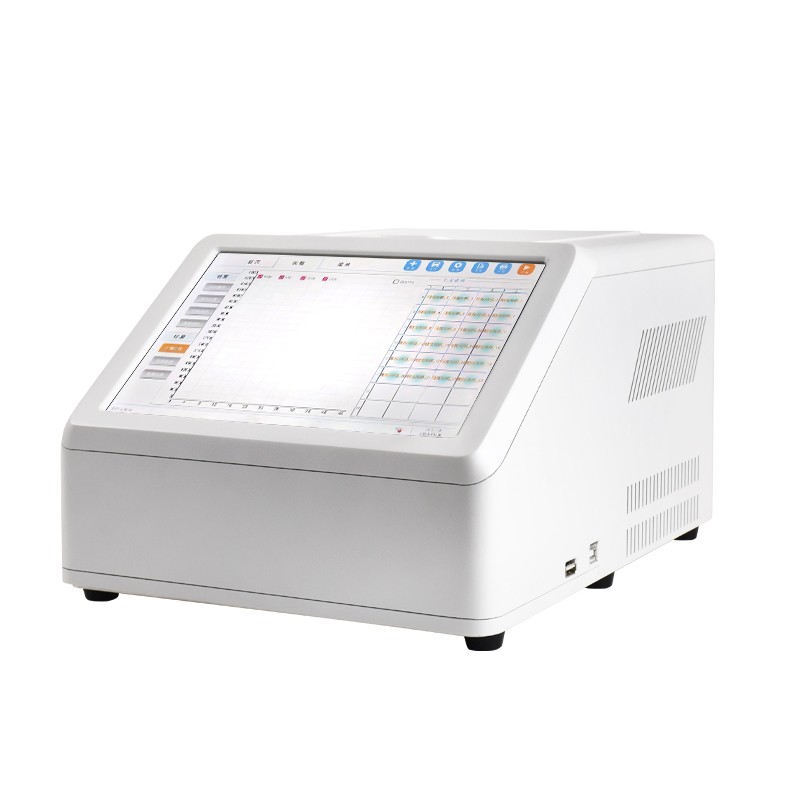
Capacity planning is the second constraint. A reader that measures a 96-well plate in three seconds at single wavelength removes reading from the bottleneck entirely; sample preparation, incubation and washing then set the daily ceiling. Laboratories that buy a faster reader expecting more throughput usually discover the queue was never at the reader.
Small-animal and mixed practice clinics
What is tested. Canine parvovirus and distemper antigen, feline coronavirus and retrovirus antigen, rabies antibody titres for travel, and toxoplasma antibody in cats. Volumes are low but the client is present and expects an answer during the consultation.
Configuration that works. A handheld strip reader with a small footprint and a printed or screen result fits the consultation room. Where titre work for travel certification is required, the clinic sends serum to a laboratory; the strip reader answers the triage question, not the certification question.
Comparison of sector requirements
| Sector | Typical daily samples | Dominant question | Recommended configuration | Record obligation |
|---|---|---|---|---|
| Pig and poultry unit | 1–20 | Is the pathogen present now? | Handheld or six-channel strip reader | Internal management record |
| Dairy herd | 20–80 in batches | Herd antibody status, residues | 96-well plate reader | Programme and processor record |
| Slaughterhouse | 20–200 | Residues, notifiable disease suspicion | Portable colloidal gold kit, printer, upload | Official inspection record |
| Quarantine post | Episodic, high stakes | Import requirement compliance | Redundant strip and plate capability | Certificate-supporting report |
| Reference laboratory | 100–1000 | Confirmation, typing, surveillance | 96-well reader plus real-time PCR | Accredited record, raw data retained |
| Small-animal clinic | 1–10 | Is this patient infected today? | Handheld strip reader | Clinical case record |
Regulatory context that shapes the workflow
Three frameworks recur across export-oriented programmes and are worth understanding before equipment is specified.
The WOAH Manual of Diagnostic Tests and Vaccines for Terrestrial Animals describes recognised diagnostic approaches for listed diseases and is the reference point for most national programmes. Where it identifies both serological and nucleic acid methods, a programme may use either, but must use the one its own standard names for reporting.
In China, national standards specify the method per disease — GB/T 18936-2020 for highly pathogenic avian influenza and GB/T 18648-2020 for African swine fever are two examples — and sample handling follows NY/T 541-2016. A laboratory that reports against a national standard needs an instrument capable of executing the method the standard describes, with the record retention the programme demands.
For exports to the European Union, Regulation (EU) 2016/429 on transmissible animal diseases establishes the framework under which Member States require pre-movement and pre-export testing, and consignment documentation depends on laboratory results produced under recognised quality systems. In practice this means records that identify the sample, the assay, the kit lot and the operator, retained for the period the authority specifies.
Common causes of failure, by sector
| Failure | Where it happens | Correction |
|---|---|---|
| Samples tested too late | Farms and clinics | Decide the triage question in advance; keep strips and reader at the point of sampling |
| Sample identity lost | Slaughterhouses | Label at collection, not at reading; use readers that store sample numbers with results |
| No valid controls | Small laboratories | Make controls a gate: no valid control, no reported batch |
| Reader blamed for kit failure | All sectors | Verify kit lot and storage first; check reader performance with a reference plate |
| PCR contamination | New molecular laboratories | Physically separate extraction from amplification; unidirectional workflow; include internal controls |
| Unrecorded cut-off changes | Programmes with staff turnover | Write the decision rule into the SOP with a version date |
Configuring a multi-site programme
Organisations running several sites — an integrated producer with farms, a feed mill and a processing plant, for example — gain from standardising instrument families rather than buying the cheapest option site by site. Standardisation delivers three practical benefits: one training programme instead of four, one consumable catalogue, and results in a comparable format across sites, which is what makes a group-level trend analysis possible at all.
HENG MEI Intelligent Manufacturing covers the range needed for that standardisation. The HM-DWYB portable colloidal gold system serves field and line-side testing; the HM-JD01 and HM-JD02 cover single-sample and six-channel bench formats; the HM-Y96A and HM-Y96B cover 96-well serology with qualitative and quantitative reporting; and the HM-P16 covers 16-well real-time PCR for confirmation. Serum-based programme work can also be referred against the requirements of the relevant national standard, so the on-site instrument handles triage and the laboratory handles reporting.
Buyers planning a multi-site rollout should provide four facts to the supplier: species, target diseases, approximate samples per site per day, and whether results must be reported against a named standard. That is usually enough to fix the configuration and to avoid buying plate capacity that sits idle or strip readers that cannot meet a reporting obligation. Our comparison of animal disease testing brands provides the market context if the shortlist also includes international suppliers.
Contact: Arthur, Sales Contact, Arthur@hmdzkj.cn, +86 18353666151 (Tel / WhatsApp / WeChat).
Address of this article:https://www.kjhm.net/news/animal-disease-testing-across-farms-slaughterhouses-labs-clinics.html
 Related News
-
23 / 2024-09
Innovative Application Of Multi-parameter Water Quality Detector In Water Resource Management.
Learn more
-
13 / 2026-11
HENG MEI Intelligent Manufacturing Choosing an Intelligent Soil and Fertilizer Analyzer
Learn more
-
13 / 2026-11
HENG MEI Intelligent Manufacturing Choosing a Nucleic Acid Extraction Instrument
Learn more
-
29 / 2024-10
Unleash the Power of Soil Respiration Analysis with HM-TH2.
Learn more