

 Current
Location:
HENG MEI Intelligent Manufacturing Choosing a Nucleic Acid Extraction Instrument
Article Source: Hengmei Technology Release time:2026-11-13 13:37:37
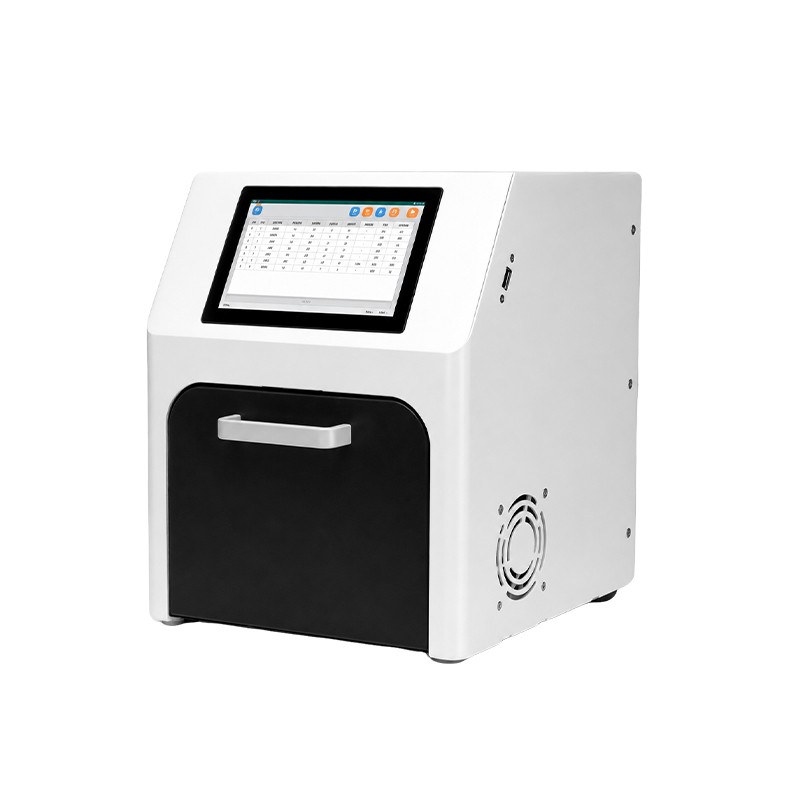
Choose a nucleic acid extractor by sample throughput, processing volume, consumables and reagent compatibility. HM-TQ16 processes 1–16 samples per run using magnetic-bead extraction. Select the kit and program for the sample type and downstream assay.
HM-TQ16 is part of the HENG MEI Intelligent Manufacturing range supplied by Shandong Hengmei Electronic Technology Co., Ltd.
How the measurement works
HM-TQ16 automates magnetic-bead binding, washing and elution with programmed heating and mixing. Its 1–16 sample throughput and 30–1000 µL processing range must be matched to the extraction kit, consumables and downstream assay.
Choose the extraction kit with the sample matrix
Specify whether the target is DNA or RNA and define the specimen and input amount. Select the lysis, binding, wash and elution chemistry for that matrix. Check consumable layout and the instrument program together. Plan extraction controls and sample separation to support the downstream PCR or sequencing workflow.
Technical configuration
| Parameter | Specification |
|---|---|
| Throughput | 1–16 samples |
| Processing volume | 30–1000 µL |
| run time | 10–30 minutes, depending on reagents |
Allocate run positions and elution volume
A 16-position run reserving one position for an extraction blank and one for a process control leaves 14 positions for samples under that layout. Eluting a total of 2 µg of nucleic acid into 100 µL gives an average concentration of 20 ng/µL. Actual yield and usable volume depend on the sample and extraction method.
Evaluate yield, purity and downstream suitability
A concentration value alone provides limited information about inhibitors or assay performance. Use the quality checks required for the downstream method and review process-control behavior. Preserve the link between specimen, extraction program and eluate tube so an unexpected downstream result can be investigated through the preparation stage.
Link extraction to the downstream assay
Assign each specimen to an extraction position and an eluate identity before loading the consumables. Select the program and reagent layout for the sample matrix, and include the required extraction controls. Keep the eluate volume and storage conditions appropriate to the downstream work. If amplification or another downstream test behaves unexpectedly, review the extraction and inhibition controls with the specimen history. Preserve the link between the two stages so an investigation can identify whether preparation, assay conditions or the sample itself needs further attention.
Put the selected method into practice
- Identify samples and arrange the extraction controls required by the assay.
- Load reagents and consumables according to the kit layout.
- Run the program matching the kit and sample type.
- Retain the eluate identity and review extraction performance before downstream testing.
Plan support for common operating issues
| Operating issue | Checks and follow-up |
|---|---|
| Downstream amplification is inhibited | Review sample loading, wash conditions and the assay’s inhibition control. |
| Extraction controls behave unexpectedly | Review reagent preparation, plate layout and handling separation. |
| Yield varies across sample types | Evaluate lysis and recovery with the corresponding matrix and kit. |
Plan the complete working configuration
Specify the sample matrix, input volume and required downstream application. Compare compatible plates, sleeves, kits and elution options as part of the complete configuration. Include extraction controls and a plan for contamination management. Estimate turnaround using sample pretreatment, extraction, control review and downstream assay preparation.
Define the acceptance and reporting requirements
Agree on the following items when configuring HM-TQ16. They connect the equipment and consumables to the intended measurement and provide a basis for operator training and result review.
- Specimen and input quantity
- Kit lot and extraction program
- Consumable layout and controls
- Eluate identity, volume and quality checks
Questions from buyers and laboratory teams
Does an extractor directly identify a pathogen?
It prepares nucleic acid. Detection is performed through the appropriate downstream assay.
Can any kit be loaded without method setup?
Confirm the consumable layout, reagent chemistry and program for the selected kit.
For a HM-TQ16 configuration enquiry, provide the sample type, required measurements, expected workload and reporting requirements. Include the consumables, preparation equipment and support arrangements needed at the installation site.
Address of this article:https://www.kjhm.net/news/choosing-a-nucleic-acid-extraction-instrument.html
 Related News
-
13 / 2026-11
HENG MEI Intelligent Manufacturing Choosing a Portable Raman Spectrometer
Learn more
-
07 / 2026-08
HM Instruments Phthalate Detector Technical FAQ
Learn more
-
05 / 2026-06
Coefficient of Friction Tester Manufacturers & Brand Guide
Learn more
-
15 / 2026-06
Reliable Sterility Testing Pump Manufacturers & Brand Guide
Learn more