

 Current
Location:
Animal Disease Diagnostic Instrument Selection Guide | HENG MEI Intelligent Manufacturing
Article Source: Hengmei Technology Release time:2026-11-16 16:50:47
Most buyers come to this decision with the same question: the farm reports coughing pigs, the slaughterhouse flags an abnormal carcass, the veterinary clinic needs a same-day answer. Three instrument families answer that need, and they are not interchangeable. Colloidal gold readers give a yes-or-no line on a test strip within 15 minutes. ELISA plate readers quantify antibody or antigen concentration across 96 wells at once. Real-time PCR instruments amplify pathogen nucleic acid and report it as a cycle threshold value. Choosing well means matching the instrument to the question actually being asked, the sample volume arriving each day, and the skills available on site.
This guide is written by the engineering team at HENG MEI Intelligent Manufacturing, a manufacturer of all three instrument families. It sets out where each method is strong, where it is not, and how the models in our catalogue differ. It is written for buyers who have to justify a purchase to a farm owner, a laboratory director or a procurement office.
The three methods answer different questions
The single most useful distinction in veterinary diagnostics is between asking "has this animal met the pathogen" and "how much antibody has this animal produced". A rapid antigen test on a nasal swab and an antibody ELISA on serum look similar on paper, but they measure different things and cannot replace each other.
Colloidal gold lateral flow: a decision at the pen side
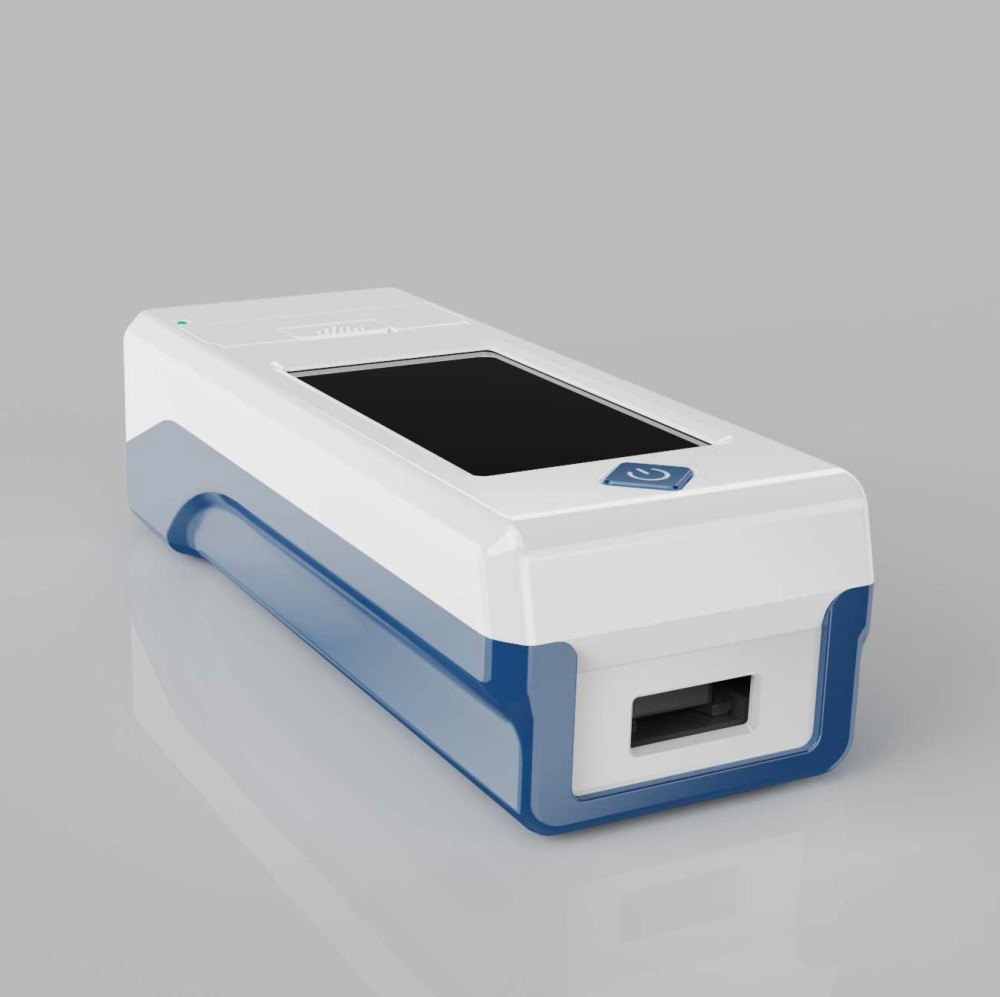
A colloidal gold strip carries antibodies or antigens dried onto a membrane. When the sample flows past them, a visible line forms if the target is present. The strip is read by eye or, more consistently, by a reader that measures line intensity and reports a cutoff index. The strength of the method is speed and simplicity: no washing steps, no incubation beyond the strip's own development time, no laboratory bench.
The limitation is equally clear. A strip reports presence or absence at a detection threshold, not a concentration. It is poorly suited to monitoring antibody titre after vaccination, and its sensitivity is generally below that of a plate-based assay. For herd-level screening where the question is "do we have a problem today", that trade-off is usually acceptable; for proving freedom from disease or certifying a consignment, it is not.
ELISA on a microplate: quantification at scale
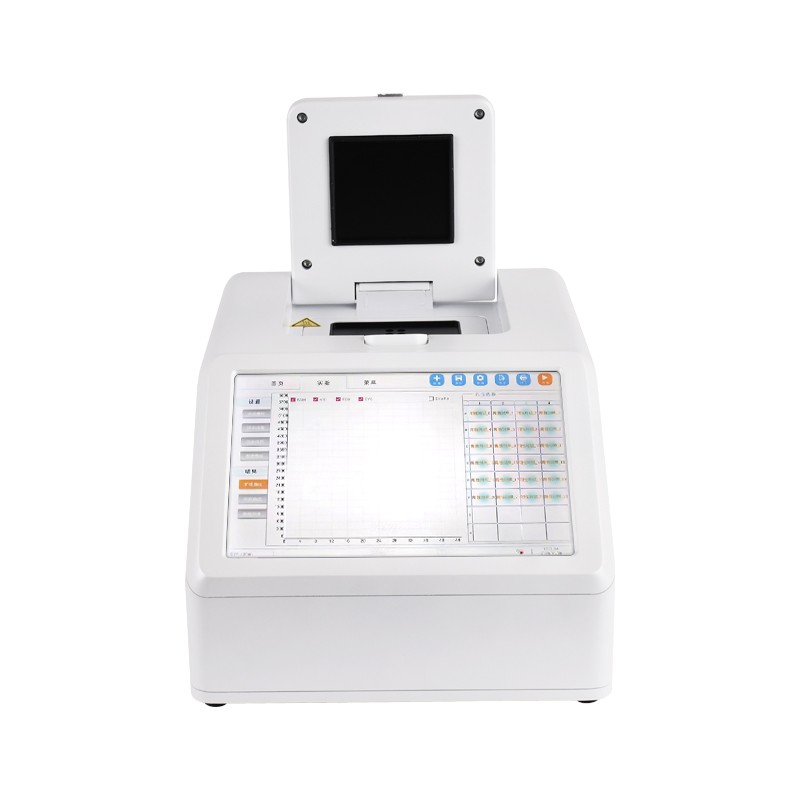
Enzyme-linked immunosorbent assay remains the workhorse of veterinary serology. Antigen or antibody is bound to the wells of a 96-well plate, an enzyme conjugate produces a colour reaction, and the optical density of each well is read at a defined wavelength. Because the reaction is proportional to concentration across a calibrated range, ELISA supports titre calculation, cut-off determination and quantitative reporting, which is why national animal disease programmes rely on it for surveillance.
An ELISA plate reader is therefore a photometer with a plate transport mechanism: a halogen lamp, a filter wheel, an eight-channel fibre optic path and a detector. The quality of the optics and the stability of the lamp determine whether a borderline sample is called correctly. Reading speed matters at scale: at three seconds per 96-well plate in single wavelength mode, a laboratory running 40 plates a day spends two minutes on reading and the rest of the day on incubation and washing.
Real-time PCR: detecting the pathogen itself
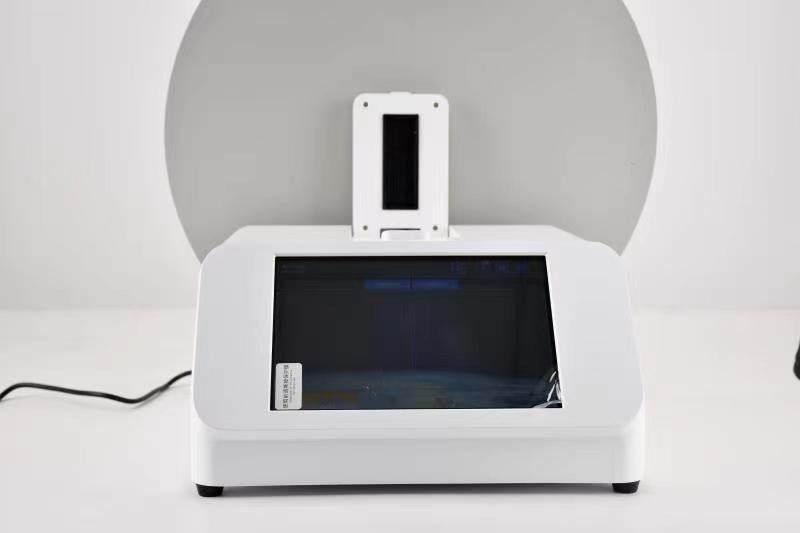
PCR amplifies a specific nucleic acid sequence until it becomes detectable, and real-time instruments track the accumulating fluorescence cycle by cycle. The cycle at which fluorescence crosses the threshold — the Ct value — falls as the starting copy number rises, which makes the method both highly sensitive and roughly quantitative. PCR is the reference approach for pathogens that are difficult or slow to culture, and for distinguishing vaccine strains from field strains when the assay is designed for it.
The cost of that sensitivity is a laboratory: nucleic acid extraction, a clean amplification area, calibrated pipettes, cold chain for reagents, and staff trained to avoid contamination. A PCR instrument installed in a room without those controls will produce false positives that destroy confidence in the whole programme.
Model comparison across the three methods
The table below compares the models in the HENG MEI catalogue on the parameters that change a purchase decision. Prices are indicative export prices for the instrument; reagents and kits are quoted separately because consumption depends on the testing programme.
| Model | Method and output | Format | Key specifications | Indicative price |
|---|---|---|---|---|
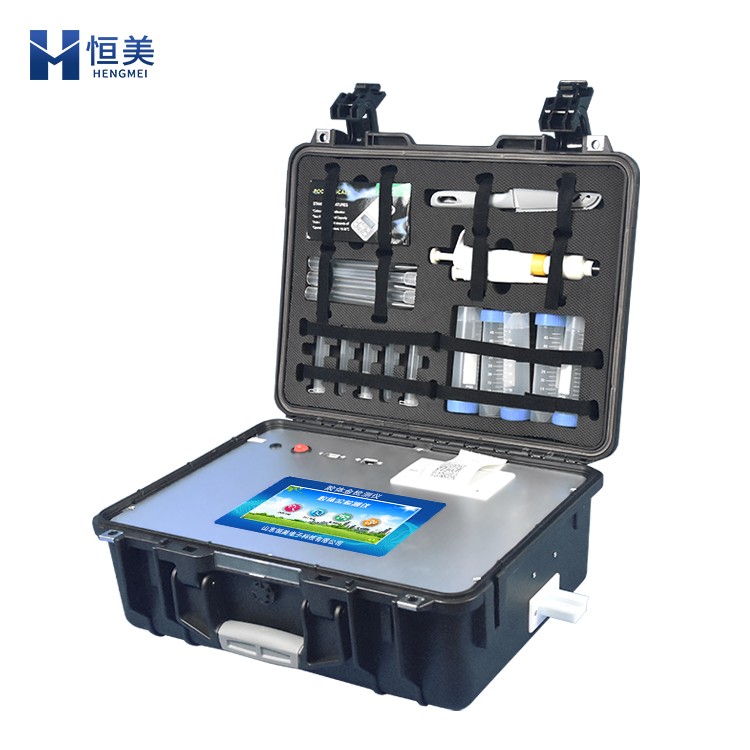
| HM-DWYB | Colloidal gold, qualitative | Portable case kit, 7-inch touchscreen | Track-type automatic strip transport, automatic C/T line recognition, 200,000 result records, Wi-Fi upload, built-in thermal printer, 12 V supply for vehicle use | USD 920 |
| HM-JD01 | Colloidal gold, qualitative | Handheld, single channel | 4.3-inch touchscreen, incubation and reading combined, platform data upload, built-in thermal printer | USD 720 |
| HM-JD02 | Colloidal gold, qualitative | Benchtop, six channels | 7-inch touchscreen, incubation and reading combined, six independent strip channels | USD 1,400 |
| HM-Y96A | ELISA, qualitative and quantitative | Benchtop, 96-well | Eight-channel vertical optics, 96-well visual plate layout, qualitative and quantitative calculation modes | USD 2,300 |
| HM-Y96B | ELISA, qualitative and quantitative | Benchtop, 96-well, 10.4-inch screen | 330–1100 nm, ten filter positions, 0.000–4.000 A, reading ≤3 s per 96-well plate single wavelength, 8 optical channels plus reference, built-in thermal printer | USD 2,800 |
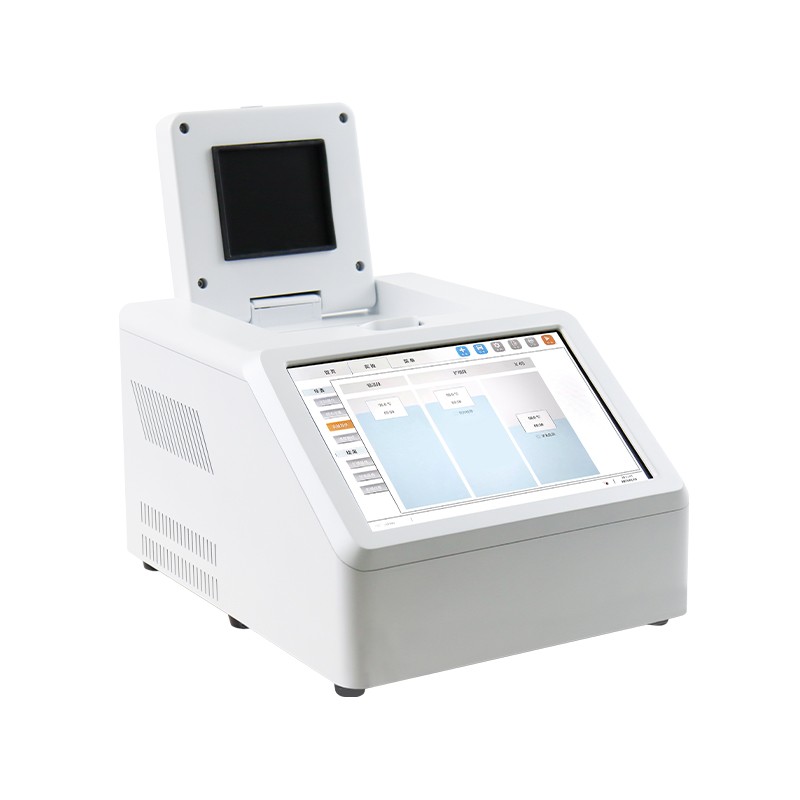
| HM-P16 | Real-time PCR, quantitative | Benchtop, 16 × 0.2 mL | 4–99 °C, heating ≥3.5 °C/s, control accuracy ≤±0.01 °C, uniformity ≤±0.3 °C, two detection channels, 5.6 kg | USD 5,500 |
Two points about this table deserve emphasis. First, the price gap between methods is not a quality ranking: a USD 920 strip reader and a USD 5,500 PCR instrument do different jobs, and a laboratory performing surveillance to a national programme may need the plate reader while a farm needs the strip reader. Second, the ELISA models differ mainly in optics and screen, not in principle; both read standard 96-well plates and both support qualitative cut-off and quantitative regression modes.
Matching the instrument to the site
Site conditions decide as much as technical specifications. A instrument that cannot be operated by the staff present, or that cannot survive the environment, will not deliver results regardless of its accuracy on a specification sheet.
Breeding farms and small clinics
A 3,000-sow farm screening for porcine reproductive and respiratory syndrome or a clinic seeing a dozen suspect cases a day does not need a 96-well plate. It needs an answer before the animal is moved. A handheld colloidal gold reader with combined incubation and reading, one strip at a time, fits that requirement. Where several samples arrive together — a batch of ten nursery pigs, for example — a six-channel benchtop reader shortens the queue without adding a laboratory.
The practical limits are worth stating plainly. Colloidal gold results depend on strip quality and on sample collection technique; a poor swab produces a poor result on any reader. Positive results in a control programme are normally confirmed by a second method, and the reader cannot substitute for that confirmation.
Slaughterhouses and veterinary quarantine stations
Throughput and documentation dominate here. Official veterinary inspection requires a result that can be printed, filed and traced to a lot. A portable colloidal gold kit with automatic C/T line recognition, 200,000-record storage, Wi-Fi upload and a built-in thermal printer addresses the workflow rather than only the chemistry: the operator scans strips continuously, the reader records each result against a sample number, and the record leaves the site electronically.
Reference and regional laboratories
A laboratory running serological surveillance needs a plate reader. The HM-Y96B reads a 96-well plate in three seconds at single wavelength and six seconds in dual-wavelength mode, with eight optical channels plus an independent reference channel and ten filter positions — 405, 450, 492 and 630 nm fitted as standard, with up to six additional wavelengths available. Absorbance range of 0.000–4.000 A with a repeatability of ≤0.2% covers the working range of most veterinary ELISA kits, and the instrument stores up to one million plate records and 500 programmed projects, which matters when a programme runs for years and auditors ask for historical raw data.
Two features are often underestimated at purchase. Independent quality control rules — Westgard multi-rule and instant quality control charts with alarm functions — let the laboratory demonstrate that a run was in control, which is the difference between a result and an auditable result. And calculation modes covering absorbance, cut-off, single-point calibration, linear and four-parameter regression, log-logit and enzyme inhibition rate mean the instrument can follow whichever data-reduction method the kit manufacturer specifies, rather than forcing a single formula.
Molecular confirmation units
Where the question is which pathogen, or whether a positive screening result is a field strain, real-time PCR is the appropriate tool. The HM-P16 accepts 16 × 0.2 mL tubes with a sample volume of 15–100 µL, ramps at ≥3.5 °C/s, holds control accuracy within ±0.01 °C and well-to-well uniformity within ±0.3 °C across a 4–99 °C range, and reads two fluorescence channels. Its 5.6 kg body and 235 × 385 × 175 mm footprint allow it to sit on a normal laboratory bench rather than requiring a dedicated thermal cycler room.
The instrument is one part of a system. Extraction, a separate pre-amplification area, calibrated pipettes, filtered tips and disciplined workflow are prerequisites. Buyers should budget for them at the same time as the instrument; a PCR programme that skips them reports contamination as disease.
Reagents, consumables and the cost of running the method
Instrument price is the smallest part of a three-year cost in most programmes. Three cost lines deserve attention before signing.
- Kits and strips. ELISA and colloidal gold both depend on matched reagents, and kit cost per test usually exceeds instrument depreciation. Confirm that the instrument accepts mainstream third-party kits for the assays you intend to run, rather than a single proprietary format.
- Ancillary equipment. An ELISA programme needs a microplate washer, an incubator, a pipette set, a grinder for tissue samples and a nitrogen evaporator for some extraction protocols. A PCR programme needs an extraction instrument, a vortex, a mini centrifuge and cold storage. These are not optional.
- Labour and quality control. A plate reader run costs operator time for plate set-up, incubation and washing far beyond the three seconds of reading. Controls, calibrators and repeat testing of borderline samples add volume that is easy to omit from a purchase justification and hard to omit in practice.
Where the methods overlap, and how to sequence them
Mature programmes do not choose one method; they sequence them. A common pattern in pig and poultry health management runs colloidal gold at the farm for triage, ELISA at the regional laboratory for surveillance and post-vaccination monitoring, and PCR at a reference laboratory for confirmation and typing. The value of that sequence depends on the instruments producing comparable, traceable records at each step, which is why data export and record retention deserve as much attention at purchase as accuracy figures.
Regulatory frameworks reinforce the same structure. The WOAH Manual of Diagnostic Tests and Vaccines for Terrestrial Animals describes both antibody detection and nucleic acid detection as recognised approaches for most listed diseases, and national programmes in China specify the applicable method in standards such as GB/T 18936-2020 for highly pathogenic avian influenza and GB/T 18648-2020 for African swine fever. Where a standard names a method, the instrument choice follows the standard rather than the reverse.
Sample handling decides more results than the instrument
Sampling, preservation and transport are governed in China by NY/T 541-2016, which sets out collection, storage and transport requirements for veterinary diagnostic samples. The practical consequences are worth repeating because they cause more disputed results than instrument error: serum separated late haemolyses and interferes with colorimetric reading; swabs dried out in transit give false negatives on both strip and PCR; tissue samples not chilled degrade nucleic acid within hours in summer conditions.
An instrument purchase is therefore a good moment to review the sample pathway. If samples reach the laboratory more than 24 hours after collection without cold chain, the first investment should be transport boxes and training, not a more sensitive detector.
Frequently confused specifications
| Specification | What it actually means | Common misreading |
|---|---|---|
| Eight optical channels | Eight wells are measured simultaneously through fibre optics, with a separate reference channel | Eight different wavelengths at once |
| Ten filter positions | Four wavelengths fitted, up to six more can be installed | Ten wavelengths fitted as standard |
| Reading time ≤3 s | Time to measure one 96-well plate at a single wavelength, excluding incubation and washing | Total assay time per plate |
| Repeatability ≤0.2% | Agreement between repeated readings of the same plate on the same instrument | Agreement with a reference laboratory |
| Two detection channels (PCR) | Two fluorescence wavelengths can be read per run, allowing duplex assays | Two samples per run |
A short selection procedure
- Write down the question. Presence of pathogen, antibody level, or pathogen load. The question determines the method before any model is considered.
- Count the daily sample load. Under 20 samples a day, single-channel reading is sufficient. Between 20 and 100, six channels or a 96-well plate. Above 100, plate-based work with a washer becomes mandatory.
- Check the method named by the programme. If surveillance follows a national standard that specifies ELISA, a strip reader cannot substitute for it in reporting.
- Confirm the operating environment. Stable power, ambient temperature within the instrument's range, bench space, and a room that can be kept clean for PCR.
- Price the consumable path, not the instrument. Obtain kit prices for the ten assays that matter most, and calculate cost per test including controls.
- Test with your own samples. Ask for a demonstration using field samples of the matrix you actually test — serum, milk, tissue homogenate — rather than a kit standard.
How HENG MEI covers the three methods
HENG MEI Intelligent Manufacturing builds all three instrument families in the same catalogue, which allows a buyer to standardise record formats and service arrangements across a farm-to-laboratory chain instead of managing three suppliers. The colloidal gold readers cover handheld single-channel and benchtop six-channel formats; the ELISA readers cover 96-well qualitative and quantitative work with either seven-inch or 10.4-inch control surfaces; the PCR instrument covers 16-well two-channel real-time detection. Buyers comparing brands across the market may also find our review of animal disease testing brands useful, which sets out the same instruments against international suppliers.
To match a configuration to a specific testing programme, tell our sales contact the species, the target diseases, the approximate daily sample number and whether results must be reported against a named standard. Those four facts usually narrow the catalogue to one or two models.
Contact: Grace, Sales Contact, graceliu@hmdzkj.cn, +86 17853698681 (Tel / WhatsApp / WeChat).
Address of this article:https://www.kjhm.net/news/animal-disease-diagnostic-instrument-selection-guide.html
 Related News
-
28 / 2026-05
Reliable Aerosol Photometer Manufacturers — HM Instruments Brand Recommendation
Learn more
-
08 / 2026-06
Reliable Doppler Flow Velocity Meter Brand Recommendation - HM Instruments
Learn more
-
13 / 2026-11
HENG MEI Intelligent Manufacturing How to Select a Negative Air Ion Detector
Learn more
-
13 / 2026-11
HENG MEI Intelligent Manufacturing How to Choose Pesticide Residue Reagents
Learn more