

 Current
Location:
Sichuan Pepper Pungency Analyzer FAQ for Sanshool Testing | HENG MEI Intelligent Manufacturing
Article Source: Hengmei Technology Release time:2026-11-20 08:50:07
Sichuan pepper pungency testing examines the tingling or numbing characteristic associated with compounds such as hydroxy-alpha-sanshool. A Sichuan pepper pungency analyzer can provide a consistent assay response when the test is specified for the material and reporting basis. The useful question for a producer is what that response measures and how it relates to ingredient or finished product decisions.
Does Sichuan pepper pungency use the same scale as chili heat?
Chili heat is associated with capsaicinoids, while the characteristic sensation of Sichuan pepper is associated with a different family of compounds. An assay for capsaicin does not become a measurement of sanshools because both results are described as pungency. Specify the compound or calibrated response, sample matrix and reporting unit before comparing data. A blend containing chili and Sichuan pepper may require separate measurements if the formulation team needs to adjust the two sensations independently.
What result does a plate-based system provide?
A plate reader measures the response generated by the selected assay. Any concentration or index derived from that response depends on the kit, calibration model, sample handling and calculation specified by the method. A reader with more wavelengths or more plate positions still needs a matching validated procedure. Confirm plate format, optical settings and compatibility of the current kit before expecting results to transfer between instruments.
For an assay configured around a 96-position plate, plan the plate layout with room for standards, controls and replicates. A plate with twelve positions reserved for calibration and quality checks leaves eighty-four positions. If each sample occupies two positions, the layout can accommodate up to forty-two sample preparations before any other reserve is added. The calculation describes workload, with the actual allocation defined by the assay.
Why might whole pepper, powder and oil produce different results?
A powder, an oil and a whole dried spice do not necessarily yield comparable analytical responses under one sample preparation scheme. Their composition affects how a test portion is defined and how the method handles that portion. Verify that the specific method covers the matrix and expected range. Where an ingredient supplier and finished product laboratory report on different bases, capture both basis and method on the comparison sheet.
A lot described as whole Sichuan pepper can also consist of material from several sacks or production periods. A test portion selected from one container may be a poor basis for characterizing the lot. Use the agreed sampling plan, keep the origin identifiers and take repeat portions in a way that matches the question the quality team is investigating.
Can a numerical measurement replace a tasting panel?
An analytical result describes a compound or calibrated assay response. A tasting panel examines the sensory experience under a defined protocol. Aroma, formulation and serving conditions influence how the result is perceived. A manufacturer can investigate the relationship by testing comparable products and recording both analytical and sensory data for each batch. Use the established relationship only for the product, matrix and conditions it covers.
How should a buyer check a new configuration?
Ask for the exact model, included assay and compatibility information. The HM-96A fixed-filter platform provides a 96-well format when a matching method and kit are supplied. Confirm the wavelength, calibration approach and calculation record for the quoted application. Start with sample types the method covers and compare the output with the laboratory's existing procedure or a suitable reference laboratory. Make the acceptance criteria clear before looking at results.
How does a handheld pungency meter differ from a plate reader?
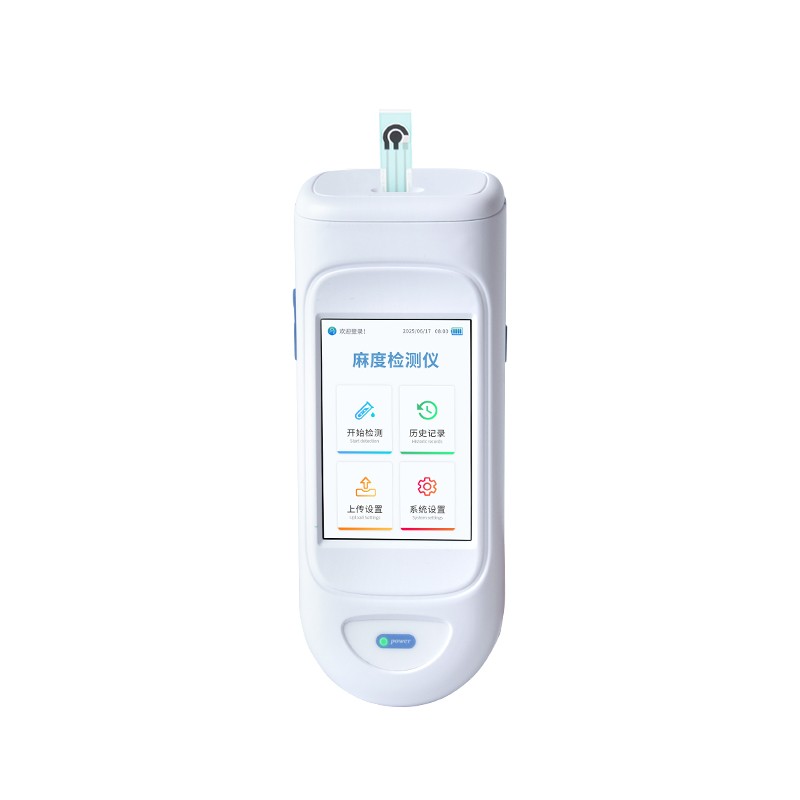
Handheld readers and plate systems are distinct configurations. A handheld meter used with its specified disposable sensor can be practical for immediate checks on a small number of identified samples. A plate reader can accommodate a larger grouped set when the assay is designed for that format. The illustrated handheld analyzer and the HM-96A plate-reader option should each be evaluated with the test and calibration intended for that platform.
Ask whether each device reports a named analyte, an index or another response, and whether the two results use the same basis. A conversion requires evidence for the particular methods and products. Two devices can produce well-behaved results on their own scales without providing interchangeable figures on a sample of pepper oil. A buyer planning to use both systems should test the relationship on representative samples and document where it is meaningful.
Can the laboratory convert between dry-basis and as-received results?
Yes, when the method provides a valid basis and the moisture content represents the same material. For example, if a result is 8.8 milligrams per gram on an as-received basis and the material contains 12 percent moisture by mass, the equivalent dry-matter result is 10 milligrams per gram if the method specifies that simple correction. The calculation divides 8.8 by the dry-matter fraction of 0.88. Keep the original value, moisture observation and basis in the record.
The correction does not address a different compound definition, calibration material or extraction basis. If a supplier report combines multiple sanshool compounds and the receiving laboratory measures one defined response, compare the methods before interpreting the numbers. The purpose of a unit conversion is to express the same quantity on a different basis.
Why do readings change during a comparative trial?
Consider the sample order, timing, kit lot and preparation record. If control readings shift across the plate or with time, investigate the factors that affect multiple positions. Compare signals before and after a repeat under the laboratory's approved procedure. A difference between two readings of one prepared portion and a difference between fresh preparations answer separate questions. Design the comparison around the step staff need to assess.
When evaluating an unfamiliar matrix, include typical materials and the variants most likely to behave differently, such as a darker spice blend or a flavored oil. Review the kit supplier's scope for each material and agree which observations need investigation. This builds evidence about the product rather than assuming a calibration developed in a simple solution transfers to every formulation.
What belongs in a report for a purchasing team?
Report the identified sample and supplier lot, the product form, the test target, the measurement or index, the units and the result basis. Include the method revision and any interpretation or action specified by the purchasing agreement. A buyer comparing two lots should be able to tell whether the figures came from the same procedure and equivalent material. Keep control and repeat details retrievable with the original record.
For a jointly agreed grading program, specify whether a lot is compared with a numerical range, a reference product, a sensory review or a combination of these. Define who can approve an exception and what material remains available for later testing. If a new instrument or assay is introduced, keep its introduction date visible on the trend. Collect comparison data across the transition where the quality decision depends on continuity with the earlier results.
Should teams pool different grades before testing?
Keep grades separate when the buyer assigns different specifications or prices to them. A pooled value can meet the target even when one grade would fall outside its own range. If the decision concerns a mixed batch, record the design used to collect the combined sample and how the result will be used. That keeps the scope of the conclusion tied to the material actually represented.
What records help resolve an unexpected value?
Keep the original sample identity, plate map, control status, reagent lot, measured response, result basis and any calculation factor. When controls fail or the signal falls outside the verified range, follow the kit and laboratory procedure for the affected results. Document whether a repeat uses the same preparation, an independently prepared portion or a newly collected sample. These choices address different sources of variation.
HENG MEI Intelligent Manufacturing supplies analytical equipment through Shandong Hengmei Electronic Technology Co., Ltd.. For specification and method inquiries, provide the pepper type, physical form, target or index, expected concentration range and intended use, such as supplier grading, formulation monitoring or comparative research.
Address of this article:https://www.kjhm.net/news/sichuan-pepper-pungency-analyzer-faq-for-sanshool-testing-heng-mei-intelligent-manufacturing.html
 Related News
-
16 / 2026-11
Pine Wood Nematode Detection with 48-Well PCR | HENG MEI Intelligent Manufacturing
Learn more
-
08 / 2026-05
Contact Angle Goniometer Value Analysis-HENGMEI ZHIZAO vs Intl Brands
Learn more
-
18 / 2026-11
HENG MEI Intelligent Manufacturing | Choosing Food Additive Testing Equipment by Analyte
Learn more
-
08 / 2026-06
HM Instruments Portable Water Quality Analyzer Brand Recommendation
Learn more