

 Current
Location:
How to Choose a Dissolved Oxygen Meter | HENG MEI Intelligent Manufacturing
Article Source: Hengmei Technology Release time:2026-11-27 14:13:50
Dissolved oxygen (DO) is one of the most time-sensitive parameters in water quality management. In aquaculture ponds, pre-dawn oxygen depletion can cause acute mortality within hours. In municipal and industrial wastewater plants, aeration basins rely on accurate DO feedback to keep biological treatment active without wasting blower energy. In rivers, reservoirs, and drinking-water intakes, DO profiles reveal stratification and organic pollution loads. Choosing the right dissolved oxygen meter starts with understanding that two fundamentally different measurement technologies serve different field workflows.
At HENG MEI Intelligent Manufacturing, buyers can choose between two portable DO instruments: the HM-DO photoelectric colorimetric dissolved oxygen meter (referencing GB7489-87) and the HM-RYG optical fluorescence-quenching dissolved oxygen meter. While both are handheld field instruments, they differ in sensing principle, measurement range, consumable requirements, waterproofing, and price. Matching those capabilities to your sampling routine ensures reliable data without unnecessary operating cost.
Comparing Colorimetric vs. Optical Fluorescence DO Technologies
Before comparing specification sheets, it helps to clarify how each method detects oxygen in water:
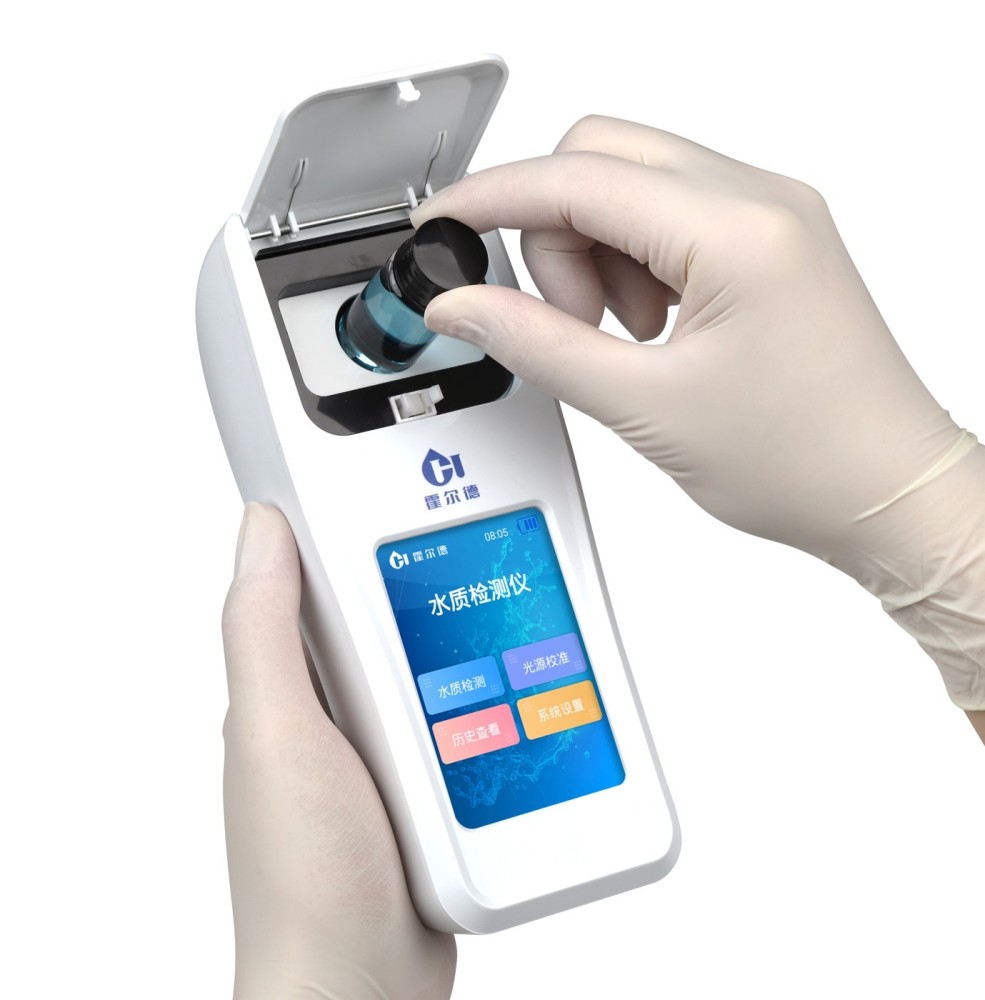
- Photoelectric Colorimetric Method (HM-DO): A 10 mL water sample is collected in a glass colorimetric vial, reacted with a rapid color-developing reagent (100-test kit included), and measured optically inside the instrument. It requires no membrane or sensor cap maintenance, stores over 80,000 records on an Android touchscreen, and offers wireless cloud upload at a lower upfront price ($320).
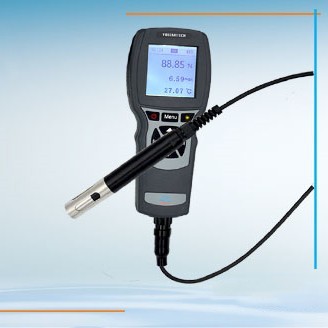
- Optical Fluorescence-Quenching Method (HM-RYG): A fully submersible optical probe (Φ16 × 180 mm) uses fluorescence lifetime quenching technology. Because the sensor does not consume oxygen during measurement, it has no water flow-rate requirement, needs no electrolyte or warm-up time, and responds in as little as 30 seconds. Operators simply lower the probe on its 5 m cable (with optional 10 m, 15 m, or 30 m lengths) directly into tanks, ponds, or rivers for instant depth profiling.
Head-to-Head Specification Comparison: HM-DO vs. HM-RYG
Reviewing the verified specifications side by side highlights where each instrument excels.
| Specification | HM-DO (Photoelectric Colorimetric) | HM-RYG (Optical Fluorescence) |
|---|---|---|
| Measurement Principle | Photoelectric colorimetry (GB7489-87) | Optical fluorescence lifetime quenching |
| Measurement Range | 1–12 mg/L | 0–20 mg/L or 0–200% air saturation |
| Accuracy / Repeatability | Repeatability < 0.5%; Stability < 0.5%; Absorbance sensitivity 0.001 | Accuracy ±1% (0–200%); Sensor drift < 1% per year; Temp ±0.2 °C |
| Response Time & Prep | Reagent reaction in 10 mL vial (22 × 50 mm) | 30 s response; no warm-up, no electrolyte, no flow-rate limit |
| Consumables / Maintenance | 100-test reagent kit (replenishable); 0.45 µm syringe filters | Fluorescent cap (1-year guaranteed life under normal use) |
| Probe / Cell & Cable | 10 mL glass vials (10 pcs included) | Submersible probe Φ16 × 180 mm (51 g); 5 m cable (10/15/30 m optional) |
| Compensation & Interface | Automatic wavelength selection; dilution factor support | Built-in automatic barometric compensation (50–115 kPa); RS-485 MODBUS |
| Display & Operating System | 3.5-inch color LCD touchscreen; Android smart OS (EN / CN) | 54.38 × 54.38 mm backlit LCD with keypad |
| Data Storage & Connectivity | > 80,000 records; Type-C, Wi-Fi, Hotspot, Bluetooth (cloud upload) | Supports data storage & USB data export |
| Protection & Power | 5600 mAh lithium battery (8 h continuous), 5V/DC; 0–50 °C, 0–90% RH | IP67 protection; 2 × 18650 rechargeable batteries (3.7V); 0–50 °C |
| Dimensions & Weight | 190 × 77 × 72 mm; 325 g (packaged 2.1 kg) | Host 220 × 96 × 44 mm; 460 g |
| Reference Price (USD) | $320 (SKU price) | $905 (converted reference price) |
Matching the Instrument to Your Application Scenario
When HM-DO Is the Better Choice
Choose the HM-DO colorimetric meter when budget efficiency, wireless cloud reporting, and periodic spot checks are your top priorities. At $320, HM-DO ships in a PVC carrying case (315 × 290 × 110 mm) with a 100-test reagent set, 10 capped colorimetric vials (10 mL, 22 × 50 mm), 5 syringes (10 mL), 10 aqueous syringe filters (0.45 µm), 2 lens-cleaning cloths, a Type-C cable, and a 5V/2A charger. It is well suited for:
- Routine Pond & Tank Audits: Aquaculture farms, swimming venues, and waterworks conducting scheduled daily checks within the 1–12 mg/L range.
- Cloud-Connected Multi-Site Teams: Service technicians who want to upload readings directly via Wi-Fi, mobile hotspot, or Bluetooth to a central monitoring platform.
- Facilities Scaling to Multi-Parameter Testing: HM-DO belongs to the same portable colorimetric platform as HENG MEI's multi-parameter series (such as 4-parameter HM-S04 at $440 or 10-parameter HM-S10 at $670), making it easy to standardize operator training.
When HM-RYG Is the Better Choice
Choose the HM-RYG optical fluorescence meter when you need rapid, reagent-free measurements across multiple depths, high-saturation or anoxic zones (0–20 mg/L or 0–200% air saturation), or harsh wet-field environments. At $905, HM-RYG includes the IP67 handheld meter, a 5 m submersible optical probe, two 18650 rechargeable batteries, a Micro USB cable, wrist strap, screwdriver, spare O-ring, 2 moisturizing sponges, and a rubber cap cover. It is well suited for:
- High-Frequency Aeration & Aquaculture Rounds: Measuring dozens of ponds or aeration basins in rapid succession with a 30-second response time and zero reagent wait.
- Depth Profiling & Stagnant Water: Lowering the Φ16 × 180 mm probe on a 5 m (or optional 10 m, 15 m, or 30 m) cable into deep reservoirs, wells, or stratified ponds—even in stagnant water, since fluorescence quenching consumes no oxygen.
- Altitude & Pressure Variations: Built-in automatic barometric compensation (50–115 kPa) and ±0.2 °C temperature accuracy ensure accurate % air saturation and mg/L readings at varying elevations.
- System Integration: The optical sensor supports RS-485 MODBUS communication in addition to handheld USB data export.
Total Cost of Ownership and Maintenance Considerations
Procurement teams should weigh upfront price against ongoing consumables:
- HM-DO: Lower initial investment ($320). Ongoing costs consist of replacement colorimetric reagent sets (100 tests per set) and 0.45 µm syringe filters when testing turbid water. There are no probes or membranes to replace.
- HM-RYG: Higher initial investment ($905), but zero per-test reagent cost. The primary wear item is the optical fluorescent cap, which carries a guaranteed 1-year service life under normal use, alongside simple 1-point or 2-point calibration and keeping the cap moist with the supplied sponge when stored.
Industry-by-Industry Selection Guide
Because dissolved oxygen monitoring spans very different water depths, turbidity levels, and staffing models, reviewing how each sector uses DO meters clarifies which architecture delivers the best fit:
- Intensive Aquaculture Ponds and Hatcheries: Farms running pre-dawn oxygen checks across 10 to 50 ponds or raceways typically favor HM-RYG because a 30-second probe reading without reagent wait times lets one technician finish a multi-pond round before sunrise. Smaller farms or hatcheries conducting periodic daily spot checks alongside other colorimetric parameters (such as ammonia, nitrite, and pH) often start with HM-DO ($320) or a multi-parameter handheld kit.
- Municipal and Industrial Wastewater Treatment Plants: Aeration basins and secondary clarifiers often contain high mixed-liquor suspended solids and wide DO swings from near-anoxic (0–1 mg/L) to over-aerated zones. HM-RYG handles 0–20 mg/L directly in mixed liquor without sample filtration, and its RS-485 MODBUS sensor interface supports integration workflows, whereas HM-DO is better suited for clarified effluent checks within 1–12 mg/L after 0.45 µm filtration.
- River Monitoring, Reservoirs, and Source-Water Protection: Environmental teams profiling vertical stratification in lakes, reservoirs, or deep intake towers require extended probe cables. HM-RYG ships with a 5 m cable and offers 10 m, 15 m, and 30 m cable options on the Φ16 × 180 mm submersible probe, plus automatic barometric compensation (50–115 kPa) for watershed surveys across varying altitudes.
- Swimming Venues, Waterworks, and Scientific Research: Clean-water facilities performing scheduled compliance audits within 1–12 mg/L appreciate HM-DO's 3.5-inch Android touchscreen, >80,000-record storage, and wireless Wi-Fi/Bluetooth upload to cloud monitoring platforms.
Five-Point Procurement Checklist
- Check Your Concentration Range: If you need to measure below 1 mg/L (anoxic wastewater zones) or above 12 mg/L (supersaturated algal ponds or pure-oxygen systems), select HM-RYG (0–20 mg/L / 0–200% air sat.) rather than HM-DO (1–12 mg/L).
- Assess Daily Test Volume: High-frequency rounds (dozens of readings per day) favor reagent-free optical probing (HM-RYG); periodic daily or weekly spot checks favor the lower upfront cost of HM-DO ($320).
- Determine Depth & Cable Needs: For surface grab samples, HM-DO's 10 mL vials work well; for tank or reservoir depth profiling, specify HM-RYG with the standard 5 m cable or optional 10 m, 15 m, or 30 m cable.
- Evaluate Data & Power Workflow: Confirm whether you need HM-DO's Wi-Fi/hotspot/Bluetooth cloud upload and 5600 mAh 8-hour battery, or HM-RYG's IP67 waterproof housing, 2 × 18650 batteries, USB export, and RS-485 MODBUS probe interface.
- Plan Consumables Ahead: Include spare 100-test reagent kits and 0.45 µm syringe filters with HM-DO orders, or spare fluorescent caps and O-rings with HM-RYG orders.
Frequently Asked Questions About Dissolved Oxygen Meters
Why does an optical fluorescence DO meter not require water flow?
Traditional galvanic or polarographic electrodes consume oxygen at the membrane surface, requiring constant stirring or water flow to avoid artificially low readings. Optical fluorescence quenching—used in HM-RYG—measures oxygen's quenching effect on luminescence lifetime without consuming oxygen, so it reads accurately in both flowing streams and stagnant pond bottoms.
Can HM-DO measure turbid aquaculture or wastewater samples?
Yes. HM-DO ships with 10 mL syringes and 0.45 µm aqueous syringe filters specifically so operators can filter out suspended algae or silt before adding reagents and taking an optical reading.
What cable lengths are available for the HM-RYG probe?
The standard kit includes a 5 m cable on the Φ16 × 180 mm submersible probe, with 10 m, 15 m, and 30 m cable lengths available as options for deep-water or tank profiling.
How long does the HM-DO battery last, and how many tests come in the starter kit?
HM-DO runs on a 5600 mAh rechargeable lithium battery (5V/DC Type-C charging) that supports up to 8 hours of continuous field operation. Its standard kit includes 1 reagent set rated for 100 tests, along with 10 capped 10 mL vials, 5 syringes (10 mL), and 10 aqueous 0.45 µm syringe filters.
Does HM-RYG require altitude or pressure adjustments before field use?
No manual barometer entry is needed. HM-RYG includes built-in automatic barometric pressure compensation covering 50–115 kPa, along with ±0.2 °C temperature compensation, ensuring accurate mg/L and % air saturation readings across different elevations and weather fronts.
Can HM-RYG connect to a PLC or data logger directly?
Yes. In addition to handheld logging and USB data export on the meter, the submersible optical DO sensor supports the RS-485 MODBUS communication protocol, allowing facilities that later integrate probe monitoring into automated telemetry or industrial controllers to reuse the same sensor interface.
What operating temperatures do both DO meters support?
Both HM-DO and HM-RYG operate across 0 to 50 °C (with HM-DO rated for 0–90% relative humidity and HM-RYG offering an IP67 waterproof handheld enclosure and -40 to 85 °C storage temperature range).
Requesting a Quotation from HENG MEI Intelligent Manufacturing
Shandong Hengmei Electronic Technology Co., Ltd., under the brand HENG MEI Intelligent Manufacturing, supplies both the HM-DO colorimetric DO analyzer and the HM-RYG optical fluorescence DO meter. Share your application (aquaculture, wastewater aeration, river monitoring, or waterworks), daily test frequency, and required cable length or reagent quantity with our sales contact to receive a tailored configuration quote.
Contact: Arthur, Sales Contact, Arthur@hmdzkj.cn, +86 18353666151 (Tel / WhatsApp / WeChat).
Address of this article:https://www.kjhm.net/news/how-to-choose-dissolved-oxygen-meter.html
 Related News
-
15 / 2026-06
Sterility Testing Pump FAQ: Technical Questions Answered
Learn more
-
22 / 2024-10
Enhance Dairy Excellence With Our Rapid Milk Analyzers.
Learn more
-
13 / 2026-11
HENG MEI Intelligent Manufacturing Planning an Online Particle Monitoring System
Learn more
-
13 / 2026-11
HENG MEI Intelligent Manufacturing Selecting a Multifunction Food Safety Analyzer
Learn more