

 Current
Location:
How to Choose an Aquaculture Water Quality Analyzer | HENG MEI Intelligent Manufacturing
Article Source: Hengmei Technology Release time:2026-11-27 13:29:22
Selecting an aquaculture water quality analyzer starts with the chemistry that actually limits survival and feed conversion in your culture system, rather than buying the largest parameter list on a brochure. A freshwater carp pond, a high-density shrimp raceway, a marine hatchery, and a recirculating aquaculture system (RAS) face different toxicities and buffering demands. Choosing the right instrument means matching four practical factors: the specific analytes you need to track, the measurement range and optical repeatability of the photometer, the sample preparation required for turbid pond water, and the battery and data-logging capacity needed for multi-pond rounds.
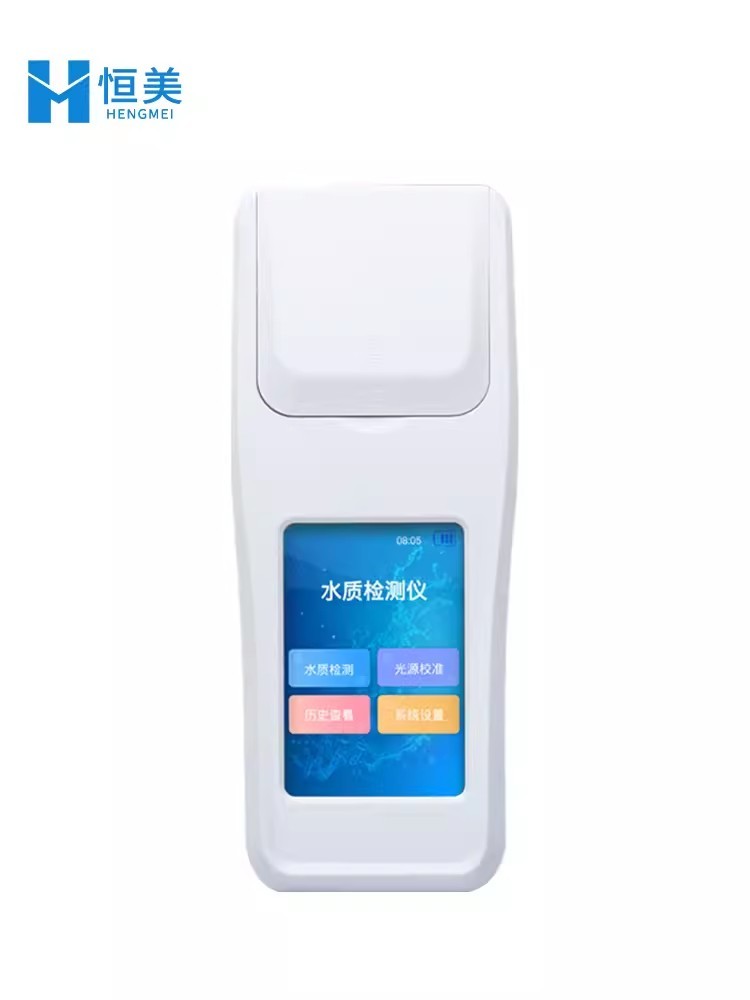
Portable photoelectric colorimetric analyzers—such as the HM-SS series from HENG MEI Intelligent Manufacturing—combine pre-calibrated optical wavelengths with rapid color-developing reagents so farm technicians can measure multiple dissolved parameters on the pond bank without shipping samples to a central laboratory. Understanding how each parameter behaves and how tiered configurations scale from 4 to 15 analytes helps buyers avoid both under-specifying critical toxins and paying for reagents they never open.
Core Aquaculture Water Quality Parameters and Why They Matter
Aquaculture water testing is different from municipal wastewater or drinking-water monitoring because toxicity thresholds are much lower and several parameters interact chemically. Ammonia nitrogen, for example, is typically monitored at lower concentrations in aquaculture than in industrial effluent, and its acute toxicity depends directly on pH and temperature. A useful analyzer therefore groups interacting parameters together rather than treating them in isolation.
Oxygenation and Acid-Base Balance
- Dissolved Oxygen (DO, 1–12 mg/L): Low dissolved oxygen is the fastest cause of acute mortality in intensive ponds, especially before dawn when algal respiration peaks and photosynthesis stops. Measuring DO alongside water temperature helps operators verify aerator performance and adjust feeding rates before fish or shrimp show surface-piping stress.
- pH (5.5–9.5): Pond pH fluctuates daily as algae consume carbon dioxide during daylight and release it at night. Beyond direct gill irritation at extremes, pH shifts alter the equilibrium between ionized ammonium and toxic unionized ammonia, as well as the toxicity of hydrogen sulfide.
- Water Temperature (-50 to 85 °C): Temperature governs metabolic rate, feeding appetite, oxygen solubility, and chemical reaction kinetics in both culture water and biofilters.
Nitrogenous Waste and Anaerobic Toxins
- Ammonia Nitrogen (0.05–5 mg/L as N): Protein metabolism and uneaten feed generate ammonia. In aquaculture, even modest rises above baseline can suppress growth and damage gill epithelium, particularly when pH climbs above 8.0.
- Nitrite (0.005–0.4 mg/L as N): Nitrite accumulates as an intermediate product when nitrifying bacteria in pond sediment or RAS biofilters are overloaded or newly established. Because nitrite interferes with oxygen transport in blood and hemolymph, aquaculture testing requires sub-milligram sensitivity down to 0.005 mg/L.
- Hydrogen Sulfide (0.02–2 mg/L as S2-): Generated under anaerobic conditions in sludge-rich pond bottoms, hydrogen sulfide is highly toxic to shrimp and bottom-dwelling species, especially when pH drops. Monitoring sulfide warns managers when bottom aeration, sludge removal, or water exchange is overdue.
Buffering Capacity, Minerals, and Source-Water Safety
- Total Alkalinity (8–400 mg/L and 40–2000 mg/L as CaCO3): Alkalinity measures the water's carbonate and bicarbonate buffering capacity. Adequate alkalinity stabilizes diurnal pH swings and supports nitrification in biofilters, where nitrifying bacteria consume alkalinity continuously.
- Total Hardness (4–200 mg/L and 20–1000 mg/L as CaCO3): Total hardness reflects dissolved calcium and magnesium ions. Crustaceans such as shrimp and crabs depend on sufficient calcium and magnesium for shell calcification after molting, while balanced hardness also moderates heavy-metal toxicity.
- Salinity (1.00–1.060, specific gravity method) and Phosphate (0.05–5 mg/L as PO43-): Salinity tracking is essential for brackish-water shrimp, marine hatcheries, and acclimation tanks. Phosphate monitoring helps managers anticipate excessive algal blooms and eutrophication in fertilized ponds.
- Residual Chlorine (0.04–3 mg/L and 0.2–15 mg/L) and Trace Metals (Zinc, Copper, Total Iron, Hexavalent Chromium): Farms that disinfect intake water with chlorine compounds must confirm complete dechlorination before stocking larvae or fry. Where intake water comes from agricultural runoff, groundwater with high iron, or industrial-adjacent rivers, testing zinc, copper, total iron, and hexavalent chromium protects hatcheries from chronic or acute metal exposure.
Comparing Parameter Tiers: 4, 6, 9, 11, and 15-Parameter Analyzers
Rather than forcing every farm into a single fixed configuration, the HM-SS aquaculture series uses the same handheld optical platform across five parameter tiers: HM-SS4, HM-SS6, HM-SS9, HM-SS11, and HM-SS15. Each tier ships with pre-matched starter reagent sets so testing can begin immediately upon delivery, and individual parameters can also be adjusted at order time if a facility needs a specific combination.
| Model | Parameter Count | Included Analytes | Starter Reagent Sets | Reference SKU Price (USD) |
|---|---|---|---|---|
| HM-SS4 | 4 parameters | pH, Dissolved Oxygen, Ammonia Nitrogen, Nitrite | 4 reagent sets | $310 |
| HM-SS6 | 6 parameters | pH, Dissolved Oxygen, Ammonia Nitrogen, Nitrite, Hydrogen Sulfide, Total Alkalinity | 6 reagent sets | $340 |
| HM-SS9 | 9 parameters | pH, Dissolved Oxygen, Ammonia Nitrogen, Nitrite, Total Alkalinity, Hydrogen Sulfide, Salinity, Phosphate, Total Hardness | 8 reagent sets | $370 |
| HM-SS11 | 11 parameters | pH, Dissolved Oxygen, Ammonia Nitrogen, Nitrite, Total Alkalinity, Hydrogen Sulfide, Salinity, Phosphate, Total Hardness, Water Temperature, Residual Chlorine | 9 reagent sets | $430 |
| HM-SS15 | 15 parameters | 11-parameter set plus Zinc, Copper, Total Iron, Hexavalent Chromium | 13 reagent sets | $600 |
Choosing between these five tiers comes down to your culture intensity and water source:
- HM-SS4 (4 parameters): Suited for routine daily screening in extensive or semi-intensive freshwater ponds where the operator primarily tracks oxygen, pH, ammonia, and nitrite.
- HM-SS6 (6 parameters): Adds hydrogen sulfide and total alkalinity, making it a practical baseline for high-density grow-out ponds and RAS facilities that need to monitor bottom-sludge toxicity and biofilter buffering.
- HM-SS9 (9 parameters): Adds salinity, phosphate, and total hardness. This is the natural fit for shrimp and crab farms managing molting minerals, brackish-water farms adjusting salinity, and pond managers controlling phytoplankton blooms.
- HM-SS11 (11 parameters): Adds water temperature and residual chlorine, ideal for hatcheries, nurseries, and indoor recirculating systems that chlorinate and neutralize source water before use.
- HM-SS15 (15 parameters): Adds zinc, copper, total iron, and hexavalent chromium for hatcheries, well-water farms, river-fed facilities, and environmental water-quality screening near industrial or mining zones.
Optical Principle, Hardware Specifications, and Field Readiness
All models in the HM-SS series operate on photoelectric colorimetry. After a measured water sample reacts with a parameter-specific reagent inside a 10 mL glass colorimetric vial (22 × 50 mm), the instrument passes light from an imported cold light source—rated for up to 100,000 hours of service—through the sample at an automatically selected wavelength. An optical detector measures absorbance down to 0.001 absorbance units and converts the reading directly into concentration using built-in calibration curves.
Because field conditions vary from humid greenhouse hatcheries to sun-exposed earthen pond banks, mechanical and optical stability matter as much as nominal range. The table below summarizes the verified hardware specifications for the HM-SS platform (using HM-SS9 and HM-SS11 as reference configurations).
| Specification | Value / Capability |
|---|---|
| Measurement Principle | Photoelectric colorimetry |
| Wavelength Selection | Automatic |
| Absorbance Sensitivity | 0.001 |
| Repeatability | < 0.5% |
| Optical Stability | < 0.5% |
| Light Source | Imported cold light source, 100,000-hour rated life |
| Operating System & Display | Android smart OS with 3.5-inch color LCD touchscreen (English / Simplified Chinese) |
| Data Storage | More than 80,000 test records |
| Connectivity | Type-C, Wi-Fi, mobile hotspot, Bluetooth; supports upload to cloud monitoring platform |
| Power & Battery | 5600 mAh rechargeable lithium battery, 5V/DC input, up to 8 hours continuous operation |
| Operating Environment | 0 to 50 °C, 0 to 90% relative humidity |
| Host Dimensions & Weight | 190 × 77 × 72 mm; 325 g |
| Carrying Case | Aluminum-alloy case (385 × 285 × 155 mm); packaged weight approx. 3.7–3.8 kg |
For multi-parameter models such as HM-SS9 and HM-SS11, the standard kit also includes practical field accessories beyond the colorimetric reagents: 10 colorimetric vials (10 mL, 22 × 50 mm), 5 syringes (10 mL), 10 aqueous syringe filters (0.45 µm), 2 lens-cleaning cloths, a 100 mL measuring cylinder, pH test paper (1–14), a salinity meter, a Type-C cable, a 5V/2A charger, and a water-temperature gauge (included with HM-SS11, covering -50 to 110 °C).
Sample Preparation and Avoiding Common Field Testing Errors
In aquaculture, the single most frequent source of inaccurate colorimetric readings is not the instrument—it is unfiltered suspended solids, microalgae, or organic turbidity in the pond sample. Because photoelectric colorimetry measures light absorption through the 10 mL vial, suspended particles scatter light and artificially inflate concentration readings. Following a disciplined field workflow eliminates most measurement drift.
- Filter turbid samples before adding reagents: Draw pond water with a 10 mL syringe and pass it through a 0.45 µm aqueous syringe filter before transferring it into the colorimetric vial. Clear, particle-free water ensures that measured absorbance comes from the color reaction rather than suspended silt or algae.
- Keep vials clean and bubble-free: Wipe the outside of each 22 × 50 mm glass vial with the supplied lens-cleaning cloth before inserting it into the optical chamber. Fingerprints, water droplets, and air bubbles on the glass wall scatter light and reduce repeatability.
- Follow on-screen reaction timing and reagent order: The Android interface includes built-in step-by-step operating prompts so operators do not need to memorize reagent volumes or reaction wait times. Adding reagents in sequence and reading promptly at the end of the color-development window keeps readings consistent across shifts.
- Use the dilution factor function for high-concentration samples: When testing heavily loaded nursery tanks, sludge-disturbed ponds, or wastewater outlets where concentrations exceed the upper range of a parameter, dilute the filtered sample with pure water and enter the dilution factor directly in the instrument. The analyzer automatically calculates the actual concentration, preventing manual arithmetic errors.
- Maintain reagent storage and zeroing discipline: Store colorimetric reagents away from direct sunlight and heat, and perform a clean blank zeroing step with the sample matrix or purified water as instructed by the reagent manual before reading a batch.
Data Logging, Cloud Upload, and Multi-Pond Management
Single-point readings tell you whether a pond is safe today; historical trends tell you whether water quality is deteriorating before a mortality event occurs. An aquaculture analyzer that stores data only on paper notebooks makes it difficult to compare morning and afternoon pH across 20 ponds or track nitrite spikes during a biofilter startup.
With storage for more than 80,000 test records, the HM-SS series holds months or years of multi-pond measurements on the device itself. Built-in Wi-Fi, mobile hotspot, Bluetooth, and Type-C connectivity allow technicians to upload test results directly to a cloud monitoring platform for short- and long-term trend analysis. When a single farm operates multiple sites—or when an aquaculture technical service team supports dozens of contract growers—wireless data upload turns routine pond-bank checks into searchable records that support feeding adjustments, water-exchange scheduling, and compliance documentation.
Battery endurance is equally practical for field work. The 5600 mAh lithium battery supports AC/DC dual-purpose charging via 5V/DC Type-C and delivers up to 8 hours of continuous operation—enough for a full day of pond rounds or hatchery inspections without returning to an office outlet.
Frequently Asked Questions About Aquaculture Water Quality Analyzers
What is the difference between a colorimetric aquaculture analyzer and an electrochemical probe meter?
Electrochemical probe meters excel at continuous, real-time monitoring of physical parameters such as dissolved oxygen, pH, conductivity, and temperature without consumables. However, probes cannot easily measure nutrient and toxin species such as nitrite, phosphate, total alkalinity, total hardness, hydrogen sulfide, or trace metals in a compact handheld unit. Photoelectric colorimetric analyzers use specific chemical reagents and optical absorbance to quantify both routine parameters and complex chemical species in a single 325 g instrument, making them well suited for comprehensive daily or weekly water-quality audits across multiple ponds.
Why do aquaculture farms need both total alkalinity and total hardness?
Although both are reported in mg/L as CaCO3, total alkalinity and total hardness measure different ions and solve different problems. Total alkalinity reflects carbonate and bicarbonate ions that buffer pH against rapid swings and fuel nitrifying bacteria. Total hardness reflects dissolved calcium and magnesium ions required for shrimp and crab molting, osmoregulation, and bone development. A pond can have adequate hardness but low alkalinity (leading to unstable pH), or high alkalinity with low calcium hardness (leading to soft-shell problems after molting). Testing both parameters separately—as provided in HM-SS9, HM-SS11, and HM-SS15—prevents misdiagnosis.
How many tests do the included starter reagent sets cover?
In the standard HM-SS9 and HM-SS11 configurations, reagent sets for pH, dissolved oxygen, ammonia nitrogen, nitrite, phosphate, and residual chlorine (on HM-SS11) are supplied at 100 tests per set, while reagent sets for hydrogen sulfide, total alkalinity, and total hardness are supplied at 50 tests per set. Additional replacement reagent sets can be ordered according to the analytes your farm tests most frequently.
Can the analyzer be used for river monitoring, swimming pools, or wastewater?
Yes. While the HM-SS parameter combinations are tailored to aquaculture needs, the underlying photoelectric colorimetric platform is also applicable to river and surface-water monitoring, swimming pool testing, purified and tap water checks, municipal and industrial wastewater screening, and laboratory research, provided the sample concentrations fall within each parameter's measurement range or are brought into range via dilution.
What happens if a pond water sample exceeds the instrument's upper measurement range?
If a sample concentration is above the upper limit—for example, ammonia nitrogen above 5 mg/L or total alkalinity above 2000 mg/L—you can dilute the filtered sample with clean water by a known ratio and input that dilution factor into the instrument's software. The analyzer automatically multiplies the measured result by the dilution factor and displays the true sample concentration.
Sourcing Aquaculture Water Quality Analyzers from HENG MEI Intelligent Manufacturing
Shandong Hengmei Electronic Technology Co., Ltd., operating under the brand HENG MEI Intelligent Manufacturing, manufactures the HM-SS series of portable aquaculture water quality analyzers alongside a full portfolio of water-quality, soil, and laboratory instruments. All HM-SS units ship in an aluminum-alloy carrying case with starter reagents, syringes, 0.45 µm filters, colorimetric vials, and bilingual English/Simplified Chinese operating software.
When requesting a quotation or configuration recommendation, share four details with our sales contact: your cultured species and system type (earthen pond, shrimp raceway, hatchery, or RAS), the number of ponds or tanks you test per round, the specific analytes you need to monitor (4, 6, 9, 11, 15 parameters, or a custom selection), and your preferred interface language and destination shipping requirements. Those details allow us to confirm the right model tier, reagent quantities, and delivery schedule.
Contact: Arthur, Sales Contact, Arthur@hmdzkj.cn, +86 18353666151 (Tel / WhatsApp / WeChat).
Address of this article:https://www.kjhm.net/news/how-to-choose-aquaculture-water-quality-analyzer.html
 Related News
-
12 / 2024-11
Unlock the Secrets of Photosynthesis with Portable Photosynthesis Meter.
Learn more
-
23 / 2024-09
Innovative Application Of Multi-parameter Water Quality Detector In Water Resource Management.
Learn more
-
13 / 2026-11
HENG MEI Intelligent Manufacturing Selecting a PCR Platform for Pigeon and Parrot Sexing
Learn more
-
24 / 2026-06
HM Instruments Online NIR Moisture Analyzer: Multi-Industry Application White Paper | HM-ZHS
Learn more