

 Current
Location:
Current
Location:HM Instruments HM-ZSD Soil Heavy Metal Detector: Henan Puyang Environmental Monitoring Centre Case Study
Article Source: Hengmei Technology Release time:2026-08-06 13:53:12
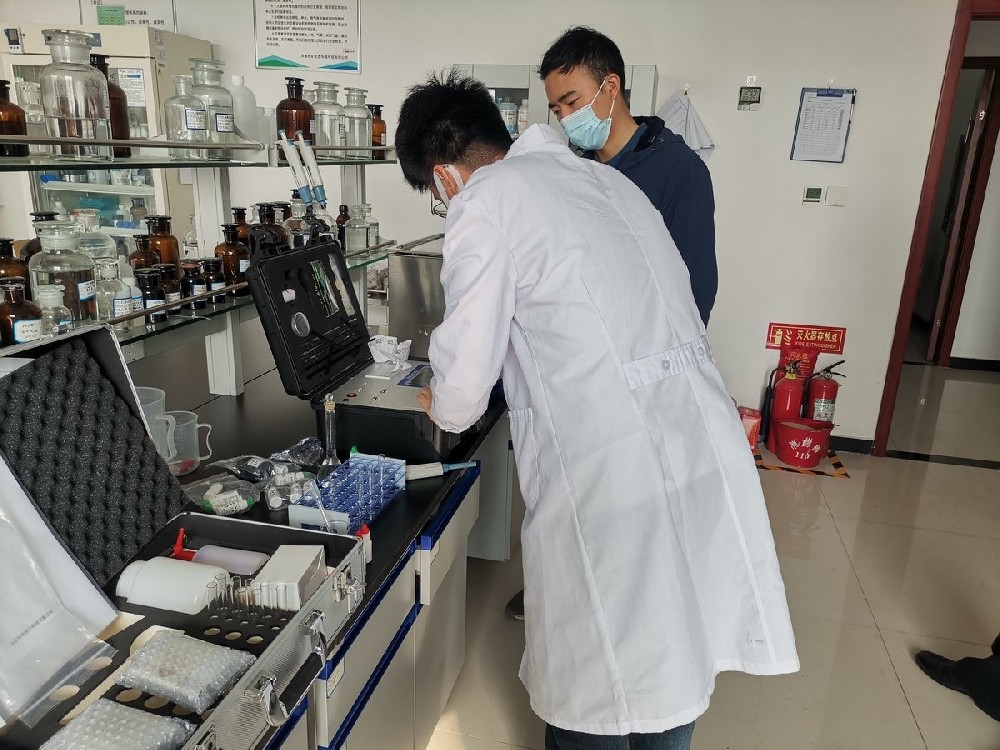
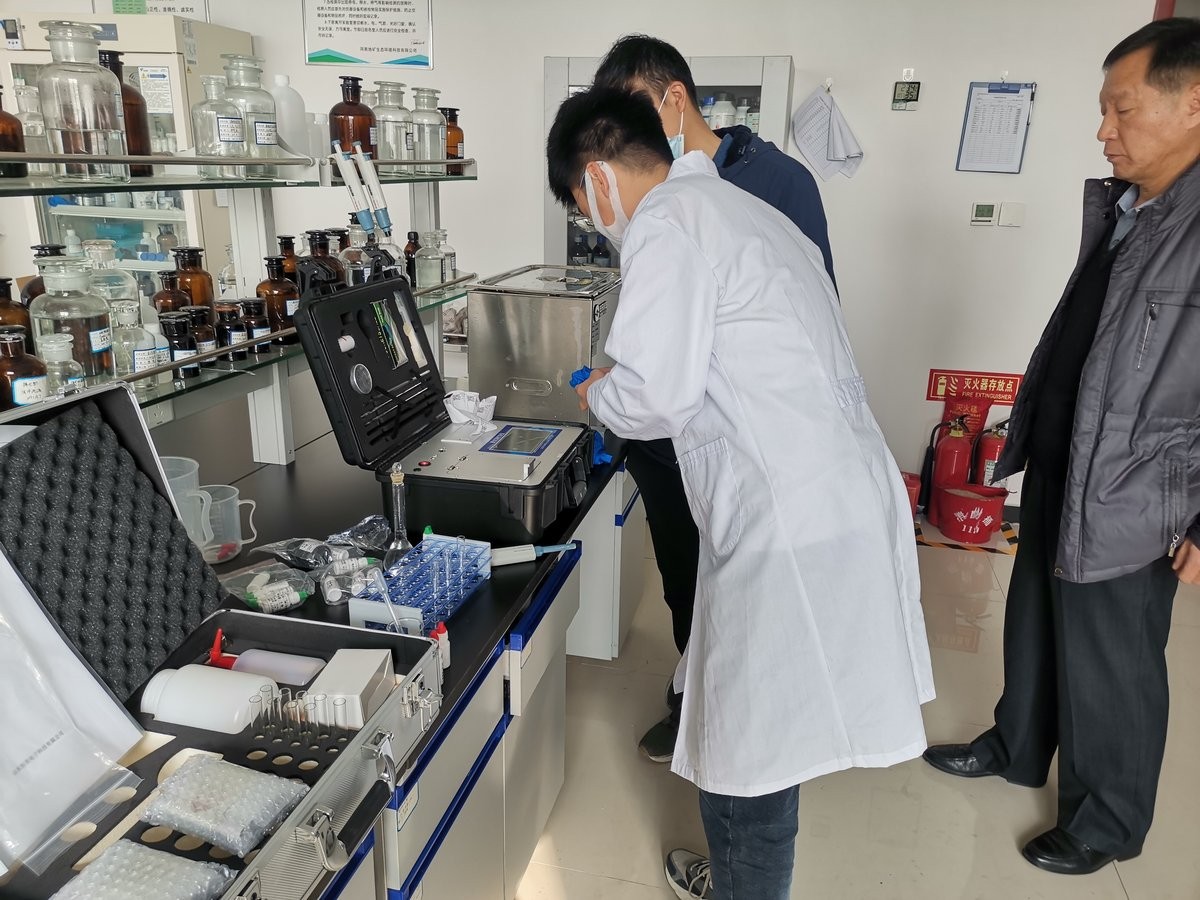
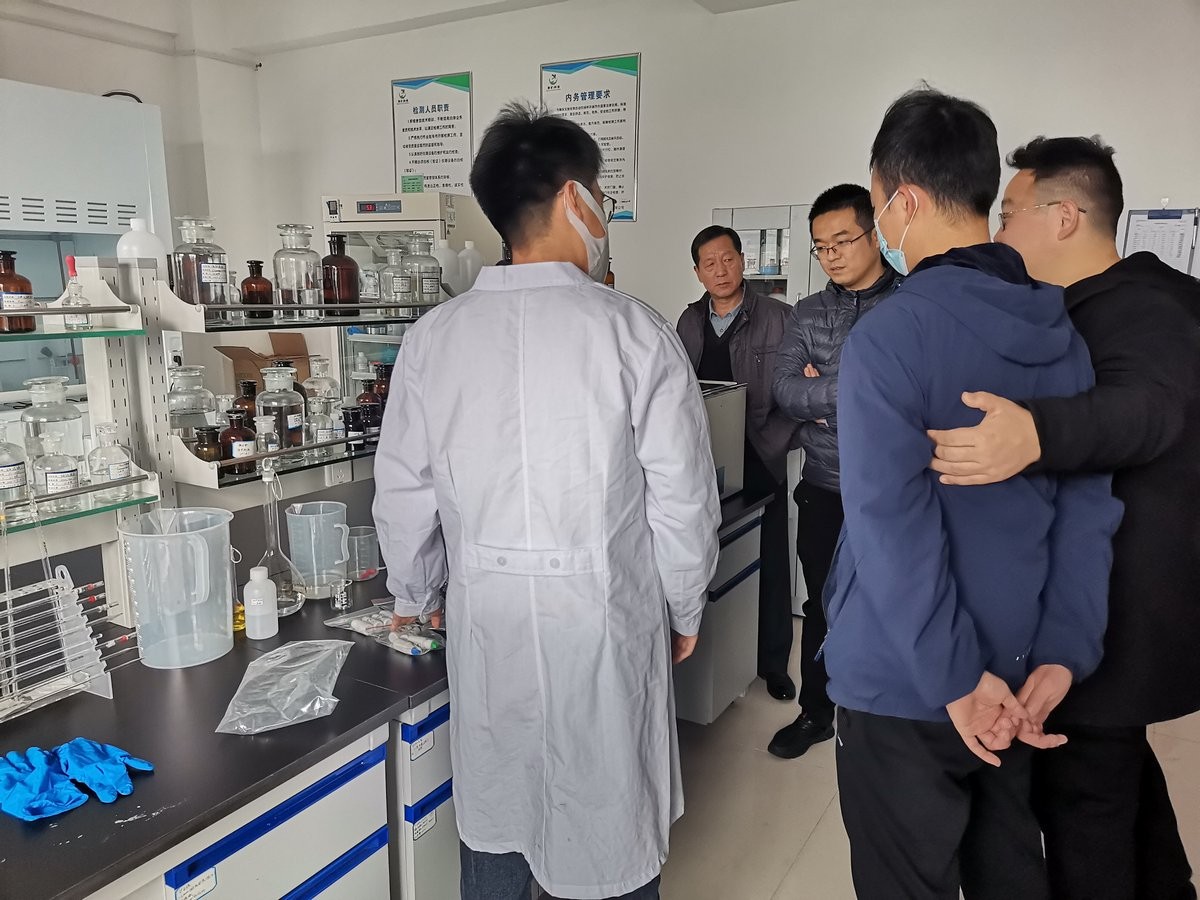
In late 2021, inside a well-organised analytical laboratory at the Henan Puyang Ecological Environment Monitoring Centre, an instructor in a white lab coat leaned over a workbench where a portable HM-ZSD high-precision soil heavy metal detector sat open, its colour touchscreen displaying spectral data from a recent test run. Beside him, a younger technician in a dark jacket observed intently, while in the background glass-fronted reagent cabinets held rows of amber and clear glass bottles, and red fire extinguishers mounted on the wall signalled the laboratory's safety-conscious design. This was the opening session of an on-site training programme marking the deployment of three HM-ZSD units — a significant equipment acquisition that would substantially expand the monitoring centre's capacity for rapid soil heavy metal screening across Puyang municipality and its surrounding counties.
The Puyang Ecological Environment Monitoring Centre operates under the Henan Provincial Department of Ecology and Environment as a frontline technical agency responsible for environmental quality monitoring, pollution source surveillance, and emergency response within its jurisdiction. Among its mandated functions is soil environment monitoring — systematic sampling and analysis of agricultural soils, industrial site perimeters, and areas of known or suspected contamination to assess compliance with national soil environmental quality standards and to support enforcement actions under China's Soil Pollution Prevention and Control Law (effective January 1, 2018).
Soil heavy metal monitoring occupies a particularly critical position within this mandate. Heavy metals — including lead (Pb), cadmium (Cd), chromium (Cr), mercury (Hg), arsenic (As), and nickel (Ni) — represent the most persistent and bioaccumulative class of soil contaminants. Unlike organic pollutants that may degrade over time, metals do not break down; they accumulate in soils, enter food crops through root uptake, and ultimately pose risks to human health through dietary exposure. The Chinese government's Soil Pollution Action Plan (2016) set explicit targets for reducing heavy metal-contaminated arable land and strengthening monitoring networks nationwide. For regional centres like Puyang, this meant scaling from occasional ad hoc sampling to systematic grid-based monitoring covering hundreds of points annually.
Project Snapshot
| Item | Detail |
|---|---|
| Country | China (Henan Province) |
| Customer type | Government environmental monitoring agency — Henan Puyang Ecological Environment Monitoring Centre (河南省濮阳生态环境检测中心) |
| Model supplied | HM-ZSD High-Precision Soil Heavy Metal Detector |
| Quantity | 3 units + accessories and reagent kits |
| Configuration | Standard configuration per unit: main unit with built-in thermal printer, pH meter, electronic balance, heavy metal detection reagent kit (covering As, Pb, Cr, Cd, Hg plus optional Fe/Zn/Mn/Cu/Al); accessory case with consumables; dual power supply (AC/DC with lithium battery) |
| Training model | On-site instructor-led training conducted by HM Instruments engineer Kan Guangwang (阚光旺) at the monitoring centre laboratory |
| Interface language | Chinese (Android OS supports English switching) |
| Deployment date | 2021 (training conducted in 2021 per documentation) |
Why the Customer Bought
The Puyang Ecological Environment Monitoring Centre's decision to acquire three dedicated soil heavy metal detectors was driven by three operational imperatives rooted in China's evolving environmental regulatory landscape:
First, the Soil Pollution Action Plan mandated expanded monitoring coverage. The Action Plan required each province to complete detailed soil pollution investigations by 2020 and establish ongoing monitoring networks for key contaminated areas, agricultural lands, and industrial sites. For Puyang — a prefecture-level city with significant agriculture plus petrochemical and manufacturing industries — this meant scaling from occasional sampling to systematic grid-based monitoring covering hundreds of points annually. The centre's existing instruments, designed for water and air quality, lacked dedicated heavy metal detection at the throughput and portability required for field-deployed soil screening.
Second, reference laboratory turnaround times were incompatible with enforcement timelines. Traditional heavy metal analysis relies on laboratory-based techniques such as atomic absorption spectroscopy (AAS), ICP-OES, or ICP-MS. While these offer excellent sensitivity and multi-element capability, they require centralised infrastructure, specialised operators, and protocols producing results in 5–14 business days. For enforcement scenarios — responding to citizen complaints about illegal discharge, conducting post-incident assessments, or verifying remediation — waiting two weeks is often impractical. A rapid-screening instrument producing same-day results enables preliminary assessments, prioritises samples for confirmatory analysis, and supports more agile time-sensitive responses.
Third, cost-per-sample economics favoured on-site screening for initial triage. Sending every soil sample for full ICP-MS analysis at a provincial reference laboratory costs approximately RMB 200–500 per sample. When a monitoring programme involves hundreds or thousands of samples annually, aggregate costs become substantial. A rapid-screening approach — using on-site colourimetric analysis for initial triage, followed by confirmatory reference analysis only for samples exceeding thresholds — can reduce overall programme costs by 60–80% while maintaining regulatory defensibility. The HM-ZSD's per-sample consumable cost (RMB 20–40 per five-element panel) makes this strategy economically attractive.
Why the HM-ZSD Was Selected
The monitoring centre's technical evaluation compared the HM-ZSD against several alternatives: ICP-MS contract analysis services, competing brand portable X-ray fluorescence (XRF) analysers, and lower-tier colourimetric heavy metal testers. The HM-ZSD was selected based on five differentiating factors:
National-standard-compliant detection methodology. Unlike XRF instruments that provide semi-quantitative data without chemical digestion (and suffer from matrix interference in complex soils), the HM-ZSD uses wet-chemistry colourimetric methods following Chinese national standards: GB/T 5009.11-2003 for arsenic, GB/T 5009.12-2003 for lead, GB/T 5009.15-2003 for cadmium, GB/T 5009.17-2003 for mercury, and diphenylcarbazide colourimetry for chromium(VI). This alignment with national standards means HM-ZSD results carry greater regulatory weight than non-standardised rapid methods.
Twelve-channel rotating design for batch processing throughput. With three units deployed, each equipped with twelve rotating detection channels, the monitoring centre can theoretically process up to 36 samples simultaneously. Combined with a test speed of approximately 60 minutes for a five-element panel (Pb, As, Cr, Cd, Hg) including digestion and sample preparation, this capacity supports the high-throughput screening demands of grid-based monitoring programmes. The rotating cuvette chamber design ensures consistent optical path length across all positions, minimising between-channel variability.
Dual-mode detection covering both priority metals and nutrient metals. The HM-ZSD detects not only the five regulatory-priority heavy metals (Pb, As, Cr, Cd, Hg) but also Fe, Zn, Mn, Cu, Al, F, Ti, and Se — elements that are relevant to both contamination assessment and agricultural soil health evaluation. This versatility means a single instrument deployment serves both environmental monitoring and agricultural extension applications, maximising the return on procurement investment.
Built-in data management with cloud connectivity and GPS geotagging. Environmental monitoring generates spatially referenced data that must be traceable and auditable. The HM-ZSD's Android OS provides WiFi, 4G, GPRS, USB, and Ethernet connectivity for cloud upload. The built-in GPS records latitude and longitude for each measurement — critical when sample locations must be documented for regulatory purposes. The integrated thermal printer produces reports with unit name, operator ID, items, absorbance, concentration (mg/kg), timestamp, and QR code.
Ruggedised field-portable construction. Although primarily operated within the laboratory, the HM-ZSD's IP65 enclosure, high-strength PVC carrying case, dual power system (AC 220V / DC 12V lithium battery with ~10+ hour runtime), and vehicle adapter mean units can be transported to remote sites for on-site analysis when needed. This field capability distinguishes the ZSD from bench-only instruments and less rugged handheld devices unsuitable for professional use.
Deployment, Installation, and Training
The three HM-ZSD units were delivered to the Puyang Ecological Environment Monitoring Centre in late 2021. HM Instruments dispatched application engineer Kan Guangwang (阚光旺) to conduct on-site training at the centre's laboratory — a purpose-built environment with fume hoods, ventilation systems, reagent storage, and standard benches, ensuring trainees learned in conditions matching their daily work.
The training programme covered four core modules:
Module 1: Hardware and safety. Engineer Kan unpacked all three units, conducting component-by-component inventory. Safety instruction emphasised handling of acid digestion reagents — stronger than those used in nutrient analysis — requiring PPE, fume hood ventilation, and compliant waste disposal. The centre's existing chemical safety protocols were reviewed in context of the new equipment's reagent requirements.
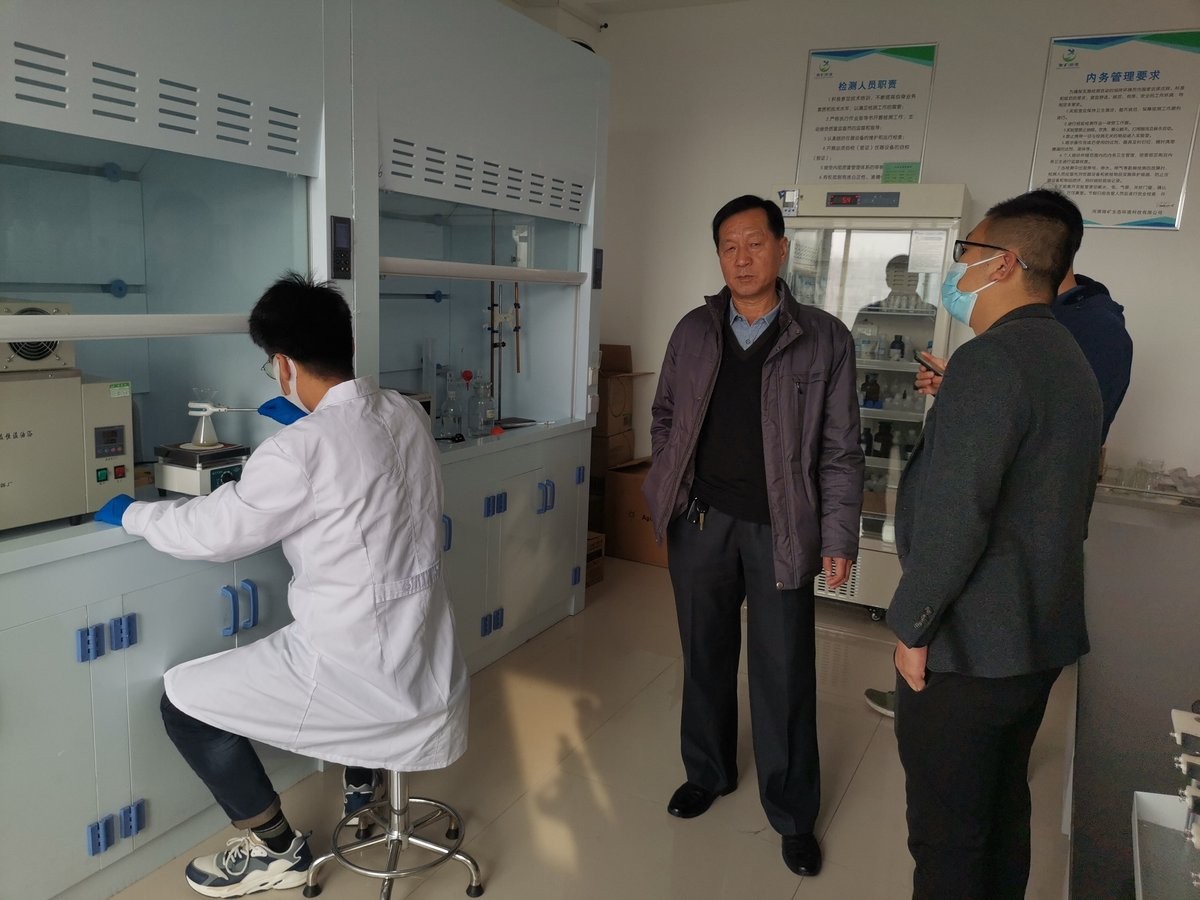
Module 2: Sample preparation and digestion workflow. Heavy metal analysis requires an additional step compared to nutrient analysis: acid digestion to convert metal species in the soil matrix into free ionic form in solution. Engineer Kan demonstrated the complete digestion protocol: weighing a representative soil subsample (typically 0.5–1.0 g), adding the appropriate acid mixture (the specific composition varies by target metal), heating on a hotplate or digestion block until the sample is fully digested (typically 30–60 minutes depending on the protocol), cooling, transferring to a volumetric flask, diluting to volume, and finally taking an aliquot for colourimetric analysis. This module was conducted at one of the laboratory's fume hoods, with trainees observing proper technique for handling hot digestion vessels, managing acid fumes, and safely transferring digested solutions.
Module 3: Instrument operation. Trainees learned the HM-ZSD workflow: loading cuvettes into rotating channels, adding metal-specific colour reagent, initiating measurement via touchscreen, and interpreting concentration values. Quality control procedures were emphasised: blank corrections before each batch, periodic calibration checks, recognising error indicators (cuvette contamination, reagent degradation), and documenting results digitally and in print. The built-in video tutorial module was demonstrated as a post-training refresher resource.
Module 4: Data management and troubleshooting. The final module covered WiFi/4G cloud upload, USB export, and Ethernet integration. Trainees practised generating printed reports via thermal printer and verifying QR code linkage. Troubleshooting addressed: incomplete digestion causing low recoveries, coloured extract interference (addressed by blank subtraction), and reagent storage. Photographs show groups of three to five staff gathered around the workbench in collaborative discussion.
| Component Category | Items Included (per unit) |
|---|---|
| Main Instrument Box | Host unit (with built-in thermal printer); pH meter (1 pc); Electronic balance (1 pc); Accessories case (1); Power cables (AC / DC); Manual & certificate (1 set) |
| Reagent / Consumables Box | Heavy metal detection reagent kit (1 set, covering As/Pb/Cr/Cd/Hg); Additional reagents for extended element panel (Fe/Zn/Mn/Cu/Al as needed); Laboratory consumables (flasks, pipettes, cuvettes, filter paper, centrifuge tubes) |
Results Reported
| Indicator | Before Deployment | After Deployment |
|---|---|---|
| Soil heavy metal sample turnaround | 7–14 days (provincial reference lab) | <2 hours per sample (on-site, 5-element panel including digestion) |
| Cost per sample (initial screen) | RMB 200–500 (full ICP-MS panel) | RMB ~20–40 (reagent consumables only) |
| Samples processed per year (capacity) | Limited by external lab budget allocation | 500–1500+ (throughput unconstrained by per-sample cost) |
| Field-deployable capability | None (samples must be transported to lab) | Yes (portable unit with battery power; on-site analysis possible) |
| Data traceability | Laboratory report PDF (external) | Integrated: print report + QR code + GPS tag + cloud upload |
Specifications Relevant to This Deployment
| Parameter | Specification |
|---|---|
| Power supply | AC 220±22 V / DC 12 V+5 V (built-in lithium battery; vehicle power compatible) |
| Power consumption | ≤5 W |
| Measurement range / resolution | 0.001–9999 |
| Repeatability error | ≤0.02% (0.0002, potassium dichromate solution) |
| Stability (drift) | <0.3% per hour transmittance; <0.001/h absorbance after warm-up |
| Linearity error | ≤0.1% (0.001, copper sulfate detection) |
| Sensitivity | Red ≥4.5×10⁻⁵; Blue ≥3.17×10⁻³; Green ≥2.35×10⁻³; Orange ≥2.13×10⁻³ |
| Wavelength range | Red: 680±2 nm; Blue: 420±2 nm; Green: 510±2 nm; Orange: 590±4 nm |
| Detection scope | As, Pb, Cr, Cd, Hg (priority panel); Ni, Al, F, Ti, Se, Fe, Zn, Mn, Cu (extended panel) |
| Detection speed | Pb+As+Cr+Cd+Hg five-element panel: ~60 min (including digestion); individual elements: ~30 min each |
| Channels | 12 rotating channels (simultaneous multi-sample processing) |
| Display resolution | 1024 × 600 pixels |
| Protection rating | IP65 |
| Data connectivity | WiFi, 4G, GPRS, USB, Ethernet; GPS geotagging; cloud platform synchronisation |
| Print output | Built-in thermal printer (no ribbon required): unit, operator, item, channel, absorbance, concentration (mg/kg), time, QR code |
| Dimensions / weight | 48 × 34.5 × 22 cm; net weight 5.2 kg |
Regulatory Context: China's Soil Pollution Prevention Framework
The deployment of rapid soil heavy metal screening at regional monitoring centres like Puyang must be understood within China's evolving soil pollution prevention framework:
The Soil Pollution Action Plan (May 2016, "Ten Articles on Soil") established overarching policy direction. It set targets: by 2020, stabilise the proportion of arable land exceeding national safe-use thresholds; by 2030, measurably decline that proportion. The Plan explicitly called for soil environment monitoring networks at national, provincial, municipal, and county levels — creating institutional mandates driving procurements like Puyang's three-unit HM-ZSD deployment.
The Soil Pollution Prevention and Control Law (adopted August 2017; effective January 2018) provided legal foundation. It established joint responsibility between polluters (cleanup costs) and government agencies (monitoring/enforcement). For monitoring centres, it created statutory duties for regular soil assessment, public data disclosure, and cross-jurisdictional cooperation. Rapid screening instruments directly support these duties through timely data collection and preliminary risk categorisation.
The Soil Environmental Quality Risk Control Standard for Agricultural Land (GB 15618-2018) replaced GB 15618-1995 with a risk-based framework setting different thresholds for different pH conditions and land uses. Soils are classified into three categories based on measured concentrations relative to risk screening values (RSVs) and risk intervention values (RIVs): Category I (below RSV, low risk), Category II (between RSV and RIV, requires investigation/limited use), Category III (above RIV, prohibited for agriculture). The HM-ZSD's mg/kg output enables real-time classification against these regulatory thresholds.
For international context, China's approach draws upon globally established methodologies. The colourimetric principles used by the HM-ZSD align with ISO-standardised techniques (e.g., ISO 17378 for arsenic via hydride generation AAS shares fundamental chemistry with the ZSD's borohydride reduction colourimetry). While the HM-ZSD is a screening tool rather than reference-method instrument, its grounding in standard chemistry lends regulatory credibility to results.
Heavy Metal Detection Methodology: From Digestion to Concentration
Understanding how the HM-ZSD produces readings clarifies both its capabilities and limitations versus reference-laboratory methods. The workflow has three stages:
Stage 1: Sample preparation. A representative soil sample is collected following a defined protocol (grid-based, random, or judgmental). The sample is air-dried, ground through a 100-mesh (0.149 mm) sieve, and thoroughly mixed. Accurate homogenisation is critical because heavy metal concentrations vary significantly over small spatial scales.
Stage 2: Acid digestion. A weighed subsample (0.5–1.0 g) is placed in a digestion vessel, acid mixture added, and heated on a hotplate until fully decomposed (clear solution, indicating complete oxidation of organic matter and dissolution of mineral-bound metals). After cooling, the digestate is diluted to fixed volume. This converts all metal forms — exchangeable, carbonate-bound, oxide-bound, organic-bound, and residual — into free ionic form for colourimetric detection.
Stage 3: Colourimetric detection. An aliquot is transferred to a cuvette, and a metal-specific reagent is added. The reagent forms a coloured complex whose absorbance (at a characteristic wavelength) is proportional to concentration per Lambert-Beer law. The HM-ZSD measures absorbance using its four-wavelength cold light source system (red 680±2 nm, blue 420±2 nm, green 510±2 nm, orange 590±4 nm) with silicon semiconductor reception, converting readings to mg/kg via internal calibration curves.
Important caveat: the HM-ZSD measures total recoverable metals after acid digestion — correlating well with but not identical to ICP-MS total content after more aggressive microwave digestion. For screening, this correlation is adequate: samples exceeding thresholds on the ZSD will almost certainly exceed them on confirmatory analysis. Borderline cases may need reference-method verification. This positions the HM-ZSD as a rapid-screening tool that dramatically increases economically screened samples while reserving reference-lab capacity for the subset truly needing it.
Related Instruments and Internal Links
Readers interested in the technical specifications of the HM-ZSD can refer to the HM-ZSD high-precision soil heavy metal detector product page [planned slug, product page pending]. For case studies involving soil nutrient analysis (as opposed to heavy metal contamination), see the HM-GT4 university laboratory deployment at Huainan Normal University and the HM-GT4 agricultural enterprise deployment at Xuechuan Agriculture Group in Gansu.
About HM Instruments
HM Instruments (Shandong Hengmei Electronic Technology Co., Ltd.) is a national high-technology enterprise and Shandong gazelle enterprise, recognised as a specialised "little giant" SME and listed on the New Fourth Board (equity code 306008). The company holds ISO 9001 quality management certification (No. 06524Q02062ROM), IP management system certification (472IP190206R0S), 3A credit enterprise status (HXZC201968486), after-sales service certification (78323SC0008R0S), occupational health and safety certification (06524S00854ROM), and environmental management certification (06524E00905ROM). Its radiation safety license (鲁环辐证[G0334]) and medical device operating license (鲁潍药监械经营备20260007号) underscore the breadth of its regulatory compliance portfolio.
With a research and development team of more than 100 engineers and around 150 core patents, HM Instruments designs and manufactures analytical instruments for soil, water, food, and environmental applications. The company operates 280 service centres across China, providing nationwide warranty coverage with a 24-hour response commitment. Warranty terms include 12-month whole-unit warranty, lifetime technical support, lifetime free training, and lifetime maintenance. Certificate metadata is notarised on the Zhixin (至信链) blockchain and verifiable at zxscan.qq.com.
Address of this article:https://www.kjhm.net/case/hm-zsd-soil-heavy-metal-detector-environmental-monitoring-puyang.html
 Related News
-
14 / 2024-09
How To Use Soil Rapid Detector To Optimize Farmland Fertilization Strategy.
Learn more
-
13 / 2026-05
Top Turbidity Meter Manufacturers & Brand Recommendations | HengMei SmartBuild In-Depth Analysis
Learn more
-
29 / 2024-10
Unleash the Power of Soil Respiration Analysis with HM-TH2.
Learn more
-
11 / 2024-05
Multi Parameter Water Quality Detector Ensures Water Quality Safety.
Learn more