

 Current
Location:
Current
Location:HM Instruments HM-L1S Grain Safety Detector: Integrated Quality Lab for Tongbai Rice Seed Farm
Article Source: Hengmei Technology Release time:2026-08-05 14:25:16
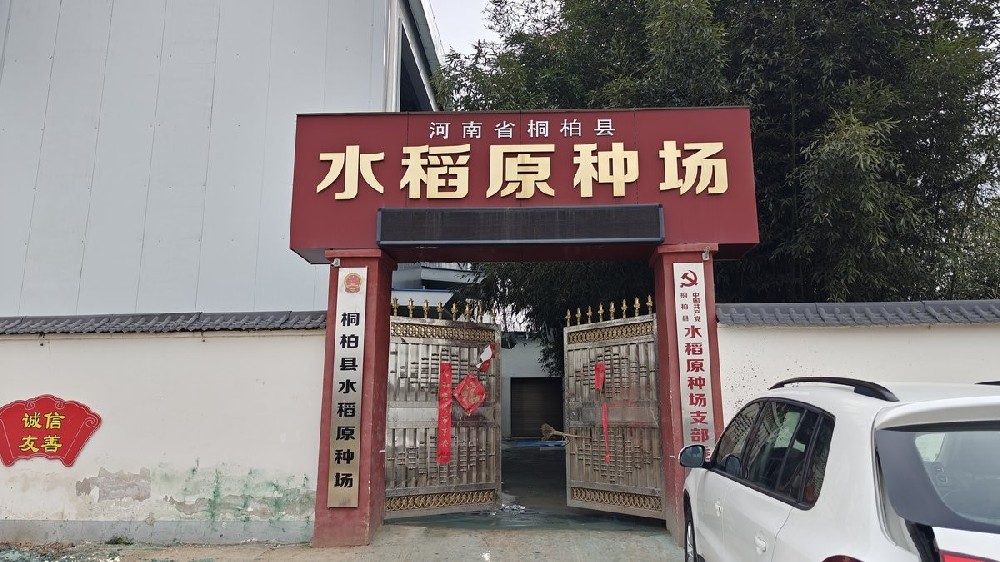
Tongbai County Rice Seed Farm, a seed-production and breeding operation in Henan Province, has built a compact but comprehensive quality-control laboratory to support every stage of its rice value chain. The facility now houses an HM Instruments HM-L1S grain safety detector alongside a Karl Fischer moisture titrator, a rice taste meter, a rice freshness meter, and a fungal toxin detector. Together, these instruments allow the farm to verify seed purity, monitor storage moisture, score eating quality, track freshness, and screen for mycotoxins before any batch leaves the farm gate.
Project Snapshot
| Item | Detail |
|---|---|
| Country | China |
| Region | Henan Province, Tongbai County |
| Customer type | Rice seed farm and breeding station |
| Lead model supplied | HM-L1S grain safety comprehensive detector [exact model to be confirmed] |
| Supporting instruments | Karl Fischer moisture titrator (HM-WS2), rice taste meter (HM-M100), rice freshness meter (HM-GW), fungal toxin detector (HM-LZ1) |
| Configuration | Host unit, 8-channel incubator, power/data cables, initial reagent cards, carrying case, manuals |
| Training model | On-site installation and multi-instrument training for farm QC staff |
| Interface language | Chinese touchscreen interface with English-compatible reporting |
| Deployment focus | Seed-to-grain quality and safety screening |
Why the Customer Bought
A seed farm operates under stricter quality expectations than a simple grain-trading depot. Its customers—farmers who plant the seed—expect high germination rates, varietal purity, and freedom from contaminants. The farm's own stored paddy must also meet food-safety limits when sold. Before the HM Instruments suite arrived, the farm sent most safety and quality tests to external laboratories. This created three problems:
- Turnaround time was too long for harvest decisions. Waiting several days for moisture or toxin results meant grain might sit in suboptimal conditions while results were pending.
- Seed-lot traceability was fragmented. External reports were not always keyed to the farm's internal lot numbers.
- Research breeding lines could not be screened quickly. Breeders needed rapid feedback on grain composition and eating quality during selection cycles.
The farm therefore invested in an in-house laboratory that could run the most important tests on site, with results available in minutes to hours rather than days.
Why the HM-L1S Was Selected as the Lead Instrument
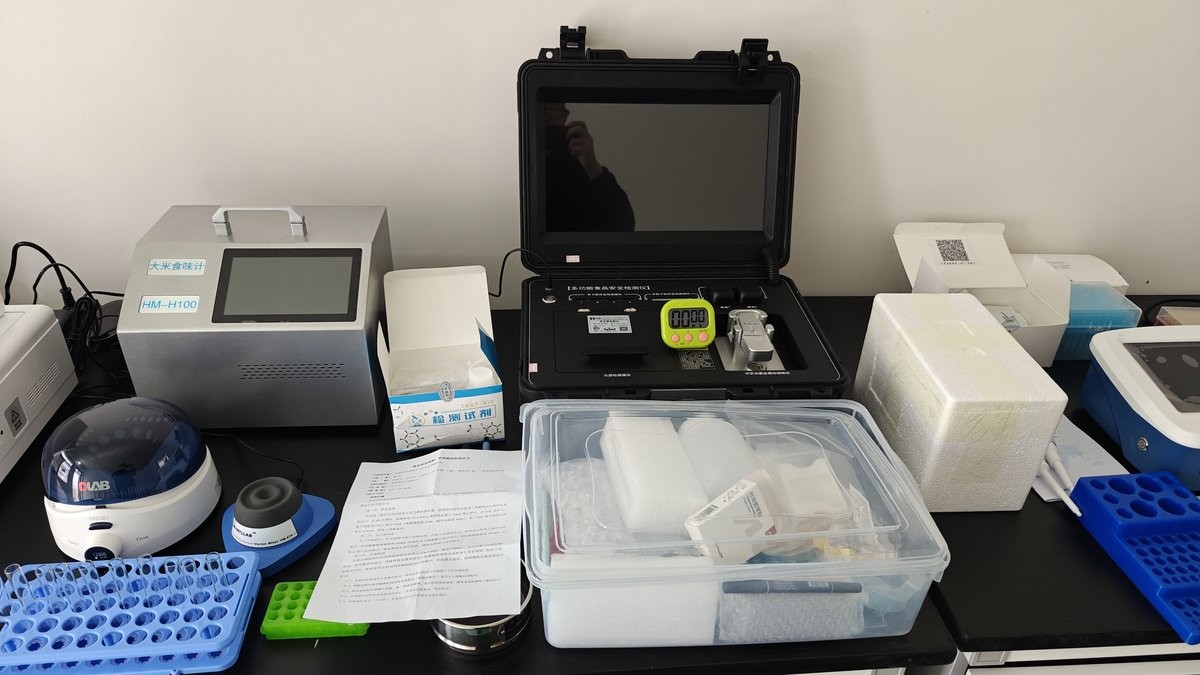
The farm needed a flexible platform that could handle multiple safety hazards without requiring a separate device for each analyte. Several configurations were discussed, including single-parameter test kits and high-performance liquid chromatography (HPLC) setups. Test kits were inexpensive but produced only qualitative or semi-quantitative results. HPLC would have delivered reference-level accuracy but required dedicated laboratory infrastructure and skilled chemists. The HM-L1S occupied a practical middle ground.
- Multi-analyte fluorescence-detection platform. The HM-L1S can screen for fungal toxins, heavy metals, pesticide residues, and antibiotic residues using different reagent cards, covering the main safety risks in grain and seed.
- Quantitative standard curves built in. The instrument contains pre-loaded calibration curves, so technicians do not need to handle pure toxin standards.
- Eight-channel incubator. Multiple samples can be incubated in parallel, supporting moderate throughput during harvest peaks.
- Portable design. The analyzer, incubator, and accessories pack into a wheeled case, allowing the farm to move testing closer to storage or receiving areas.
- Connected reporting. WiFi, Bluetooth, USB, and barcode/IC-card options support integration with the farm's record-keeping system.
Deployment / Installation / Training
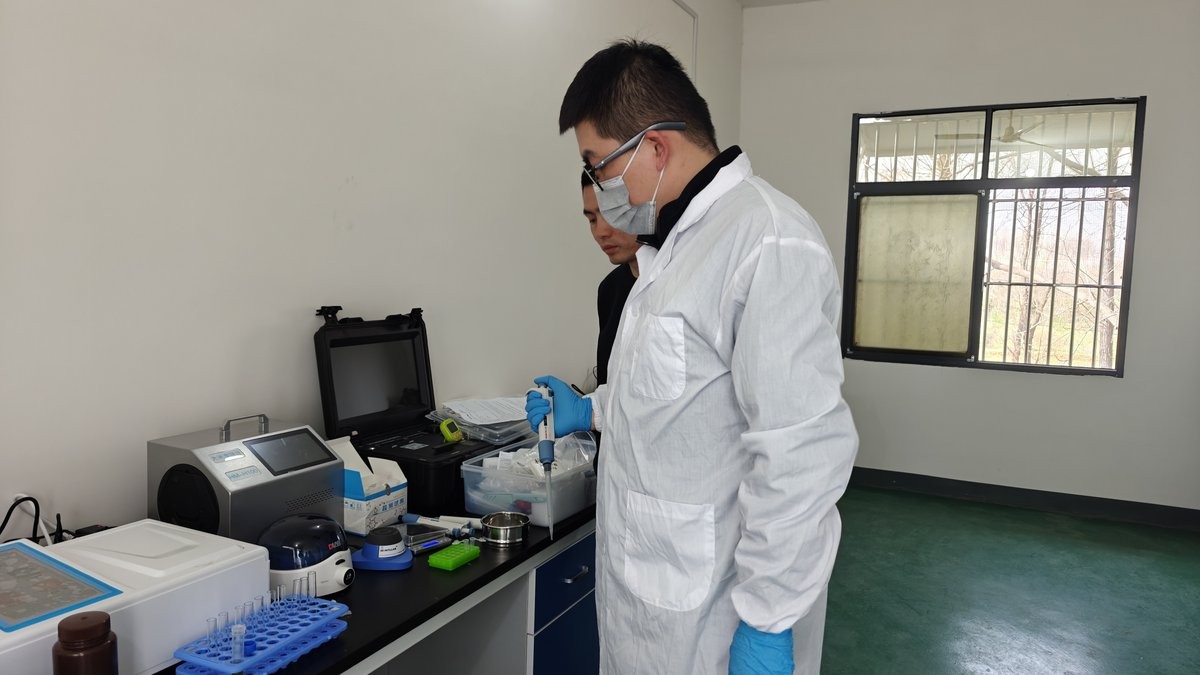
The instruments were installed in a dedicated room within the farm's administrative building. HM Instruments engineers positioned the Karl Fischer titrator on a stable bench away from vibration, connected the HM-L1S to the local WiFi network, and verified that each reagent card lot was recognized by the reader. Training was organized around the farm's workflow: morning sessions covered sample preparation, afternoon sessions covered instrument operation and data interpretation.
Because the laboratory handles several instrument types, the engineers provided a workflow map showing when to use each device. Moisture is measured first because it determines whether a lot is safe to store. If moisture is acceptable, freshness and taste are evaluated for commercial lots. Safety screening with the HM-L1S is performed on every incoming seed or grain batch before it is released or blended. This sequence prevents unnecessary testing on lots that must first be dried.
HM-L1S Configuration Delivered
| Item | Qty |
|---|---|
| HM-L1S host unit | 1 |
| 8-channel constant-temperature incubator | 1 |
| Power adapter and data cables | 1 set |
| Reagent cards (initial batch) | As required |
| Wheeled instrument case | 1 |
| User manual and certificate | 1 set |
Results Reported / What Changed
| Indicator | Before | After |
|---|---|---|
| Safety screening turnaround | External lab: several days | On-site: approximately 12 minutes per test |
| Moisture determination | Oven method: hours | Karl Fischer titration: about 60 seconds |
| Eating-quality assessment | Occasional sensory panel | Routine instrumental taste score in 90 seconds |
| Lot traceability | External reports with mismatched IDs | Internal lot numbers entered at instrument |
| Breeding-line feedback | Delayed until external results returned | Same-day protein, moisture, and amylose data |
| Documentation | Paper forms and scattered PDFs | Electronic records with optional A4 printout |
Specifications Relevant to This Deployment
| Parameter | Specification |
|---|---|
| Detection principle | Fluorescence quantitative rapid detection |
| Screen | 10.1-inch HD colour touchscreen, 1280 × 800 resolution |
| Operating system | Android smart OS |
| Memory | 1 GB RAM + 8 GB storage |
| Incubator | 8-channel independent temperature control, automatic timing |
| Data interfaces | WiFi, Bluetooth, USB, RF card reader, barcode scanner |
| Storage capacity | More than 100,000 records |
| Repeatability | Coefficient of variation CV ≤ 3 % |
| Accuracy | Error ≤ 5 % |
| Printer | Built-in thermal printer (57 × 30 mm paper) |
| Power supply | AC adapter |
Building a Seed-to-Ship Quality Protocol
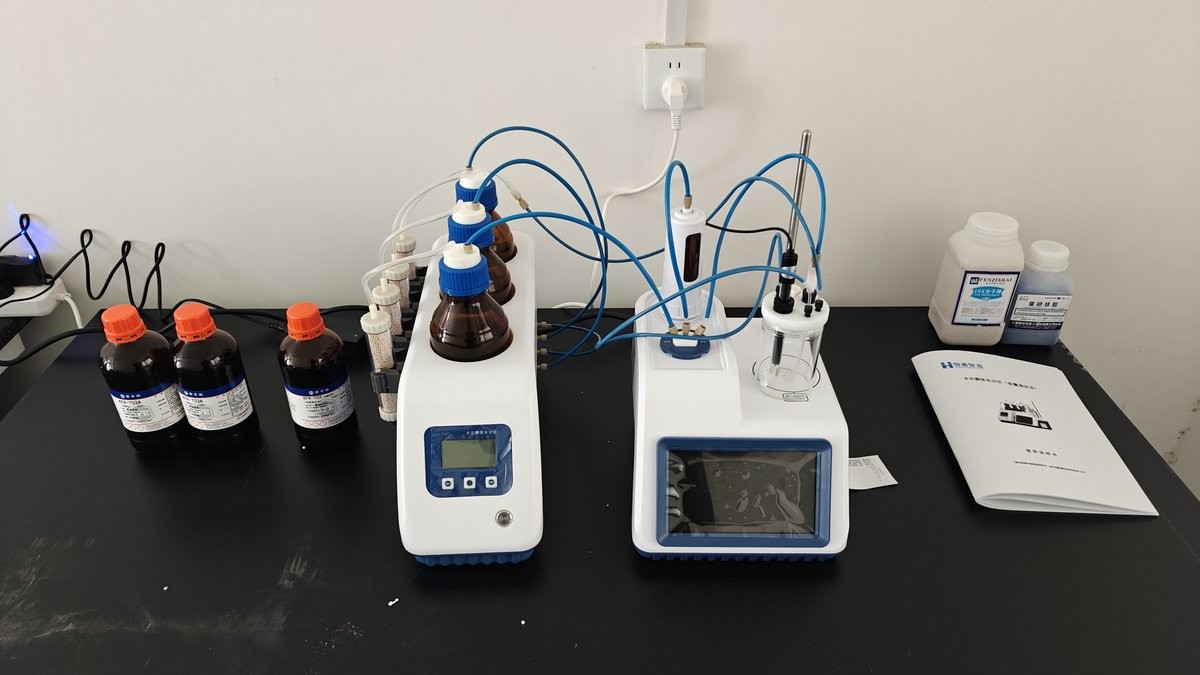
The farm's quality protocol now begins as soon as a seed or grain lot arrives at the gate. A composite sample is divided into sub-samples for moisture, taste, freshness, and safety testing. Moisture is measured first; if it exceeds the safe-storage threshold, the lot is routed to drying before further testing. Once moisture is acceptable, the HM-L1S screens for aflatoxin B1, zearalenone, deoxynivalenol, and fumonisin using the appropriate reagent cards. Any positive or borderline result is flagged for confirmation, while negative lots proceed to taste and freshness scoring.
This tiered approach conserves resources and reduces the risk of human exposure to mycotoxins. Because the HM-L1S uses built-in standard curves, technicians do not handle neat toxin standards. The reagent cards are single-use and produce a small amount of solid waste that can be disposed of through the farm's standard laboratory-waste stream.
Supporting Research and Breeding Selection
Beyond commercial quality control, the laboratory supports the farm's breeding program. New lines are evaluated for moisture, protein, amylose, and taste value using the rice taste meter, which provides objective scores that correlate with sensory panels. Breeders can compare dozens of lines in a single day and identify candidates with superior eating quality before advancing them to larger yield trials. The near-infrared measurement principle of the taste meter also gives students and trainees an introduction to chemometric modeling, linking spectral data to compositional predictions.
The Karl Fischer titrator plays a dual role. In addition to incoming-lot checks, it is used to validate the moisture readings from faster, indirect methods and to monitor the drying process. Accurate moisture data are essential because even small errors in storage moisture can lead to significant losses from spoilage or heating.
Operator Training and Laboratory Safety
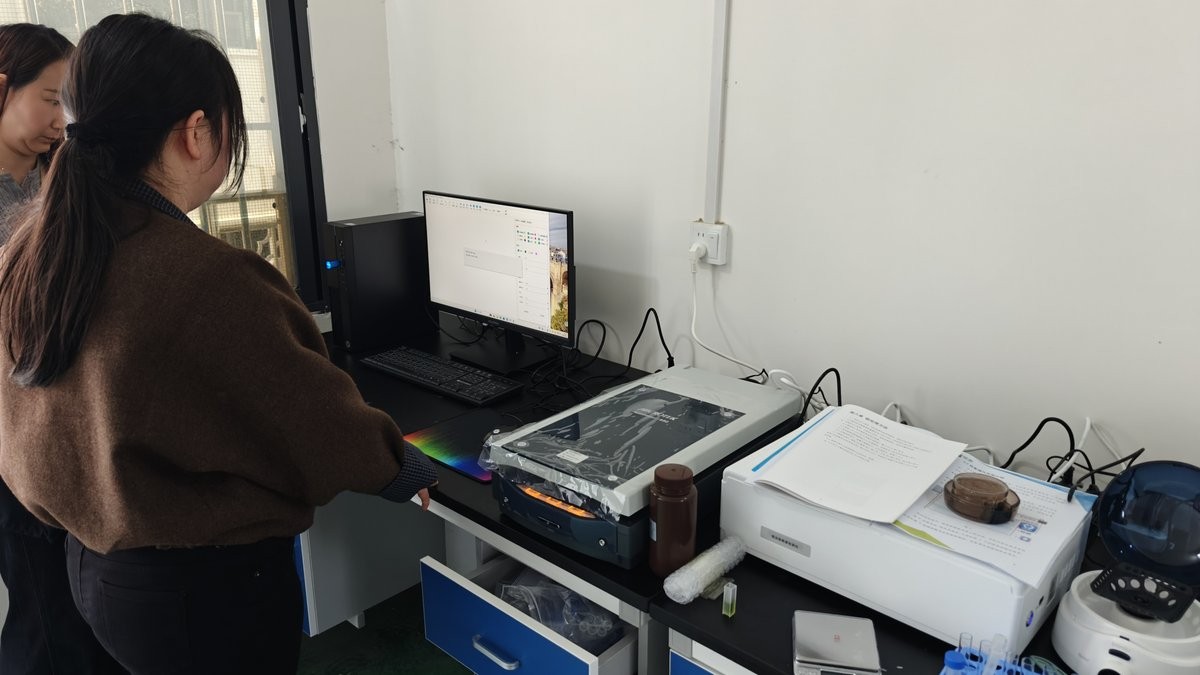
Because the laboratory handles multiple instruments and chemical reagents, training emphasized both operation and safety. Technicians learned to wear appropriate personal protective equipment when handling the Karl Fischer reagents and to dispose of used reagent cards according to the farm's waste-management plan. For the HM-L1S, training focused on correct card insertion, incubation timing, and reading interpretation. Each operator completed a competency check before being authorized to report results.
The farm has also established a maintenance calendar. The Karl Fischer titrator is checked daily for drift, the NIR-based taste meter is verified with reference samples weekly, and the HM-L1S is inspected for software updates and reagent expiry dates. This preventive approach keeps the laboratory ready during the busy harvest season and reduces the likelihood of instrument downtime when critical decisions must be made.
Compliance and Market Access
For a seed farm, compliance with national food-safety limits is not optional. The HM-L1S platform supports screening against the contaminant limits referenced in Chinese national food-safety standards, including GB 2761 for mycotoxins, GB 2762 for heavy metals, and GB 2763 for pesticide residues. While the instrument is a rapid screening tool rather than a confirmatory reference method, it provides the farm with an early warning system that reduces the chance of non-compliant grain entering commerce.
Seed certification also benefits from the new laboratory. Seed lots can now be accompanied by in-house test records covering moisture, germination-related quality indicators, and safety screening. These records strengthen the farm's position with seed-certification authorities and with farmer-customers who want assurance that the seed they purchase meets quality expectations.
Why an Integrated Suite Rather Than a Single Analyzer
A recurring question from other seed producers is whether a single multi-purpose instrument could replace the five devices installed at Tongbai. In practice, the parameters the farm needs to control belong to different measurement families and cannot be collapsed into one platform without significant compromise. Moisture at reference accuracy requires a titrimetric or gravimetric method. Eating quality requires near-infrared spectroscopy calibrated against sensory panels. Freshness requires a specific colorimetric reaction defined by the grain-industry standard. Mycotoxin and heavy-metal screening requires immunoassay chemistry with analyte-specific reagent cards.
Attempting to force all of these onto one device would either reduce accuracy or restrict the range of analytes. The farm therefore chose a suite in which each instrument does one job well, linked by a common sample-handling and record-keeping workflow. The shared elements—sample identification, lot numbering, and result archiving—provide the integration, while the measurement technologies remain specialised.
This architecture also improves resilience. If one instrument requires service, the remaining tests continue uninterrupted. For a seasonal operation where a week of downtime during harvest could affect an entire year's output, the ability to isolate a fault to a single measurement channel is a meaningful operational advantage.
Data Management and Long-Term Record Retention
Seed producers are expected to retain quality records for several seasons, both for regulatory purposes and to support any future investigation into field performance. The HM-L1S stores more than one hundred thousand records internally, but the farm does not rely on instrument memory alone. At the end of each working week, results are exported and consolidated into a central spreadsheet keyed by lot number, field of origin, harvest date, and storage location.
This consolidated record allows the farm to answer questions that no single measurement can address. For example, staff can examine whether lots from a particular field consistently show higher mycotoxin screening values, which might indicate a drainage or crop-rotation issue. They can also track whether moisture at intake correlates with freshness decline over the following months, informing decisions about drying targets.
Over time, this dataset becomes an asset in its own right. It supports evidence-based agronomic discussions with the farm's growers, provides documentation for seed-certification submissions, and gives management a factual basis for capital planning. The farm's quality manager describes the laboratory as having shifted the organisation from reacting to problems towards anticipating them.
Linking to HM Instruments Resources
The lead instrument in this deployment, the HM-L1S grain safety detector [planned slug, product page to be created], is part of a family of fluorescence-based grain-safety analyzers. Farms and mills that need higher channel counts may also consider the HM-L2S grain safety comprehensive detector [planned slug, product page to be created], which offers six independent detection channels in an integrated incubation-and-read design. For moisture measurement, the HM-WS2 Karl Fischer moisture titrator [planned slug, product page to be created] provides coulometric water determination across a wide measurement range.
HM Instruments is the international brand of Shandong Hengmei Electronic Technology Co., Ltd., a national high-technology enterprise, Shandong gazelle enterprise, and specialized "little giant" SME listed on the New Fourth Board (equity code 306008). The company holds ISO 9001 quality management certification (No. 06524Q02062ROM), an intellectual-property management system certificate (472IP190206R0S), 3A credit-enterprise certification (HXZC201968486), after-sales service certification (78323SC0008R0S), occupational health and safety certification (06524S00854ROM), and environmental management certification (06524E00905ROM). With a research team of more than one hundred engineers and around 150 core patents, HM Instruments supports its instruments through 280 service centres across China, offering a 12-month whole-unit warranty, lifetime technical support, lifetime free training, and lifetime maintenance. Certificate metadata is notarised on the Zhixin (至信链) blockchain and verifiable at zxscan.qq.com.
Questions Raised by Other Seed Producers
Is a rapid screening result sufficient for a compliance claim? No. The HM-L1S is a screening instrument. Positive or borderline results should be confirmed by an accredited laboratory using a reference method before any formal compliance determination is made.
Do operators need a chemistry background? Not for routine screening. The reagent cards contain pre-loaded quantitative curves and the instrument guides each step, so trained technicians without formal chemistry qualifications can operate the system reliably after a short competency programme.
How many samples can be processed in a working day? With an eight-channel incubator and a detection cycle of approximately twelve minutes, a single operator can complete several dozen screening tests per shift, which is sufficient for the farm's peak intake volume.
Address of this article:https://www.kjhm.net/case/hm-l1s-grain-safety-detector-case-tongbai-rice-seed-farm.html
 Related News
-
08 / 2026-06
HM Instruments Portable Water Quality Analyzer FAQ Technical Questions
Learn more
-
29 / 2024-10
Unleash the Power of Soil Respiration Analysis with HM-TH2.
Learn more
-
05 / 2024-12
Functional analysis of enzyme-substrate water quality detector.
Learn more
-
09 / 2024-12
Luminescent bacterial biotoxicity detector for water quality monitoring to provide scientific evidence.
Learn more