

 Current
Location:
HENG MEI Intelligent Manufacturing Selecting a Microwave Digestion System
Article Source: Hengmei Technology Release time:2026-11-13 13:34:31
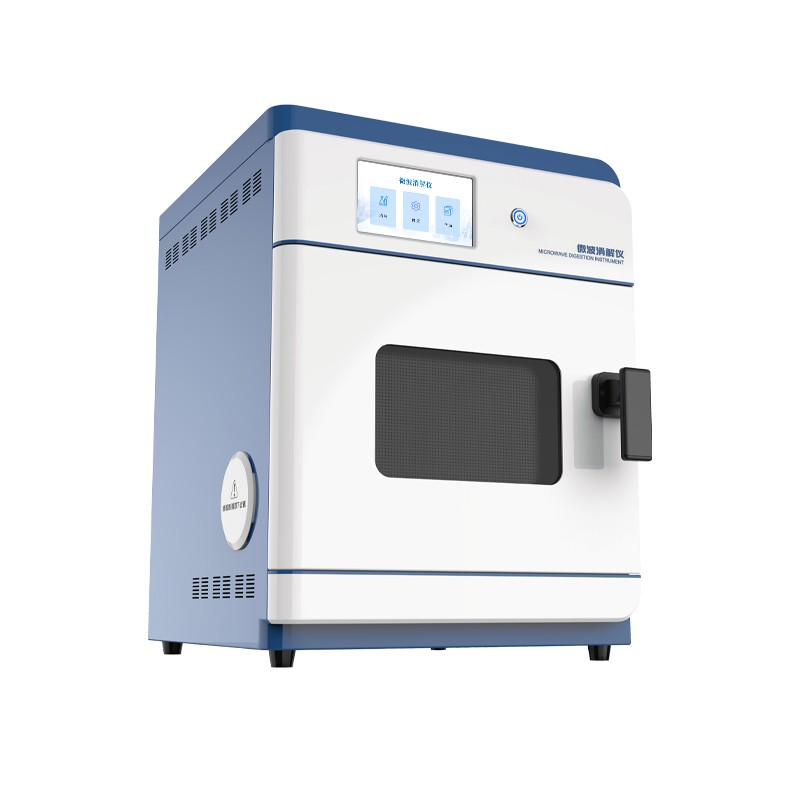
Select a microwave digestion system by the sample matrix, digestion chemistry, vessel configuration and monitoring requirements. HM-WB12 lists 12 standard digestion positions and 55 mL vessels. Build the complete method around the sample and downstream analysis.
HM-WB12 is part of the HENG MEI Intelligent Manufacturing range supplied by Shandong Hengmei Electronic Technology Co., Ltd.
How the measurement works
HM-WB12 uses controlled microwave heating for sample digestion in 12 standard positions with 55 mL vessels. Temperature and pressure monitoring support the programmed preparation sequence. The digest is subsequently measured by the analytical method selected for the target elements.
Select the digestion method before maximizing load
Define the sample matrix, analytes and downstream measurement. Match acid chemistry, allowable sample loading and vessel compatibility to that method. Include blanks, reference materials and duplicates in the batch. Plan ventilation, cooling, handling and the final digest transfer as part of the equipment installation and operator training.
Technical configuration
| Parameter | Specification |
|---|---|
| Standard batch capacity | 12 positions |
| vessel volume | 55 mL |
| Temperature monitoring | Non-contact infrared monitoring |
Convert digest concentration to sample content
If a 0.500 g sample is made to 50.0 mL after digestion and the digest contains 0.20 mg/L of an analyte, the corresponding sample content is 20 mg/kg before other method corrections. The calculation uses 0.20 × 0.050 ÷ 0.000500. Include reagent-blank treatment and any additional dilution required by the method.
Assess digestion through the complete analytical process
Review the temperature and pressure sequence, the prepared digest and the analytical controls. A clear-looking digest is only one observation within method evaluation. Recovery checks and suitable reference materials help assess preparation for the target elements and sample matrix. Use the vessel and method instructions for loading, cooling and opening.
Prepare a batch for downstream elemental analysis
Arrange the digestion batch around the sample matrices and the target analytical method. Identify blanks, reference material and duplicate positions before loading. Keep sample masses and final digest volumes on the batch worksheet, and connect each vessel to the later measurement container. After the prescribed cooling and opening sequence, handle transfers using the contamination controls required for the analytes. Review preparation performance through the downstream controls and recovery results. This preserves the connection between the original material, the digestion conditions and the concentration eventually reported by the analytical instrument.
Put the selected method into practice
- Select the validated digestion method and inspect the vessels and sealing components.
- Load samples, reagents and controls within the method limits.
- Run the specified heating program and retain the temperature and pressure records.
- Cool and open vessels according to the instructions, then prepare the digest for analysis.
Plan support for common operating issues
| Operating issue | Checks and follow-up |
|---|---|
| Digestion behavior differs between vessels | Review sample homogeneity, loading, reagent addition and vessel condition. |
| Blank contamination is high | Review acids, vessels, transfer containers and preparation environment. |
| Recoveries are inconsistent | Evaluate the preparation method and downstream measurement with suitable controls. |
Plan the complete working configuration
Define the sample matrices and downstream analytes before comparing vessel counts. Check allowable sample loading, acid compatibility, pressure monitoring, cooling and vessel handling. Include blanks and control materials in the usable batch count. Evaluate the installation requirements and ventilation arrangement using the equipment and method instructions.
Define the acceptance and reporting requirements
Agree on the following items when configuring HM-WB12. They connect the equipment and consumables to the intended measurement and provide a basis for operator training and result review.
- Sample mass and matrix
- Acids, vessel and method
- Temperature and pressure sequence
- Final volume, blanks and recovery checks
Questions from buyers and laboratory teams
Does digestion directly give the metal concentration?
The digest is measured by the appropriate downstream analytical method.
Are all vessel positions available for unknown samples?
Reserve capacity for blanks, reference materials, duplicates and other required controls.
For a HM-WB12 configuration enquiry, provide the sample type, required measurements, expected workload and reporting requirements. Include the consumables, preparation equipment and support arrangements needed at the installation site.
Address of this article:https://www.kjhm.net/news/selecting-a-microwave-digestion-system.html
 Related News
-
09 / 2026-11
Animal Disease Tester Brands Compared: IDEXX, Bio-Rad, HENG MEI
Learn more
-
13 / 2026-11
HENG MEI Intelligent Manufacturing Choosing an ATP Hygiene Luminometer
Learn more
-
13 / 2026-11
HENG MEI Intelligent Manufacturing Choosing a Milk Analyzer for Collection Stations
Learn more
-
24 / 2024-10
Transform Water Quality Monitoring with Our Advanced COD Ammonia Nitrogen Total Phosphorus Total Nitrogen Analyzer.
Learn more