

 Current
Location:
How to Choose a Suspended Solids and Turbidity Meter | HENG MEI Intelligent Manufacturing
Article Source: Hengmei Technology Release time:2026-11-27 14:14:38
Selecting a suspended solids and turbidity meter requires matching the optical measurement principle and concentration range of the instrument to the particulate load and regulatory standards of your water system. While turbidity and suspended solids (SS) both describe insoluble particulate matter in water, they are not identical measurements. Turbidity quantifies the optical scattering or attenuation caused by suspended particles, whereas suspended solids expresses particulate mass concentration in mg/L. Buying an instrument without checking whether your application needs routine colorimetric screening, dual-parameter field checks, or 860 nm nephelometric accuracy leads either to range saturation in wastewater or insufficient sensitivity in treated drinking water.
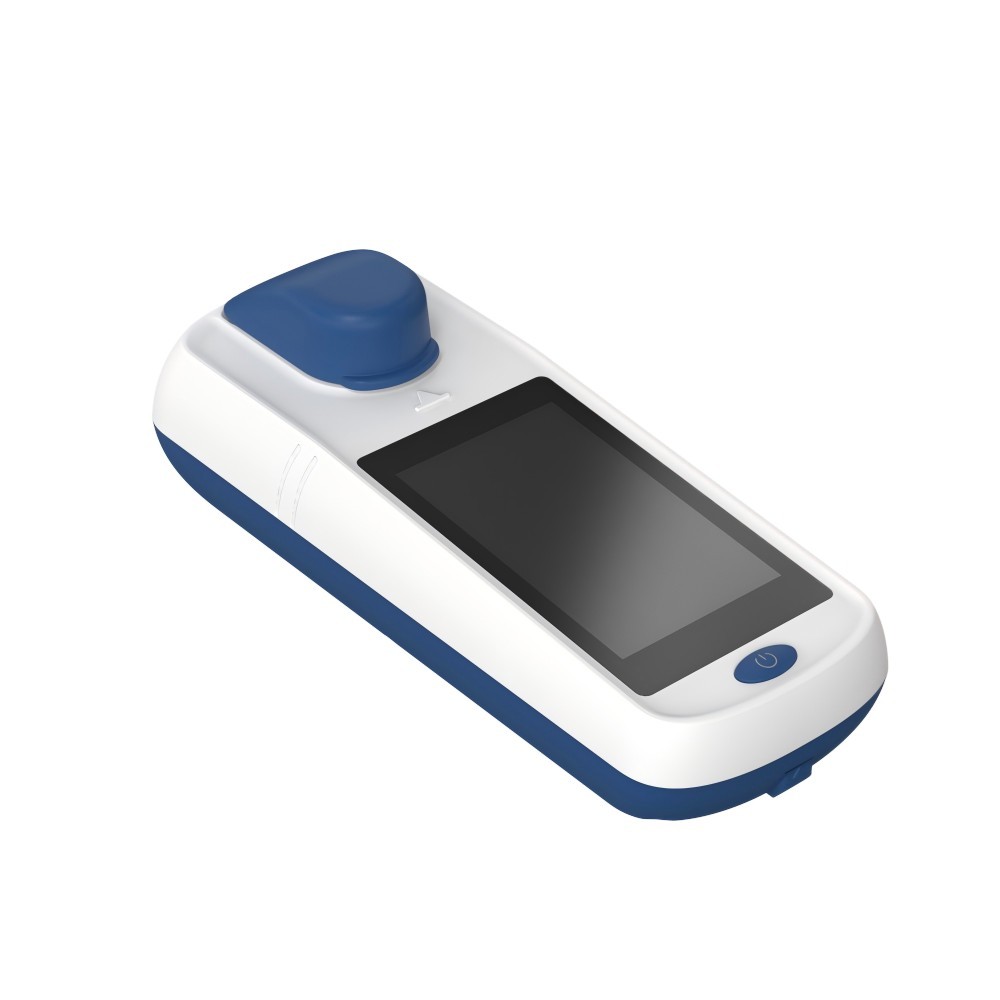
Portable analyzers from HENG MEI Intelligent Manufacturing cover three distinct configurations for suspended solids and turbidity monitoring: the single-parameter HM-SS suspended solids meter, the dual-parameter HM-SNT suspended solids and turbidity analyzer, and the high-precision HM-SXTS 860 nm scattering turbidity and suspended solids meter. Understanding how these three models differ in optical architecture, applicable standards, resolution, battery endurance, and included accessories allows environmental teams, plant operators, and procurement engineers to specify the right unit for their sampling routes.
Turbidity vs. Suspended Solids: Why Measurement Method Matters
Before comparing hardware models, buyers should clarify which optical method aligns with their water matrix and compliance framework. In portable field instrumentation, two primary optical approaches are used to quantify particulate matter:
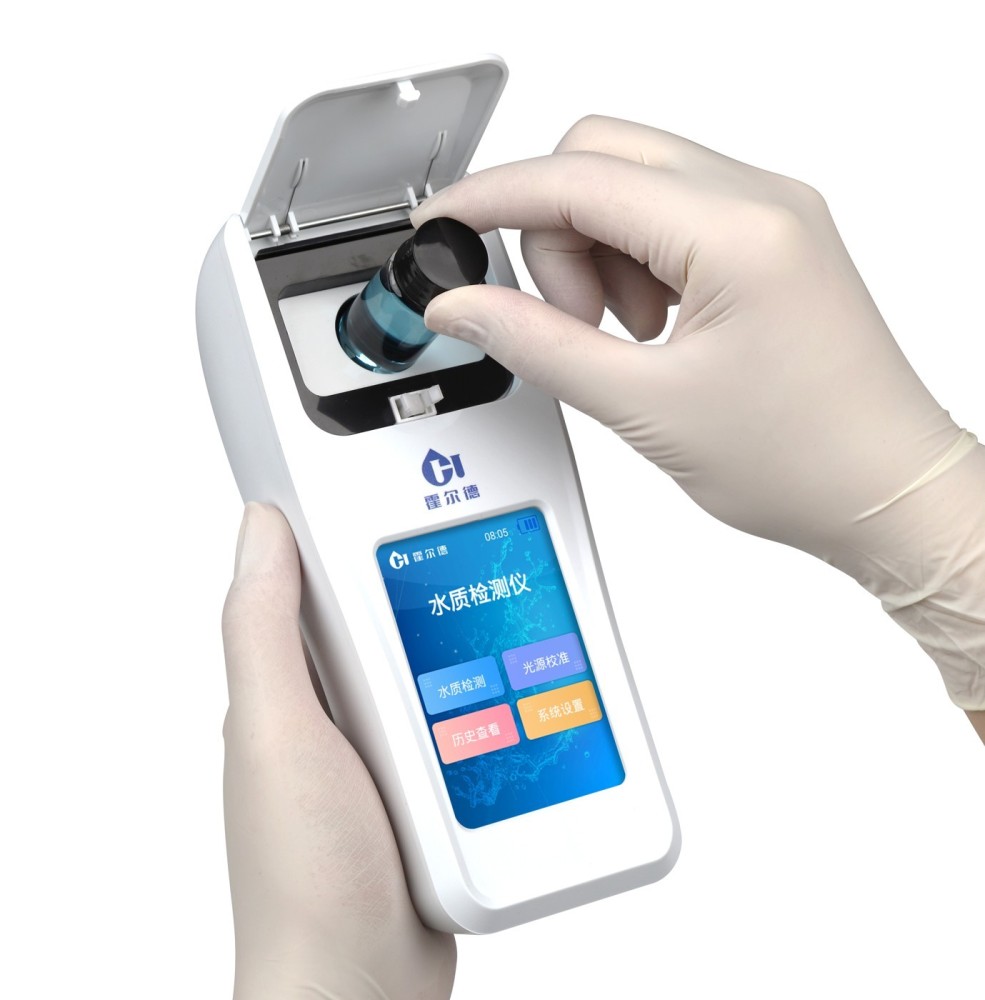
- Photoelectric Colorimetric / Turbidimetric Method (GB13200-91): Used in the HM-SS and HM-SNT, this method passes light from a cold light source through a 10 mL glass colorimetric vial (22 × 50 mm) and measures optical attenuation or scattering against built-in calibration curves. It provides fast, repeatable screening for routine plant checks, industrial process water, and general wastewater monitoring with a compact 325 g handheld body.
- 860 nm Nephelometric (90° Scattering) Method (HJ 1075-2019 / ISO 7027): Used in the HM-SXTS, this method directs an 860 nm LED beam through a 25 × 60 mm sample bottle and measures scattered light at a 90° angle using a 10 × 10 mm large-area photocell. Because 860 nm near-infrared light sits outside the absorption band of most dissolved natural colors, it effectively avoids color interference in humic river water, colored industrial effluent, and beverage or pharmaceutical process streams.
When water source characteristics and particle size distribution remain relatively stable at a given facility, the optical scattering signal exhibits a consistent linear empirical correlation with suspended solids mass concentration. The HM-SXTS leverages this relationship by allowing operators to set a custom conversion coefficient (for example, an initial factor of 1 NTU ≈ 1 mg/L) so the instrument displays both turbidity in NTU and converted suspended solids concentration in mg/L from a single measurement.
Comparing HM-SS, HM-SNT, and HM-SXTS Configurations
The three HENG MEI models address different budgets, accuracy tiers, and parameter scopes. The table below summarizes their verified specifications, applicable standards, and reference USD pricing from the product catalog.
| Parameter / Feature | HM-SS | HM-SNT | HM-SXTS |
|---|---|---|---|
| Primary Function | Suspended Solids (single parameter) | Turbidity + Suspended Solids (2-in-1) | High-Precision Turbidity + Suspended Solids (2-in-1) |
| Measurement Principle | Turbidimetric / photoelectric colorimetric | Turbidimetric / photoelectric colorimetric | 90° scattered light (860 nm LED) |
| Turbidity Range | Not included | 0.5–300 NTU | 0–2,000 NTU (auto range switching) |
| Suspended Solids Range | 1–600 mg/L | 1–600 mg/L | Corresponds to turbidity range (Turbidity × user factor) |
| Resolution | 0.001 absorbance sensitivity | 0.001 absorbance sensitivity | 0.001 NTU; (0.001 × factor) mg/L |
| Applicable Standards | GB13200-91 | GB13200-91 | HJ 1075-2019, ISO 7027, JJG 880-2006, GB 5749, CJ 3020, GB/T 14848 |
| Display & OS | Android OS, 3.5-inch color touchscreen | Android OS, 3.5-inch color touchscreen | Android OS, 4.3-inch HD touchscreen |
| Data Storage | > 80,000 records | > 80,000 records | 16 GB internal memory (> 10,000 records) |
| Battery & Power | 5600 mAh lithium, 5V/DC, 8 hours | 5600 mAh lithium, 5V/DC, 8 hours | 8000 mAh lithium, USB-C 5V/2.1A (BC2.1) |
| Ingress Protection | Standard handheld enclosure | Standard handheld enclosure | IP65; chamber resists 0.5 mL liquid ingress |
| Dimensions & Weight | 190 × 77 × 72 mm; 325 g | 190 × 77 × 72 mm; 325 g | 246 × 59.4 × 84 mm; 0.59 kg |
| Reference SKU Price (USD) | $320 | $350 | $880 |
For buyers evaluating the wider turbidity family alongside these three models, HENG MEI Intelligent Manufacturing also offers the entry-level HM-NTU (0.5–300 NTU transmitted method, $330 USD), the single-turbidity 860 nm scattering HM-SXT1 (0–2,000 NTU, $680 USD), the dual-mode scattering-plus-transmission HM-SXT2 (0–4,000 NTU, $830 USD), and the benchtop TUR-4000 (0–4,000 NTU, $1,100 USD). Selecting between HM-SS, HM-SNT, and HM-SXTS depends on four practical criteria.
1. Required Lower Detection Limit and Upper Range
If you monitor drinking water distribution networks, purified water plants, or membrane filtration effluent where turbidity frequently sits below 1 NTU, the HM-SXTS is the clear technical choice. Its 0.001 NTU resolution, 10 × 10 mm photocell, and 860 nm scattering geometry provide low-end sensitivity down to trace particulate levels, while its 0–2,000 NTU range handles raw river water and storm-event spikes without immediate dilution. By contrast, HM-SNT starts at 0.5 NTU and caps at 300 NTU, making it suitable for routine process checks and general wastewater effluent rather than ultra-low-turbidity drinking water compliance.
2. Sample Color and Optical Interference
Colored industrial wastewater—such as dyeing effluent, brewery wash water, or tannin-rich surface water—absorbs visible wavelengths and can bias conventional transmitted-light measurements. Because the HM-SXTS uses an 860 nm infrared LED light source per ISO 7027 and HJ 1075-2019, dissolved color does not interfere with the 90° scattered-light reading. Facilities dealing with clear or lightly colored samples can rely on HM-SS or HM-SNT, both of which deliver < 0.5% repeatability and < 0.5% optical stability using a 100,000-hour cold light source.
3. Field Environment and Ingress Protection
Field sampling along riverbanks, aeration basins, and open sedimentation tanks exposes instruments to rain, splashes, and accidental vial spills. The HM-SXTS features an IP65-rated housing and an internal sample chamber designed to withstand up to 0.5 mL of liquid ingress, paired with an 8000 mAh lithium battery and USB-C 5V/2.1A charging (compatible with standard phone chargers and power banks). Meanwhile, the HM-SS and HM-SNT prioritize ultra-lightweight portability at 325 g with a 5600 mAh battery providing up to 8 hours of continuous operation.
Detailed Platform Capabilities and Shared Strengths
Despite their differences in optical geometry, all three instruments share an Android-based smart operating system with bilingual English and Simplified Chinese interfaces. Operators do not need specialized laboratory training to run daily tests because step-by-step operating prompts are built directly into the touchscreen workflow.
Optical Stability and Repeatability
Consistent readings across shifts require stable illumination and precise detector electronics. Both HM-SS and HM-SNT achieve < 0.5% repeatability and < 0.5% optical stability with automatic wavelength selection and 0.001 absorbance sensitivity. The HM-SXTS uses a high-reliability imported LED at 860 nm that requires no warm-up time, delivering ±6% indication error, ≤ 0.5% repeatability, ±0.5% FS/30 min zero drift, and ±0.5% FS/30 min indication stability across a 5–40 °C operating window.
Unit Flexibility and High-Concentration Handling
Different industries report particulate clarity in different units. While HM-SNT reports turbidity in NTU and suspended solids in mg/L, the HM-SXTS defaults to NTU and lets operators switch freely among FAU, FNU, FTU, EBC (European Brewery Convention), ASBC (American Society of Brewing Chemists), and mg/L. For high-concentration samples on HM-SS and HM-SNT—such as mixed liquor or sludge-thickener overflow exceeding 600 mg/L—operators can enter a dilution factor directly on the touchscreen so the analyzer automatically computes the true sample concentration.
Data Connectivity and Cloud Integration
Paper logbooks slow down compliance audits and introduce transcription errors. HM-SS and HM-SNT store more than 80,000 test records internally and support Type-C, Wi-Fi, mobile hotspot, and Bluetooth transmission, enabling direct wireless upload to a cloud monitoring platform for short- and long-term trend analysis. The HM-SXTS includes 16 GB of internal memory (> 10,000 records), Wi-Fi, Bluetooth, and a USB port for direct PC batch upload, plus optional compatibility with a portable Bluetooth thermal printer for on-site ticket printing.
Standard Packing Lists and Optional Accessories
When comparing quotations, procurement teams should verify what arrives in the carrying case so field crews can calibrate and test immediately upon delivery. HM-SS and HM-SNT ship in a PVC carrying case (315 × 290 × 110 mm; packaged weight 2 kg) containing the main unit, 10 colorimetric vials with caps (10 mL, 22 × 50 mm), 2 lens-cleaning cloths, a 5V/2A charger, a Type-C cable, 2 operation manuals, and a certificate/warranty card.
The HM-SXTS ships with a more comprehensive calibration-ready field kit in its portable accessory case (315 × 290 × 110 mm):
- Main Instrument & Power: 1 HM-SXTS host, 1 charger (5V/2A, 10 W), and 1 Type-C 5A data cable (1 m).
- Sample Cells & Calibration Standards: 5 colorimetric bottles (25 × 60 mm with alignment cross) and 1 full set of turbidity standard solutions (7 bottles per set) for zero and multi-point calibration.
- Operator & Maintenance Accessories: 2 large nitrile gloves, 1 lens-cleaning cloth, 1 instruction manual, 1 certificate of conformity, and 1 warranty card.
- Optional Field Upgrades (HM-SXTS): Bluetooth thermal printer, thermal printing paper (φ 57 × 30 mm), and a 220V portable power station (500 W continuous output, 360 Wh capacity, with car charger) for extended off-grid campaigns.
Application Fit Across Key Industries
Matching the right model to your sector prevents both over-spending and field bottlenecks:
- Drinking Water & Municipal Supply: Choose HM-SXTS for raw-water intake, filter-backwash monitoring, and distribution-network inspections where GB 5749 and HJ 1075-2019 compliance and 0.001 NTU resolution are mandatory.
- Municipal & Industrial Wastewater Treatment: Choose HM-SNT for rapid inlet/outlet screening within 1–600 mg/L SS and 0.5–300 NTU, or HM-SXTS when effluent carries dissolved color or requires 0–2,000 NTU range coverage and custom SS correlation factors.
- Dedicated Suspended Solids Audits: Choose HM-SS when your facility already tracks turbidity online or only needs a lightweight, economical ($320 USD) portable SS meter for 1–600 mg/L spot checks.
- Beverage, Brewing & Pharmaceutical Water: Choose HM-SXTS for EBC and ASBC unit switching, 860 nm color-interference immunity, and IP65 washdown durability.
- Environmental & River Monitoring: Choose HM-SXTS for field ruggedness (IP65, 8000 mAh battery) and multi-standard traceability (HJ 1075-2019, ISO 7027, GB/T 14848), or HM-SNT for lightweight multi-site patrols.
Frequently Asked Questions
Can one instrument measure both turbidity and suspended solids accurately?
Yes. HM-SNT measures both turbidity (0.5–300 NTU) and suspended solids (1–600 mg/L) using built-in turbidimetric curves under GB13200-91. HM-SXTS measures turbidity via 860 nm 90° light scattering (0–2,000 NTU) and converts readings to suspended solids (mg/L) using a user-calibrated empirical conversion factor tailored to your specific water matrix.
Why does HM-SXTS use an 860 nm LED instead of a white-light lamp?
An 860 nm near-infrared LED conforms to ISO 7027 and HJ 1075-2019 requirements. Dissolved organic matter, iron, or industrial dyes absorb visible light and can cause false-high readings in white-light meters, whereas 860 nm light passes through dissolved color cleanly and requires zero warm-up time.
What calibration standards are included with HM-SXTS?
Each HM-SXTS ships with a 7-bottle turbidity standard solution set covering multi-point calibration and zero calibration, along with five 25 × 60 mm colorimetric bottles with alignment cross marks to keep optical positioning consistent.
How do I choose between HM-SNT ($350) and HM-SXTS ($880)?
Choose HM-SNT if your samples fall within 0.5–300 NTU and 1–600 mg/L SS, are relatively low in dissolved color, and you want a compact 325 g meter with cloud upload. Choose HM-SXTS if you need 0.001 NTU low-end resolution, 0–2,000 NTU wide range, ISO 7027 / HJ 1075-2019 compliance, IP65 waterproofing, or EBC/ASBC unit support.
What happens if my wastewater sample exceeds 600 mg/L on HM-SS or HM-SNT?
Dilute the sample with particle-free purified water by a known ratio and enter that dilution factor in the Android interface. The instrument automatically multiplies the measured result and displays the actual concentration.
Requesting a Quotation from HENG MEI Intelligent Manufacturing
Shandong Hengmei Electronic Technology Co., Ltd., operating under the brand HENG MEI Intelligent Manufacturing, manufactures the HM-SS, HM-SNT, and HM-SXTS analyzers with bilingual English/Simplified Chinese software and factory-calibrated optical systems. To receive a formal quotation or configuration recommendation, share your target measurement range (NTU and/or mg/L), sample type (drinking water, river water, municipal wastewater, or colored industrial effluent), preferred units, and required accessories such as a Bluetooth printer.
Contact: Grace, Sales Contact, graceliu@hmdzkj.cn, +86 17853698681 (Tel / WhatsApp / WeChat).
Address of this article:https://www.kjhm.net/news/how-to-choose-suspended-solids-turbidity-meter.html
 Related News
-
24 / 2026-06
HM Instruments Online NIR Moisture Analyzer: Multi-Industry Application White Paper | HM-ZHS
Learn more
-
11 / 2024-05
Multi Parameter Water Quality Detector Ensures Water Quality Safety.
Learn more
-
19 / 2024-12
Fully automatic Kjeldahl nitrogen analyzer: an accurate and efficient protein analysis tool.
Learn more
-
19 / 2026-11
Milk Somatic Cell Counters in Dairy Quality Management: An Industry Application White Paper | HENG MEI Intelligent Manufacturing
Learn more