

 Current
Location:
Current
Location:HM Instruments HM-GT5 Soil Nutrient Analyzer: Mozambique Multi-Unit Training Case
Article Source: Hengmei Technology Release time:2026-08-07 09:56:10
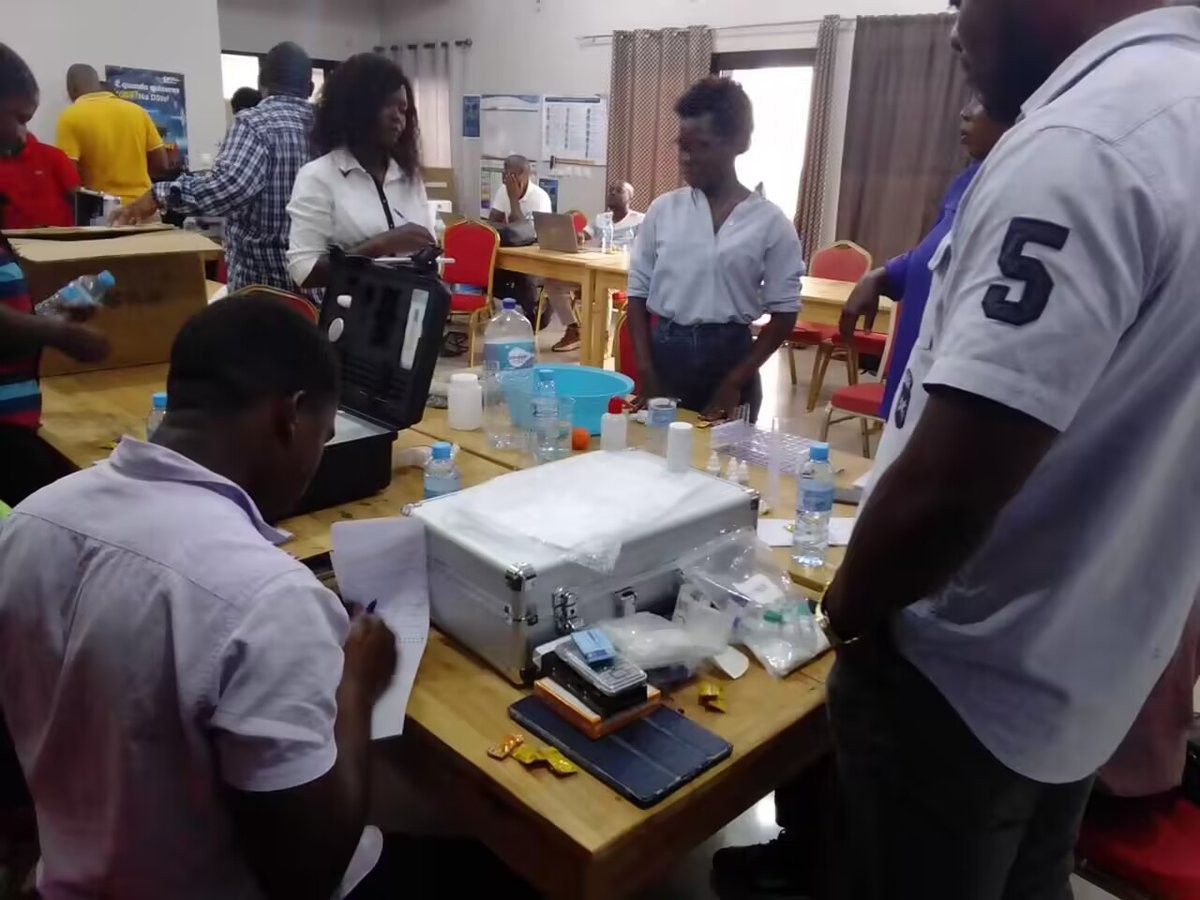
In 2024, a training room in Mozambique filled with technicians, agronomists and extension staff from across the country. They gathered around wooden tables where black and silver instrument cases had been opened to reveal portable soil analyzers, reagent bottles, plastic basins and notebooks. The session was an operator-training programme for a shipment of HM-GT5 soil nutrient analyzers supplied by HM Instruments. The photographs show participants handling cuvettes, practising sample preparation and discussing results — a cross-border deployment designed to leave sustainable soil-testing capability in the host country.
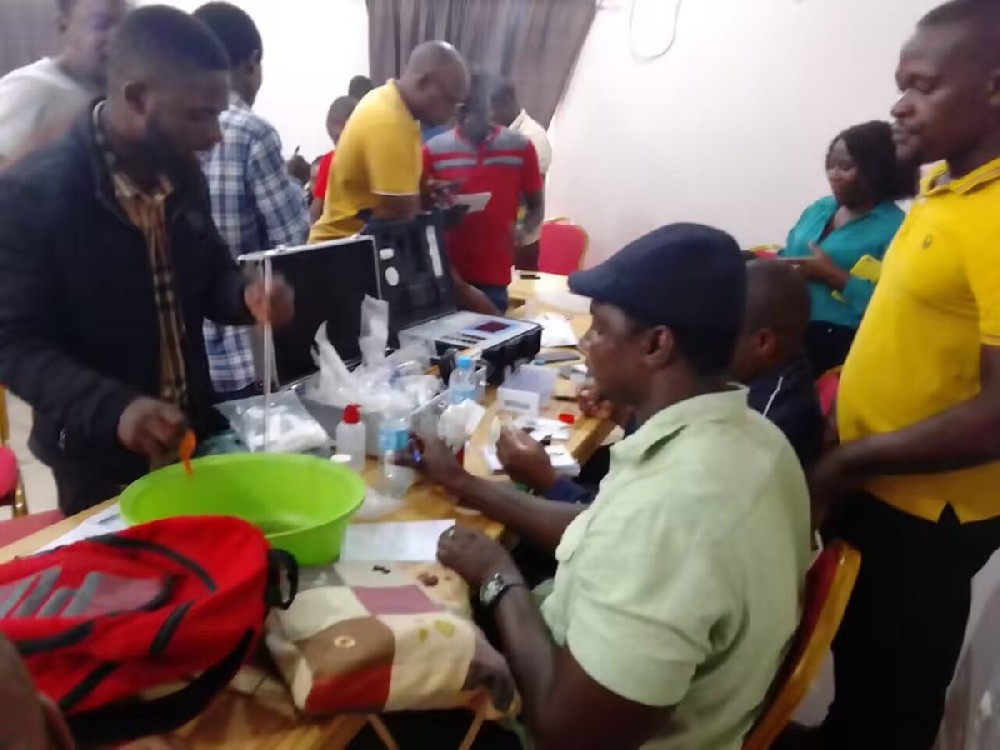
Mozambique's agricultural sector depends heavily on smallholder farming, where soil fertility varies widely and access to laboratory services is limited. For government agencies, NGOs and commercial farms, the ability to test soil on-site means that fertiliser recommendations can be grounded in local data rather than in generic regional prescriptions. The HM-GT5 units delivered to Mozambique were configured with an English-language interface and export-standard packaging, supporting immediate use by local operators after training.
Project Snapshot
| Item | Detail |
|---|---|
| Country | Mozambique |
| Customer type | Agricultural extension project / commercial farm consortium |
| Model supplied | HM-GT5 soil nutrient analyzer |
| Quantity | Multiple units |
| Application | On-site soil and fertiliser testing to support extension services and farm input planning |
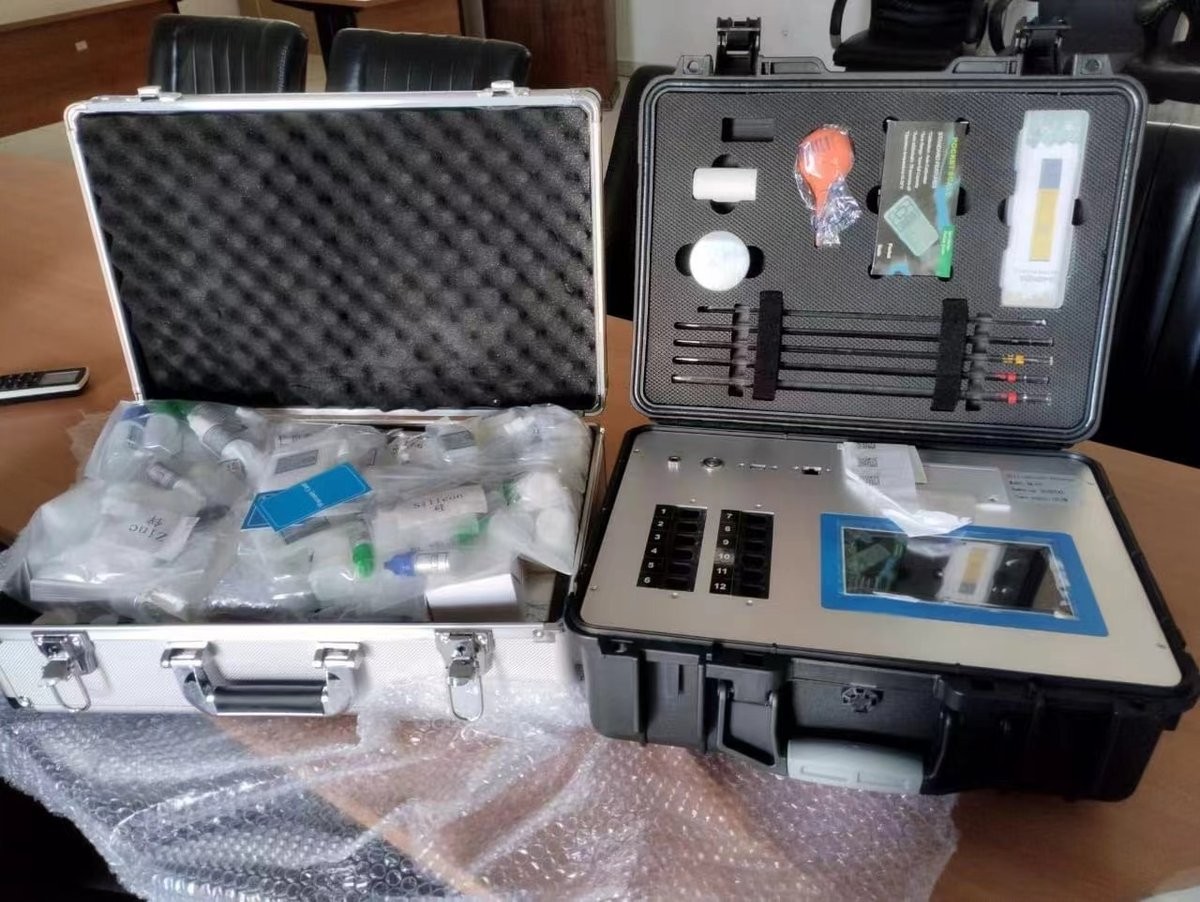
| Configuration | Main unit with 7-inch touchscreen, built-in printer, pH electrode, TDS meter, electronic balance, cuvettes, reagent sets and glassware |
| Training model | Group hands-on training covering hardware, reagent preparation, sample workflow and result interpretation |
| Interface language | English |
| Year of delivery | 2024 |
Why the Customer Bought: The Starting Point
Mozambique has extensive agricultural potential, but soil productivity is constrained by variable nutrient status, limited access to analytical services and the high cost of sending samples to distant laboratories. The customer — a project or commercial consortium supporting farm development — faced three constraints.
Laboratory access. Centralised soil laboratories are concentrated in major cities. For farms and extension stations in rural provinces, shipping samples, waiting for results and receiving recommendations can take weeks. By the time feedback arrives, the planting window has often closed.
Fertiliser optimisation. Imported fertiliser represents a significant cost for Mozambican farms. Applying the wrong blend wastes money and can damage soil health. Local soil testing allows managers to match fertiliser inputs to measured deficiencies rather than applying blanket rates.
Capacity building. A one-time soil survey provides a snapshot, but long-term improvement requires ongoing monitoring. The customer wanted not only equipment but also trained local operators who could continue testing after the initial project period ended.
Why the HM-GT5 Was Selected
The customer evaluated three alternatives: contracting a mobile laboratory service, buying simple single-parameter testers, or importing multi-channel portable analyzers. The HM-GT5 was selected for the following reasons.
English interface for export use. The HM-GT5 supports Chinese-English language switching, making it usable by operators who do not read Chinese. This removes a major barrier to technology transfer in international projects.
Eight-channel rotary colourimetric design. The precision rotary pool gives consistent illumination across eight samples in a single batch. This allows a small training group to process enough samples during a session to build real confidence.
Integrated multi-parameter coverage. The instrument measures available nitrogen, phosphorus and potassium, organic matter, pH, salt content and trace elements in soil, as well as NPK in fertilisers. This covers the parameters most relevant to African smallholder and commercial farming.
Field portability and dual power. The unit runs from AC mains, an internal lithium battery or a 12 V vehicle supply. Extension teams can take the analyzer to remote farms and demonstration plots without relying on grid electricity.
Cloud platform and traceable records. With Wi-Fi standard and optional 4G, results can be uploaded for long-term field records. Printed tickets include nutrient concentrations and QR codes, giving farmers and project managers physical documents they can file.
Deployment, Installation and Training
The units arrived in Mozambique and were unpacked in the training room. Each shipment was checked against the export configuration list: main analyzer, pH meter, TDS meter, electronic balance, cuvettes, glass pipettes, conical flasks, reagent bottles, soil NPK and organic-matter reagent sets, filter paper, test tubes and accessories. The training was structured as a hands-on workshop.
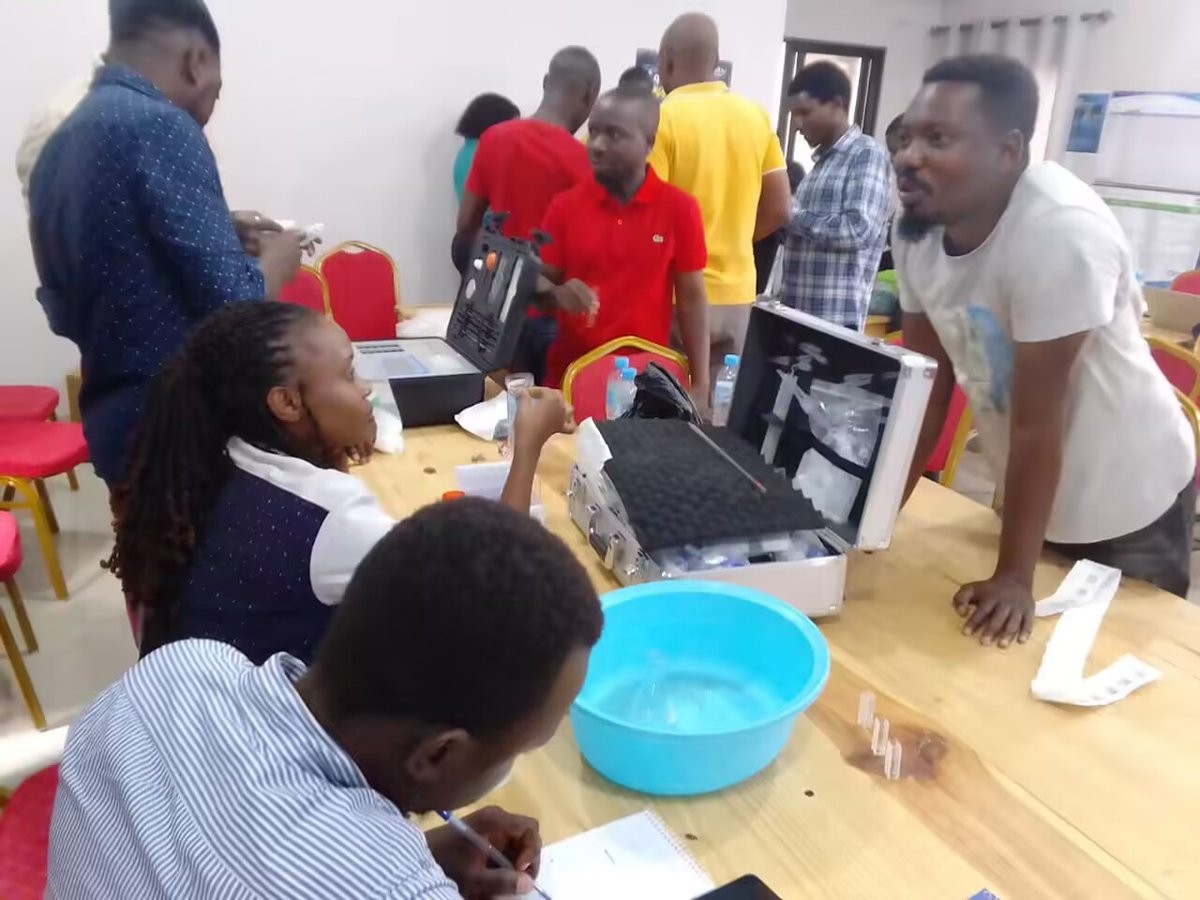
The morning sessions covered instrument start-up, touchscreen navigation in English, account setup and calibration. The instructor demonstrated how the rotary pool accepts standard 1 cm cuvettes and how the four-wavelength cold sources stabilise before each batch. The afternoon sessions moved to sample preparation: weighing soil, adding extraction solution, filtering, transferring the extract to cuvettes and loading the pool. Participants practised these steps in small groups, with each table operating its own instrument.
The final module covered result interpretation and the built-in crop expert fertilisation system. Operators selected crops and target yields, then reviewed the recommended fertiliser rates. Because all units share the same software version and reagent kit, participants could compare results across tables and learn from each other's measurements.
Delivered Configuration
| Item | Detail |
|---|---|
| Main unit | HM-GT5 soil nutrient analyzer with 7-inch true-colour touchscreen, built-in thermal printer and Android operating system |
| Processor | ARM Cortex-A7 RK3288 quad-core, 1.88 GHz |
| Power supply | AC 220 V ±22 V / DC 12 V +5 V; internal lithium battery; vehicle power compatible |
| Channels | 8 rotary colourimetric detection channels |
| pH electrode | 1 unit for soil pH measurement |
| TDS meter | 1 unit for soluble salt estimation |
| Electronic balance | 100 g / 0.01 g for soil sample weighing |
| Glassware | 100 mL conical flasks, 50 mL measuring cylinder, glass test tubes, plastic test tubes, reagent bottles, glass pipettes (1, 2, 5, 10 mL), wash bottle, test tube rack, test tube brush |
| Consumables | Soil NPK and organic-matter reagent sets, qualitative filter paper, cuvettes, plastic droppers, weighing spoon, aluminium box, ear wash ball, glass stirring rod |
| Documentation | Manual, qualification certificate, warranty card, print paper, power adapter |
Results Reported: What Changed
| Indicator | Before | After |
|---|---|---|
| Soil test turnaround | Weeks via distant laboratory | Same day at the farm or extension station |
| Number of locations served | Limited by laboratory capacity and transport | Multiple teams equipped for on-site testing |
| Fertiliser recommendation basis | Regional prescription or visual crop symptoms | Measured NPK, organic matter, pH and trace-element values |
| Local technical capacity | Dependent on external specialists | Trained local operators able to run routine tests |
| Data record format | Paper notes and third-party reports | Printed on-site ticket plus cloud upload with timestamp |
| Language barrier | Equipment manuals only in Chinese | English interface and training materials |
Specifications Relevant to This Deployment
| Parameter | Specification |
|---|---|
| Power supply | AC 220 ±22 V / DC 12 V +5 V (built-in lithium battery or vehicle power) |
| Power consumption | ≤5 W |
| Detection channels | 8 rotary colourimetric channels |
| Range and resolution | 0.001–9999 |
| Repeatability error | ≤0.02% (0.0002, potassium dichromate solution) |
| Stability | No drift within 1 h; ≤0.3% within 2 h (transmittance), 0.001 (absorbance) |
| Linear error | ≤0.1% (0.001, copper sulfate) |
| Wavelengths | Red 680 ±2 nm; blue 420 ±2 nm; green 510 ±2 nm; orange 590 ±4 nm |
| pH range / accuracy | 1–14 / 0.01; error ±0.1 |
| Salt content range / error | 0.01%–1.00% / ±5% |
| Soil moisture range / error | 0–100% / <0.5% |
| Test speed | Single soil sample (NPK) ≈20 min; 3 samples ≤40 min; 8 samples ≤1 h |
| Protection | IP65 |
| Dimensions / weight | 480 × 345 × 220 mm / 5.2 kg (host) |
Cross-Border Training Methodology for Soil Analyzers
Training is the critical success factor in any exported soil-analyzer deployment. Equipment that sits unused in a storeroom helps no one. The Mozambique programme followed a structured methodology designed to leave behind capable operators rather than dependent users.
Learn by doing. Each participant spent most of the training time at a bench with an open instrument, reagents and soil samples. Lectures were kept short; the emphasis was on repeated cycles of weighing, extracting, filtering, loading cuvettes and reading results. This approach builds muscle memory and confidence.
Group problem solving. Participants worked in small teams, comparing their results and troubleshooting together. When one group obtained an unexpected value, the instructor used it as a teaching moment about calibration, reagent handling or sample contamination. This collaborative style is particularly effective in extension contexts where trained operators will later support each other in the field.
Local reference materials. The training included collection of a few local soil samples so that participants could see how the instrument performs on the soils they will actually test. This makes the technology feel relevant from the first day and provides a baseline for comparing future results.
Train-the-trainer follow-up. Rather than treating the initial workshop as a one-time event, the programme identified lead operators who could later coach colleagues. These leads received additional practice time on calibration troubleshooting, reagent replacement and basic maintenance. When the training team departed, the lead operators remained as the first line of support for their own organisations, increasing the likelihood that the instruments would stay in active use.
Adapting Soil Testing Protocols to Tropical African Soils
Soils in Mozambique range from sandy coastal soils to heavier clayey inland soils, and the appropriate fertiliser strategy depends on the specific soil type. The HM-GT5 measures the same chemical parameters regardless of soil texture, but interpretation requires local knowledge.
For example, sandy soils common in parts of Mozambique have low cation-exchange capacity, meaning that nutrients such as potassium and magnesium leach more easily than in heavier soils. A soil test showing low potassium in a sandy soil may justify split application of fertiliser rather than a single heavy dose. Clayey soils, by contrast, may fix phosphorus, so the available-phosphorus reading takes on added importance.
The training therefore covered not only instrument operation but also the agronomic interpretation of results. This aligns with the FAO World Soil Charter principle that soil information should support sustainable land management. By connecting laboratory-style measurements to local soil behaviour, the programme helped ensure that data would lead to better decisions rather than simply more data.
Building Sustainable Technical Support for Exported Equipment
International deployments face a common challenge: after the initial trainer leaves, who maintains the equipment and answers operator questions? HM Instruments addresses this through several mechanisms.
Documentation in English. The HM-GT5 supports an English-language interface, and the supplied manual can be used by operators who do not read Chinese. This reduces the dependency on bilingual supervisors.
Standardised reagent kits. All units in the shipment use the same reagent chemistry and the same consumables. This simplifies reagent ordering and reduces the risk of a unit being sidelined because a specialised part cannot be sourced.
Remote support infrastructure. With Wi-Fi standard and optional 4G, the instruments can upload diagnostic information and results. HM Instruments' cloud platform allows remote review of instrument status, which can reduce the need for on-site troubleshooting visits.
Warranty and training commitment. HM Instruments provides a 12-month whole-unit warranty, lifetime technical support, lifetime free training and lifetime maintenance. For an international customer, this long-term commitment is important because local technicians need confidence that spare parts and technical guidance will remain available.
Related Reading
Technical specifications for the HM-GT5 soil and fertiliser nutrient analyzer are summarised on the product page for the New Type Soil Detector. Laboratories that need a higher-channel research-grade unit may also review the New Type Soil Detector. A complementary domestic deployment is described in the Hebei Anxin County Agriculture Bureau case.
About HM Instruments
HM Instruments is the international brand of Shandong Hengmei Electronic Technology Co., Ltd., a national high-technology enterprise, a Shandong gazelle enterprise and a specialised "little giant" SME listed on the New Fourth Board under equity code 306008. The company holds ISO 9001 quality management certification (No. 06524Q02062ROM), an intellectual property management system certification (472IP190206R0S), occupational health and safety certification (06524S00854ROM), environmental management certification (06524E00905ROM), an after-sales service certification (78323SC0008R0S) and a radiation safety licence (鲁环辐证[G0334]). Certificate metadata is notarised on the Zhixin (至信链) blockchain and can be verified at zxscan.qq.com.
Development is carried out by a research team of more than one hundred engineers, and the company holds around 150 core patents, including the rotary colourimetric pool design (patent ZL 2018 2 1777724.7) and the high-precision filter-spectrophotometry method (patent ZL 2020 2 1763837.9) used in the HM-GT5. Field support is delivered through 280 service centres across China with a 24-hour response commitment. Every instrument carries a 12-month whole-unit warranty, lifetime technical support, lifetime free training and lifetime maintenance. For the Mozambique deployment, the English-language interface and export-standard packaging reflect HM Instruments' experience in supporting international customers.
Address of this article:https://www.kjhm.net/case/hm-gt5-soil-nutrient-analyzer-case-mozambique.html
 Related News
-
16 / 2025-09
Total Phosphorus Analyzer: Essential for Water Quality and Environmental Monitoring
Learn more
-
08 / 2026-06
Reliable Doppler Flow Velocity Meter Brand Recommendation - HM Instruments
Learn more
-
21 / 2024-11
Multifunctional pesticide residue detectors can adapt to diverse detection needs.
Learn more
-
08 / 2026-06
HM Instruments Portable Water Quality Analyzer Brand Recommendation
Learn more