
 Current
Location:
Current
Location:
 +86 17853698681
 WhatsApp
 Product Details


1. Overview
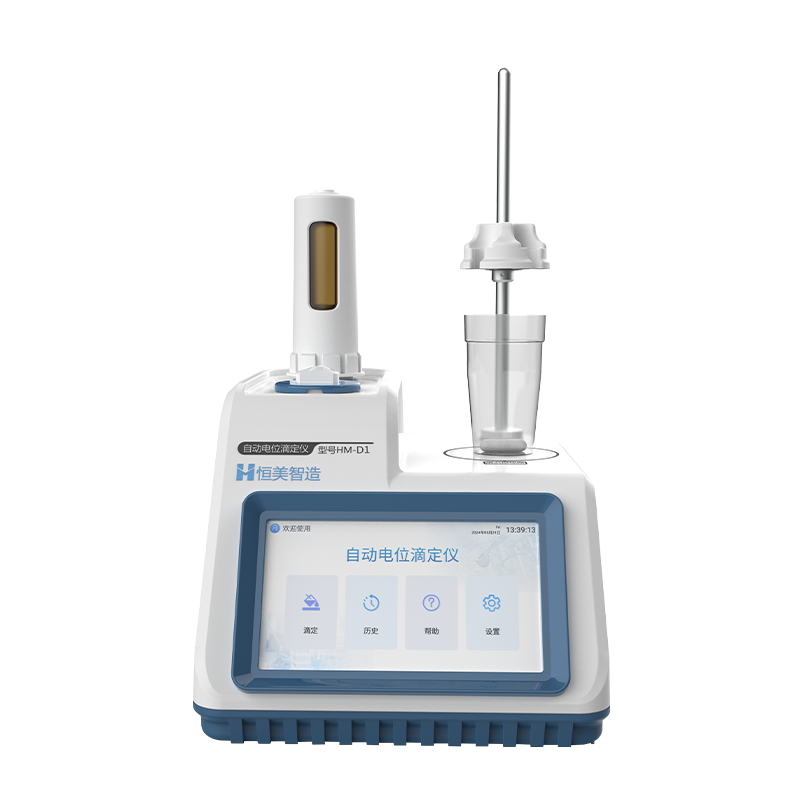
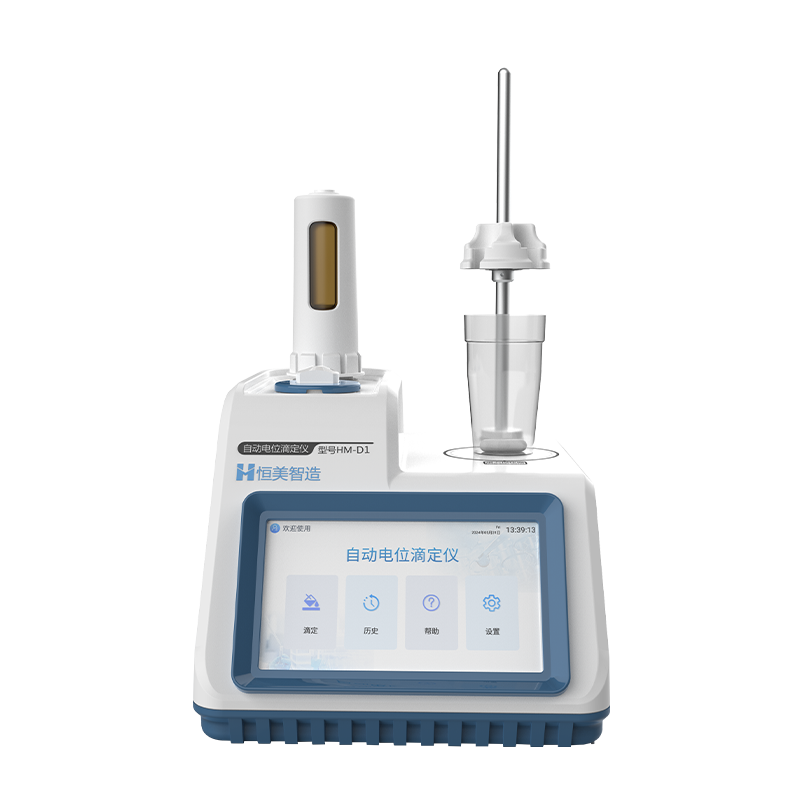
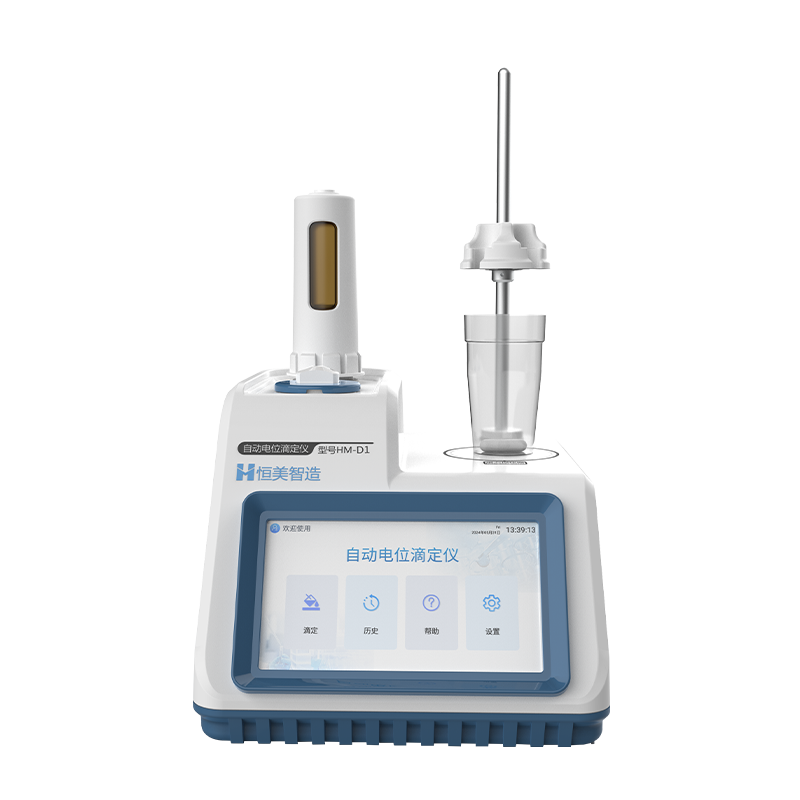
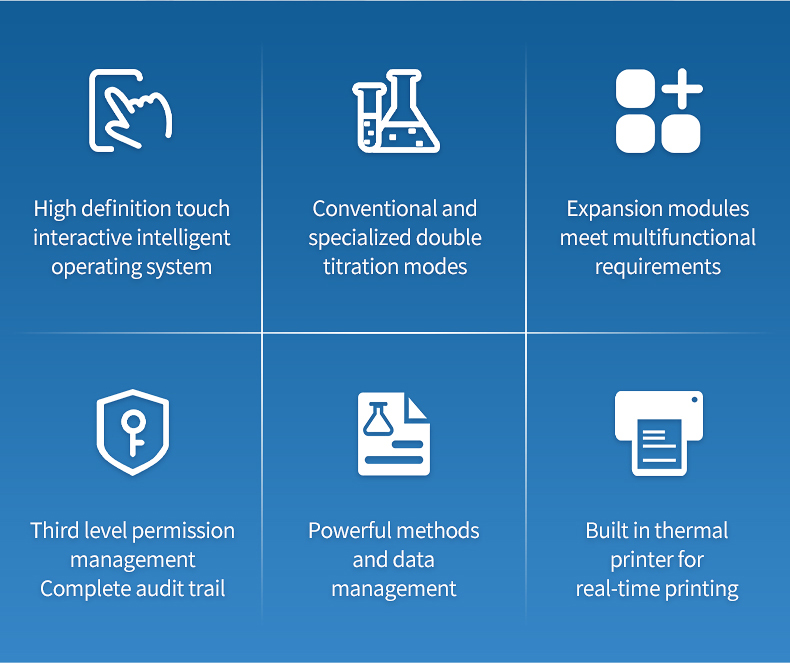
The HM-D2 Automatic Potentiometric Titrator is a precision analytical instrument integrating high accuracy, intelligent control, and modular design. The core platform supports basic titration modes including acid-base, redox, precipitation, and complexometric titration, and is further equipped with an extended conductivity titration module, enabling flexible configuration and multifunctional use in a single instrument.
The instrument adopts an advanced Android 10 intelligent operating system and is equipped with a 7-inch high-definition touchscreen, providing intuitive and smooth operation. With excellent core performance, the titration repeatability is ≤0.2%. It supports real-time monitoring and compensation of multiple parameters such as potential, pH, and temperature.
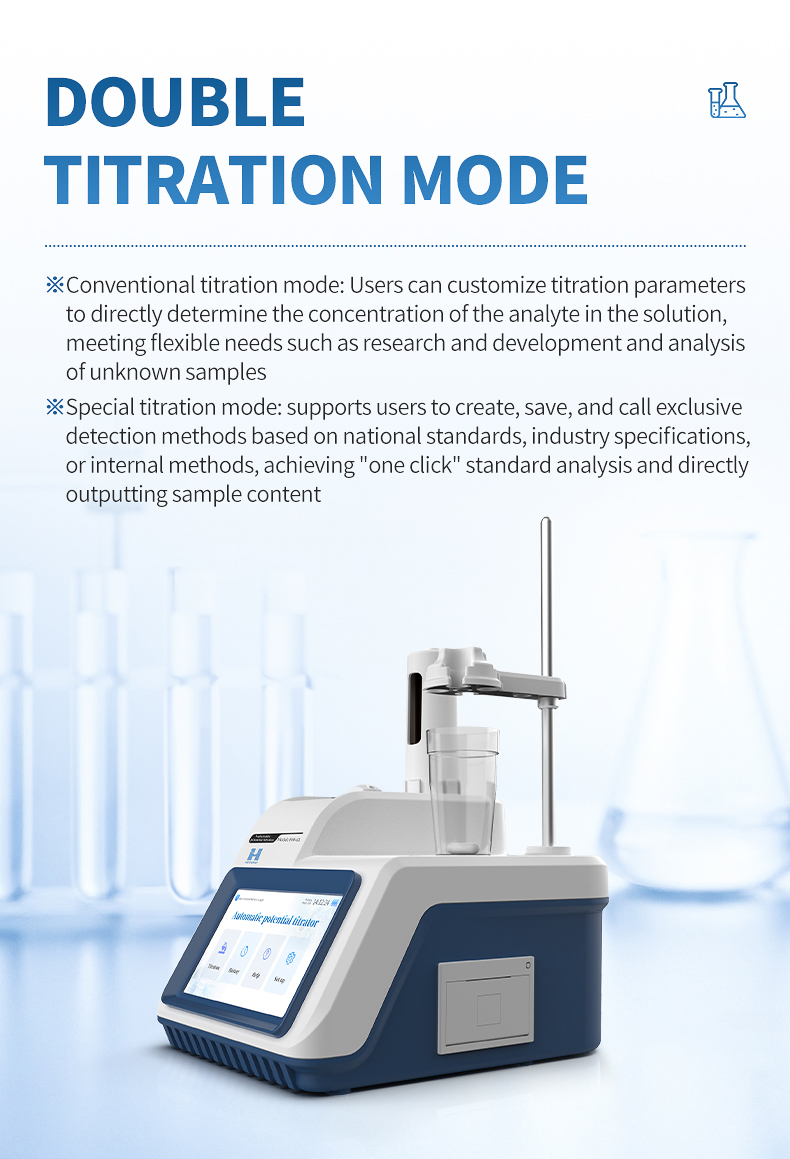
The instrument features built-in professional routine titration and dedicated titration modes. It can flexibly meet research and development needs while efficiently completing standard testing and directly outputting sample content results.
With a high-precision fluid control system, large-capacity data storage, complete audit trail functionality, and multiple data interfaces, this series of instruments serves as an efficient analytical platform for laboratory quality control and scientific research.
2. Principle
The automatic potentiometric titrator operates based on changes in electrochemical parameters of the solution during the titration process. High-precision sensors monitor these changes in real time, and the system intelligently determines the endpoint to achieve automated quantitative analysis.
Potentiometric titration is the fundamental detection method of the instrument. During titration, the potential difference (or pH value) between the indicator electrode and the reference electrode changes as the titrant is added. The instrument continuously collects signals with a high resolution of 0.1 mV (or 0.01 pH), generates a potential–volume curve, and automatically identifies the inflection point or sudden jump point of the curve using intelligent algorithms to accurately determine the titration endpoint. It is suitable for acid-base, redox, precipitation, and complexometric titration reactions.
Conductivity titration determines the endpoint by monitoring changes in the electrical conductivity of the solution. During titration, variations in ion types and concentrations lead to significant changes in conductivity. The instrument is equipped with a high-stability conductivity detection module that captures conductivity inflection points in real time, making it particularly suitable for very weak acid/alkali titration or complex system analysis.
Through the integration of these sensors and an intelligent control system, the instrument automatically performs precise liquid addition, signal acquisition, data processing, and endpoint determination, ensuring high accuracy, high repeatability, and ease of operation.
3. Reference Standards
JJG 814-2015 Verification Regulation of Automatic Potentiometric Titrators
GB/T 29252-2012 Rules for Quality Inspection of Laboratory Instruments and Equipment
GB 4793.1-2007 Safety Requirements for Electrical Equipment for Measurement, Control and Laboratory Use – Part 1: General Requirements
4. Applications
The automatic potentiometric titrator, with its comprehensive titration modules and high-precision measurement performance, is widely used in quality control and scientific research across multiple industries.
In the food safety field, it can be used to determine acid value and peroxide value in edible oils, amino nitrogen in soy sauce and vinegar, as well as acidity and alkalinity in various food products.
In environmental monitoring, it is suitable for water quality analysis, including parameters such as chemical oxygen demand (COD), chloride ions, and ammonia nitrogen.
In the pharmaceutical and cosmetics industries, it can be used for active ingredient determination, solution pH and conductivity monitoring, and cleaning validation.
In the petrochemical field, it is used for analyzing acid value, base value, sulfur content in petroleum products, and purity of chemical raw materials.
In addition, the instrument is widely applied in universities and research institutes for chemical teaching and experimental research, providing a reliable analytical tool capable of meeting both basic titration and complex system analysis requirements.
5. Features
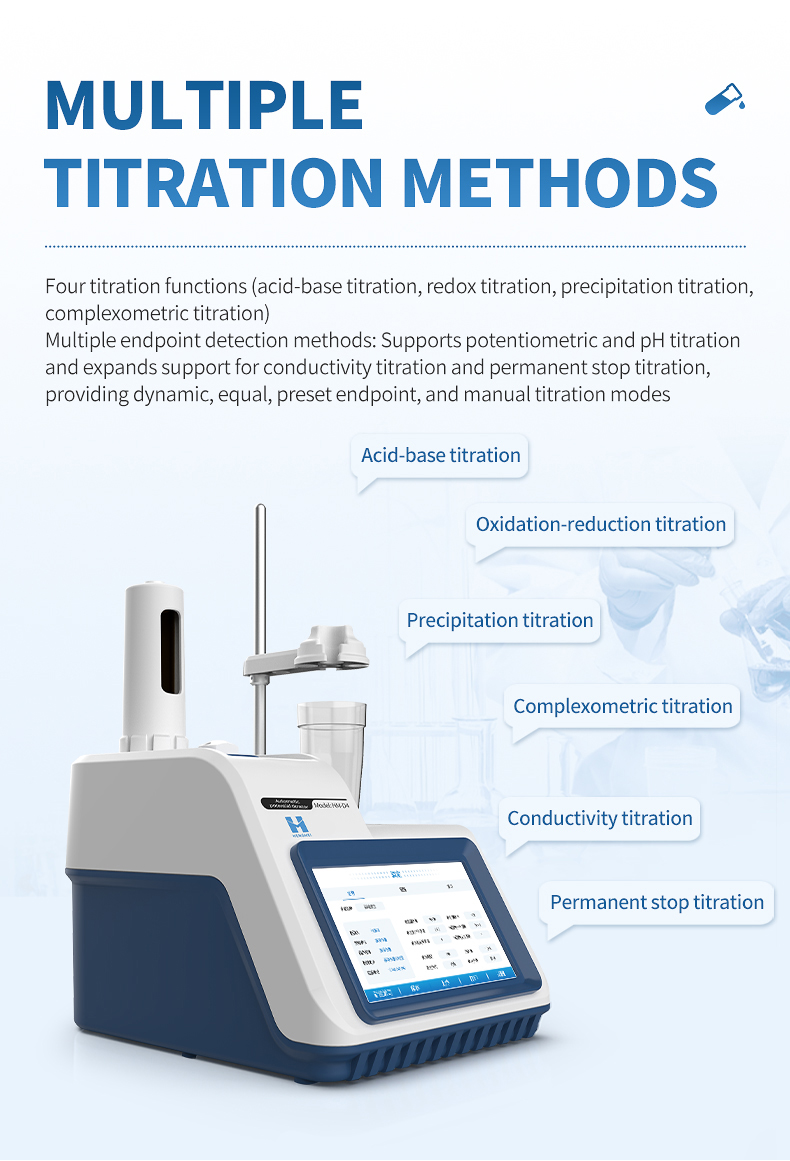
Modular functional configuration: Provides flexible configurations ranging from basic titration to integrated conductivity titration and specialized analysis modules, allowing users to select according to actual analytical needs with high cost-effectiveness and flexibility.
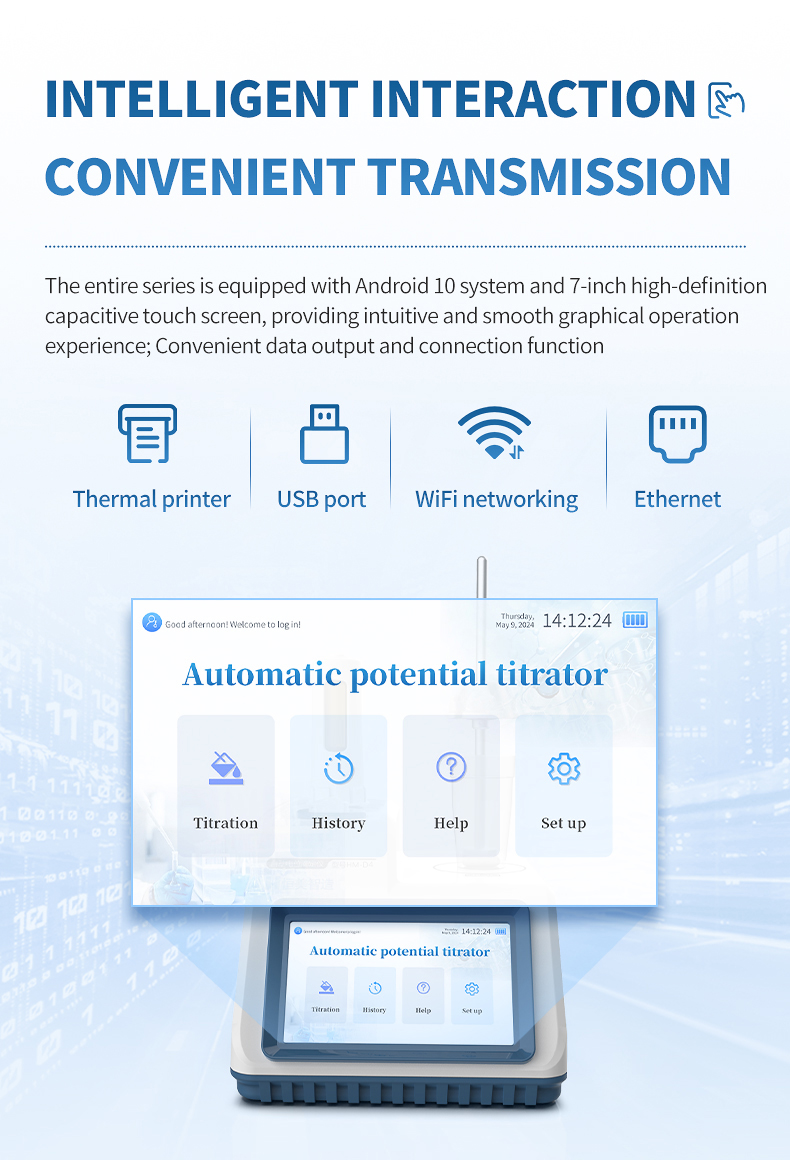
Intelligent Android system and touch interaction: Equipped with Android 10 system and a 7-inch high-definition capacitive touchscreen, delivering intuitive and smooth graphical operation.
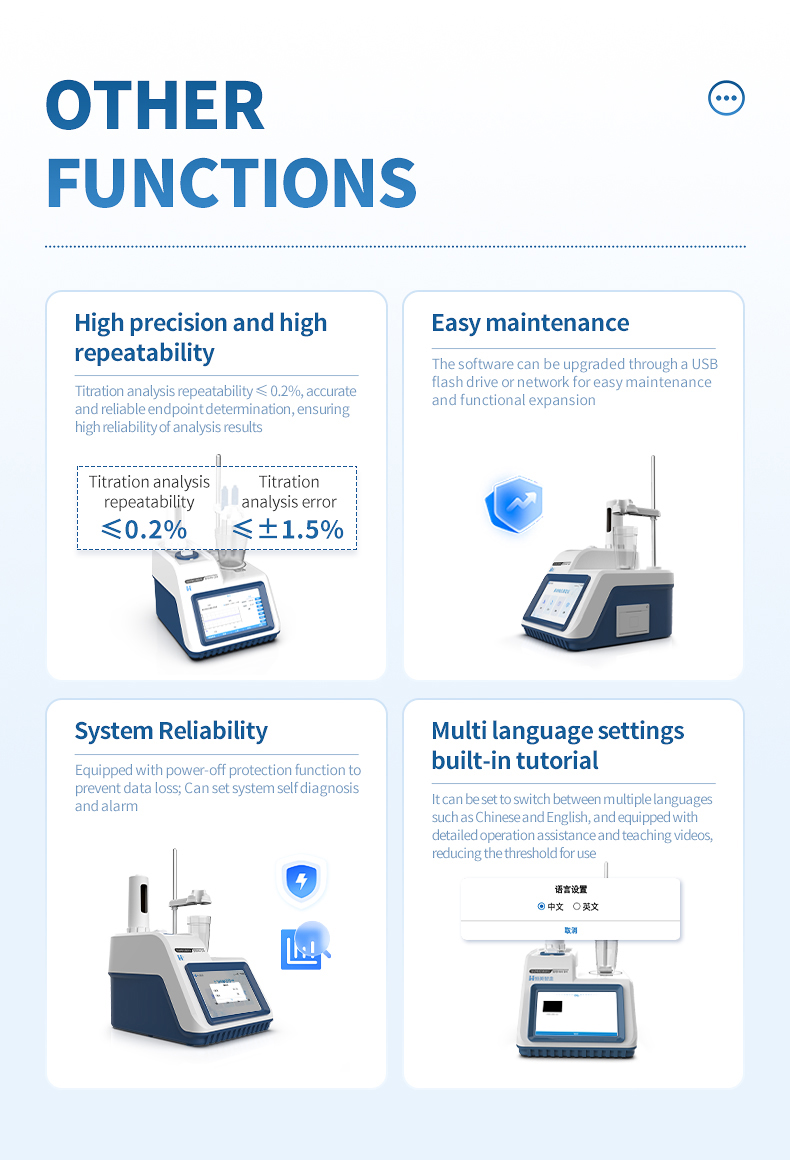
High accuracy and repeatability: Titration repeatability ≤0.2%, ensuring reliable and accurate endpoint determination.
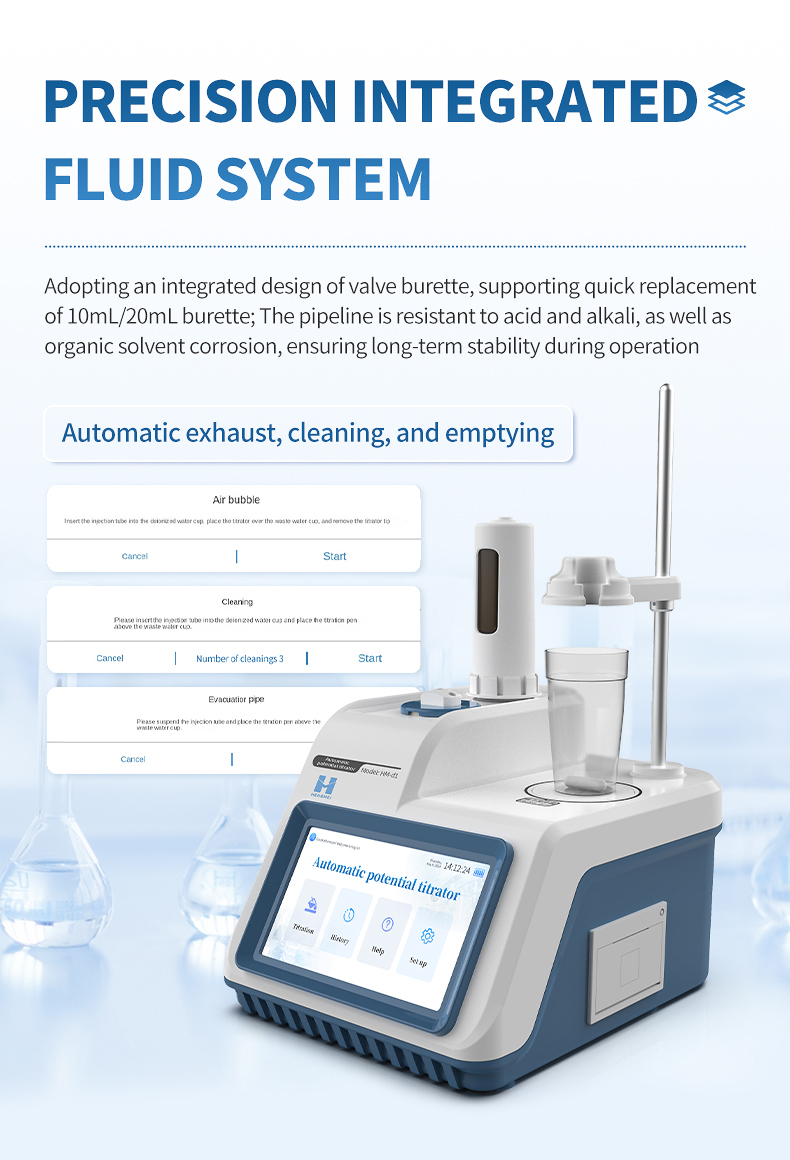
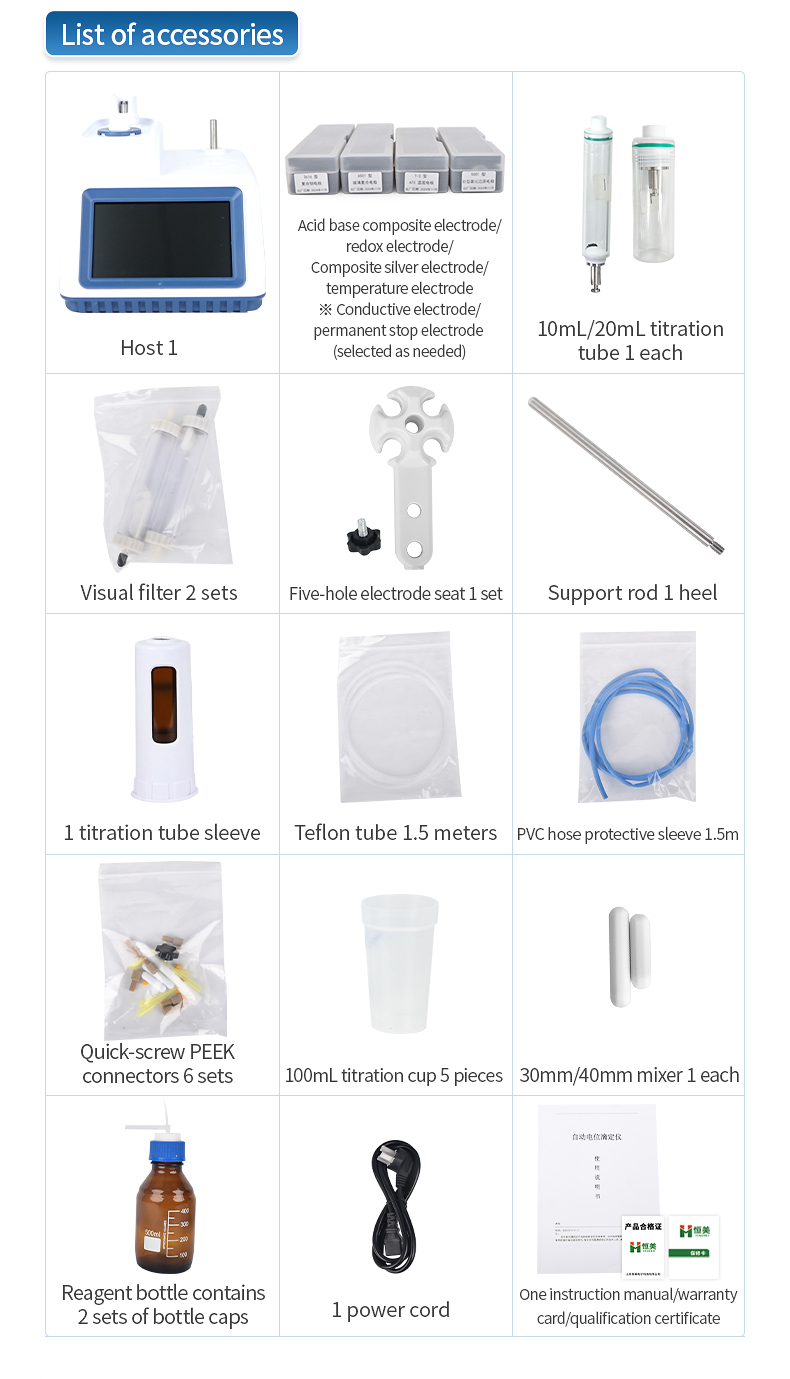
Integrated precision fluid system: Valve burette integrated design, supporting quick replacement of 10 mL/20 mL burettes; resistant to acids, alkalis, and organic solvents, ensuring long-term operational stability.
★ Dual titration modes:
Routine titration mode: Users can customize titration parameters to directly determine analyte concentration, suitable for R&D and unknown sample analysis.
Dedicated titration mode: Supports creating, saving, and calling specific methods based on national standards, industry regulations, or internal procedures, enabling one-click standardized analysis and direct output of sample results.
Multiple endpoint detection methods: Supports potentiometric and pH titration, and extended support for conductivity titration. Provides dynamic, equivalence point, preset endpoint, and manual titration modes.
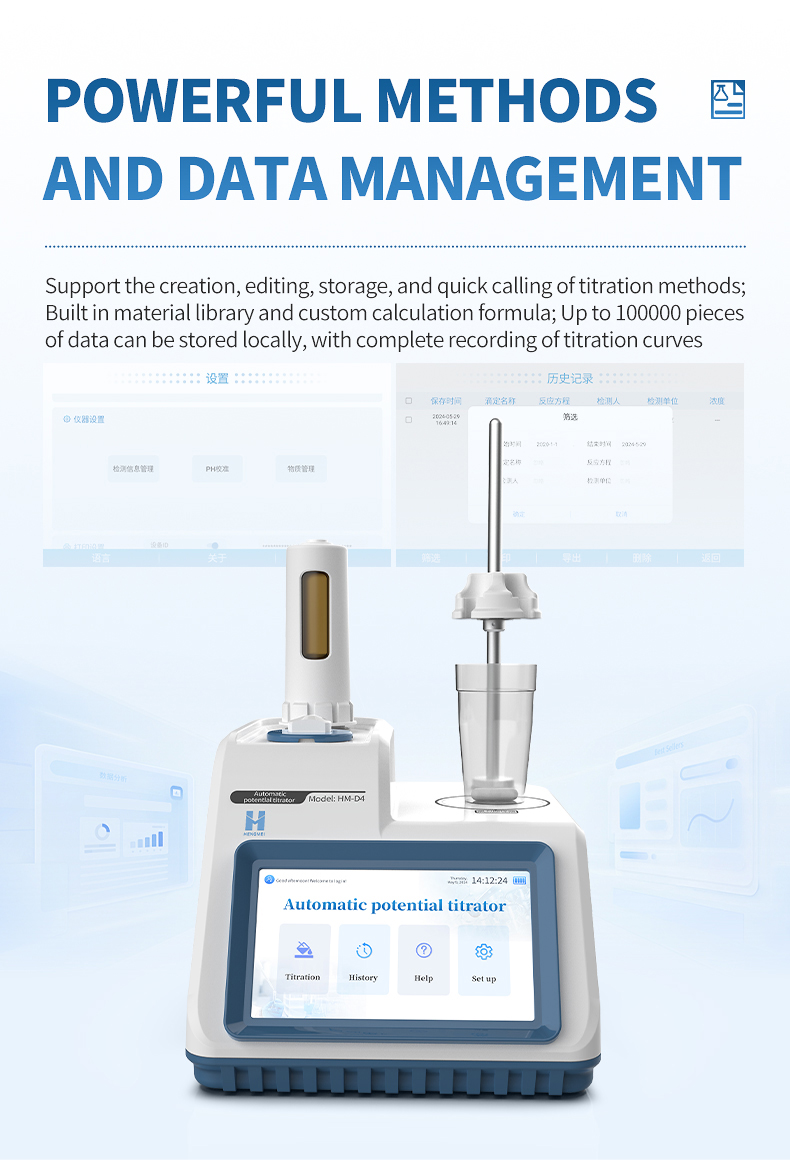
★ Powerful method and data management: Supports creation, editing, storage, and quick access of titration methods; built-in substance library and customizable calculation formulas; capable of storing up to 100,000 data records with complete titration curves.
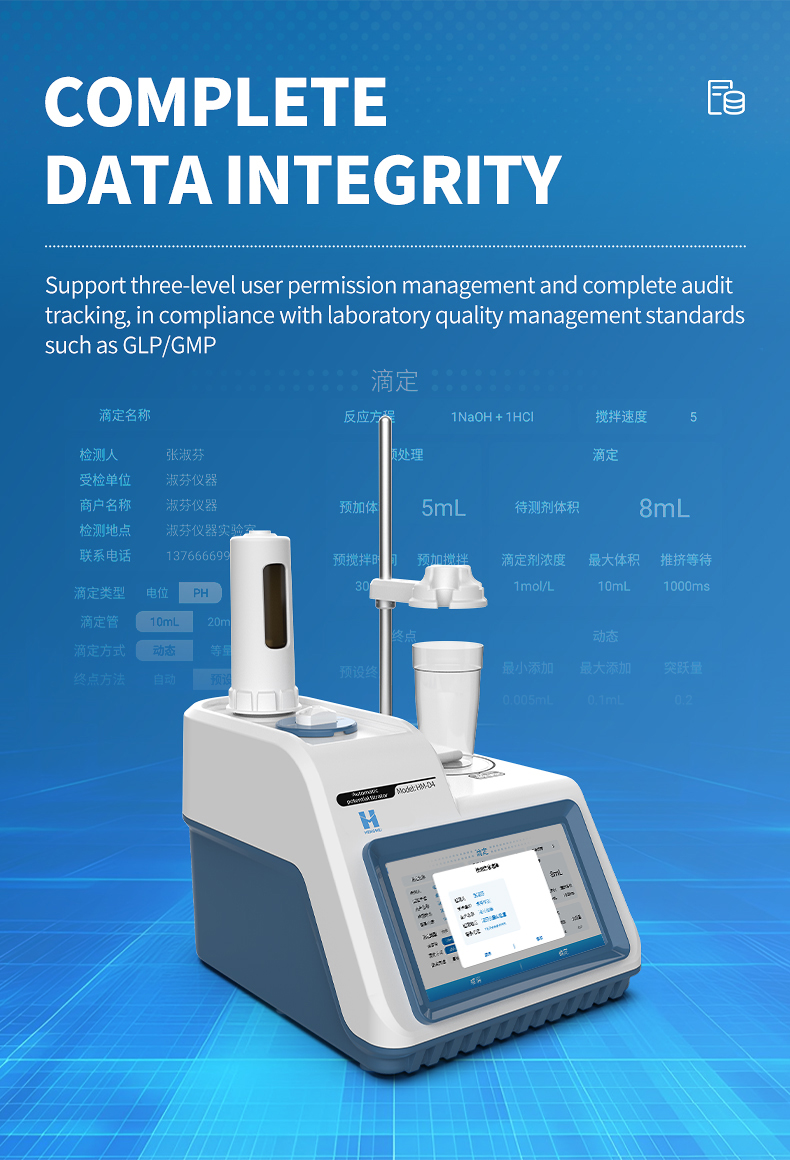
Complete data integrity functions: Supports three-level user permission management and full audit trail, compliant with GLP/GMP laboratory quality management requirements.
Convenient data output and connectivity: Built-in thermal printer with USB, Wi-Fi, and Ethernet interfaces, supporting real-time printing, exporting, and uploading to LIMS systems.
System reliability and easy maintenance: Equipped with power-off protection to prevent data loss; supports system self-diagnosis and alarm settings; software can be upgraded via USB or network.
Multi-language and user-friendly design: Supports Chinese and English interface switching, with detailed operation guides and instructional videos to reduce user learning curve.
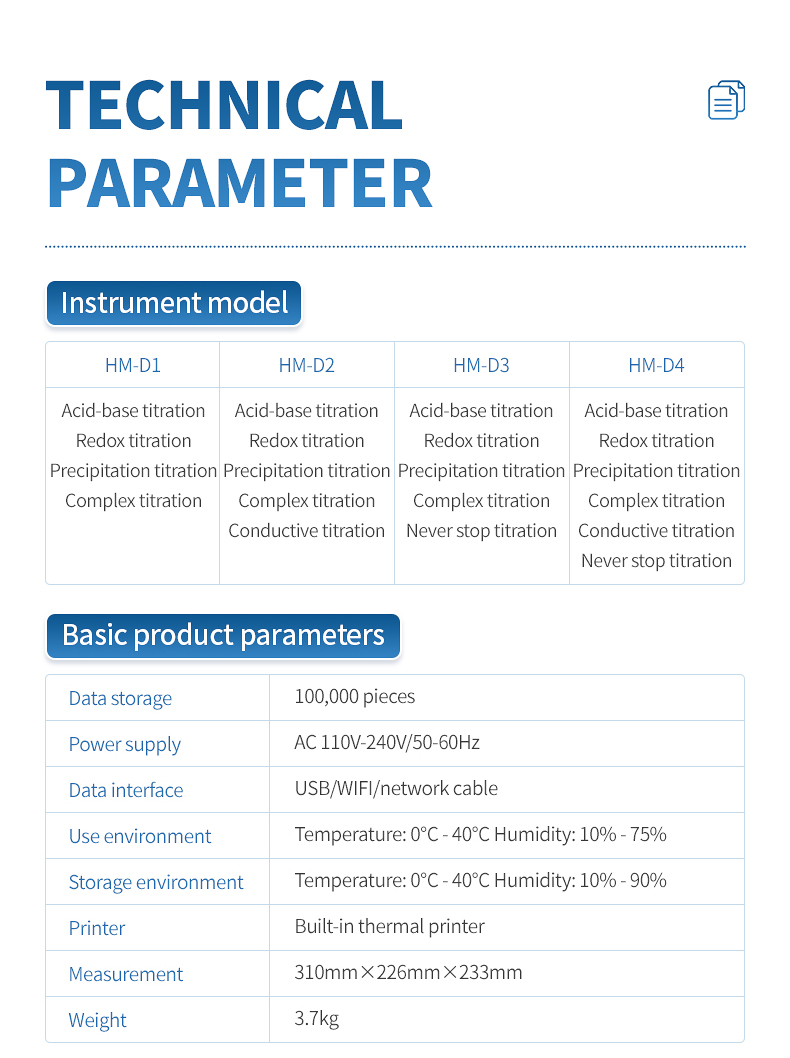
6. Technical Parameters
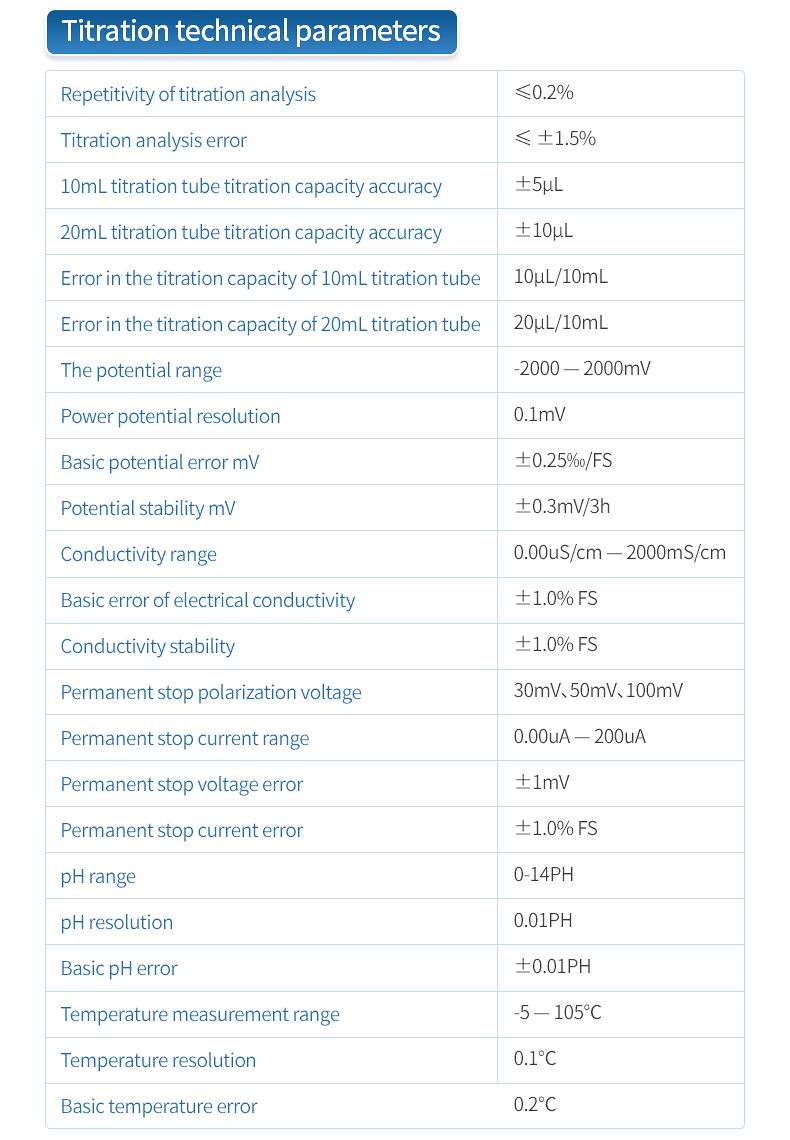
1. General Titration Performance
Titration repeatability: ≤0.2%
Titration error: ≤±1.5%
10 mL burette: Accuracy ±5 μL; volume error 10 μL/10 mL
20 mL burette: Accuracy ±10 μL; volume error 20 μL/10 mL
2. General Measurement Performance
Potential measurement: Range -2000 mV to +2000 mV; resolution 0.1 mV; basic error ±0.25‰ FS; stability ±0.3 mV/3h
pH measurement: Range 0–14 pH; resolution 0.01 pH; basic error ±0.01 pH
Temperature measurement: Range -5–105°C; resolution 0.1°C; basic error ±0.2°C
Conductivity measurement: Range 0.00 μS/cm – 2000 mS/cm; basic error ±1.0% FS; stability ±1.0% FS
3. System & Physical Specifications
Operating system: Android 10
Display: 7-inch capacitive touchscreen
Data storage: 100,000 records
Data interfaces: USB, Wi-Fi, Ethernet
Printer: Built-in thermal printer
Power supply: AC 110–240V, 50–60Hz
Operating environment: Temperature 0–40°C, humidity 10%–75% RH
Storage environment: Temperature 0–40°C, humidity 10%–90% RH
Dimensions: 310 × 226 × 233 mm
Weight: approx. 3.7 kg
 Related Products