
 Current
Location:
Current
Location: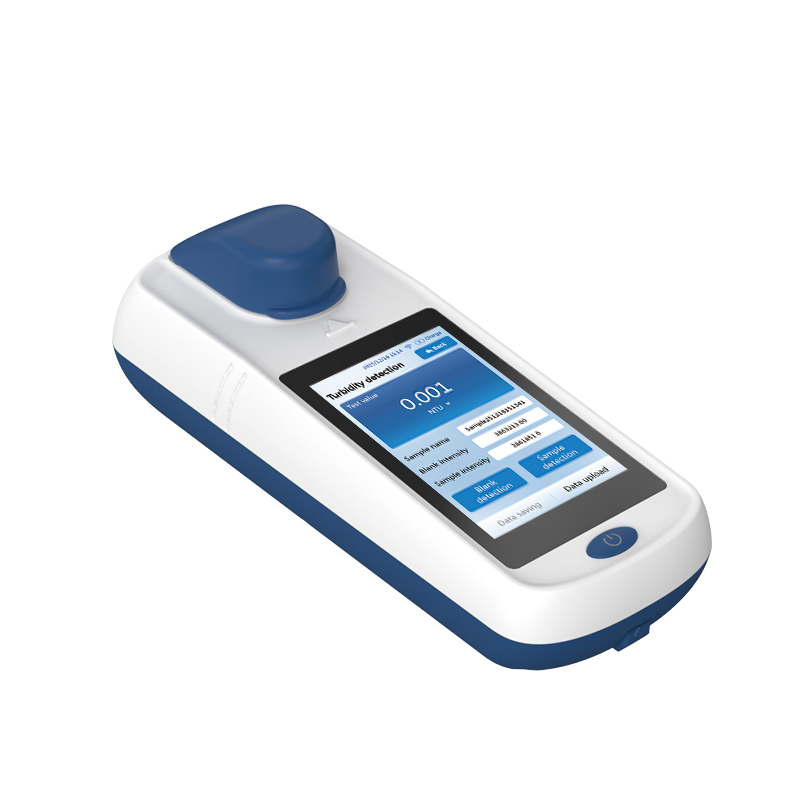
 +86 17853698681
 WhatsApp
 Product Details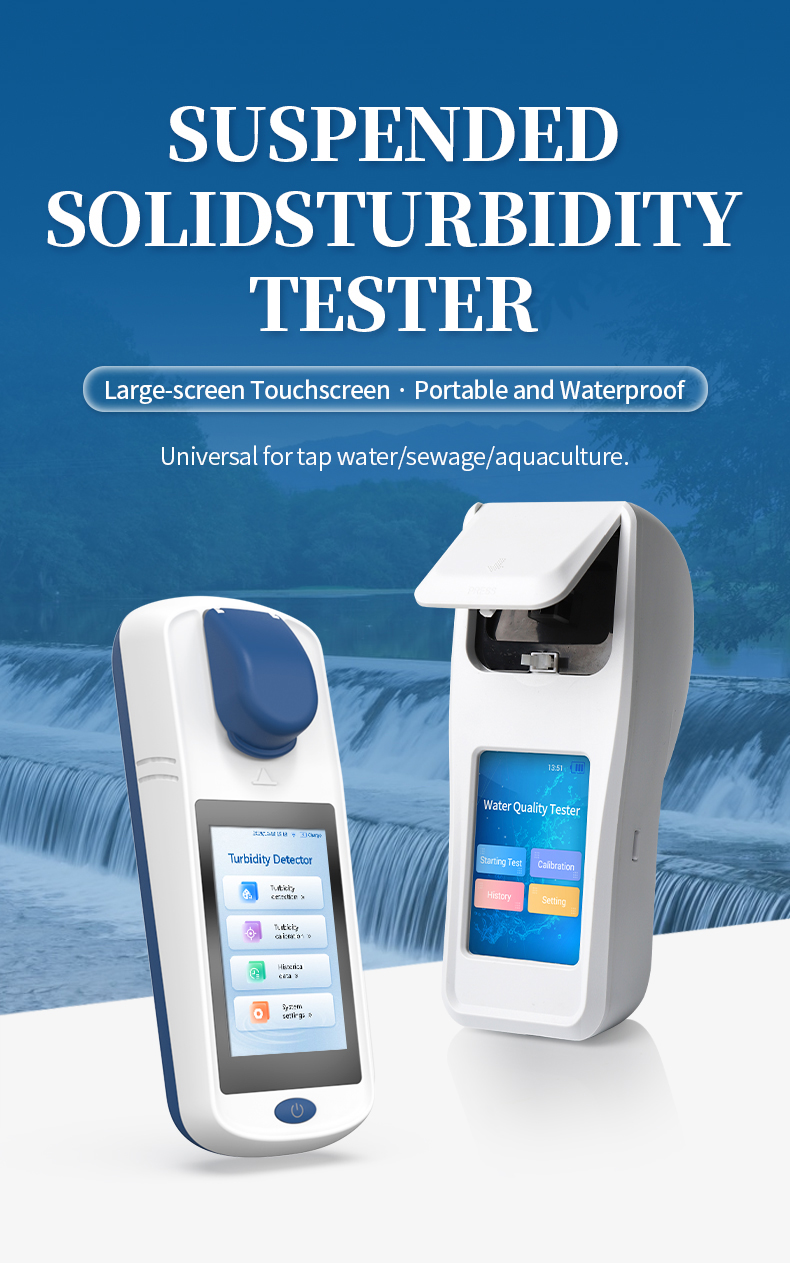


I. Product Description
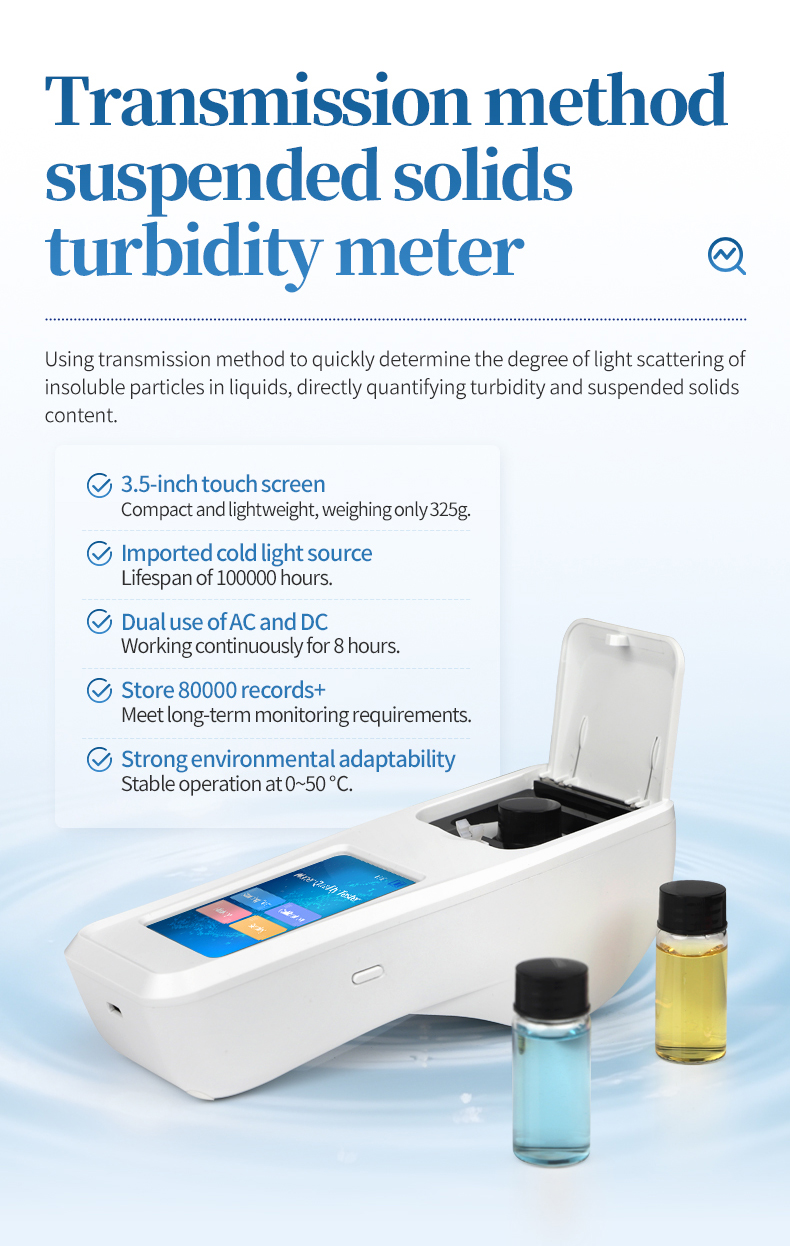
Turbidity is a key water quality indicator that measures the concentration of suspended particulate matter in water, and its value directly relates to the aesthetic quality and safety of water. This instrument employs a single-wavelength 860nm scatter light measurement method for precise turbidity determination, and supports user-defined coefficients to convert turbidity readings into suspended solids concentration, achieving dual-parameter detection in a single instrument. Integrating precision optics with intelligent technology, the instrument features one-key calibration, rapid response, large-screen display, and data storage capabilities. The enclosure is lightweight, portable, and durable with extended battery life and a high ingress protection rating, making it well-suited for demanding field environments. It is primarily applied in water treatment plants, environmental monitoring, wastewater treatment, food and beverage production, and aquaculture, providing an efficient and professional on-site water quality testing solution and serving as an ideal tool for water quality management.
II. Detection Principle
The scatter light detection method directs a stable light beam through a sample cell containing the test specimen. A sensor positioned at 90 degrees to the incident beam measures the intensity of scattered light. The scattered light intensity produced when the beam enters the sample is proportional to the turbidity concentration within a certain range.
Under conditions where the water source, water quality, and operating conditions are relatively stable, the material composition and particle size distribution of suspended particulate matter remain essentially consistent. A stable linear empirical correlation exists between suspended solids mass concentration and the turbidity optical scatter signal. Based on the empirical correlation coefficient between turbidity and suspended solids concentration (e.g., 1 NTU ≈ 1 mg/L as the initial default), the instrument can convert turbidity measurement results into suspended solids concentration values in real time.
III. Applicable Standards
HJ 1075-2019 Water Quality — Determination of Turbidity — Turbidimetric Method
ISO 7027 Water Quality — Determination of Turbidity
JJG 880-2006 Turbidimeter
GB 5749 Standards for Drinking Water Quality
CJ 3020 Water Quality Standard for Drinking Water Sources
GB/T 14848 Quality Standard for Ground Water
IV. Product Features
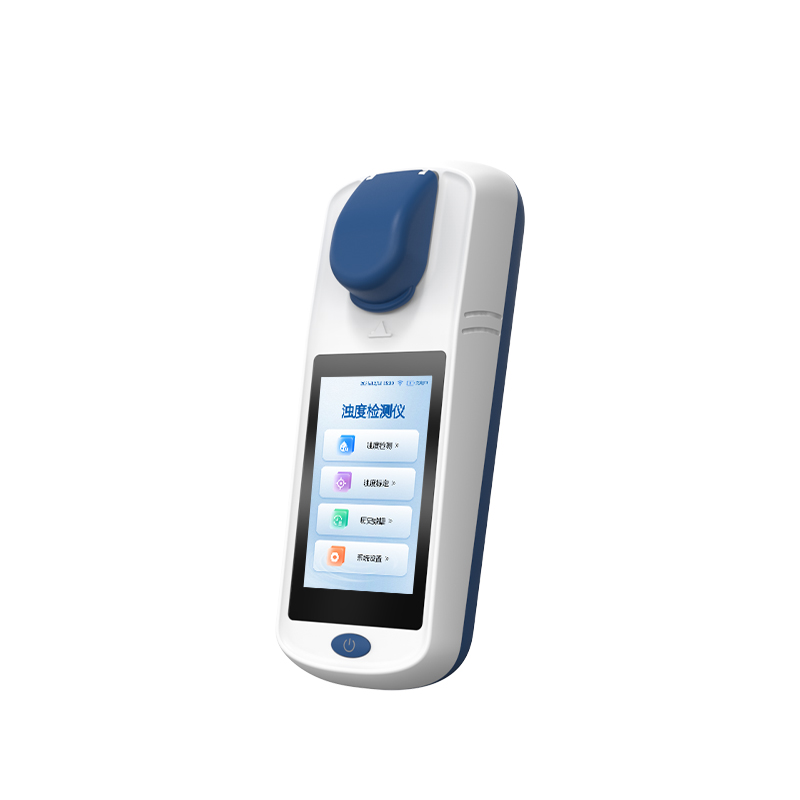
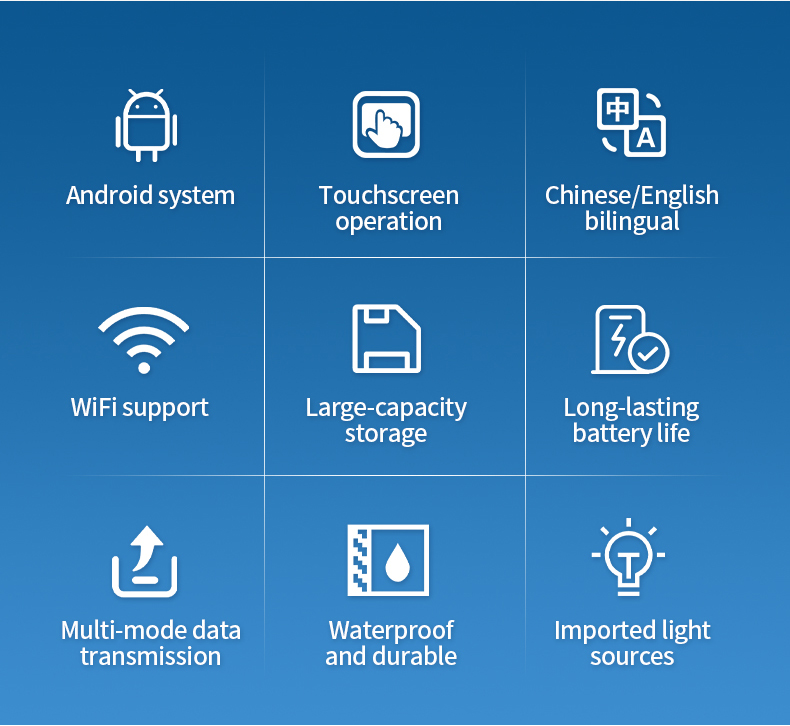
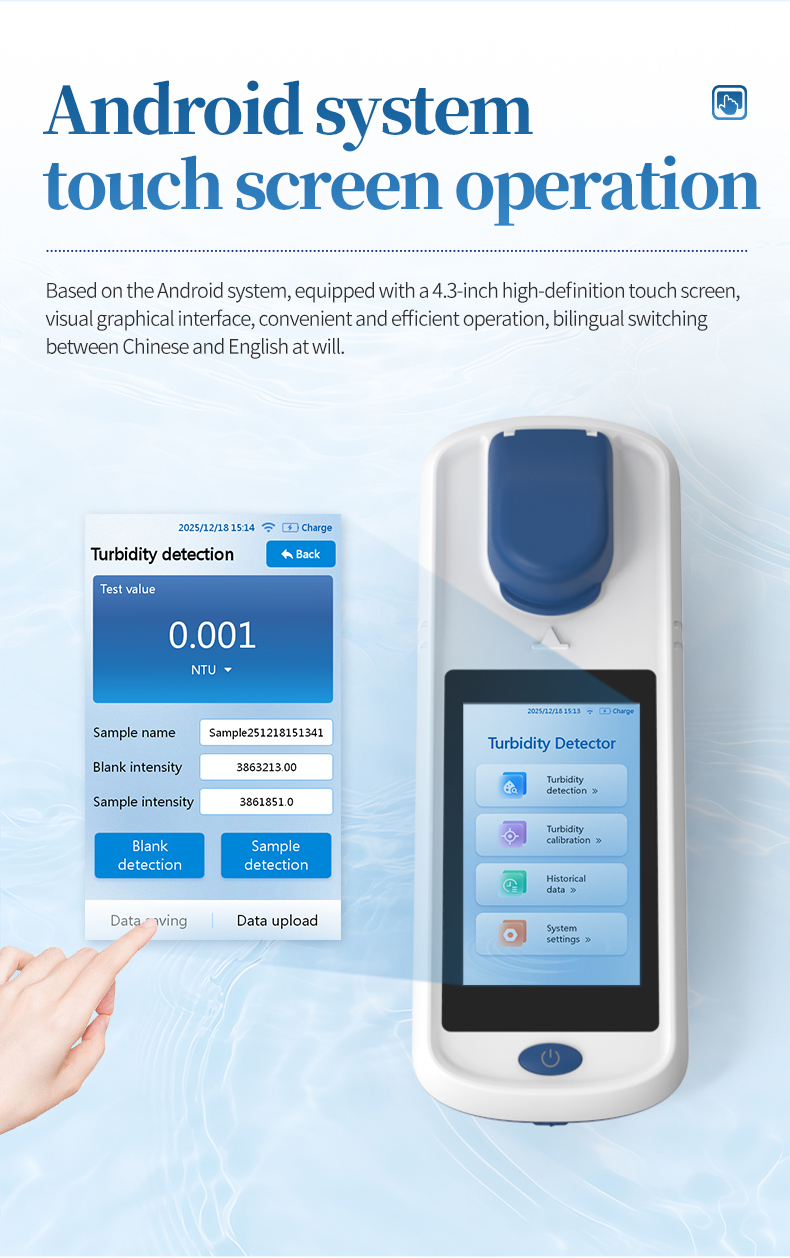
Android Operating System: Aesthetically designed interface with user-friendly operation.
4.3-inch HD Touchscreen: Visual graphical operation pages significantly improve operational efficiency.
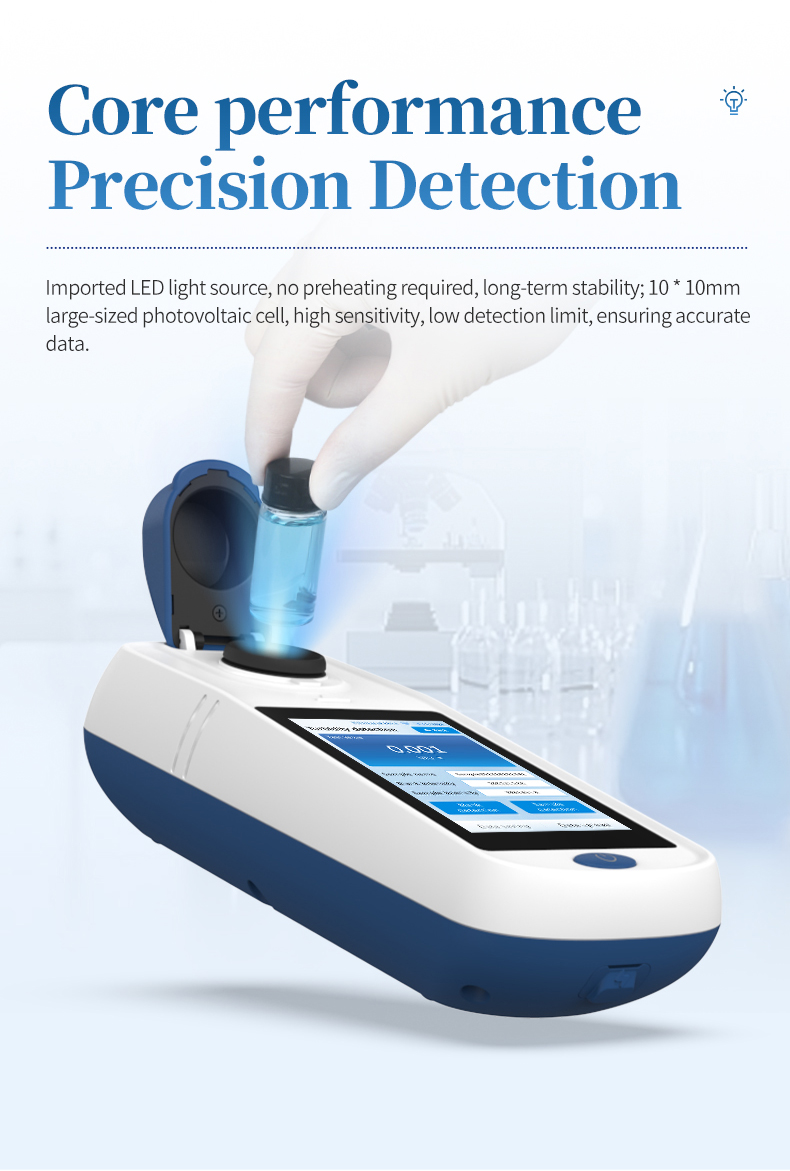
High-Reliability Imported LED Light Source: No warm-up required; stable long-term performance.
Large 10×10mm Photocell: High sensitivity with a low detection limit.
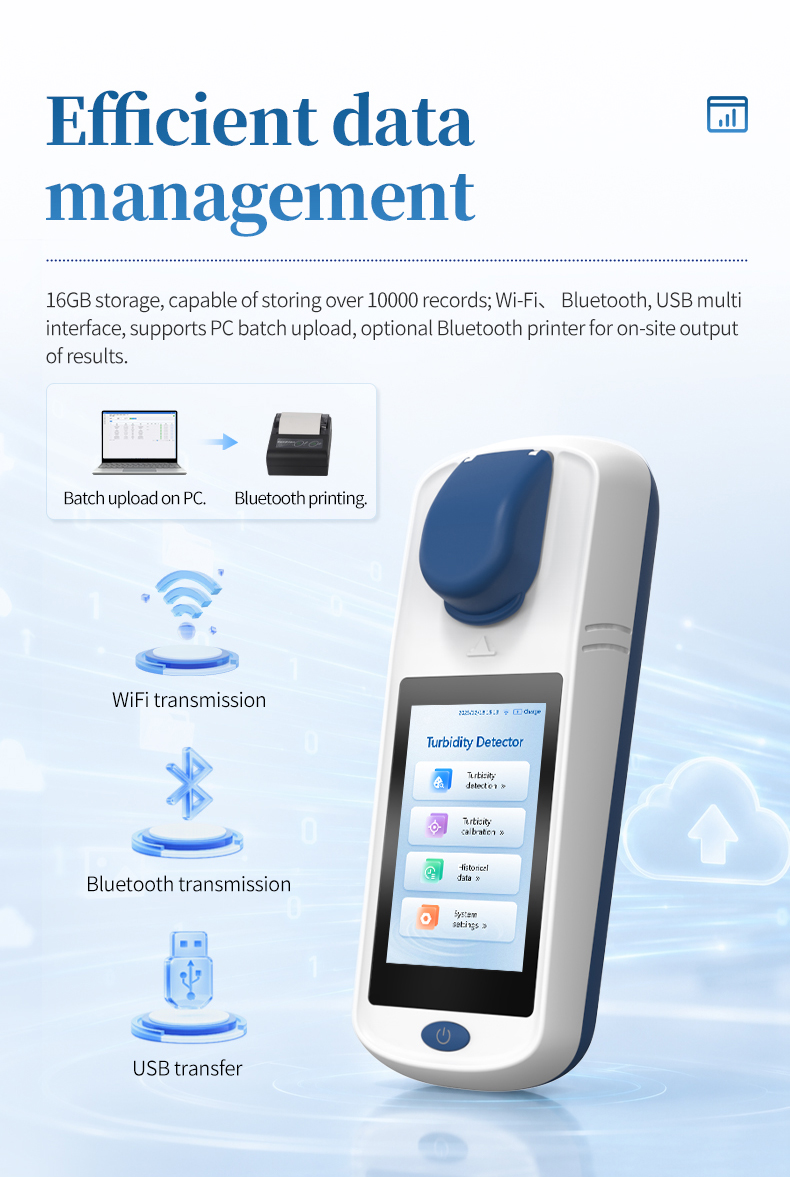
16 GB Internal Storage: Saves over 10,000 records; optional Bluetooth printer for on-site result printing.
Wireless Connectivity: Wi-Fi and Bluetooth capability, plus USB port for direct PC connection and fast batch data upload.
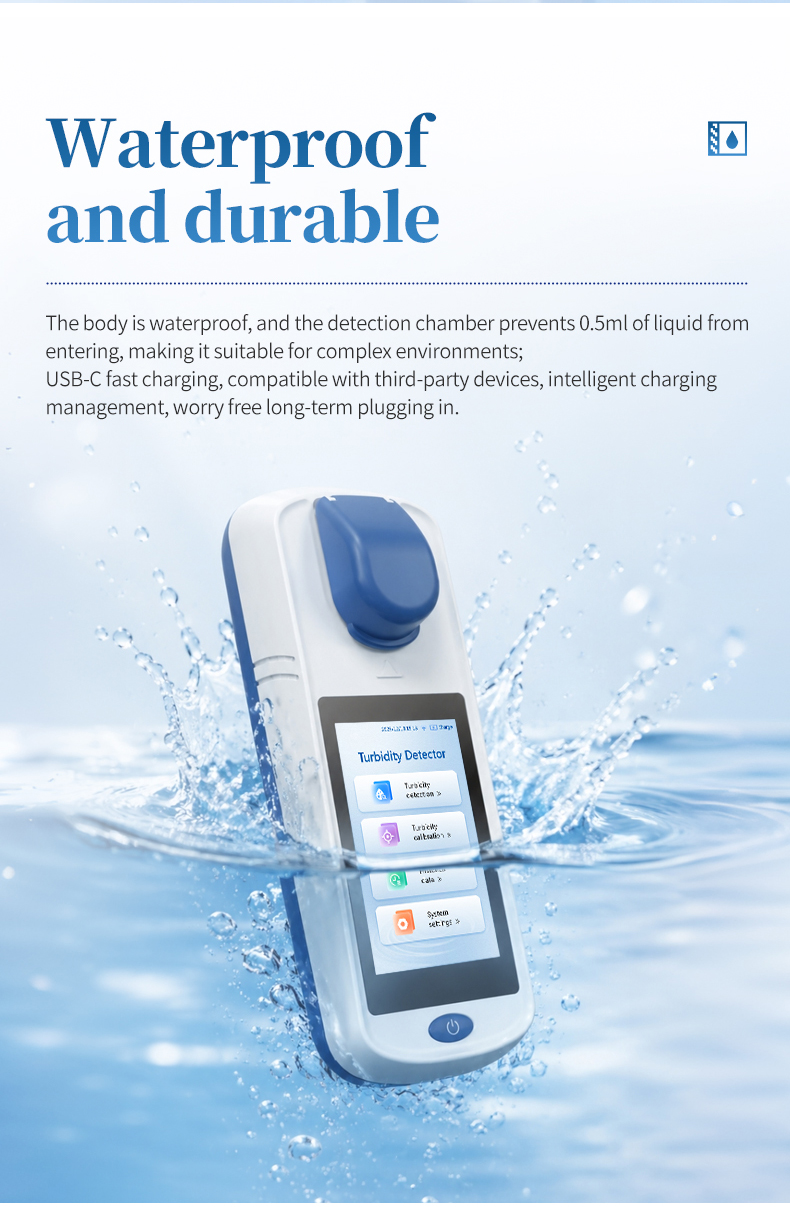
Water-Resistant Enclosure: The instrument housing is waterproof; the detection chamber internally resists liquid ingress up to 0.5 mL.
USB-C 5V 2.1A Power with BC2.1 Charging Protocol: Compatible with third-party phone chargers, cables, and power banks; intelligent lithium battery charging management supports prolonged plugged-in use.
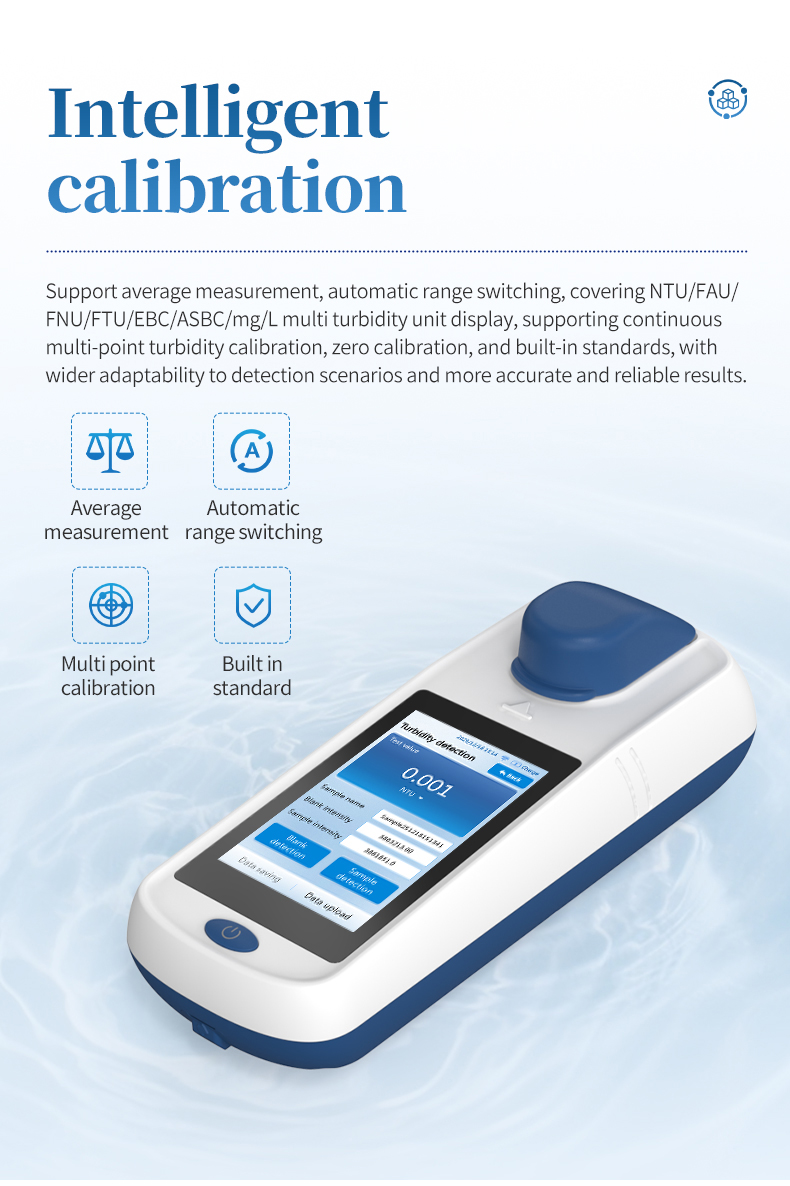
Averaged Measurement with Auto-Range Switching: Automatically selects the appropriate measurement range.
Multiple Display Units: Default unit is NTU; switchable to FAU, FNU, FTU, EBC, ASBC, and mg/L.
Flexible Calibration: Supports continuous multi-point turbidity calibration, zero-point calibration, and built-in calibration standards.
Bilingual Interface: Chinese/English dual-language operating system.
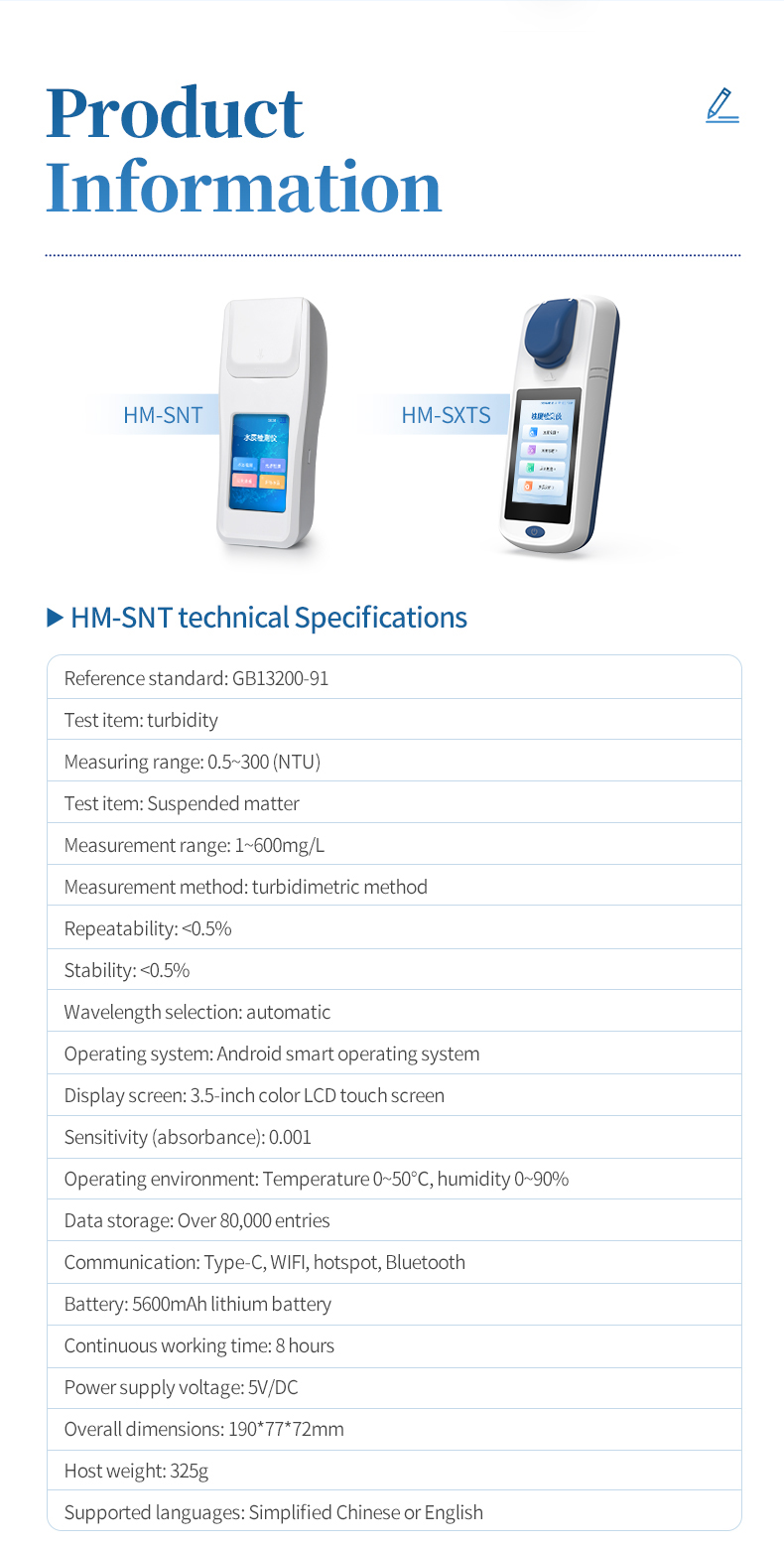
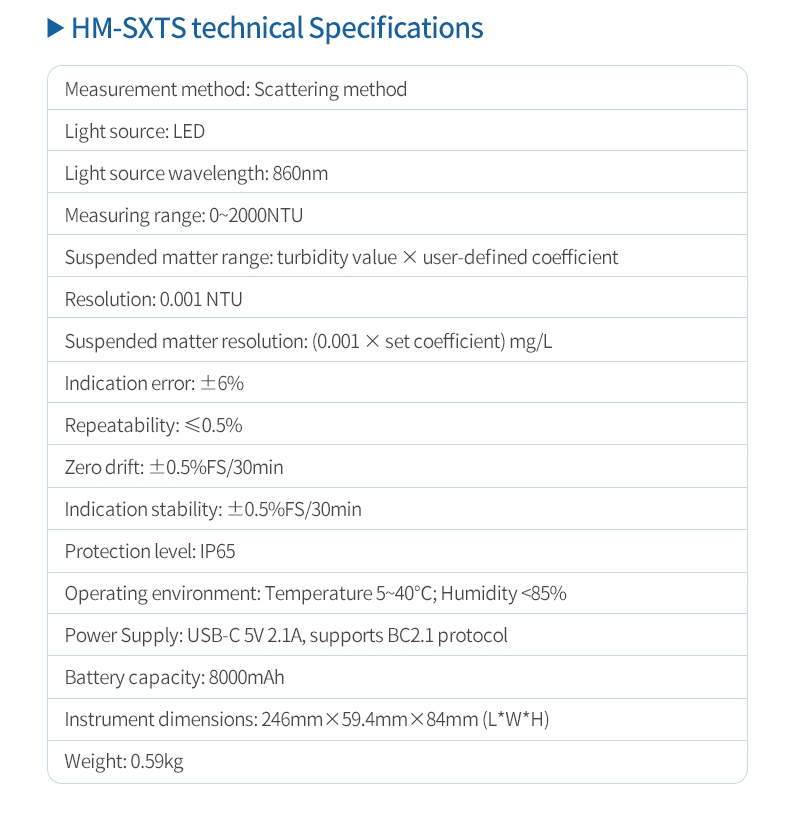
V. Technical Specifications
Optical & Measurement Parameters
| Parameter | Specification |
|---|---|
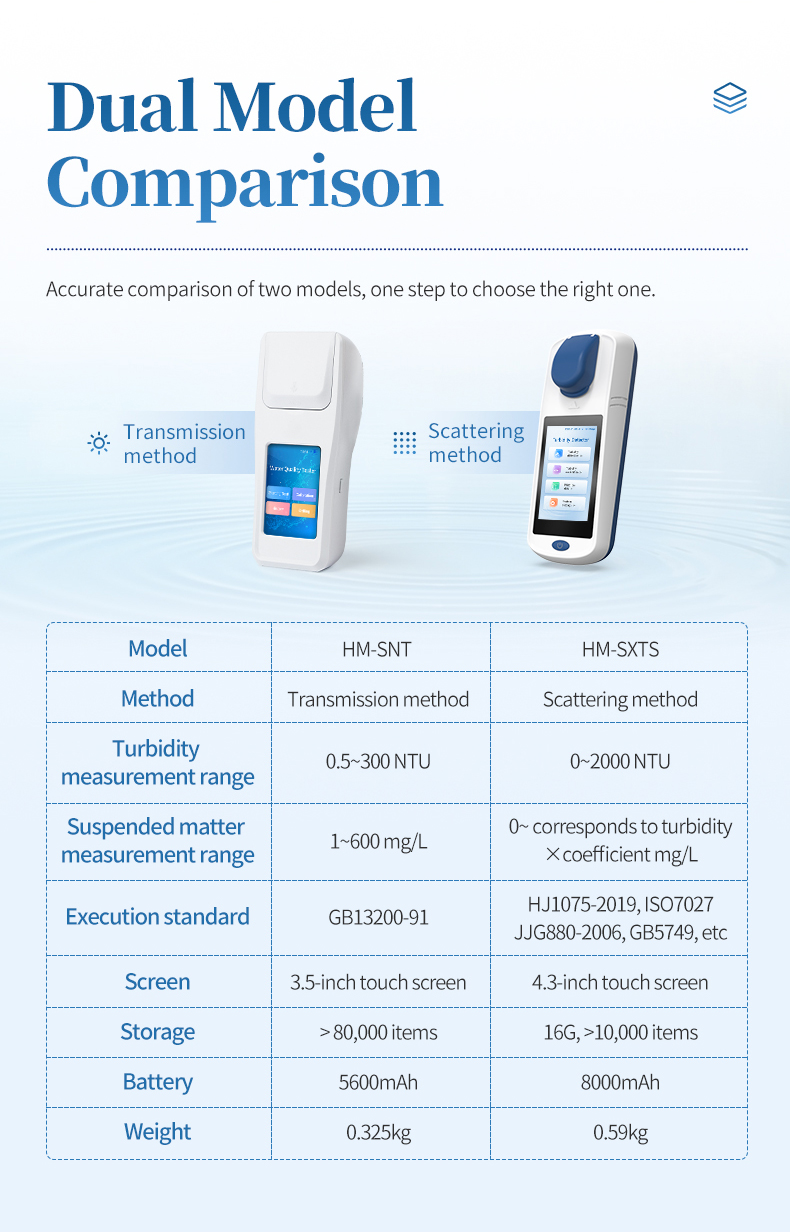
| Measurement Method | Scatter method (Nephelometric) |
| Light Source | LED |
| Light Source Wavelength | 860 nm |
| Turbidity Range | 0–2000 NTU |
| Suspended Solids Range | Range corresponds to turbidity; displayed value = turbidity value × user-defined coefficient |
| Resolution | 0.001 NTU |
| Suspended Solids Resolution | (0.001 × set coefficient) mg/L |
Accuracy & Stability
| Parameter | Specification |
|---|---|
| Indication Error | ±6% |
| Repeatability | ≤0.5% |
| Zero Drift | ±0.5% FS / 30 min |
| Indication Stability | ±0.5% FS / 30 min |
Environmental & Physical Parameters
| Parameter | Specification |
|---|---|
| Ingress Protection Rating | IP65 |
| Operating Temperature | 5–40°C |
| Operating Humidity | <85% |
| Power Supply | USB-C 5V 2.1A, supports BC2.1 protocol |
| Battery Capacity | 8000 mAh |
| Dimensions (L × W × H) | 246 mm × 59.4 mm × 84 mm |
| Weight | 0.59 kg |
VI. Frequently Asked Questions (FAQ)
Q1: How does the HM-SXTS measure suspended solids (TSS) without a separate sensor?
A: The HM-SXTS uses a single 860nm scatter optical channel to measure turbidity in NTU. Under stable water source conditions, a linear empirical relationship exists between turbidity and suspended solids concentration. The instrument converts turbidity readings to TSS values using a user-defined coefficient (default: 1 NTU ≈ 1 mg/L). Users can calibrate this coefficient against site-specific gravimetric laboratory data for improved accuracy in their particular water matrix.
Q2: What is the advantage of the 860nm LED light source compared to visible-light turbidity meters?
A: The 860nm near-infrared wavelength effectively eliminates color interference from dissolved organic matter (such as humic substances) that can bias readings on broadband visible-light instruments. This conforms to ISO 7027 requirements and provides more stable, reproducible results in colored or organically laden water samples.
Q3: Is the HM-SXTS suitable for outdoor field use?
A: Yes. The instrument carries an IP65 ingress protection rating, meaning it is dust-tight and protected against water jets. The 8000mAh lithium battery supports extended field deployment, and the USB-C charging port with BC2.1 protocol is compatible with common phone chargers and power banks. At 0.59 kg, it is easily portable for on-site water quality inspections.
Q4: How is the TSS conversion coefficient calibrated for different water sources?
A: Collect representative water samples and measure turbidity with the HM-SXTS while simultaneously determining TSS through standard laboratory gravimetric analysis (filtering, drying, and weighing). Divide the gravimetric TSS result (mg/L) by the corresponding turbidity reading (NTU) to derive the empirical coefficient, then enter this value into the instrument. The coefficient can be adjusted at any time to reflect seasonal or process-related changes in water composition.
Q5: What calibration options does the HM-SXTS support?
A: The instrument supports continuous multi-point turbidity calibration using standard formazin solutions, zero-point calibration for baseline correction, and built-in calibration standards for routine verification. The one-key calibration function streamlines the process, and the Android-based interface provides on-screen guidance through each calibration step.
- Previous: HM-SXT2 Portable Turbidity Meter
- Next: no more
 Related Products