
 Current
Location:
Current
Location: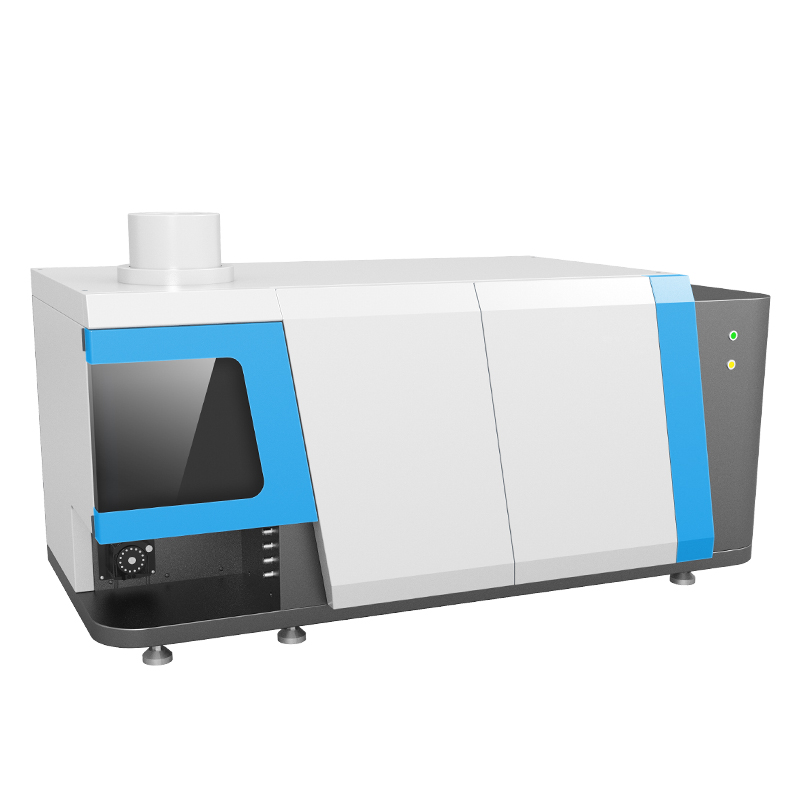
 +86 17853698681
 WhatsApp
 Product Details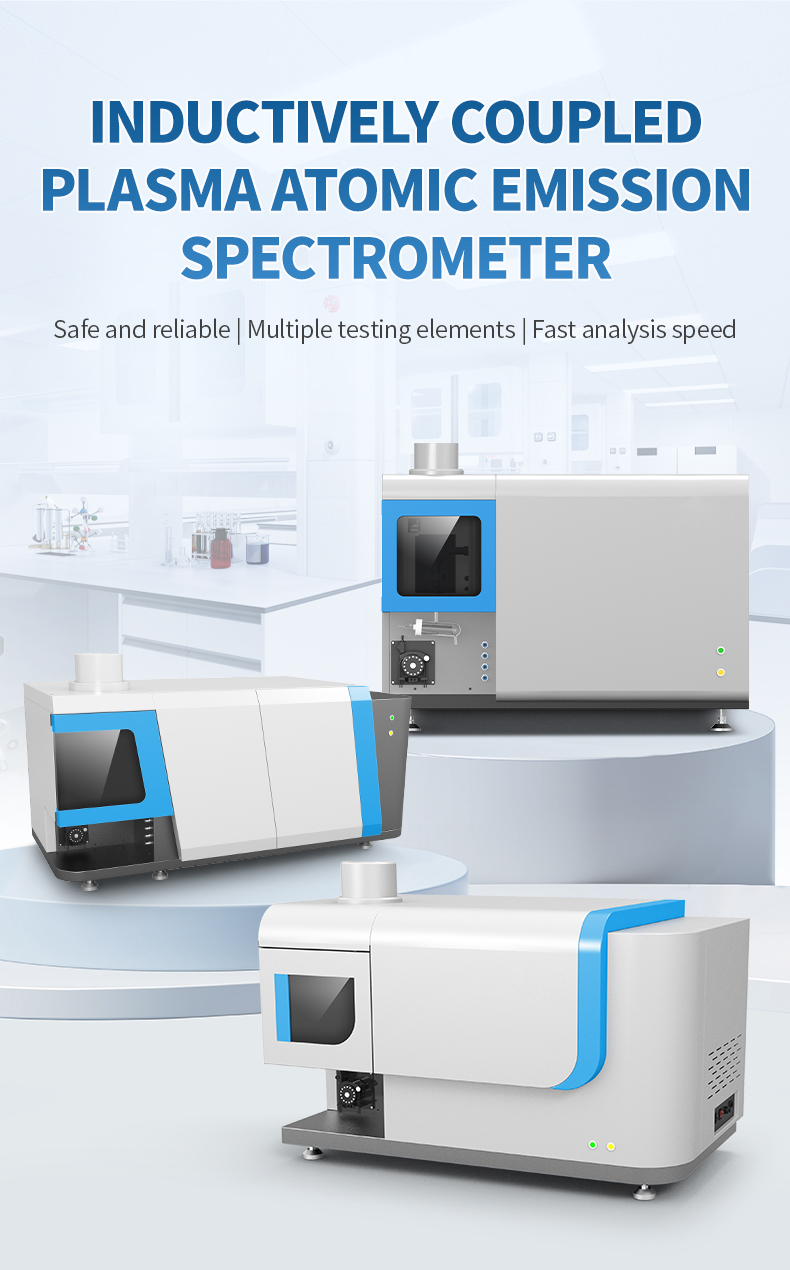



Product Introduction
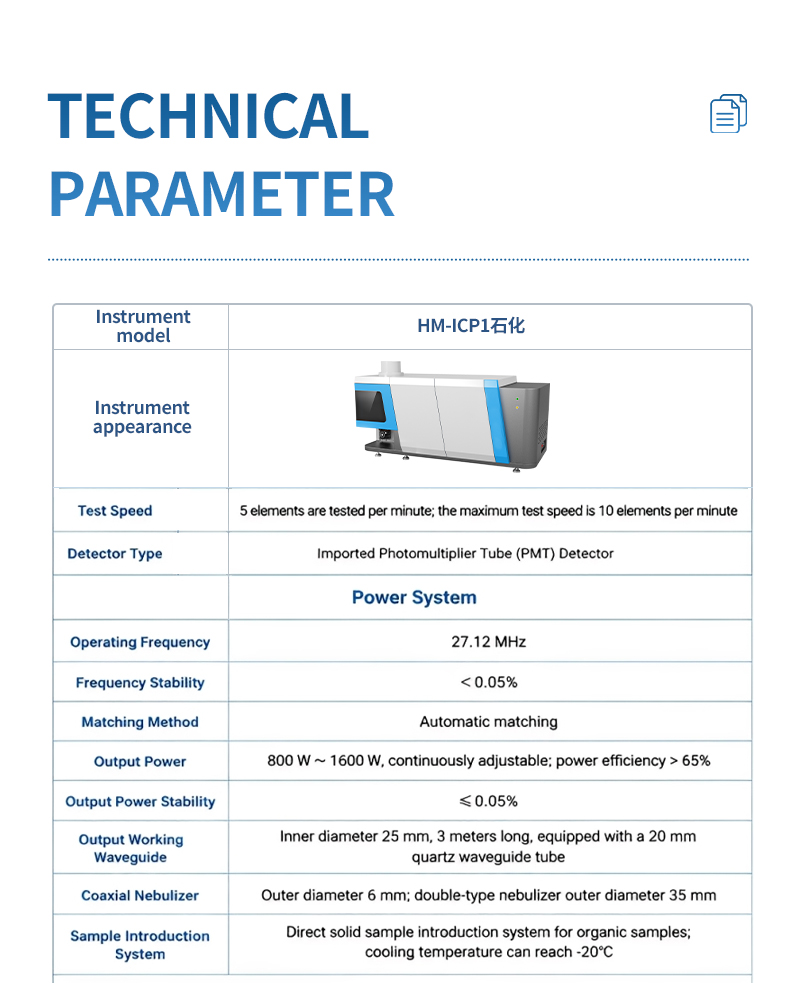
The HM-ICP1 is a sequential scanning ICP-OES spectrometer engineered specifically for the petrochemical industry. It employs photomultiplier tube (PMT) detection with dual-beam R212/R928 detectors, enabling precise determination of trace element concentrations in oils, lubricants, and related petroleum products.
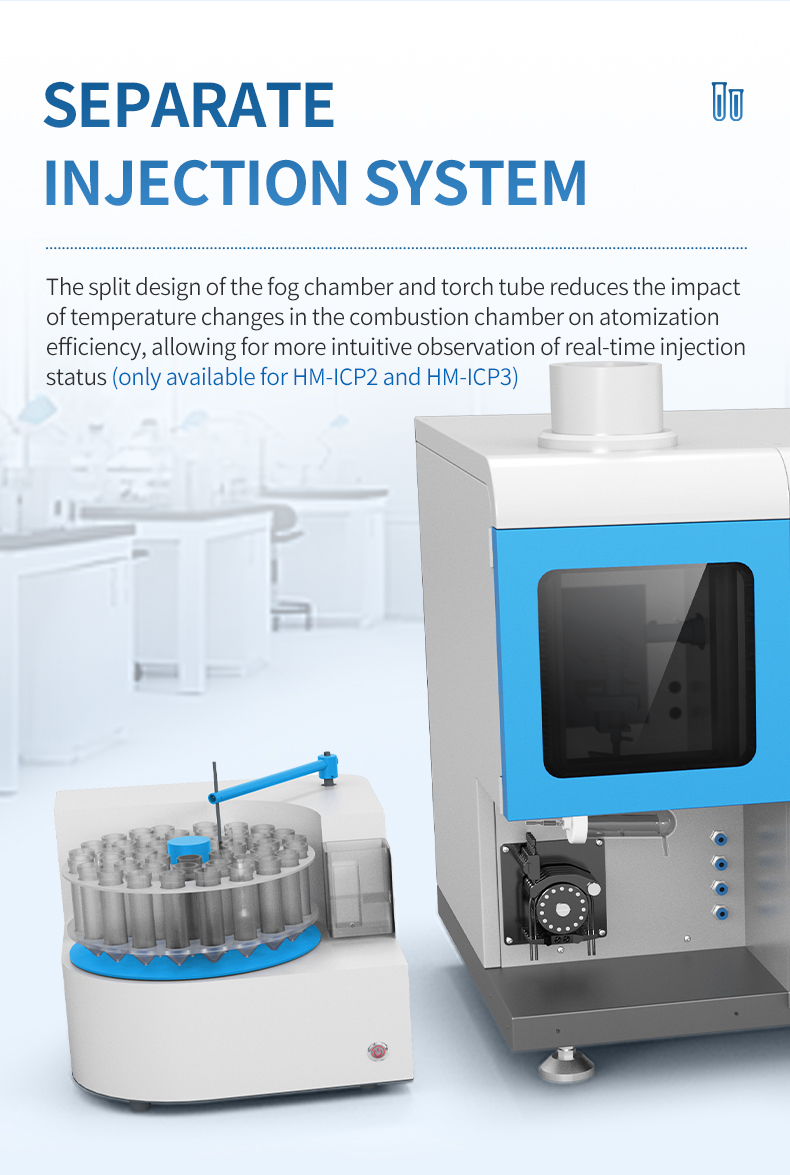
A distinguishing feature of this instrument is its direct oil sample introduction capability. Coupled with a semiconductor-cooled spray chamber operating at -20°C and oxygen-assisted injection, the system eliminates the carbon buildup issues commonly encountered with organic samples. This allows gasoline, diesel, and lubricating oils to be analyzed directly without complex acid digestion, significantly streamlining sample preparation workflows.
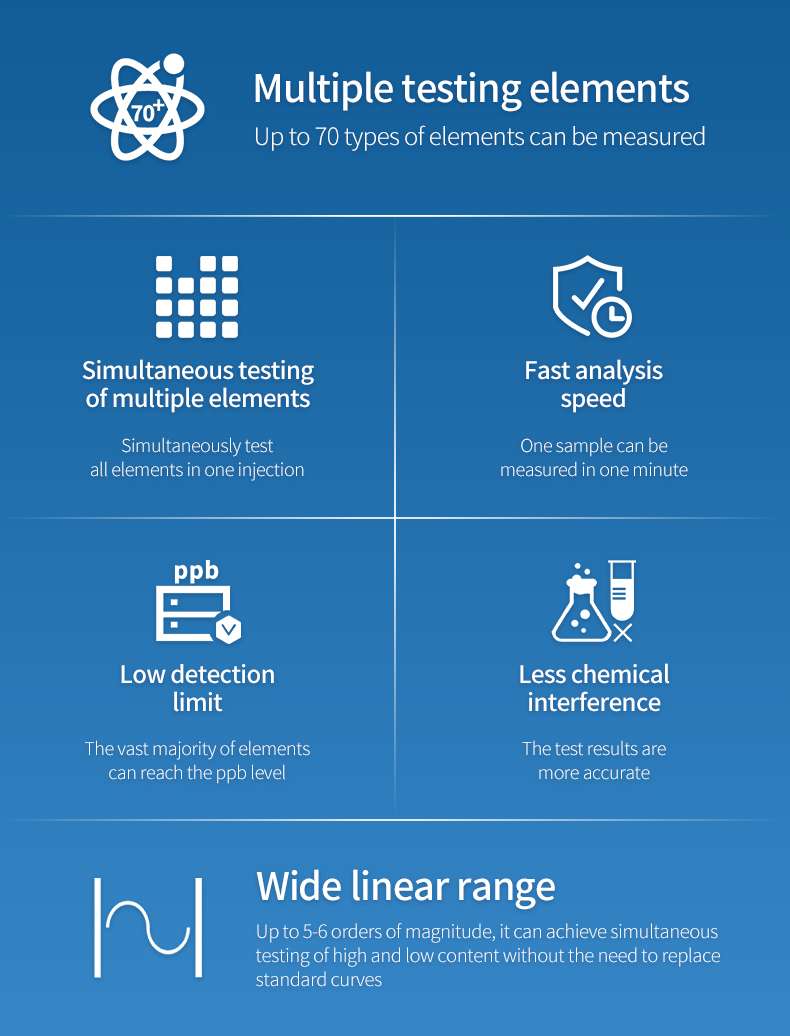
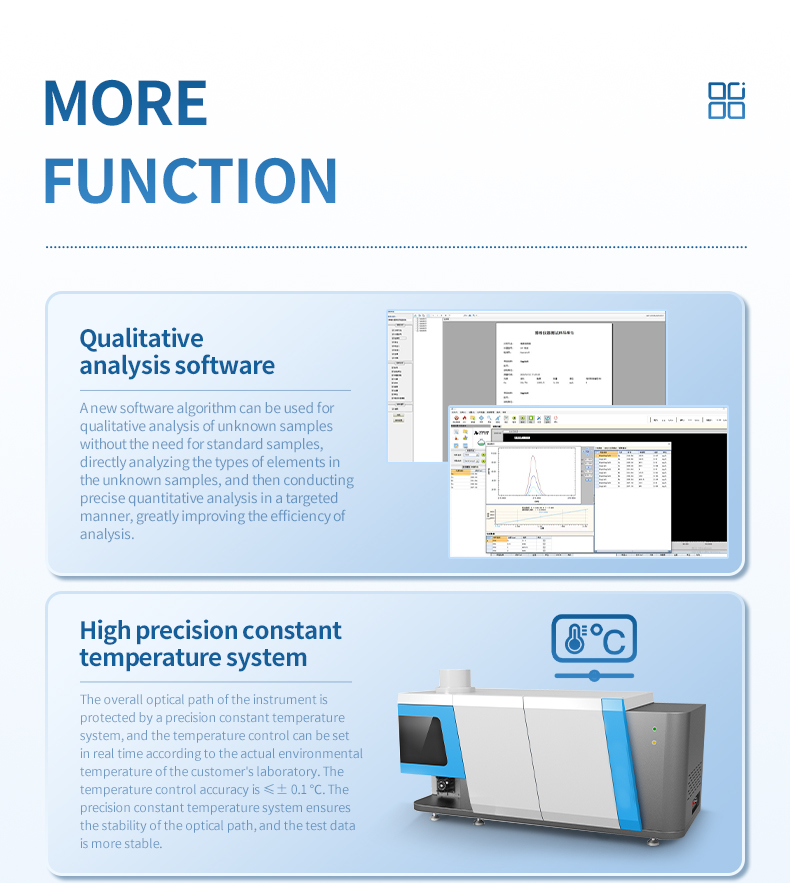
The optical system incorporates a 4320-groove imported grating paired with advanced optical path adjustment, delivering a resolution within 0.005nm — finer than the 0.008nm typical of conventional ICP spectrometers. The solid-state RF generator operates at 27.12 MHz with output power from 800 to 1600W, while a precision thermostat maintains optical path stability at ±0.1°C. With detection limits at ppb level for most elements and a linear range of 5–6 orders of magnitude, the instrument covers concentrations from trace to major levels without requiring standard curve changes.
Applications / Testing Items
Gasoline and diesel: direct injection analysis of Si, P, Fe, Mn, Pb, and other trace elements
Lubricating oils and additives: determination of 20+ wear metal elements after simple dilution
Used lubricants: wear element analysis using optional high-salt nebulizer
Crude oil and byproducts: multi-element analysis of 30+ elements
Methanol, ethanol, and other petrochemical feedstocks: elemental content determination
Automotive urea (DEF): Na, K, Ca, Mg, Al, Fe, Ni, Cu, Zn, Cr analysis
Oilfield tracer rare earth elements
Features
Direct oil sample injection — semiconductor-cooled spray chamber at -20°C with oxygen-assisted delivery eliminates organic sample carbon buildup
Ultra-high resolution optical system — 4320-groove imported grating achieving resolution within 0.005nm, superior to standard 0.008nm instruments
High-sensitivity PMT detection — R212/R928 photomultiplier tubes with negative high voltage adjustable from -50 to -1000V; no cooling or purge gas required
Low operating cost — requires only 99.99% argon gas instead of 99.999% high-purity grade, reducing gas expenses by at least one-third
Precision constant temperature system — optical path maintained at ±0.1°C stability for reproducible wavelength accuracy
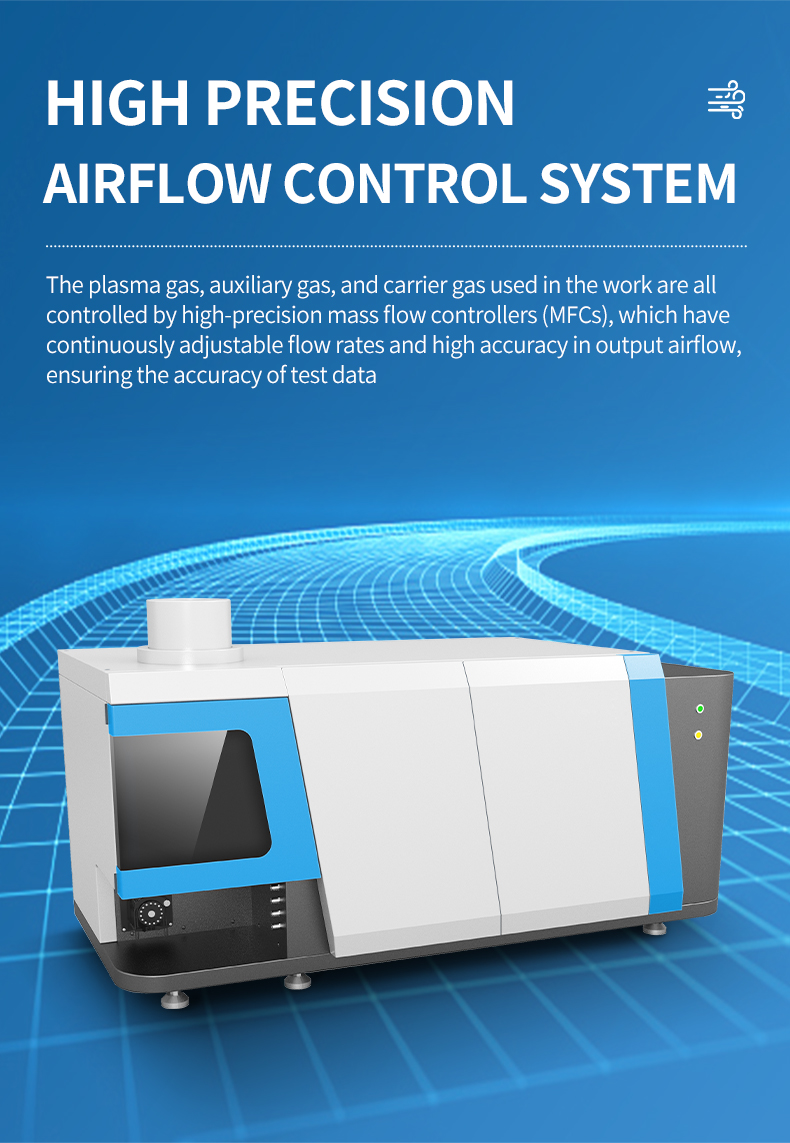
High-precision MFC gas control — all plasma, auxiliary, carrier, and oxygen gas flows managed by mass flow controllers with continuous adjustability
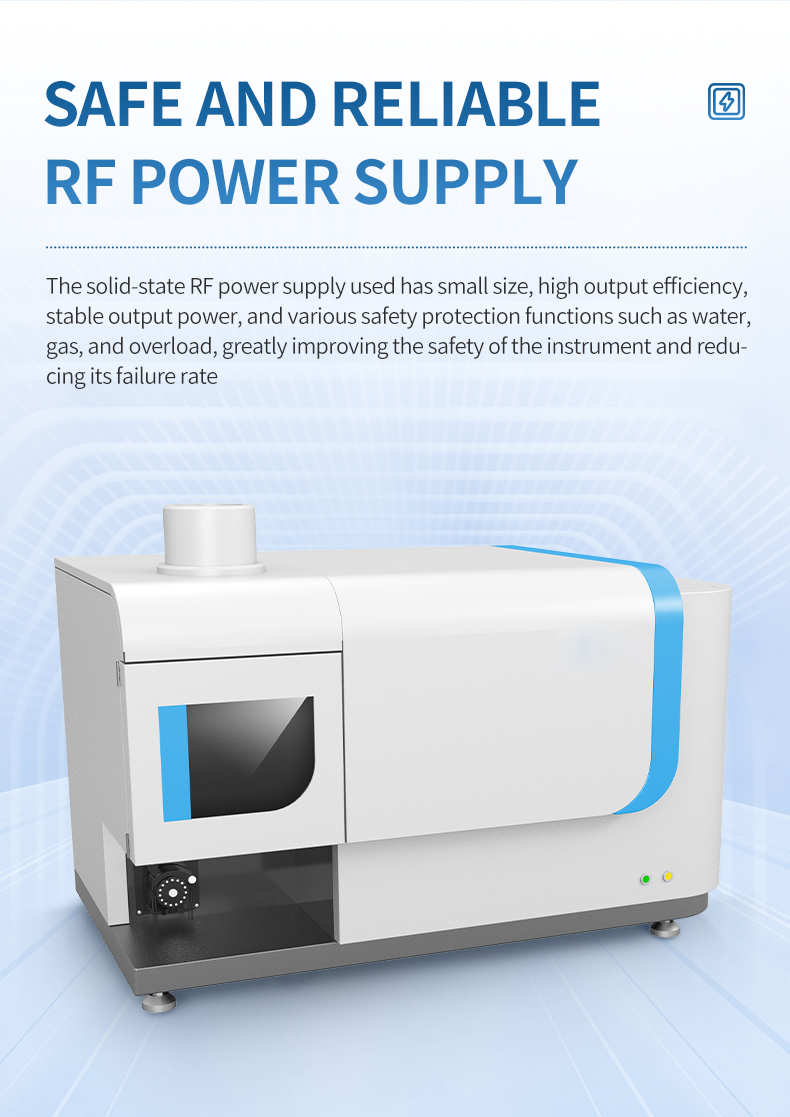
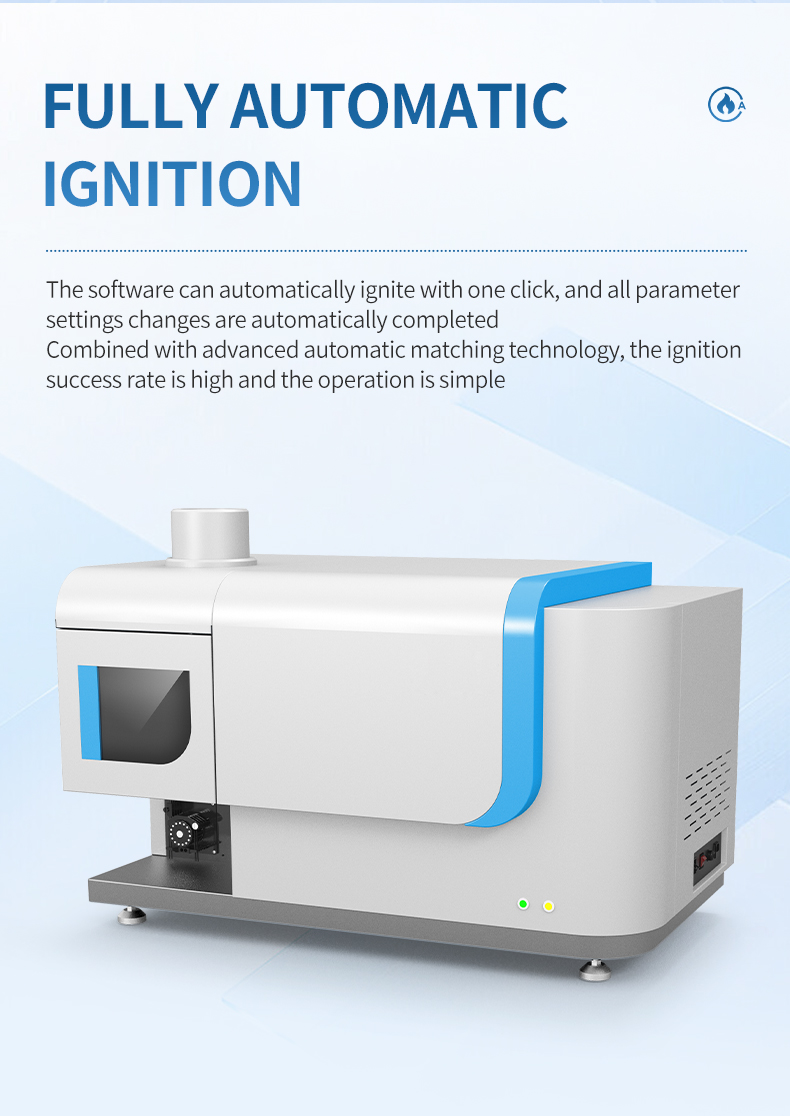
Full-auto ignition and matching — one-click startup with automatic impedance matching for reliable plasma ignition
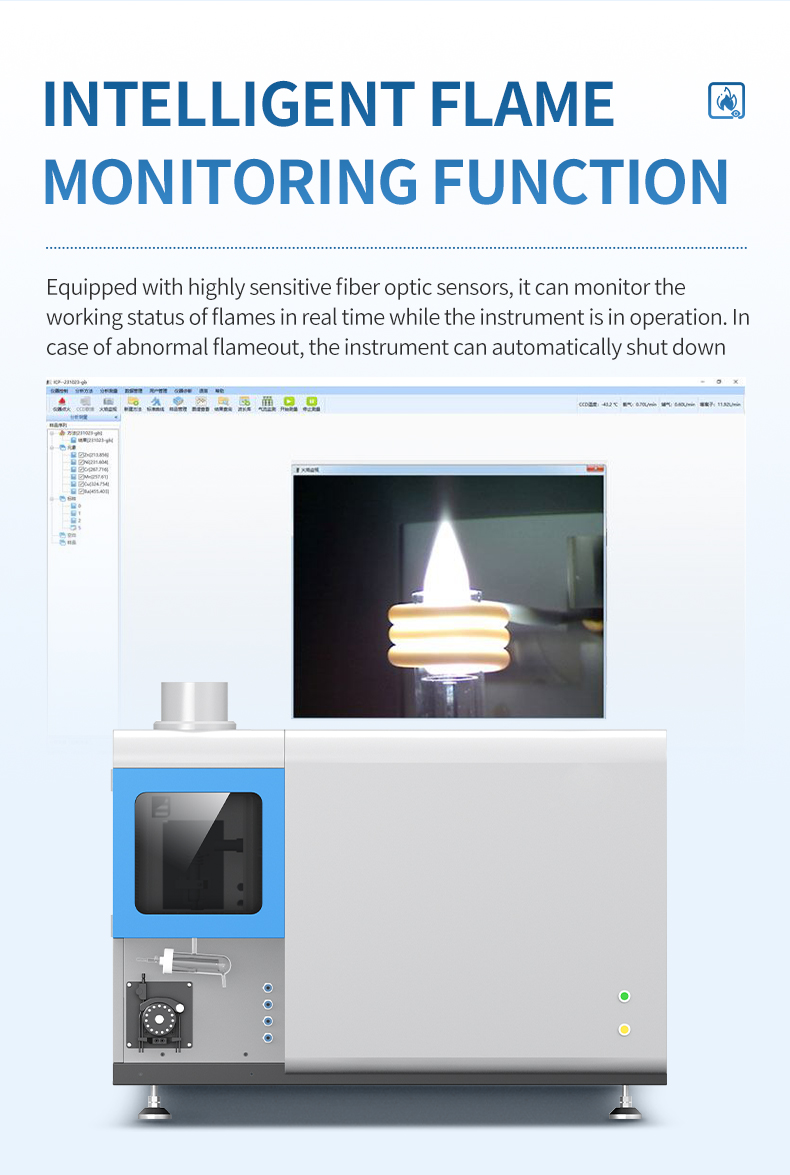
Intelligent flame monitoring — fiber optic sensor detects abnormal flameout and automatically shuts down the instrument
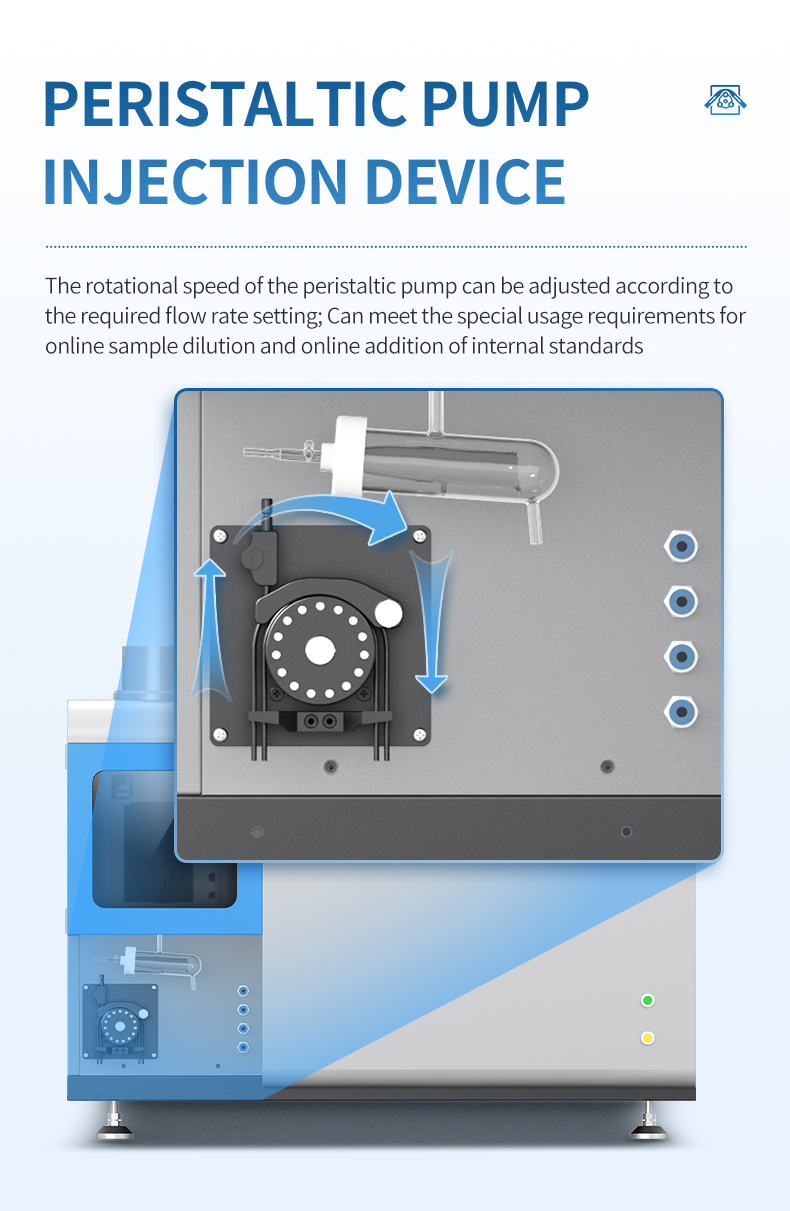
4-channel 12-roller peristaltic pump — consistent sample delivery with continuously adjustable rotation speed
2D observation position adjustment — software-controlled torch positioning with signal feedback for optimal viewing height
Wide linear dynamic range — 5–6 orders of magnitude allows simultaneous high and low concentration measurement
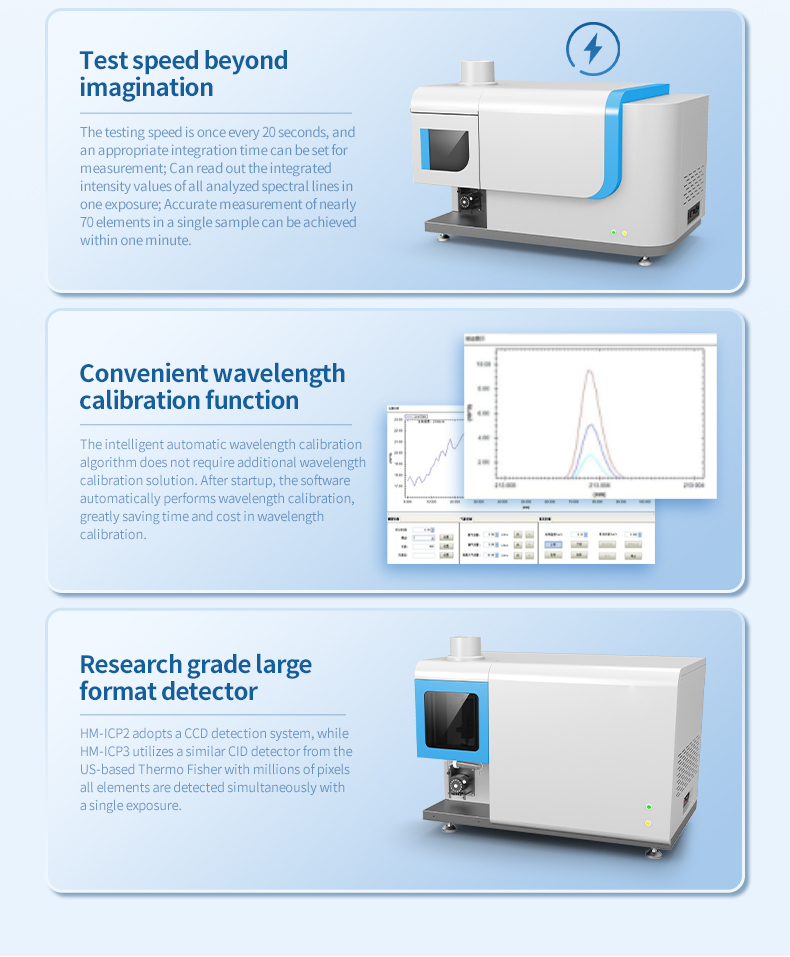
Multi-element capability — analyzes 70+ elements with 5–10 elements per minute scanning speed
Main Parameters
| Parameter | Specification |
|---|---|
| Technique | Sequential Scanning ICP-OES with PMT Detection |
| Detectable Elements | 70+ |
| Detection Limits | ppb level (most elements) |
| Linear Range | 5–6 orders of magnitude |
| Analysis Speed | 5–10 elements/min |
| Resolution | ≤0.005nm (4320-groove grating); ≤0.008nm (3600L/mm grating) |
| RF Frequency | 27.12 MHz |
| RF Power | 800–1600W, continuously adjustable |
| Sample Introduction | Direct oil injection with -20°C cooling |
| Gas Requirement | 99.99% argon |
Technical Parameters
| Parameter | Specification |
|---|---|
| Model | HM-ICP1石化 |
| Working Frequency | 27.12 MHz |
| Frequency Stability | <0.05% |
| Matching Method | Automatic matching |
| Output Power | 800–1600W, continuously adjustable; power efficiency >65% |
| Output Power Stability | ≤0.05% |
| Working Coil | Inner diameter 25mm, 3 turns |
| Quartz Torch Tube | Three concentric, outer diameter 20mm |
| Coaxial Nebulizer | Outer diameter 6mm |
| Spray Chamber | Cyclonic type |
| Organic Sample Introduction | Direct injection with cooling to -20°C |
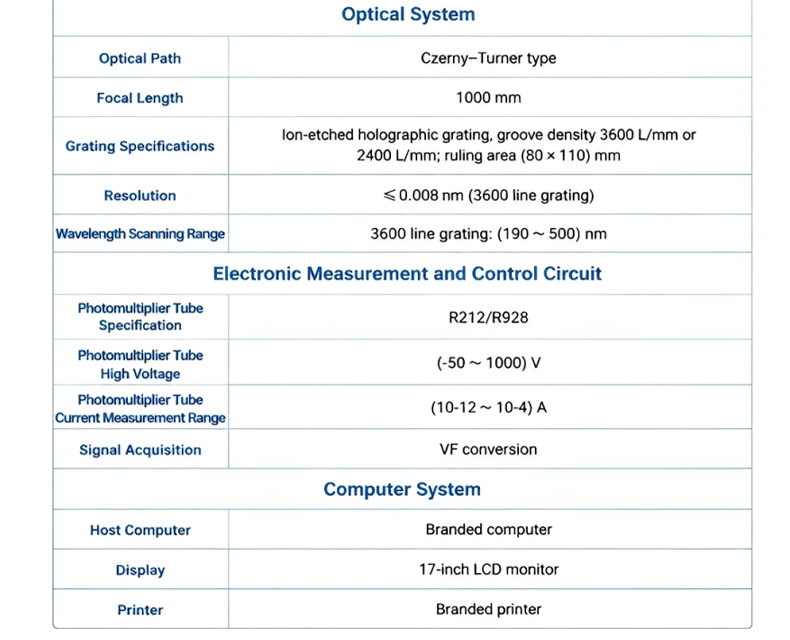
| Optical Path | Czerny-Turner type |
| Focal Length | 1000mm |
| Grating Specification | Ion-etched holographic grating; groove density 3600L/mm or 2400L/mm; ruling area 80×110mm |
| Resolution | ≤0.008nm (3600L/mm grating) |
| Scanning Wavelength Range | 190–500nm (3600L/mm grating) |
| PMT Specification | R212/R928 |
| PMT Negative High Voltage | -50 to -1000V |
| PMT Current Range | 10⁻¹² to 10⁻⁴ A |
| Signal Acquisition | VF conversion |
| Computer | Branded PC with 17-inch LCD monitor and branded printer |
- Previous: no more
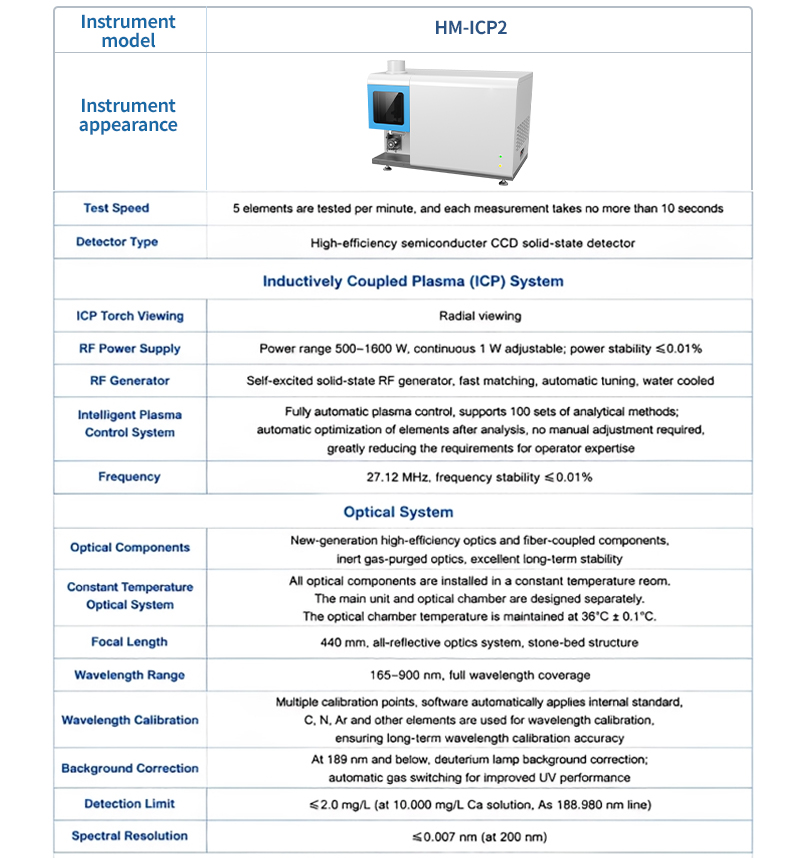
- Next: HM-ICP2 Full Spectrum CCD ICP-OES Spectrometer
 Related Products