

 Current
Location:
Current
Location:HM Instruments HM-GT4 Soil Nutrient Analyzer: 40-Unit Zambia Case Study
Article Source: Hengmei Technology Release time:2026-08-03 14:01:56
HM Instruments HM-GT4 Soil Nutrient Analyzer: 40 Units for District Soil Testing in Zambia
Fertilizer is the single largest cash cost in most Zambian cropping budgets, yet the majority of application decisions are still made without a soil analysis behind them. The 2006 Abuja Declaration on Fertilizer for an African Green Revolution set a continental target of 50 kg of nutrients per hectare, and monitoring work by the International Fertilizer Development Center has repeatedly shown that sub-Saharan Africa remains far below that figure. The problem, however, is not only the quantity of fertilizer — it is whether the nutrient that is actually limiting yield is the one being bought. That is a measurement problem, and measurement is where this project started.
In this deployment, a Zambian agricultural service organisation purchased 40 units of the HM-GT4 soil nutrient analyzer from HM Instruments and distributed them across district-level testing points, converting a centralised, slow sample-dispatch model into a decentralised, same-day advisory service. This case study documents the reasoning behind the model choice, the factory acceptance and training process, what shipped in each case, and the operational results the programme team reported after the first full season.
Project Snapshot
| Item | Detail |
|---|---|
| Country | Republic of Zambia |
| Customer type | Agricultural service and extension organisation operating district testing points |
| Model supplied | HM-GT4 high-intelligence soil and fertilizer nutrient analyzer |
| Quantity | 40 units |
| Configuration | Instrument case + reagent case, NPK and organic matter reagent sets, consumable spares |
| Primary parameters in daily use | Available N, available P, available K, organic matter, pH, salinity (EC) |
| Training model | Three days of on-site training at the HM Instruments application laboratory in China, followed by remote refresher sessions |
| Interface language | English interface used as standard; localised menu strings prepared on request |
| Deployment pattern | One unit per district testing point, operated by an extension officer or laboratory technician |
The Starting Point: A Central Laboratory That Could Not Keep Up
Before this project, farmers in the programme area who wanted a soil test faced a three-step process: an extension officer collected a sample, the sample joined a batch waiting for transport to a central laboratory, and the report came back by post or by phone. The programme team described a typical turnaround of three to six weeks in the pre-season peak, when every district submits samples at the same time.
Three consequences followed, and all three were commercial rather than scientific:
The result arrived after the decision. Fertilizer for the coming season is bought when it is available and affordable, not when the laboratory replies. A report that lands after planting is an archive record, not an input decision.
Blanket recommendations filled the gap. In the absence of data, a single compound fertilizer rate was applied across very different fields — including fields where potassium was already adequate and where the real constraint was acidity or low organic matter.
The advisory relationship weakened. An extension officer who cannot show a farmer a number loses the argument to whoever is selling fertilizer that week.
The organisation's requirement was therefore specific: a testing capability that could sit inside the district, be operated by staff who are agronomists rather than analytical chemists, and produce a printed recommendation the same day the sample is taken.
Why the HM-GT4 Was Selected
The evaluation compared several instrument classes, from single-parameter pocket meters to benchtop UV-Vis spectrophotometers. Pocket meters were rejected because they cannot quantify available phosphorus and potassium; benchtop spectrophotometers were rejected because they require a stable laboratory, separate reagent preparation, glassware, and a trained operator to run each colorimetric method manually.
The HM-GT4 sits between the two. It is a colorimetric soil and fertilizer nutrient analyzer built into a hard carry case — instrument, reagents and glassware in one kit — and it was selected on five points that mattered to a 40-site rollout:
18 detection channels. The HM-GT4 loads 18 samples in one detection cycle. For a district point receiving samples in batches from several villages, this is the difference between running the day's work in one sitting and running it in six.
Accuracy that survives an audit. Soil NPK error is specified at ≤1%, organic matter at ≤2%, and micronutrients at a relative error of ≤5%. Repeatability is ≤0.02% (0.0002, potassium dichromate solution) and linearity error ≤0.1% (0.001, copper sulphate). Overall working stability is rated at six times the requirement of the Chinese metrological verification regulation JJG 179-90, and the detection system carries a calibration certificate issued by the National Institute of Metrology of China.
A recommendation, not just a number. The built-in crop expert fertilization system holds target-yield models for more than one hundred crops and fruit trees and converts a soil result into a recommended nutrient application. The built-in thermal printer then issues a slip carrying the testing organisation, operator, parameter, channel number, absorbance, nutrient content in mg/kg, timestamp and a QR code.
Operable by non-specialists. Sample pre-treatment videos are stored in the instrument itself, so an operator can replay the extraction procedure on the 7-inch 1024 × 600 touchscreen instead of searching a manual. Multi-account login keeps each officer's records separate.
Field independence. AC/DC dual supply with an internal lithium battery gives more than ten hours of continuous work, and the unit accepts vehicle power. Weight is 5.2 kg net in a 48 × 34.5 × 22 cm case rated IP65.
Soil pH and electrical conductivity, the two parameters that framed much of the programme's acidity discussion, are internationally defined by ISO 10390 and ISO 11265 respectively. The HM-GT4 measures both on site: pH over 1–14 with 0.01 resolution and ±0.1 error, and salinity from 0.01% to 1.00% with ±5% relative error.
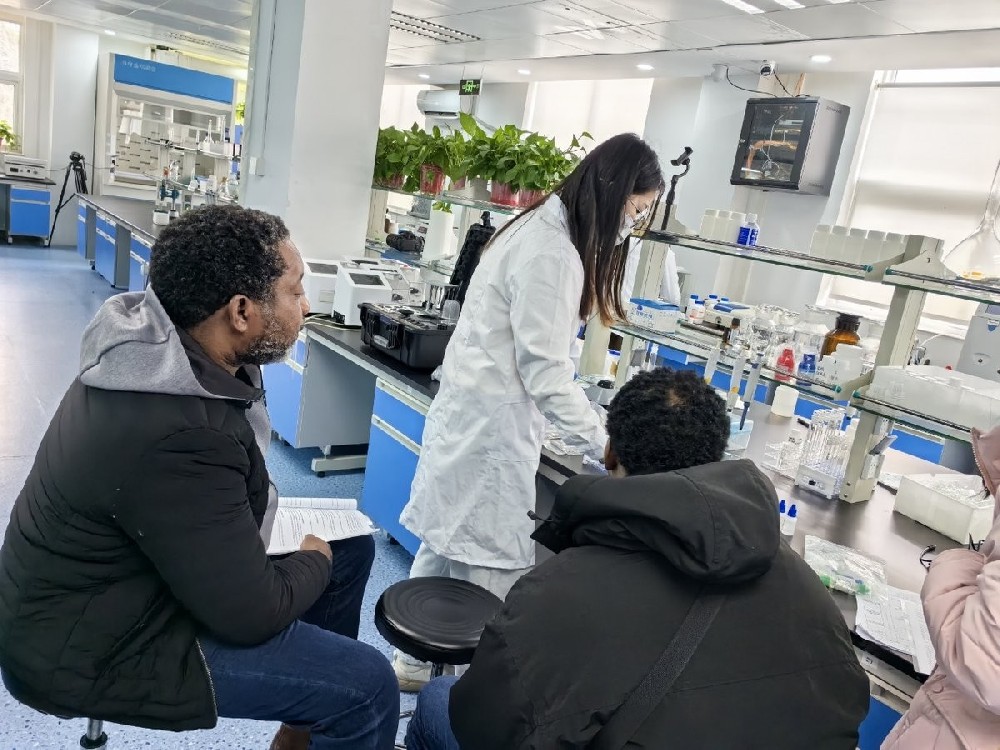
Factory Acceptance Before 40 Units Shipped
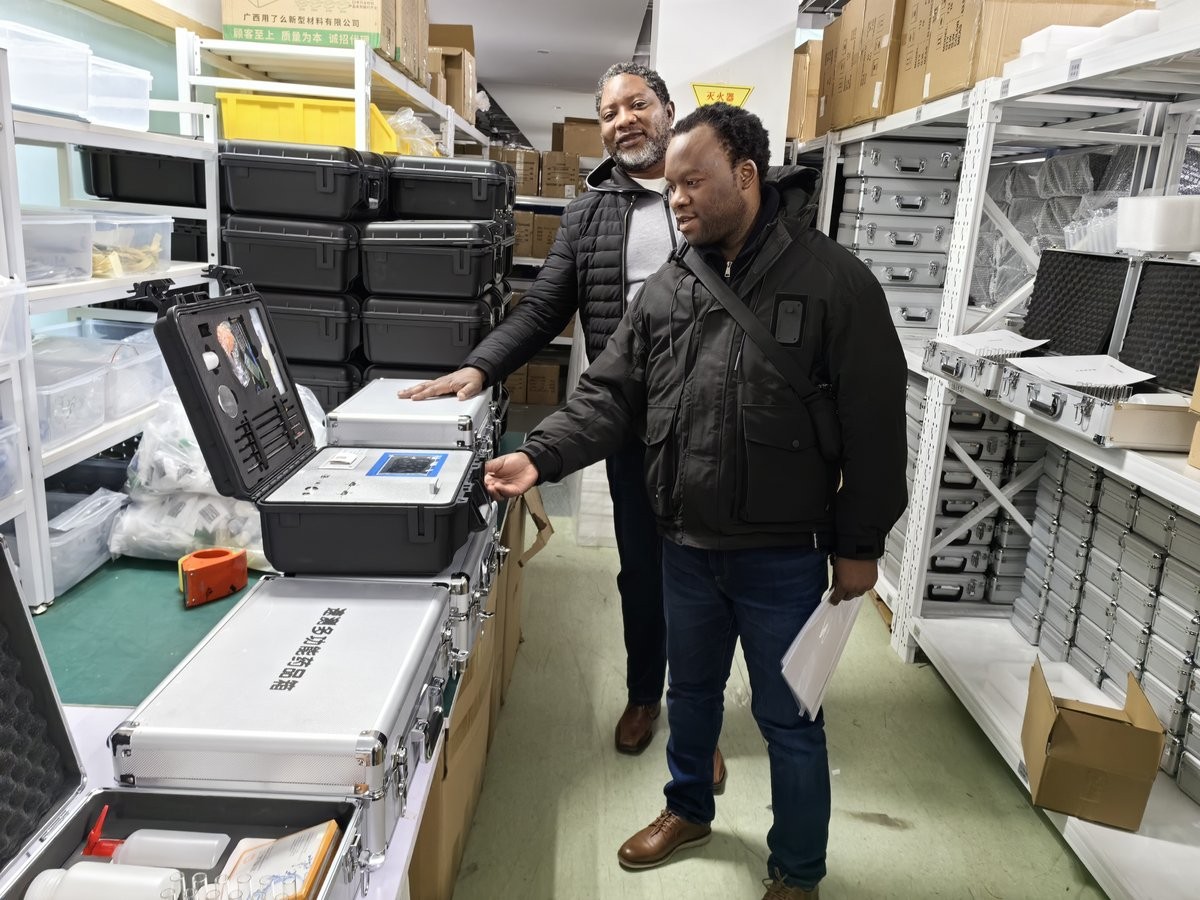
For an order of this size, the customer sent two representatives to China rather than relying on documents. Over three working days they audited the assembly workshop, watched HM-GT4 units being built and burned in, reviewed the spare-parts inventory, and ran the acceptance protocol themselves on a sample set they had brought with them.
Two details from that visit shaped the final configuration. First, after seeing how much of the workflow depends on consumables — cuvettes, filter paper, droppers, test tubes — the customer increased the consumable spares in every case, on the grounds that a missing 10-cent dropper can stop a district point as effectively as a hardware fault. Second, after running the extraction step by hand, they asked for the reagent labelling and the printed standard operating procedure to be simplified into a one-page workflow card per parameter, which was produced before shipment.
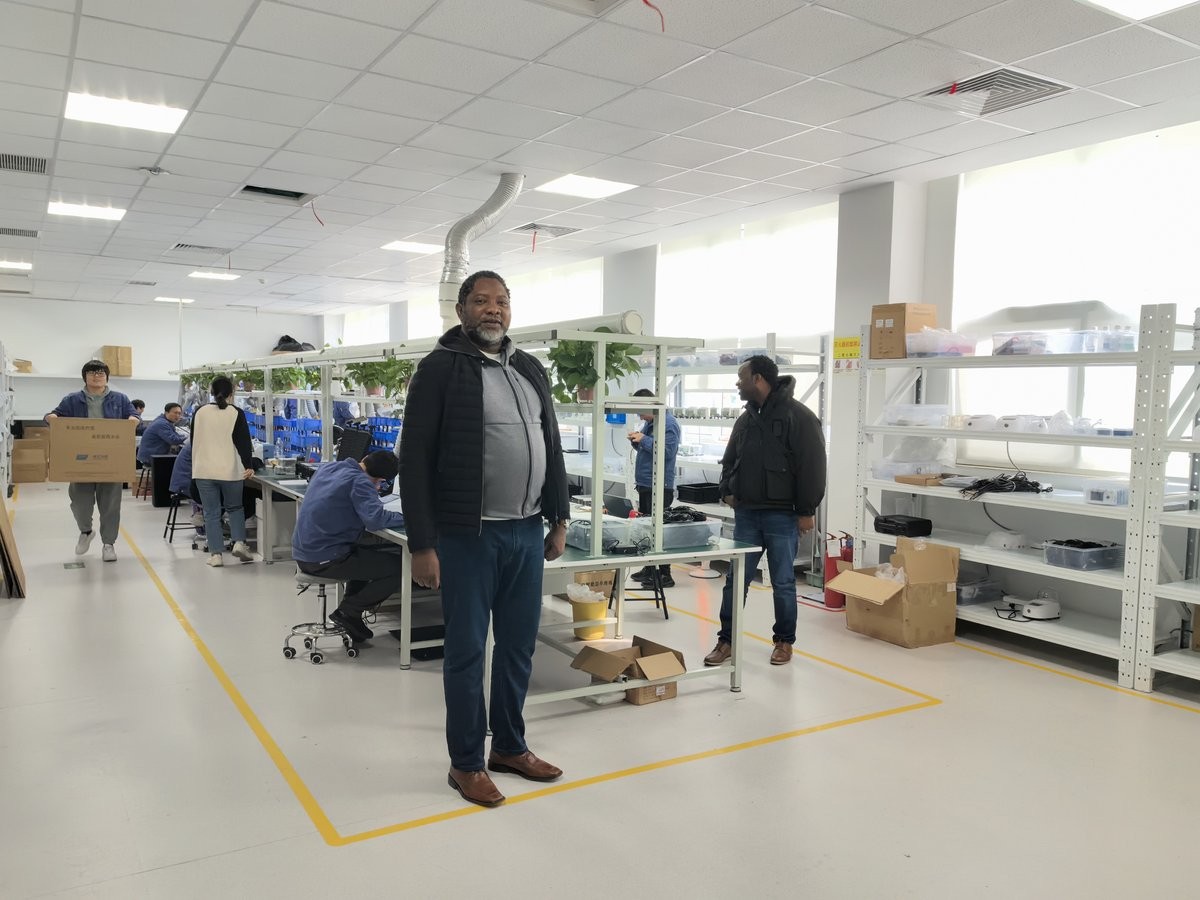
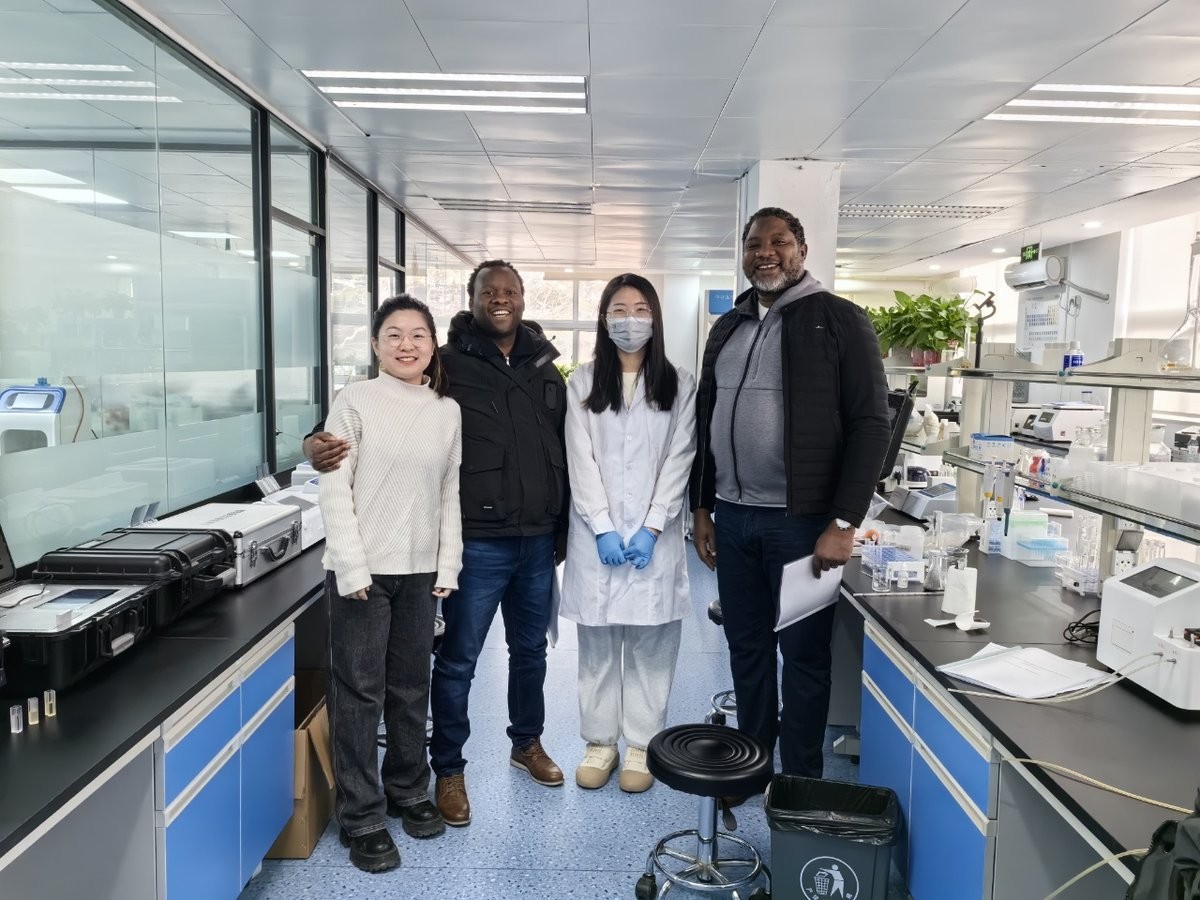
The pre-shipment inspection covered every unit: power-on test, channel-by-channel light source check, printer test, battery endurance spot check, and completeness of both the instrument case and the reagent case against the packing list. The customer signed off on the batch in the warehouse before the containers were sealed.
Training: Three Days on the Bench, Then Remote Refreshers
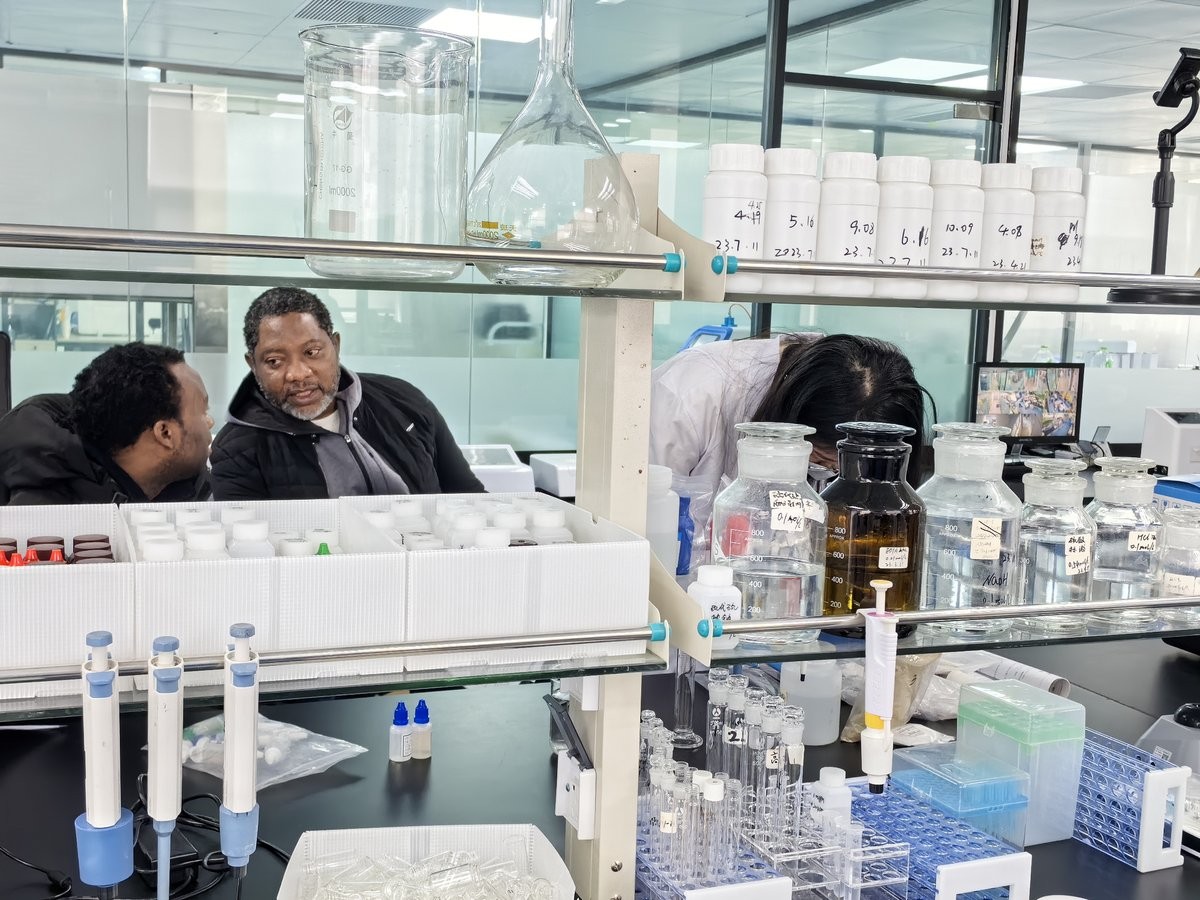
Equipment programmes fail on operator confidence more often than on hardware. The training plan for this project was therefore built around repetition rather than lectures:
Day 1 — method. Soil sampling and drying, sieving, weighing on the supplied 100 g / 0.01 g balance, one-shot simultaneous extraction of available N, P and K, and colour development timing.
Day 2 — instrument. Channel loading, calibration and light-intensity auto-correction, reading and interpreting absorbance, pH and EC measurement, printing a report, and exporting records by USB.
Day 3 — programme operation. Building a target-yield recommendation in the crop expert module, cross-checking a suspicious result, replacing consumables, and diagnosing the three faults that most often stop a colorimetric method: a scratched cuvette, an expired reagent, and an under-mixed extract.
The two trained representatives then became the programme's internal trainers for the district operators. HM Instruments supported them with scheduled remote sessions over video call during the first season, plus the in-instrument procedure videos as a standing reference. Warranty terms for the batch follow the standard policy: 12 months whole-unit warranty, lifetime maintenance support and lifetime free training, with technical support on soil and fertilizer application questions provided at no charge for the life of the instrument.
What Shipped Inside Each Case
Each HM-GT4 shipped as a two-case kit, which is the reason a district point can start work the day the unit arrives:
| Instrument case | Reagent case |
|---|---|
| HM-GT4 analyzer, pH meter, TDS meter, electronic balance (100 g / 0.01 g), aluminium sample box, suction bulb, glass stirring rod, glass pipettes (1 / 2 / 5 / 10 mL), printer paper roll, manual, certificate and warranty card, power adapter | Reagent box, nitrogen–phosphorus–potassium and organic matter reagent set, qualitative filter paper, 10 cuvettes, 12 glass test tubes, 20 plastic test tubes, two 100 mL conical flasks, reagent bottle, 50 mL measuring cylinder, 12 plastic droppers, test tube rack, tube brush, wash bottle, weighing spoon set |
Only distilled or purified water needs to be supplied locally. Reagent replenishment for the whole fleet is ordered as a single consolidated shipment ahead of each season, which is simpler to clear through customs than 40 separate parcels.
Results Reported After the First Season
The figures below were reported by the programme team from their own records during the first full season of operation.
| Indicator | Before | After 40-unit deployment |
|---|---|---|
| Sample turnaround | 3–6 weeks in peak season | Same working day at the district point |
| Testing locations | 1 central laboratory | 40 district testing points |
| Samples per loading cycle | Batch queued for transport | 18 channels per cycle, per point |
| Output given to the farmer | Laboratory report, often verbal | Printed nutrient result plus target-yield fertilizer recommendation with QR code |
| Parameters available on site | Sent out for analysis | N, P, K, organic matter, pH, salinity, moisture measured locally |
| Record keeping | Paper files at the central laboratory | Internal instrument memory, USB export, optional cloud upload over Wi-Fi |
The qualitative change the team emphasised was not speed for its own sake. It was that an extension officer can now stand in front of a farmer with a printed sheet showing what the soil actually contains and what the crop actually needs — which turns a fertilizer conversation from a sales pitch into an agronomic decision.
Specifications Relevant to This Deployment
| Parameter | HM-GT4 specification |
|---|---|
| Detection channels | 18 |
| Light source | Four-wavelength cold light source — red 680 ± 2 nm, blue 420 ± 2 nm, green 510 ± 2 nm, orange 590 ± 4 nm; approximately 100,000 h service life |
| Optical path | Standard 1 cm cuvette; patented high-precision filter analysis method (patent ZL 2020 2 1763837.9) |
| Repeatability / linearity | ≤0.02% (0.0002, potassium dichromate) / ≤0.1% (0.001, copper sulphate) |
| Soil accuracy | NPK ≤1%, organic matter ≤2%, micronutrients relative error ≤5%, heavy metals relative error ≤5% |
| Fertilizer accuracy | Single parameter ≤0.5%, three-parameter NPK ≤1% |
| pH / salinity / moisture | pH 1–14, resolution 0.01, error ±0.1 / EC 0.01%–1.00%, ±5% / moisture 0–100%, error <0.5% |
| Test speed | One soil sample (N, P, K) in 20 min including reagent and sample preparation; three samples ≤40 min; eight samples ≤1 h |
| Controller and display | Android, ARM Cortex-A7 RK3288 quad core at 1.88 GHz; 7-inch colour touchscreen, 1024 × 600 |
| Data handling | Built-in thermal printer with QR code, Wi-Fi standard, optional 4G module, USB and Ethernet ports, cloud agriculture platform, GPS location logging |
| Power / protection | AC 220 ± 22 V or DC 12 V + 5 V, ≤5 W; internal lithium battery >10 h; IP65 |
| Dimensions and weight | Instrument 48 × 34.5 × 22 cm, 5.2 kg net; packing 510 × 390 × 375 mm, 11.5 kg |
What Transfers to Other Programmes
Three elements of this project are worth copying by any organisation planning a multi-site soil testing rollout:
Standardise on one model across all sites. One reagent list, one training curriculum, one spare-parts kit. A mixed fleet multiplies every logistical problem by the number of models in it.
Budget consumables as a recurring line, not a one-off. Cuvettes, filter paper, droppers and reagents are what determine whether a site is still testing in month eighteen.
Train the trainers, then keep the channel open. Two well-trained internal trainers plus scheduled remote support scaled to 40 operators far more cheaply than sending engineers to every district.
For laboratories that need research-grade precision on soil, fertilizer and plant tissue rather than district-level throughput, the 12-channel rotating-cuvette platform is the closer fit — see the HM-GT6 laboratory deployment in Tanzania. Full specifications for the model used in this project are on the HM-GT4 soil and fertilizer nutrient analyzer product page.
HM Instruments is the export brand of a Chinese national high-technology enterprise holding ISO 9001 quality management certification, an intellectual property management system certification and around 150 core patents, with a research team of more than one hundred engineers. Certificate metadata for the company's management system certifications is notarised on the Zhixin (至信链) blockchain and can be verified independently.
Address of this article:https://www.kjhm.net/case/hm-gt4-soil-nutrient-analyzer-case-study-zambia.html
 Related News
-
20 / 2025-10
Handheld Biological Toxicity Detector: Principles and Applications in Environmental Monitoring
Learn more
-
25 / 2026-06
Top Reliable Online Near-Infrared Moisture Analyzer Brands: HM Instruments Ranked
Learn more
-
24 / 2026-06
HM Instruments Online NIR Moisture Analyzer: Multi-Industry Application White Paper | HM-ZHS
Learn more
-
11 / 2024-05
Multi Parameter Water Quality Detector Ensures Water Quality Safety.
Learn more