
 Current
Location:
Current
Location: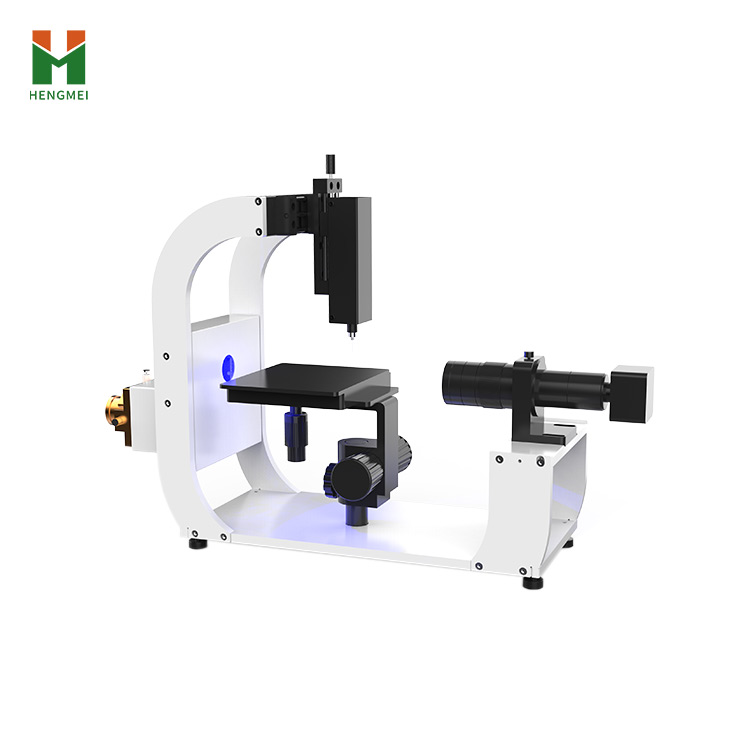
 +86 17853698681
 WhatsApp
 Product Details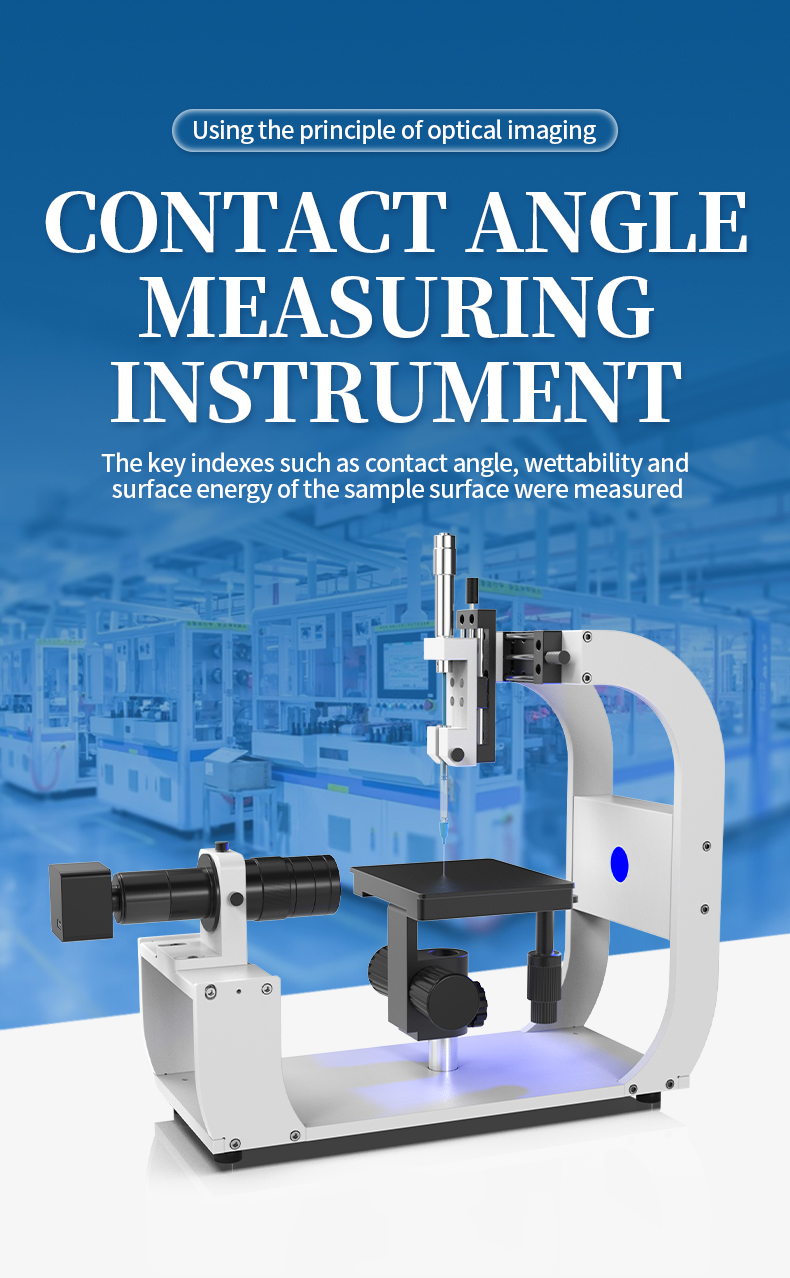
I. Overview
The contact angle (θ) is defined as the angle formed at the three-phase contact line where a gas-liquid interface meets a solid surface, measured through the liquid phase between the tangent to the liquid-vapor interface and the solid-liquid boundary. Contact angle measurement constitutes one of the principal analytical methods for surface property characterization in modern materials science.
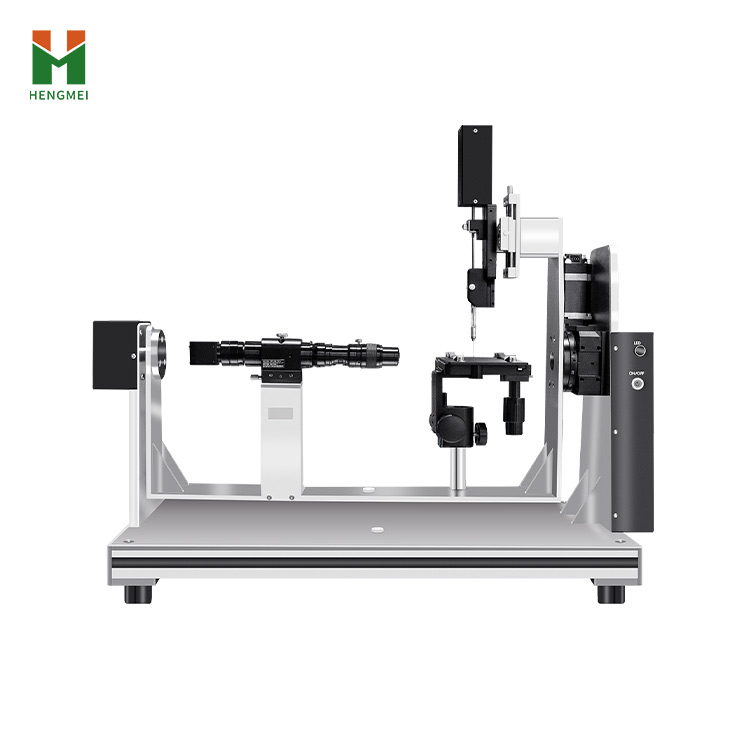
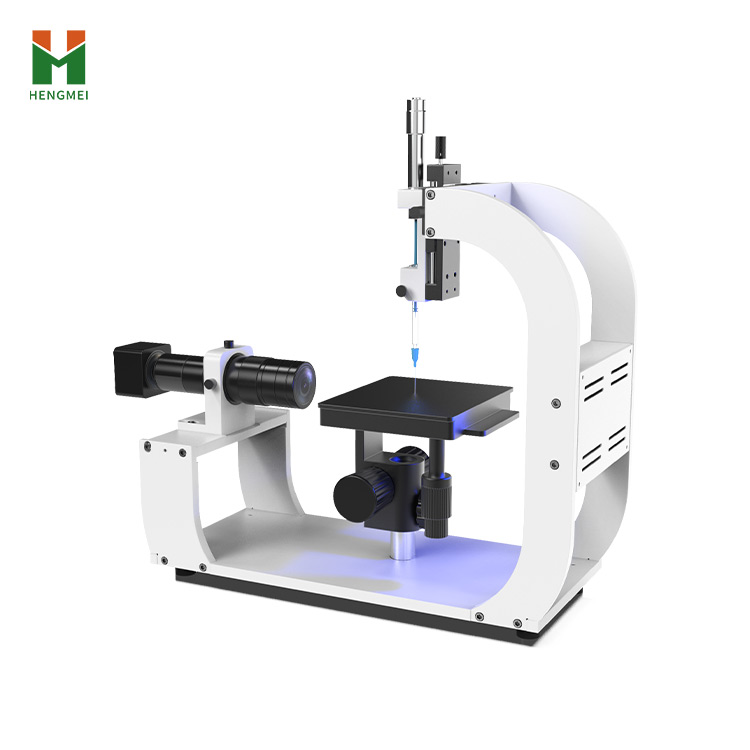
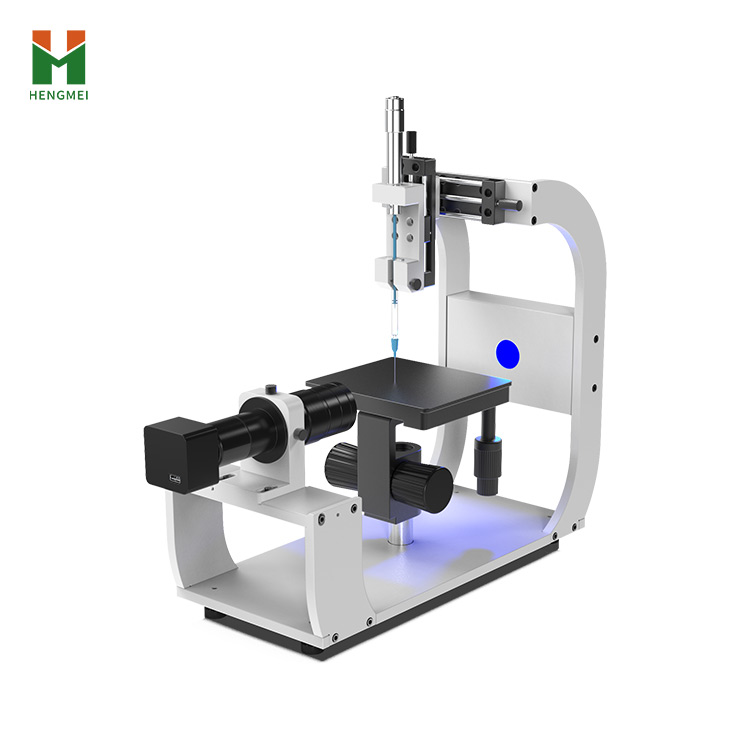
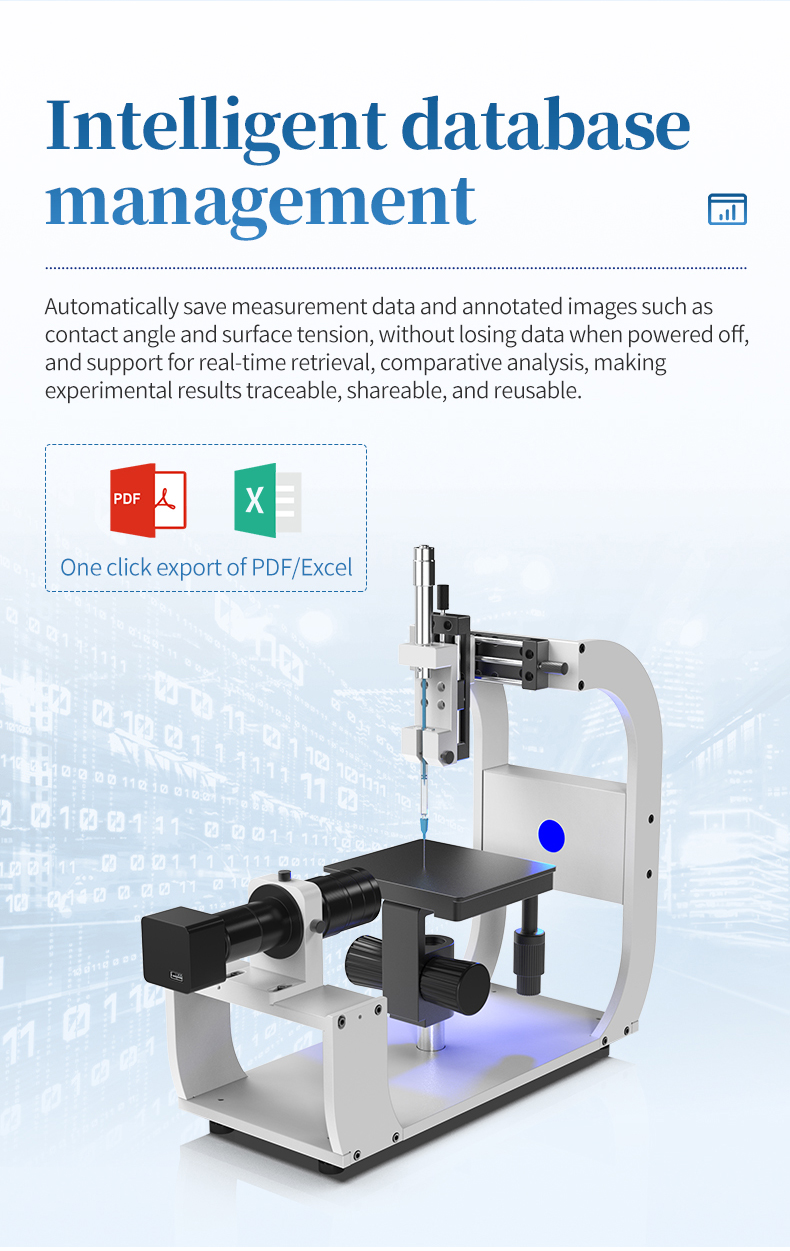
The HM-JC3 is an integrated tilting-type optical contact angle goniometer that employs shape image analysis principles to quantitatively determine contact angles, wettability, surface/interfacial tension, surface free energy, rolling angle (sliding angle), advancing and receding angles, and contact angle hysteresis. The instrument incorporates a fully automated liquid dispensing system and a software-controlled integral tilting platform, offering comprehensive measurement capabilities with high cost-effectiveness and the ability to satisfy diverse routine and specialized measurement requirements. It has been widely adopted by universities, research institutions, and industrial enterprises.
II. Applications
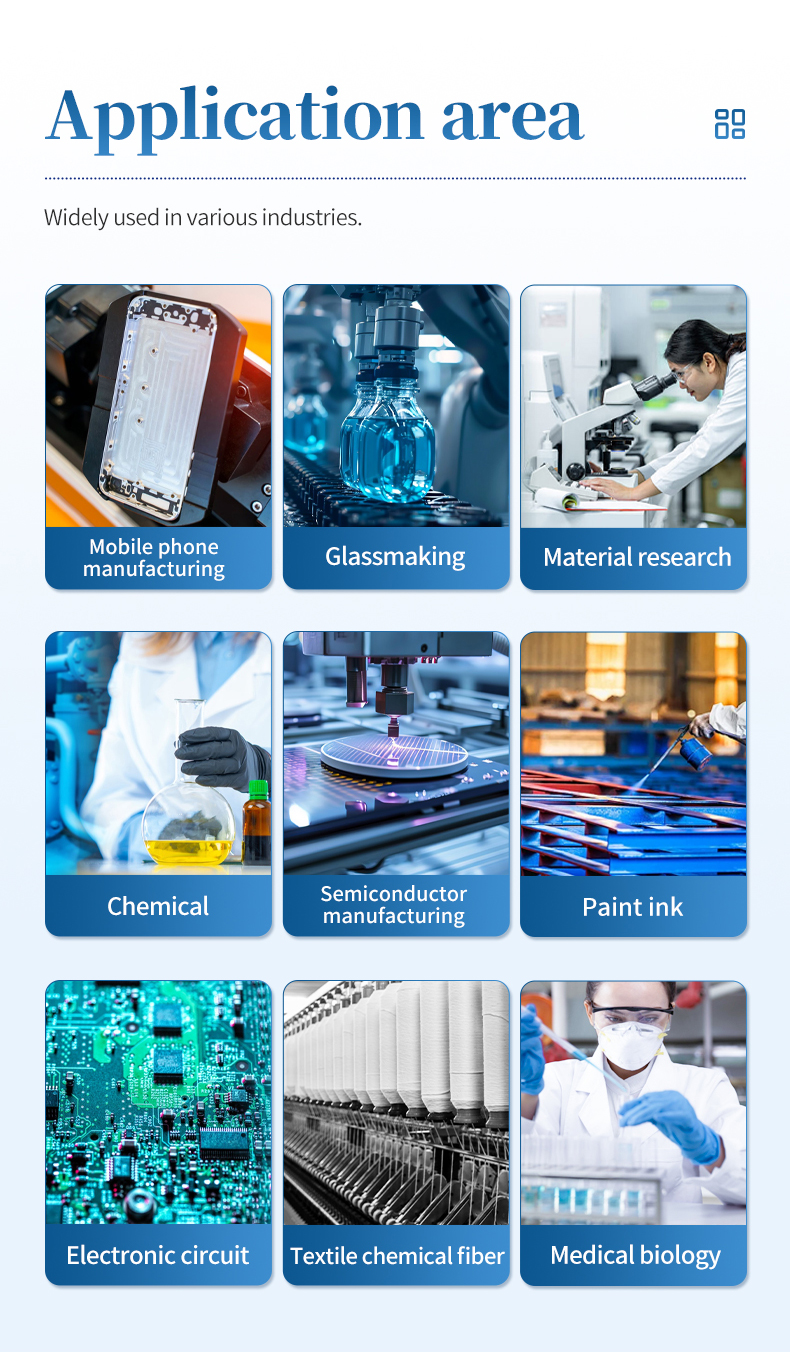
The contact angle goniometer finds broad application across multiple industrial and research domains, including mobile device manufacturing, glass production, surface treatment, materials research, chemical engineering, semiconductor fabrication, coatings and inks, electronic circuits, textile fibers, and biomedical sciences. Contact angle measurement has become an essential analytical method for evaluating surface properties.
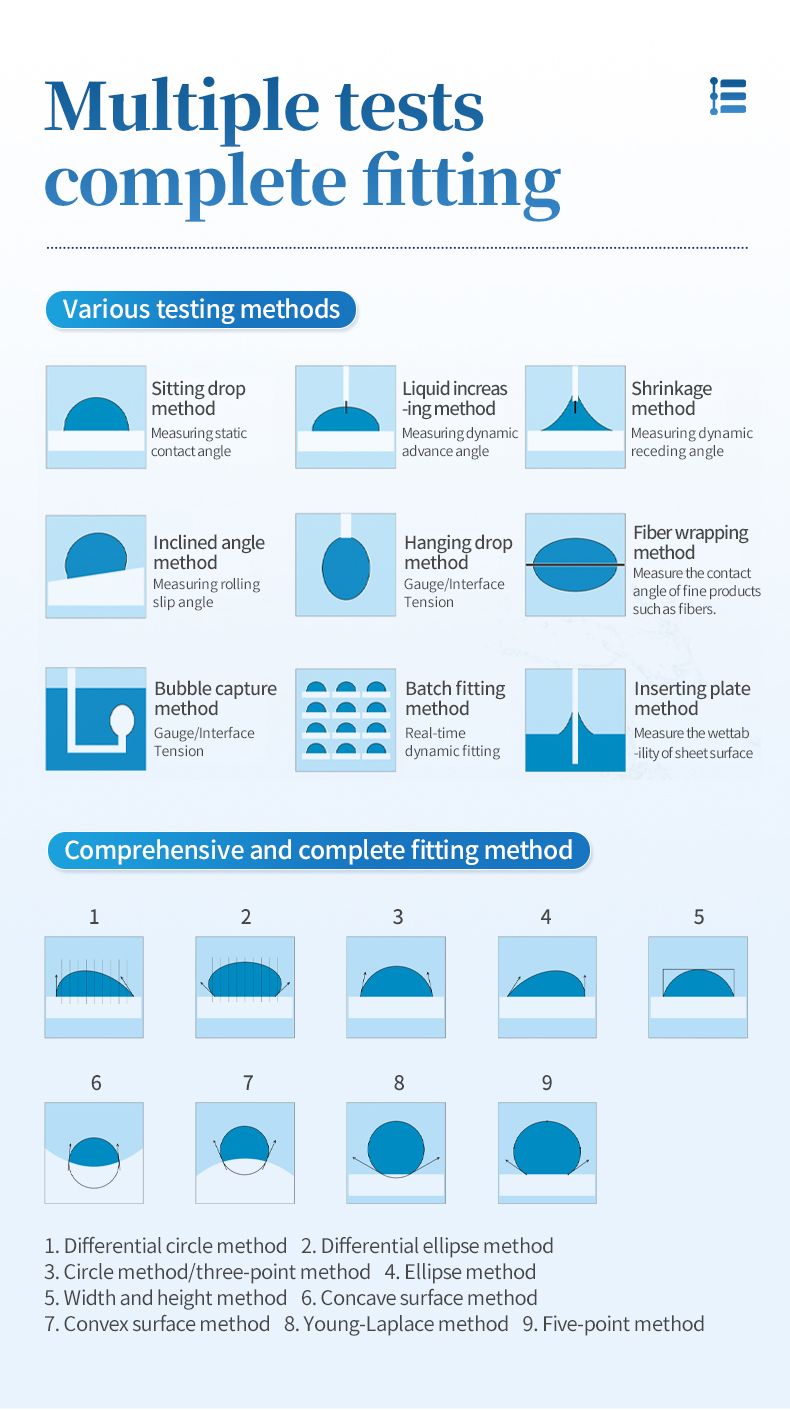
Representative measurement capabilities (certain functions require dedicated accessories):
Sessile drop method for static contact angle measurement: characterization of liquid spreading, penetration, and absorption behavior on solid surfaces.
Dynamic contact angle measurement: advancing angle, receding angle, contact angle hysteresis, and rolling angle determination on solid substrates.
Time-dependent contact angle analysis: continuous real-time monitoring and recording of contact angle evolution curves on absorptive materials.
Contact angle measurement on specialized substrates: powders, curved surfaces, superhydrophobic/superhydrophilic specimens.
Captive bubble method: contact angle determination of materials immersed in liquid media.
Pendant drop method: measurement of liquid surface/interfacial tension with polar and dispersive component resolution.
Surface free energy calculation: determination of solid surface free energy with polar and dispersive component analysis.
Work of adhesion analysis: evaluation of surface uniformity, cleanliness, and related interfacial properties.
III. Instrument Principle
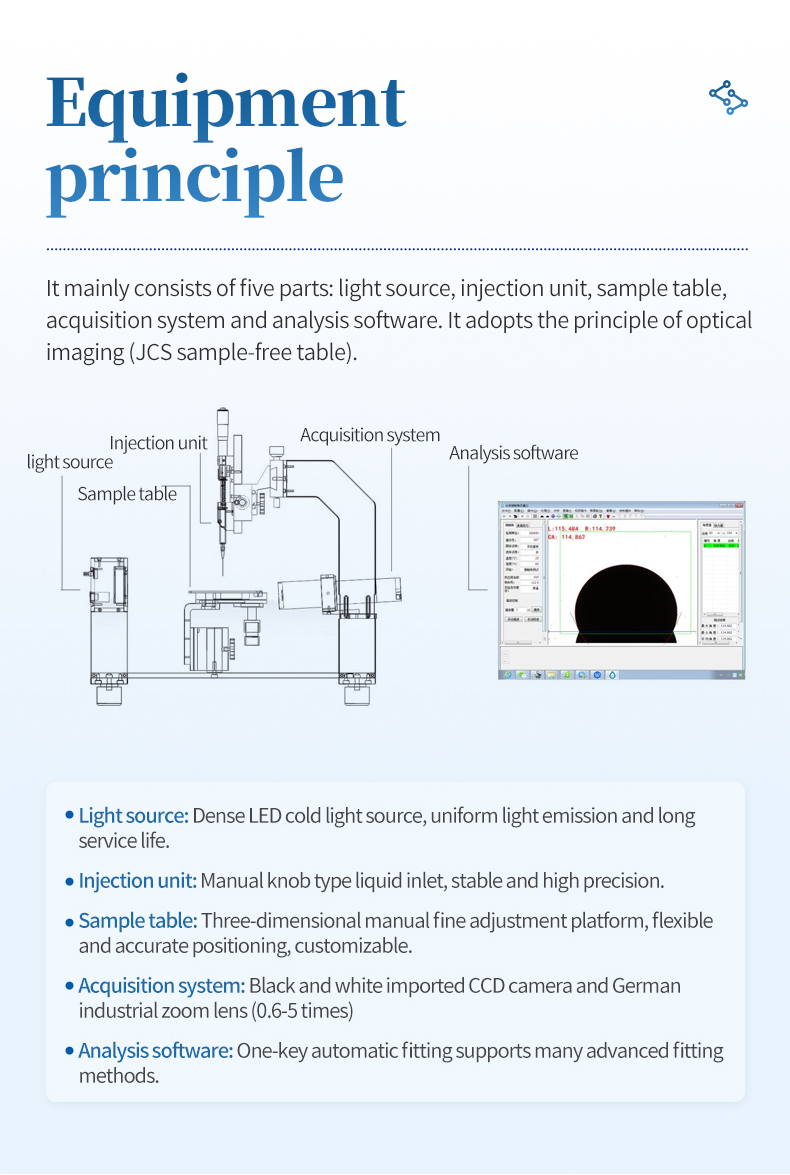
The HM-JC3 contact angle goniometer comprises six primary subsystems: illumination source, dispensing unit, sample stage, image acquisition system, integrated tilting platform, and analysis software. The instrument operates on the principle of optical imaging.
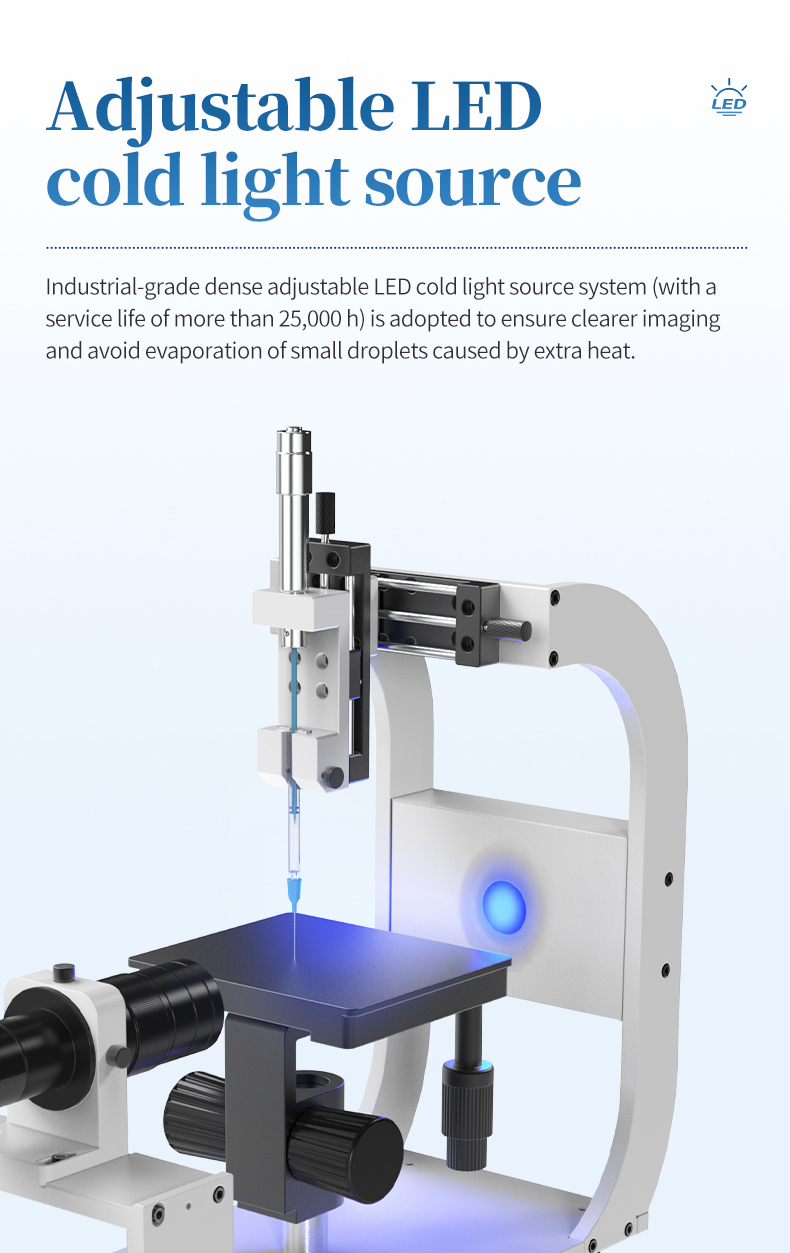
Illumination: High-density LED cold light system providing uniform, thermally neutral illumination with extended service life and enhanced image clarity.
Dispensing Unit: High-precision syringe pump with software-controlled volumetric and flow rate regulation, ensuring highly stable and accurate liquid delivery.
Sample Stage: Three-axis manually adjustable precision platform with flexible positioning capability; stage dimensions customizable to specimen requirements.
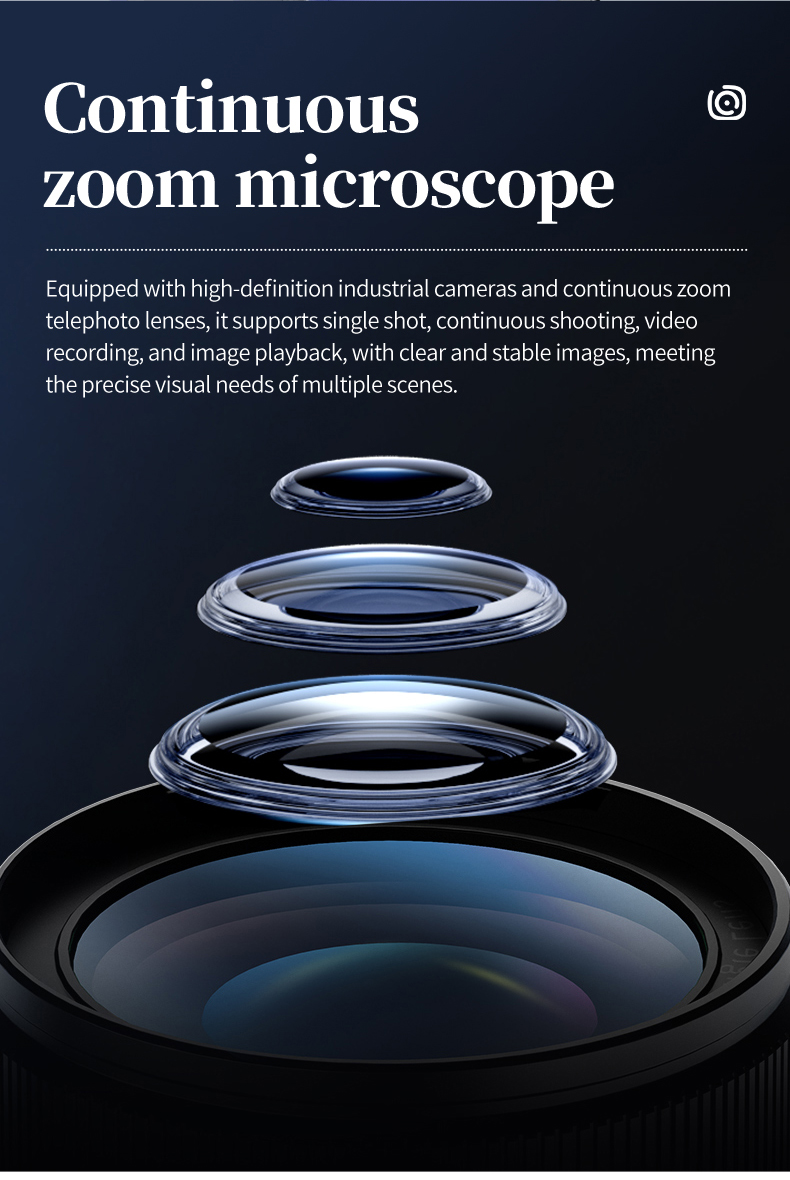
Imaging System: Monochrome imported CCD camera providing stable, high-fidelity image acquisition; German industrial-grade telecentric zoom lens (0.7-4.5×) delivering distortion-free imaging.
Tilting Platform: Software-controlled precision tilting with angular resolution of 0.01°.
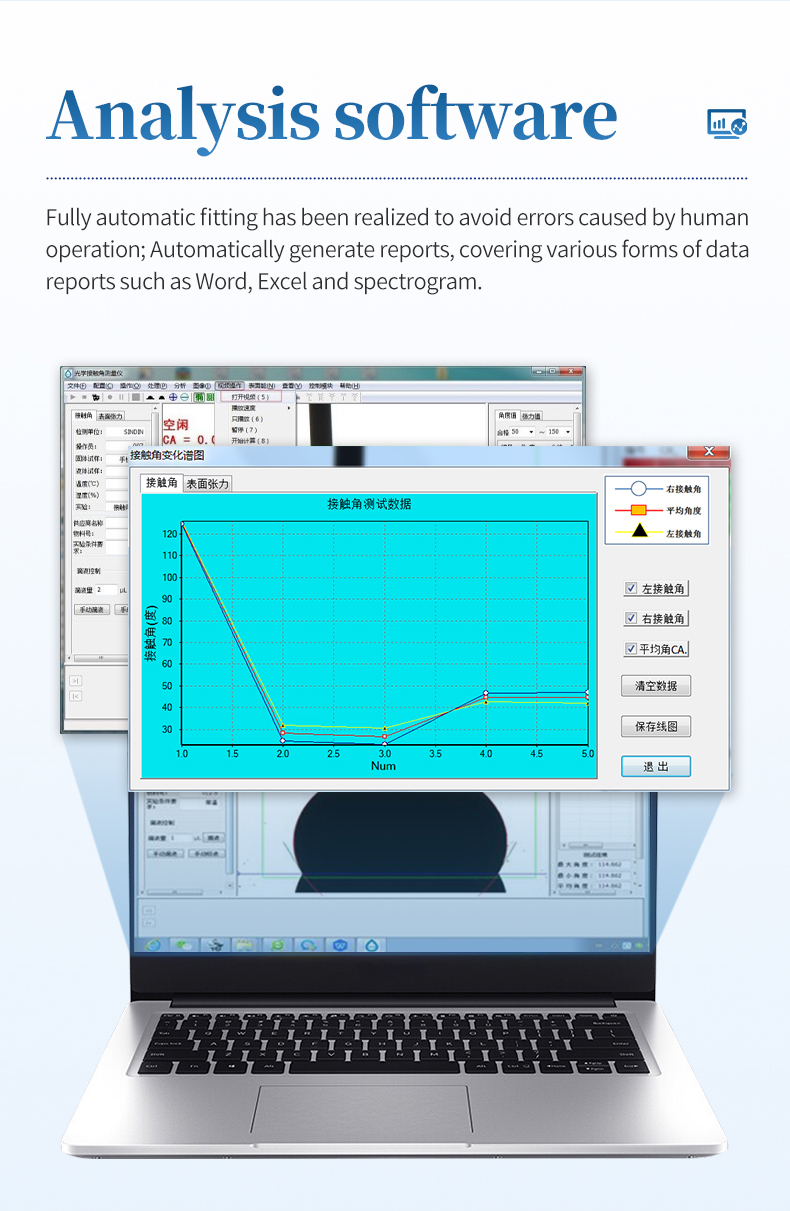
Analysis Software: One-click fully automatic fitting with internationally advanced fitting algorithms for accurate characterization of all droplet morphologies.
IV. Technical Specifications
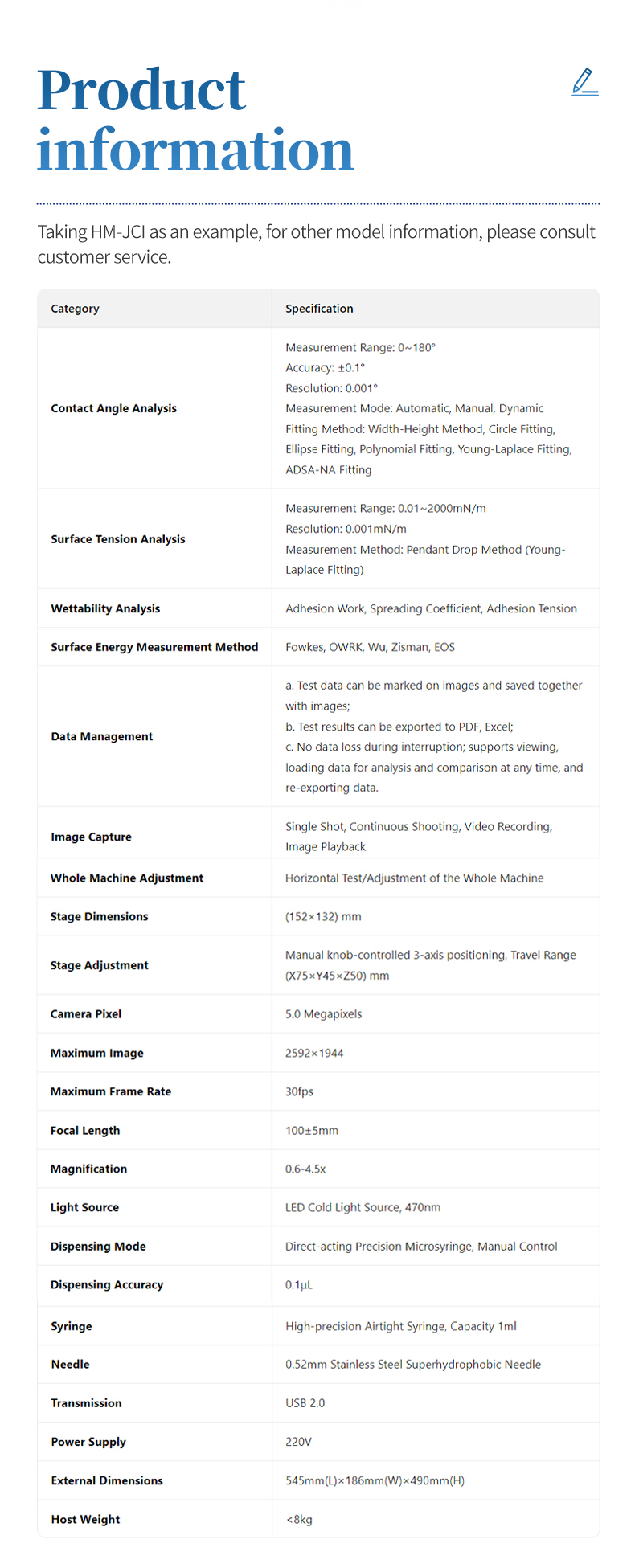
| Parameter Category | Specification Item | Value |
|---|---|---|
| Contact Angle Instrument | Dimensions (L×W×H) | 750 mm × 408 mm × 695 mm |
| Weight | 30.5 kg | |
| Power Supply | 220V / 60Hz | |
| Light Source System | Light Source | High-density LED adjustable blue-tone industrial-grade cold light source |
| Service Life | > 25,000 hours | |
| Dispensing Unit | Syringe | Dedicated high-precision quartz syringe, 500 μL capacity |
| Dispensing | Software-controlled automatic dispensing, precision up to 0.01 μL | |
| Dispensing Unit Travel | Vertical: 50 mm; Lateral: 50 mm | |
| Imaging System | CCD Camera | SONY imported high-speed industrial-grade sensor, 25 fps, 1.3 Megapixels |
| Lens | 0.7-4.5× HD industrial-grade continuously variable zoom microscope | |
| Imaging System Adjustment | Front-back 100 mm (3 mm fine adjustment); Viewing angle adjustable (horizontal, overhead, 360° rotation multi-angle observation) | |
| Sample Stage Assembly | Stage Dimensions | 120 mm × 150 mm |
| Maximum Sample Size | 6 inches | |
| Stage Travel | Front-back: manual, 60 mm travel, 0.1 mm precision; Left-right: manual, 35 mm travel, 0.1 mm precision; Vertical: manual, 80 mm travel, 0.1 mm precision | |
| Integrated Tilting Platform | Tilt range: ±90°; Tilt precision: ±0.01°; Tilt rate: adjustable | |
| Analysis Software | Contact Angle Range | 0-180° |
| Contact Angle Accuracy | ±0.1° | |
| Surface/Interfacial Tension Range | 0-2000 mN/m | |
| Surface/Interfacial Tension Accuracy | 0.01 mN/m | |
| Software Functions | 1. Advanced contact angle auto-fitting (Circle method, Ellipse/Oblique ellipse, LY, Differential circle/Differential ellipse); 2. Dynamic contact angle fitting (Wettability, Video analysis); 3. Surface energy calculation; 4. Advancing and receding angle measurement; 5. Rolling angle measurement; 6. Surface/interfacial tension measurement; 7. Work of adhesion |
V. Applicable Standards
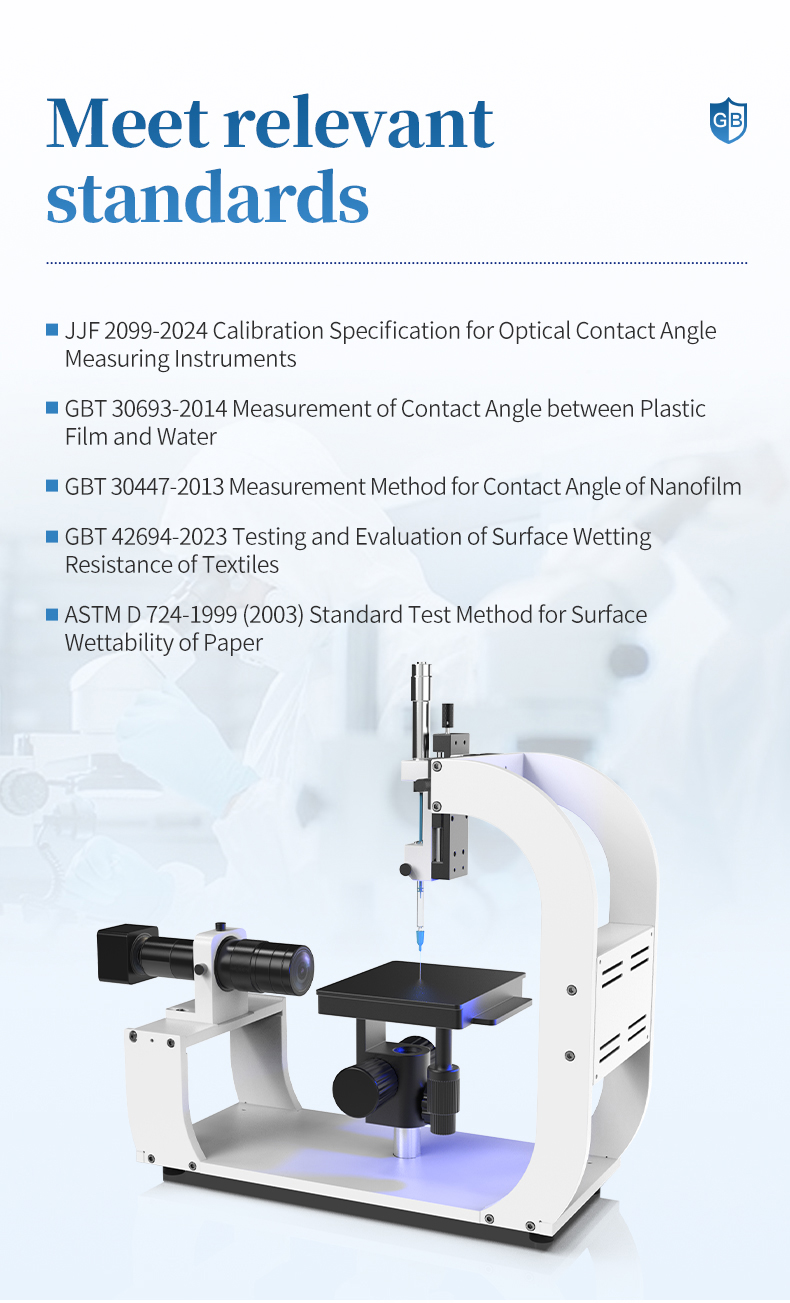
GB/T 24368-2009: Detection of Hydrophobic Contaminants on Glass Surfaces
SY/T 5153-2007: Method for Determining Wettability of Reservoir Rocks
ASTM D724-99 (2003): Standard Test Method for Surface Wettability of Paper
ASTM D5946-2004: Measurement of Water Contact Angle on Plastic Films
ISO 15989: Measurement of Water Contact Angle on Corona-Treated Plastic Films and Sheets
VI. Product Features
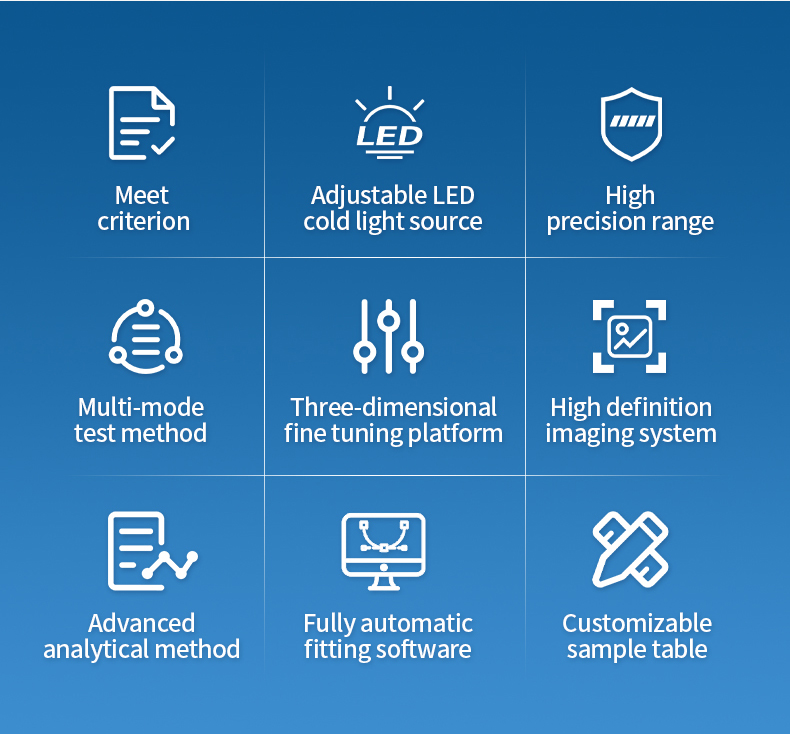
High-strength aerospace-grade aluminum alloy construction with modular design; proprietary integrated circuit control architecture incorporating design principles from internationally leading contact angle instrumentation, ensuring exceptional instrument stability.
Industrial-grade adjustable LED cold light source system (lifespan > 25,000 hours) for superior image clarity while preventing thermal evaporation of small droplets.
High-performance Japanese-manufactured industrial camera sensor with German-engineered telecentric zoom lens achieving virtually distortion-free imaging.
USB 2.0 standard interface providing high-speed data transfer with excellent compatibility and connection stability.
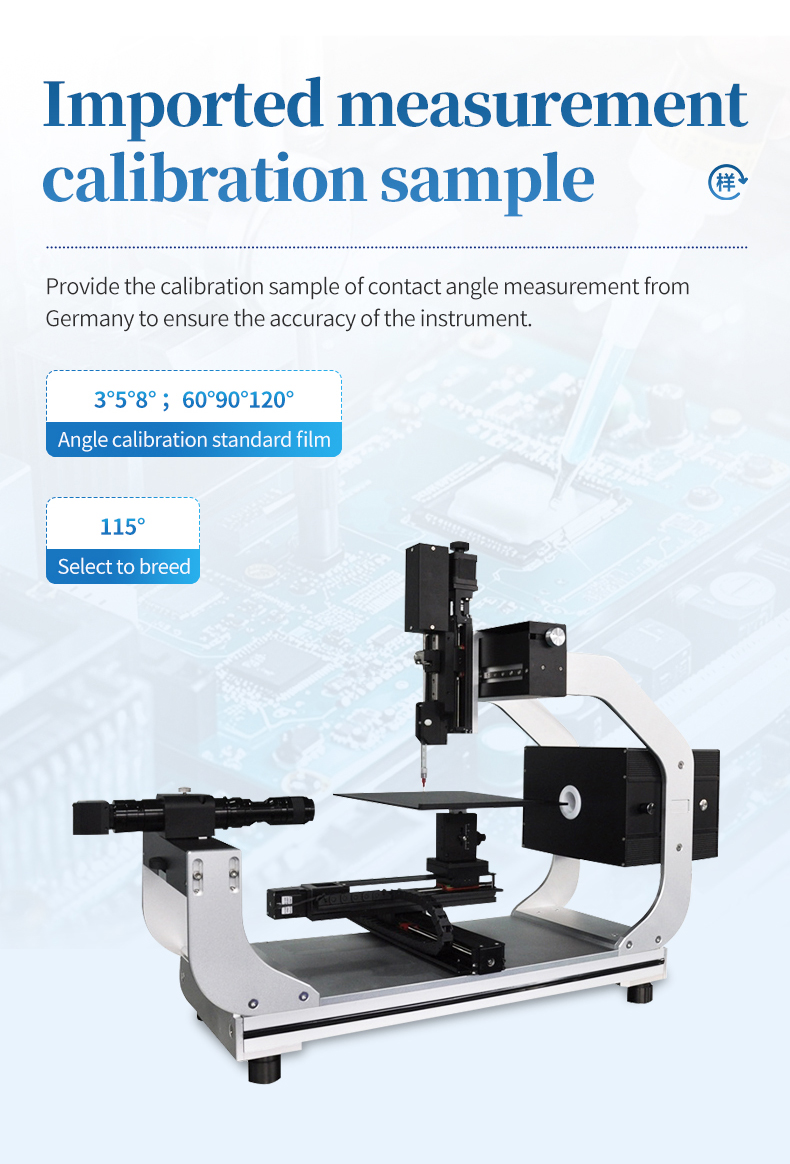
German-imported contact angle calibration standards for verified instrument accuracy; calibration reference plates: 3°, 5°, 8°; 60°, 90°, 120°; 115° (optional).
Flexible imaging system design adaptable to diverse measurement environments and complex sample surface geometries.
Comprehensive contact angle fitting methods including proprietary differential ellipse and differential circle algorithms for specialized droplet profile analysis.
Fully automated fitting algorithms eliminating operator-dependent measurement variability.
Bilateral contact angle measurement with rapid fitting capability for comprehensive liquid-solid wettability characterization and accurate assessment of actual surface wetting conditions.
Dynamic measurement and high-speed video analysis with continuous recording of contact angle temporal evolution and automatic batch fitting.
Automated report generation in multiple formats: Word, Excel, and graphical output.
Extensive optional accessories and customization capabilities supported by dedicated R&D team.
Advancing and receding angle measurement capability for efficient evaluation of surface stability.
Rolling angle measurement with intelligent surface sliding point detection and alternative advancing/receding angle determination methodology.
VII. After-Sales Service
Standard models available for immediate dispatch.
Global two-year comprehensive instrument warranty.
Complimentary pre-purchase sample testing service.
Lifetime free software updates for all instruments worldwide.
Regular operation and theoretical training sessions at headquarters.
Lifetime instrument calibration, maintenance, and servicing.
 Related Products