


 Current
Location:
HENG MEI Intelligent Manufacturing Selecting a Quantitative Tray Sealer for Water Tests
Article Source: Hengmei Technology Release time:2026-11-13 13:30:23
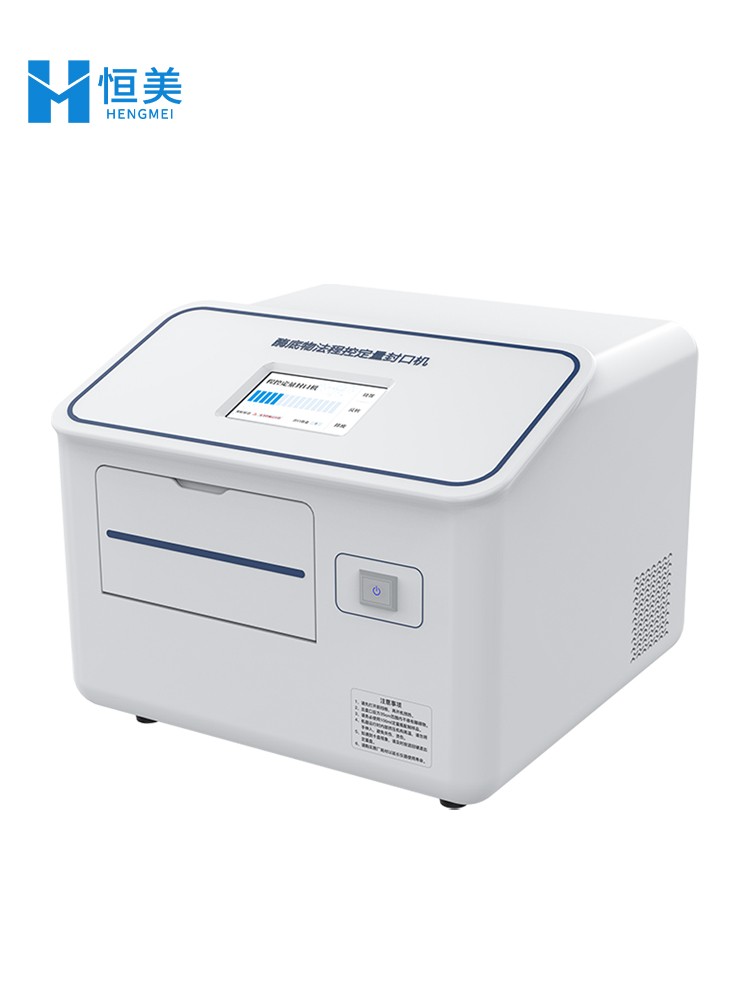
Select a quantitative tray sealer together with compatible trays, reagents and incubation equipment. HM-FKJ seals 51-well and 97-well quantitative trays for enzyme-substrate water testing. The complete workflow also includes incubation, result reading and the appropriate most-probable-number table.
HM-FKJ is part of the HENG MEI Intelligent Manufacturing range supplied by Shandong Hengmei Electronic Technology Co., Ltd.
How the measurement works
HM-FKJ seals compatible 51-well and 97-well trays for enzyme-substrate water tests. After incubation, the pattern of positive wells is interpreted with the table corresponding to the tray. The complete result depends on reagent preparation, tray integrity, incubation and endpoint reading.
Purchase the complete tray-testing workflow
Specify the tray format, reagent system, incubator capacity and color or fluorescence reading arrangement together. Plan sample preparation and tray handling so loaded trays can move through sealing and incubation consistently. Include consumable availability and the reporting range needed for the expected water samples.
Technical configuration
| Parameter | Specification |
|---|---|
| Tray formats | 51-well and 97-well quantitative trays |
| sealing time | ≤12 seconds per compatible tray |
| warm-up | ≤3 minutes |
Include dilution in the MPN report
If the matching tray table gives 120 MPN/100 mL for a sample diluted by a factor of ten, the corresponding original-sample result is 1,200 MPN/100 mL under that reporting procedure. Keep the dilution and tray identity with the positive-well pattern. Choose additional dilution through the method when the pattern reaches the upper reporting range.
Separate sealing capacity from reporting time
HM-FKJ seals a compatible tray within 12 seconds and warms up within three minutes. Schedule incubation and endpoint reading as separate stages. After sealing, inspect the tray for the condition required by the procedure. Count positive wells consistently and use the matching table for the actual well layout and dilution.
Organize a water microbiology testing day
Set up the day around sample receipt, preparation, sealing, incubation and reading. Make sure tray labels remain readable through the full sequence and link each tray to the water sample and dilution. Arrange incubator space for the expected arrival pattern, including controls and any repeat work. Inspect sealed trays before loading and document any problem through the laboratory procedure. At the reading stage, record the well pattern before calculating the final result. Keep the matching table and dilution accessible to the reviewer. This workflow turns fast sealing into an orderly, traceable analytical process.
Put the selected method into practice
- Prepare the sample with the compatible enzyme-substrate reagent.
- Fill and load the specified quantitative tray according to the procedure.
- Seal the tray and inspect its condition before incubation.
- Read the accepted endpoint and use the MPN table corresponding to the tray and sample dilution.
Plan support for common operating issues
| Operating issue | Checks and follow-up |
|---|---|
| The sealed tray leaks | Review tray compatibility, loading orientation and instrument readiness. |
| The positive-well pattern exceeds the table range | Apply the method procedure for dilution and repeat testing. |
| Endpoint reading is ambiguous | Review incubation conditions, reagent controls and the specified viewing arrangement. |
Plan the complete working configuration
Specify the reagent system, tray type, daily workload and required incubation conditions. Include reading equipment for the intended color and fluorescence endpoints. Compare the sealer configuration and consumable supply as a complete system. Sealing speed is one scheduling input, while incubation and reading determine the overall reporting workflow.
Define the acceptance and reporting requirements
Agree on the following items when configuring HM-FKJ. They connect the equipment and consumables to the intended measurement and provide a basis for operator training and result review.
- Water sample and reagent lot
- Tray format and dilution
- Incubation start, duration and conditions
- Positive-well pattern and MPN table
Questions from buyers and laboratory teams
Can 51-well and 97-well trays use the same MPN table?
Use the table specified for the actual tray format and dilution.
Does a short sealing time give an immediate result?
The assay includes incubation and endpoint reading after sealing.
For a HM-FKJ configuration enquiry, provide the sample type, required measurements, expected workload and reporting requirements. Include the consumables, preparation equipment and support arrangements needed at the installation site.
Address of this article:https://www.kjhm.net/news/selecting-a-quantitative-tray-sealer-for-water-tests.html
 Related News
-
13 / 2026-11
HENG MEI Intelligent Manufacturing Choosing an Amylose Analyzer for Grain Testing
Learn more
-
08 / 2026-05
Contact Angle Goniometer Value Analysis-HENGMEI ZHIZAO vs Intl Brands
Learn more
-
13 / 2026-05
HengMei SmartBuild Turbidity Meter FAQ
Learn more
-
09 / 2026-11
Animal Disease Tester Brands Compared: IDEXX, Bio-Rad, HENG MEI
Learn more